Why Indian Schools Need Heat-Safe Drinking Water
 TBH Editorial
A school can have a water tap and still leave children thirsty. If the water is warm, unreliable, unsafe, or surrounded by a long queue under a hard sun, that tap isn’t doing its job.
Heat-safe drinking water isn’t a luxury for Indian schools. It’s basic protection during hotter days, crowded classrooms, outdoor assemblies, and long walks to school. It means water that’s clean, accessible, and comfortable to drink, delivered through infrastructure that won’t fail when children need it most. The supply should also meet applicable Indian water quality standards.
We need to stop treating hydration as a bottle problem and start treating drinking water quality as part of a school’s safety duty.
Key Takeaways
- Heat-safe drinking water is clean, accessible, comfortable to drink, and available when children need it most.
- A school water station should work during the busiest hour, with enough taps, shade, safe drainage, disability access, and child-friendly design.
- Clear water and boiling alone do not prove safety; schools need testing for microbial and chemical contaminants at the final tap.
- Water filtration should match the actual source and contaminant risk, with safe storage, maintenance, and responsible handling of reject water.
- Long-term safety depends on named responsibility, regular testing, repair budgets, durable materials, and documented maintenance—not just installation.
Heat-safe drinking water protects attention, health, and dignity
Heat does not affect every child equally, and drinking water safety is part of protecting attention, health, and dignity. A student arriving by foot, sitting in a top-floor classroom, or playing on an unshaded ground starts the day with a heavier physical burden.
When water is far away, queues are long, it tastes unpleasant, or supply is unreliable, children may drink less. They may feel tired, develop headaches, or struggle to focus, while poor facilities can lead some to skip toilet visits. Safe supply and hygiene can reduce exposure to waterborne diseases. None of this looks dramatic in a school register, but it can still change a child’s day.
A water point must work at the busiest hour
One tap beside a handpump is not a drinking-water system for a school of hundreds. The test is simple: can children refill safely during recess without missing most of their break or waiting in direct sun?
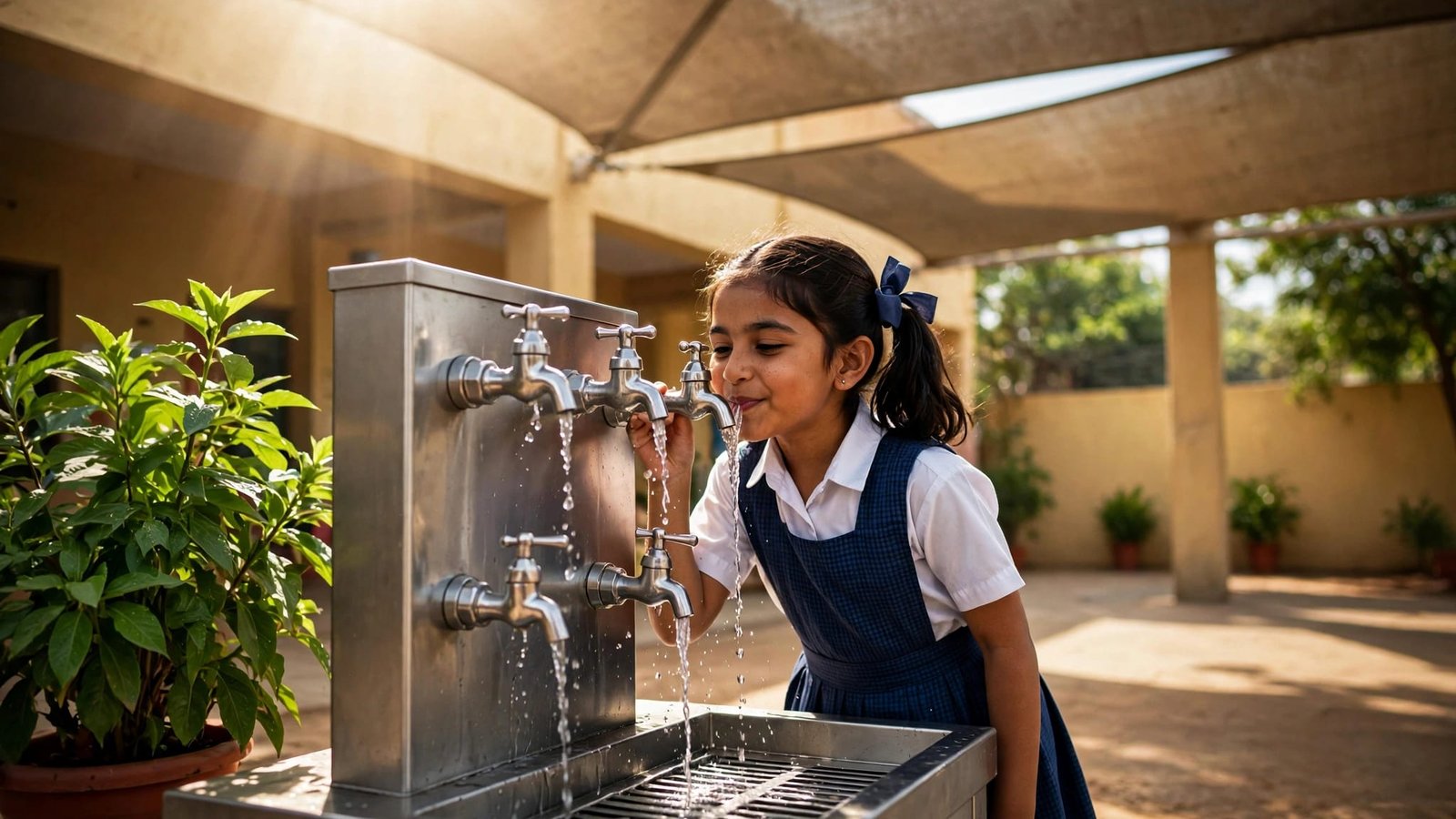
A useful station needs enough taps for the school population, child-friendly tap heights, disability access, and a drainage channel that avoids muddy pools. It should comply with applicable water quality standards and sit near classrooms or the playground, not behind a locked storeroom.
UNICEF’s WASH work in schools treats water, sanitation, and hygiene as connected needs, and schools should do the same. A functioning water point supports handwashing and can help reduce conditions that contribute to waterborne diseases. A child can’t wash hands properly if water stops at noon. They can’t stay hydrated if the only supply is questionable.
Shade is part of the infrastructure
Water stored in exposed black tanks or supplied through pipes running across hot roofs can become unpleasantly warm. An unpleasant taste or questionable supply can signal poor drinking water quality and reduce willingness to drink. Some children may choose sugary packaged drinks or go without.
Shade trees, roof insulation, covered tanks, and a station placed under a permanent canopy all reduce heat exposure. This is where urban biodiversity becomes practical public health. A healthy tree canopy cools a school ground, slows harsh sunlight, and makes the walk to a water point less punishing.
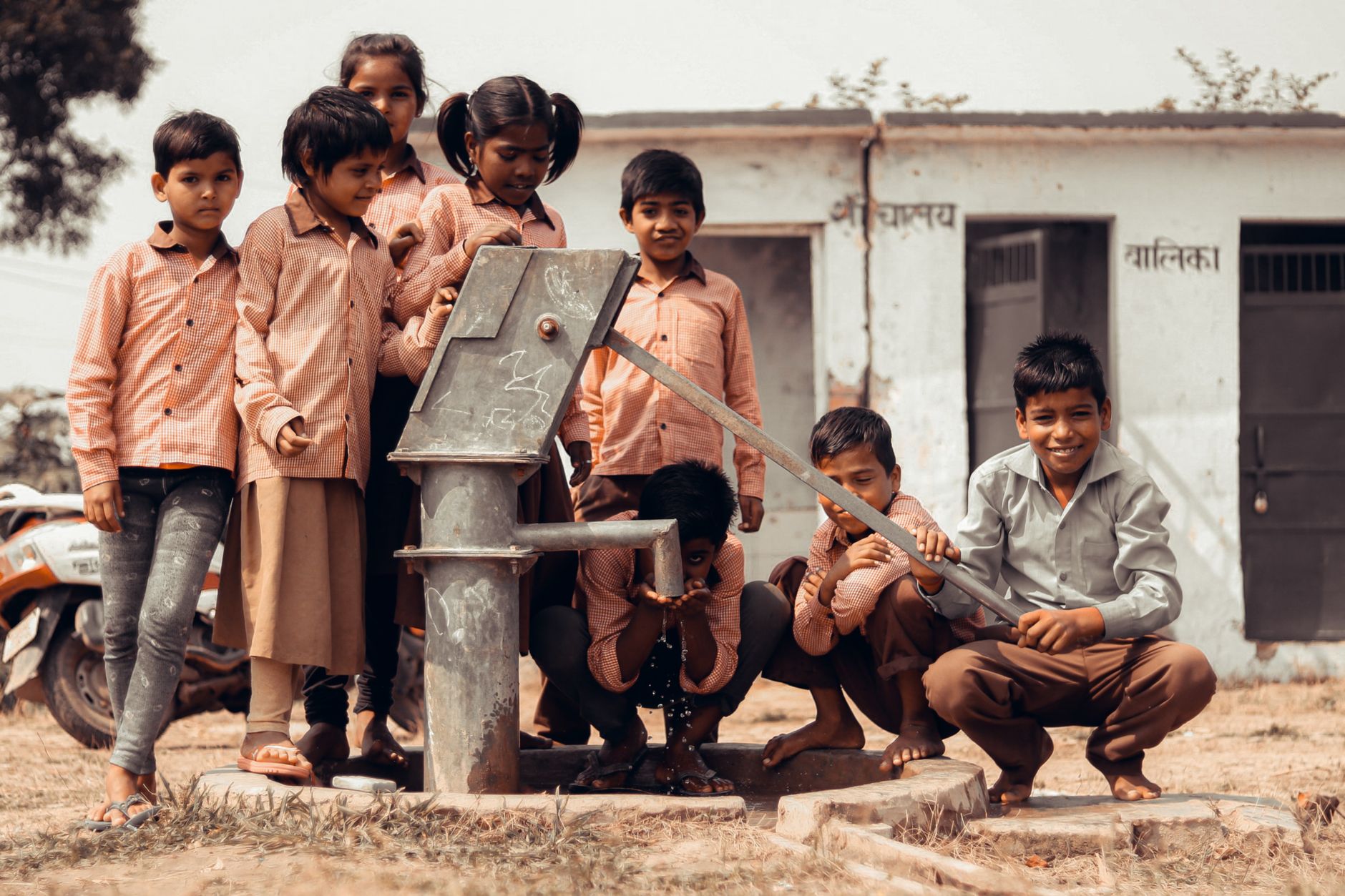
Photo by ritesh arya
A tap is not proof that water is safe
Clear water can still hide drinking water contamination. Bacteria and viruses are microbial pathogens, and exposure can cause waterborne diseases. Chemical contaminants, including fluoride, arsenic, lead, and nitrate, may affect drinking water quality without changing its smell or colour.
Not every school faces every hazard. Actual risk depends on the water source, local geology, plumbing age, and known contamination history.
India’s drinking-water standard, IS 10500, distinguishes bacteriological safety from chemical safety. Schools need to use these water quality standards when interpreting test results. Clear appearance alone does not show compliance with drinking water standards.
Boiling helps, but it does not solve everything
Boiling water can kill many disease-causing organisms. During a confirmed microbial incident, it can reduce many microbial pathogens when no safer treated supply is available.
But boiling does not remove chemical contaminants. The CDC states plainly that boiling water does not remove chemicals, including hazards such as lead and arsenic. As water evaporates, some dissolved substances may become more concentrated, depending on the contaminant and conditions.
That matters in areas dependent on borewells or ageing plumbing. Where testing identifies microbial hazards, a reliable treated supply helps reduce exposure to waterborne diseases.
A school should never respond to a failed water-quality test with, “We told the children to boil it.” That response can leave children vulnerable to waterborne diseases.
Boiled water may be safer from germs, but it is not automatically safer from every contaminant.
Testing every tap beats trusting appearances
The Jal Jeevan Mission framework commonly recommends bacteriological checks before and after monsoon, plus annual chemical testing. Requirements can vary by state, source, and current guidance, so schools should confirm the applicable schedule and water quality standards.
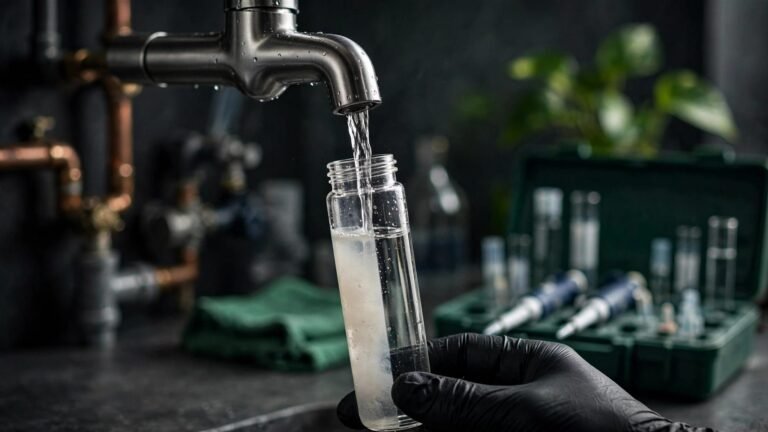
A school with its own filter should test the water leaving the final tap. This verifies drinking water quality and treatment performance, not just source quality, against water quality standards.
That includes taps near old pipes, kitchen points, and stations used most often by children. Lead can enter through plumbing and fixtures after water leaves the source. Depending on local geology and plumbing history, laboratories may assess fluoride concentration or heavy metal concentration. Persistent organic pollutants should be included only when source history or laboratory advice warrants targeted testing.
Read more about school water lead testing in India before accepting a single clean source report as proof that every tap is safe.
Match water filtration to the actual risk
Schools often buy a purifier first and ask questions later. That is how expensive equipment becomes a wall decoration with a glowing light.
Water purification should follow source and contaminant testing, not a product’s appearance or marketing claims.
Start with a source-specific water test. Identify the source, then identify the contaminant. Borewell water, municipal supply, tanker water, and stored rainwater each carry different risks.
Test chemical and microbial risks, since treatment and hygienic storage must both help protect against waterborne diseases. Compare findings with relevant water quality standards, including India’s BIS IS 10500 drinking-water specification.
Activated carbon filters and reverse osmosis do different jobs
Some suppliers loosely use the label active carbon filters, but the term activated carbon filters is more precise. These filters can improve taste and smell. They can also reduce chlorine and some organic chemicals. They are not a universal shield against dissolved salts, metals, or microbes.
Specialized contaminants such as persistent organic pollutants require appropriate laboratory testing and treatment validation. Schools should rely on verified manufacturer or laboratory performance data for microplastics removal, rather than assume every filter provides it.
Reverse osmosis systems use a membrane to reduce many dissolved contaminants. They may suit groundwater where testing shows high salinity, a high fluoride concentration, arsenic, or other dissolved chemicals. They also create reject water, need consistent maintenance, and can waste water if poorly designed.
The EPA’s overview of drinking-water treatment technologies makes the core point clear: treatment options vary because contaminants vary.
For a school, the right question is not, “Which purifier looks premium?” Ask, “What is in our water, can this system remove it, and will it protect drinking water quality?” A complete water filtration system includes pretreatment, safe storage, a hygienic final tap, and maintenance. Check treatment performance against relevant water quality standards, then verify the final tap after installation.
Plan for the water the filter rejects
A reverse osmosis unit cannot become an excuse to send its reject water into a school drain without thought. Where local water quality permits, that water may be routed for toilet flushing, floor cleaning, or gardening. It should never be reused for drinking or food preparation.
This is where the circular economy has to mean more than recycling posters. Filters need service schedules, spent cartridges need safe disposal, and damaged taps need repair before they become leaks or contamination points. Mineral deposits can signal scale or maintenance needs, but they do not prove that water is unsafe.
A station built around disposable parts with no replacement budget is not sustainable. It is delayed failure.
Build a station children can use safely in summer
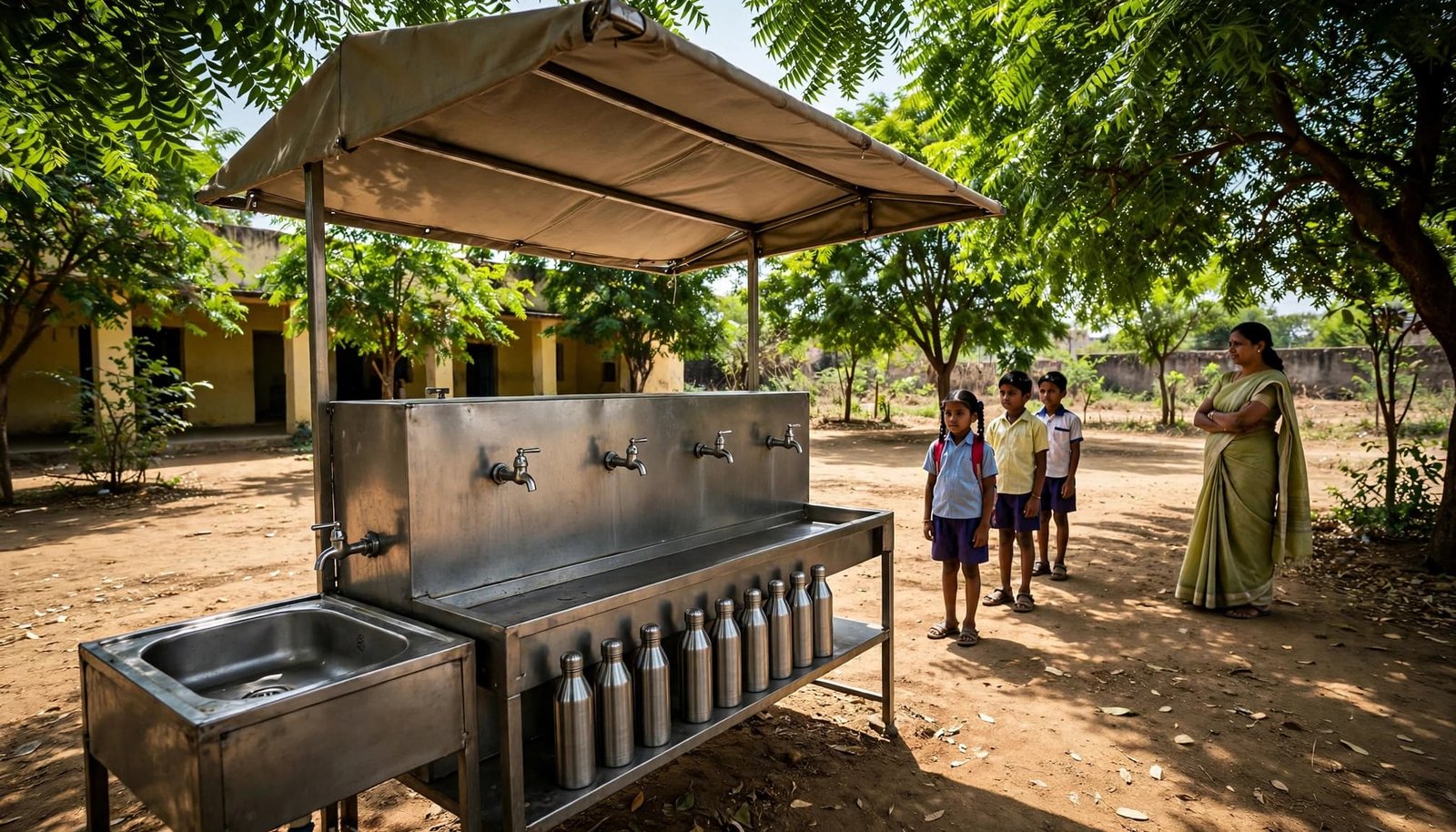
A strong water station is simple. It doesn’t need flashy screens, chilled branding, or a photo-op launch. It needs clean water, sturdy crack-free materials, shade, rounded cleanable surfaces, an accessible tap height, protected storage, and enough flow.
Choose durable materials, not cheap replacements
Food-contact stainless steel works well for taps, dispensing surfaces, and refill points because it is durable, non-porous, and easier to clean than cracked plastic. A reusable stainless steel bottle is also a better school option than a daily pile of single-use plastic cups. For plastic components, choose BPA-free materials with clear food-contact documentation. BPA-free doesn’t rule out every possible chemical hazard.
For vessels that may face temperature changes, borosilicate glass can offer good thermal shock resistance. This means resistance to cracking from sudden temperature changes, not resistance to impact. Tempered glass may withstand impact better, but chipped or cracked vessels should be removed from use.
Choose lead-free glassware or ceramic items only when the manufacturer provides documentation. An unlabeled product isn’t proof that it is lead-free. Products marketed as heat resistant glassware still need evidence of suitability for food contact and school use. Old glazed ceramic cups and decorative glassware shouldn’t be treated as safe by default, especially when their origin is unknown.
Safe drinkware materials include stainless steel, documented food-contact glass, and suitable plastics. Look for credible food-contact documentation or food safe certification from the manufacturer. Dishwasher safe tumblers make sense only where a dishwasher is available and the manufacturer permits that cleaning method. Damaged or poorly documented items create uncertainty about toxic chemical leaching, so replace them rather than guessing.
Material choice complements water testing, treatment, cleaning, and safe storage. It can’t replace them or establish compliance with water quality standards.
Keep hot water away from children’s stations
Heat-safe drinking water means safe during heat, not water served hot. A school hydration point should provide ambient or cooled potable water, not near-boiling water from a dispenser or kettle.
The International Agency for Research on Cancer warns that very hot beverages above 65 C are probably carcinogenic to humans because repeated thermal injury can affect the oesophagus. This evidence concerns hot beverage consumption at very high temperatures, not ordinary warm water.
Hot tea may feel comforting, but it isn’t a hydration strategy for a sweltering school day. Warm water also has no special power to purify unsafe water. The source and treatment process matter far more than temperature.
Maintenance is where good stations usually fail
The common failure is painfully ordinary. A station is installed, photographed, inaugurated, and forgotten.
Filters clog. Tanks gather sediment. Taps leak. A pump loses power. The cleaning cloth becomes dirtier than the surface it wipes. Then children return to carrying water from home, buying packaged drinks, or waiting beside a dry tap.
Put responsibility on paper
Every school needs one named person responsible for the station, plus a backup. That person shouldn’t be expected to fix everything alone. They need a contact for repairs, a small maintenance budget, and authority to close a station when tests fail.
Keep a visible, simple record of:
- Water-source tests, filter changes, tank-cleaning dates, and whether testing and corrective actions align with applicable water quality standards.
- Tap repairs, low-pressure complaints, supply interruptions, and station closure or reopening decisions.
- The responsible person’s name, backup contact, and corrective-action deadline.
- Where the school uses dishwasher safe tumblers and has a dishwasher, cleaning cycles and replacement of damaged items.
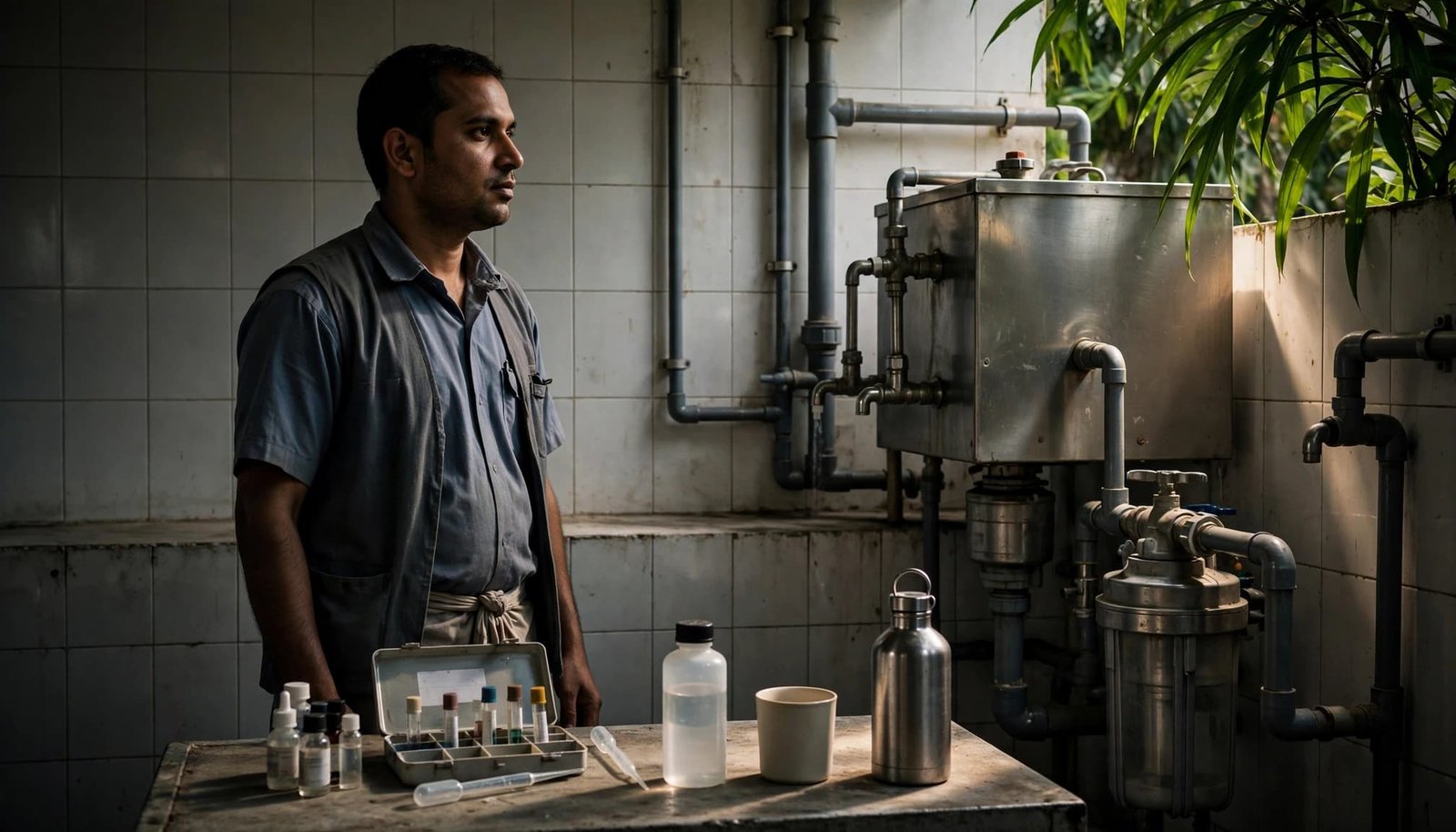
A clean-looking tap with an expired filter doesn’t prove drinking water quality. It is a compliance prop, not safe infrastructure.
Fund the unglamorous work
Systemic change looks boring on launch day. It looks like inspection logs, spare parts, lab bills, roof repairs, and a contractor who returns when the flow slows down.
Schools need sustainable business models that pay for five years of functioning service, not one day of installation. Funders, including CSR programs, local bodies, parent groups, and philanthropies, should ask for multi-year service evidence before celebrating hardware. That evidence should cover spare parts, testing costs, maintenance visits, and response times.
Everyday mindfulness has a place here. Students can notice a leak, report dirty drainage, and learn where their water comes from. But children should not become unpaid safety inspectors or carry responsibility for safety management because adults refused to fund maintenance.
Make water safety part of climate literacy
Climate literacy cannot stop at learning about heatwaves, planting saplings, or carrying a steel bottle. Those things matter. They do not fix contaminated plumbing or a neglected drinking station.
A school can teach plant-based living, waste reduction, and water conservation. It should also ask sharper questions: Where does our water come from? Who tests it? Where are testing records kept? Do they show compliance with water quality standards? Which trees shade our drinking points? What happens when the supply fails?
Link school health to the neighbourhood
Unsafe water infrastructure has ecological effects beyond the school gate and can disrupt a station’s operation. Leaking pipes waste treated water, while overflowing drains create hazards around homes and classrooms. Poor wastewater handling can damage local soil, trees, and nearby water bodies, while increasing public-health risks from waterborne diseases. Current WHO and UNICEF public-health guidance notes that safe water, sanitation, and hygiene can help reduce these risks.
Communities should request test dates, water-quality records, repair timelines, and the authority responsible for the station. They should report leaks, ensure drainage protects play areas, and seek evidence that supply and repairs meet applicable water quality standards. Vague assurances that “action has been taken” are not enough; a date, a report, and a responsible person are better.
For practical work connecting children, ecosystems, and public accountability, Explore Our Active Missions offers ways to support action where it is needed.
Frequently Asked Questions
What is heat-safe drinking water?
Heat-safe drinking water is clean, tested, accessible, and comfortable to drink during hot weather. It should meet applicable Indian water quality standards and be delivered through a shaded, hygienic, well-maintained station.
Does boiling make school drinking water safe?
Boiling can kill many disease-causing organisms, but it does not remove chemical contaminants such as lead, arsenic, or fluoride. Schools should test the water and use treatment suited to the hazards identified.
How often should school water be tested?
The Jal Jeevan Mission framework commonly recommends bacteriological checks before and after monsoon, along with annual chemical testing. The correct schedule can vary by state, source, and current guidance, so schools should confirm applicable requirements.
Which water purifier is best for a school?
There is no universal best purifier because treatment must match the source and contaminants. Activated carbon can improve taste and reduce some chemicals, while reverse osmosis may suit water with certain dissolved contaminants, but both require validated performance and regular maintenance.
Who should maintain a school water station?
Each school should name a responsible person and a backup, with access to repair contacts, testing records, and a maintenance budget. The school should document filter changes, tank cleaning, repairs, supply interruptions, and decisions to close or reopen the station.
The water station a child deserves
A child should not have to choose between thirst and questionable water. A working tap should provide consistently acceptable drinking water quality, not just visible flow. Nor should their health depend on whether a filter happens to be working that week.
Heat-safe drinking water means more than a tap. It means a tested supply that meets water quality standards, sensible treatment, shade, safe materials, working drainage, and adults who can prove the system is maintained.
That is not charity. It is basic accountability, delivered one safe refill at a time. A school should demonstrate that its supply remains safe and its station is maintained.