Why Indian Schools Need Lead Testing for Drinking Water
 TBH Editorial
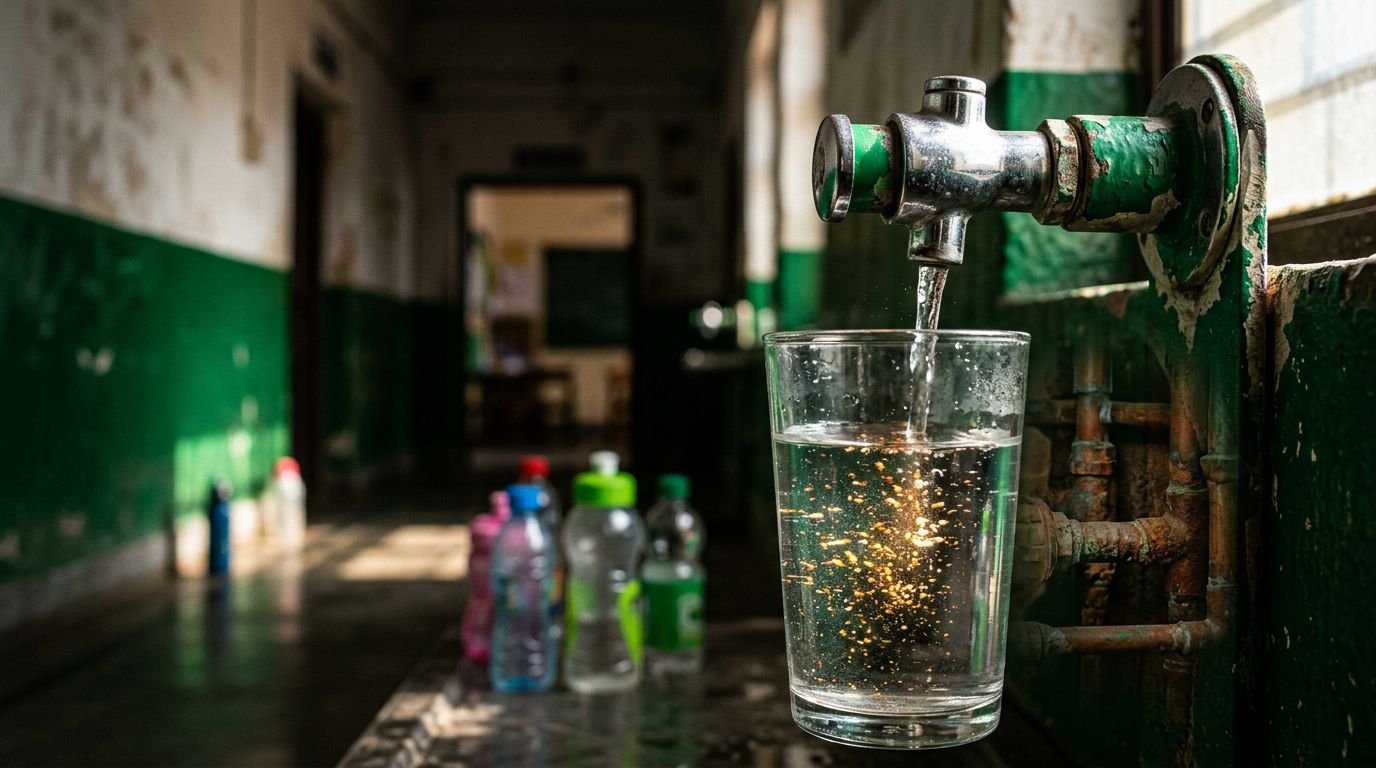
A clear glass of water can still carry a risk a school cannot see. Lead has no smell, no colour, and no taste, yet even low-level lead exposure can affect a child’s developing brain.
Most schools judge drinking water quality by what is visible. Is the tap running? Is the tank clean? Did a field test kit show bacteria or chlorine problems? Those checks matter. But the school water lead testing India needs asks a harder question: what is coming out of the pipe itself?
Every child deserves water that supports learning, not water that quietly adds another health burden.
Key Takeaways
- Clear, odourless, and colourless water can still contain lead, which may harm children’s developing brains even at low levels.
- India’s BIS IS 10500 standard sets the acceptable lead limit at 0.01 mg/L, or 10 micrograms per litre. Schools should treat results at or above this level as an operational action point and stop using affected outlets until the cause is addressed.
- Routine checks for bacteria, turbidity, or chlorine do not establish that lead is absent. Lead testing requires properly collected samples and analysis by a capable, preferably NABL-accredited, laboratory.
- Schools should test the taps children use, including first-draw and flushed samples, rather than relying only on a tank or source-water sample.
- Elevated results should trigger immediate access to safe alternative water, transparent reporting, plumbing repairs, retesting, and public records that families can understand.
The school water lead testing India needs
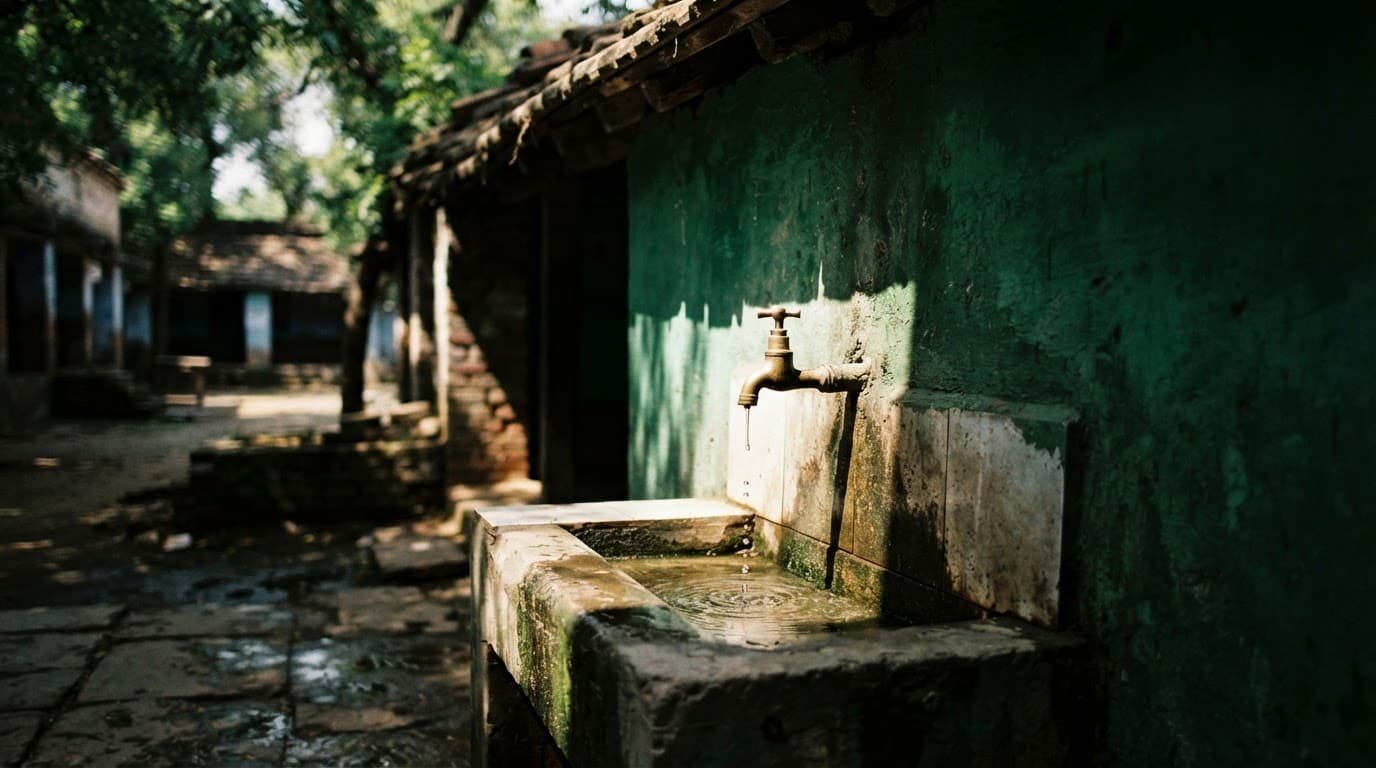
Lead can enter water at school through old pipes, corroded joints, brass taps, solder, storage fittings, or other plumbing materials. The source water may be fine while the last metre of campus water supply systems creates the problem.
Children are more vulnerable because their bodies and brains are still developing. A child doesn’t need to drink visibly dirty water to face exposure. One daily bottle refill from a contaminated tap can make school drinking water a public-health issue when maintenance fails.
India’s public health standards include BIS IS 10500, which sets the acceptable lead limit at 0.01 mg/L, or 10 micrograms per litre. There is no permissible relaxation when an alternate source exists. For school operations, a result at or above that level should be treated as an action level. That is practical response language, not a formal BIS term. Normal use should end until the school identifies and fixes the cause.
India does not yet have a nationwide, school-specific lead-testing rule with the clarity of some international programmes. That gap should concern parents, school leaders, and public authorities. A regional health authority can help set and communicate a clear school response protocol. Waiting for a child to show symptoms is not a plan.
Other countries offer a warning, not a template to copy blindly. The U.S. lead and copper rule is an international comparison, not an Indian requirement. A U.S. Government Accountability Office review of school lead testing found that an estimated 37 percent of districts that tested had discovered elevated lead based on their chosen thresholds. Testing did not create the problem. It revealed a problem plumbing had hidden.
A clean-looking tank does not prove that water is safe at the tap where a child fills a bottle.
A campus-wide testing plan must treat every drinking outlet as part of a system. Its risk assessment should consider children’s exposure patterns, fixture age, stagnation time, and plumbing history, not just one storage-tank sample.
Routine water checks do not catch every danger
India’s jal jeevan mission has brought needed attention to drinking water quality. Its routine water quality monitoring asks schools and anganwadis to check school drinking water for turbidity, free residual chlorine where chlorination is used, and bacterial indicators through microbiological quality tests. These measures address different hazards, with bacterial checks focused on contamination that can cause immediate illness.
That is useful surveillance. It can catch contamination that causes immediate illness, but it cannot establish that lead is absent. Water treatment methods aimed at microbes or chlorine control do not replace metals analysis.
Field test kits help trained community members screen basic water quality parameters close to the source. H2S vials can flag likely bacterial contamination, but both are screening tools. A positive result should go to a district or state laboratory for confirmation, and neither tool should reassure families about lead.
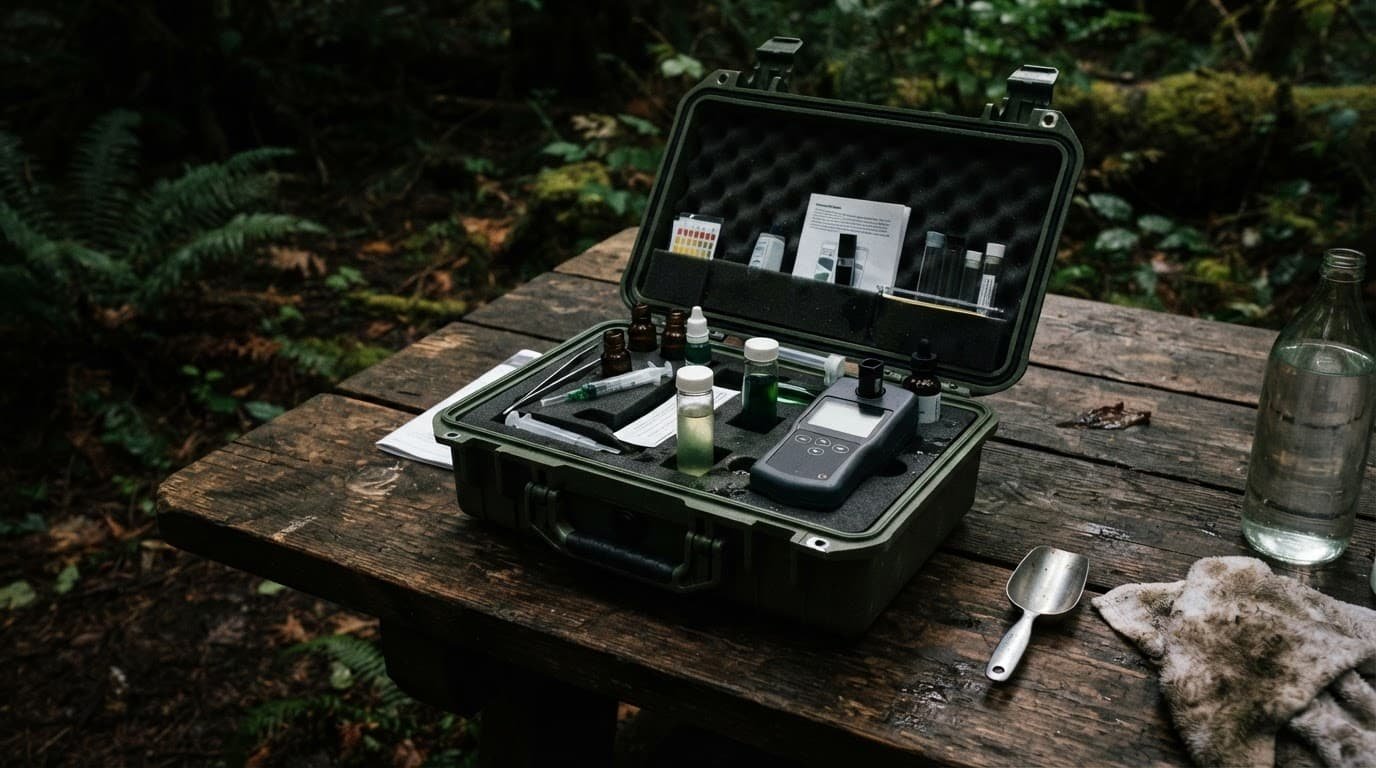
Lead needs a different route. Reliable water sample collection requires laboratory-grade bottles, preservation, careful handling, and chain-of-custody instructions. Samples should go to capable water testing laboratories, preferably one accredited by the National Accreditation Board for Testing and Calibration Laboratories. Depending on laboratory capability, atomic absorption spectrometry or ICP-MS can measure metals at low concentrations. A routine kit should never be used to give families false confidence about lead. The U.S. lead and copper rule shows why fixture-level sampling and follow-up matter, but it isn’t India’s governing rule.
Jal Jeevan Mission guidance asks state public health engineering and rural water supply departments to test sources at least once a year for chemical parameters. Bacteriological testing should occur twice yearly, before and after monsoon. A regional health authority can coordinate this routine monitoring. For schools, that baseline needs a deliberate heavy-metals layer.
A reported 73 percent pass rate for microbiological quality in samples from public institutions may sound reassuring. It still leaves many unsafe samples, and microbiological performance does not establish lead safety. A lead result at or above the defined action level should trigger protection of students, not a routine bacteriological pass or fail judgment.
Rural water supply systems face ordinary disruptions: pump failures, leaking pipelines, unreliable power, broken taps, poor chlorination, and no budget for quick repairs. A gram panchayat may oversee local maintenance, while intermittent supply leaves water standing in fittings longer. If plumbing is corroded, that extra contact time can raise the risk of lead entering the water. When a school lead result needs specialist follow-up, the regional health authority should coordinate escalation.
Test taps, not assumptions
A credible plan starts with a plumbing map. The school should map drinking water outlets, noting taps, cooler outlets, kitchen outlets, bottle-filling points, and classroom collection locations.
The map supports a practical risk assessment. It helps prioritize fixtures by use, fixture age, distance from the inlet, stagnation time, and repair history. Schools should cross-check relevant Jal Jeevan Mission school records where available. They should share the sampling schedule with the regional health authority.
The school water lead testing India needs must reach the fixtures children use most, not only the source inlet. A review of how states handle lead in school drinking water shows why consistent sampling and open reporting matter. A single convenient sample can miss the outlet with the worst contamination.
Where schools should collect water samples
Before water sample collection, staff should obtain bottles and written handling instructions directly from water testing laboratories. They should follow the receiving laboratory’s preservation, handling, and timing protocol, then sample these locations:
| Fixture or point | Why it matters | Sampling approach |
|---|---|---|
| Cold-water drinking taps and cooler outlets | These are direct drinking sources for students. | Take a first-draw sample after 6 to 8 hours of no use, then a flushed follow-up sample. |
| Mid-day meal kitchen taps | Water may enter food, tea, and cooking. | Test the cold-water outlet used for food preparation. |
| The farthest student tap from the tank or inlet | It can reveal contamination from long internal pipe runs. | Compare results with the inlet and nearer fixtures. |
| Storage tank outlet or distribution inlet | This gives a source-water baseline before internal plumbing. | Use it to separate a supply problem from a fixture problem. |
First-draw and flushed tap water samples reveal different plumbing conditions. The first draw captures water that has sat near the tap; flushing shows whether risk stays at the fixture or extends deeper.
Staff should record the fixture ID, location, collection date, last known water use, and any recent repair work. Report each result for drinking water outlets, not a campus-wide average; prioritize those near or above the defined action level. A result without a location is difficult to repair, and one without a date is difficult to trust.
When elevated lead levels appear, issue a repair order
Immediate mitigation strategies must be written, time-bound, and visible. “We have informed the contractor” is not a safety measure.
A school should take these steps:
- Treat the BIS-based limit as the health benchmark. When the school’s operational action level is triggered, remove the affected tap, cooler, or kitchen outlet from use for school drinking water and cooking at once. Provide a known safe alternative water source while repairs happen.
- Notify parents, staff, the school management committee, the relevant local authority, and the regional health authority. Share the fixture location, test date, result, and temporary water arrangement.
- Inspect the fitting, aerator, connectors, solder, pipes, and nearby plumbing materials. Check the upstream line, and document the remediation options, including whether the source was repaired, replaced, isolated, or otherwise addressed.
- Use a properly maintained, certified lead-reduction filter only as a temporary safeguard where appropriate. Filters are not a substitute for replacing unsafe plumbing.
- Retest the affected drinking water outlets after repair. Send first-draw and flushed samples to the same laboratory, or another qualified provider. Have qualified water testing laboratories analyze both sample types. Reopen the outlet only when results meet the BIS-based requirement and remain below the operational action level.
Flushing can reduce lead in standing water for a short period. Certified lead-reduction filtration can provide another temporary safeguard. These mitigation strategies do not remove the source of contamination or replace unsafe plumbing correction. That is why public-school water safety guidance treats testing, maintenance, and access as linked responsibilities.
This is the response Indian schools deserve: testing tied to repair budgets, deadlines, retesting, and public records.
Safe school water needs public accountability
A lab report should trigger a chain of responsibility. The school identifies drinking points and protects children. The water supplier and gram panchayat map the supply line and follow up on local repairs. A laboratory confirms results, while the regional health authority sets the repair timeline, checks corrective work, and verifies the retest.
Public institutions serving children should publish annual testing results in language families can understand. Each entry should name the outlet tested, date, and result. It should state whether the result crossed the action level, the temporary water arrangement, action taken, and next test date. Explain the mitigation strategies used while repairs are pending, because a vague “water quality checked” notice protects nobody.
Parents and community groups can ask public authorities for existing inspection reports, water sample results, complaint logs, and action-taken records through the Right to Information Act. Where the jal jeevan mission programme applies, request its monitoring reports and related sample results. Ask for defined documents over a stated period. “Provide copies of lead test reports from school taps between April and June” is far harder to ignore than “Why is our water unsafe?”
This is systemic change in its least glamorous form: maintenance logs, sample registers, repair orders, laboratory bills, recurring test schedules, and officials who cannot disappear after the first complaint.
Climate literacy should not stop at a school garden or a poster about urban biodiversity. Those lessons can build everyday mindfulness, encourage plant-based living, and deepen awareness of our ecological impact. But they cannot protect a child from unsafe plumbing without funded maintenance.
A circular economy for school infrastructure means repairing safe systems, replacing suspect fixtures with traceable plumbing materials, and disposing of discarded metal responsibly. Sustainable business models for school maintenance need budgets for recurring water tests, not optional line items.
For people who want climate literacy and community care to lead to visible work on the ground, Explore Our Active Missions connects education, local ecosystems, and direct accountability.
Frequently Asked Questions
Why should schools test for lead if their water looks clean?
Lead has no smell, colour, or taste, so clear water can still be contaminated. Lead may enter through old pipes, brass taps, solder, fittings, or other plumbing materials after water leaves the source.
What is the acceptable lead limit for school drinking water in India?
BIS IS 10500 sets the acceptable lead limit at 0.01 mg/L, or 10 micrograms per litre. Schools should use this as a health benchmark and take affected drinking outlets out of service when results reach or exceed the operational action level.
Can routine water testing kits detect lead?
No. Routine checks and field test kits can screen for issues such as bacterial contamination, turbidity, or chlorine, but they cannot confirm that lead is absent. Lead samples should be collected according to laboratory instructions and tested by a capable water testing laboratory.
Which school water outlets should be tested?
Schools should test cold-water drinking taps, cooler outlets, kitchen taps, the farthest student tap, and the storage tank outlet or distribution inlet. First-draw and flushed samples help show whether contamination is limited to a fixture or extends into the wider plumbing system.
What should a school do when a lead result is elevated?
The affected tap, cooler, or kitchen outlet should be removed from use immediately, and students should receive a known safe alternative water source. The school should notify relevant authorities and families, investigate and repair the plumbing, then retest before reopening the outlet.
The water children drink is a public promise
A school can repaint a wall, host an environment day, and still fail its students at the drinking tap. Lead testing is not a luxury for elite campuses. It is basic care.
We should stop treating clear water as proof of safe water. Schools and public institutions should connect jal jeevan mission checks to a clear action level, triggering timely mitigation strategies when results cross it. A regional health authority must make the testing, reporting, repair, and retesting chain enforceable. Test the taps, publish the results, repair the cause, and test again.