How Indian Rice Farmers Can Cut Methane With AWD
 TBH Editorial
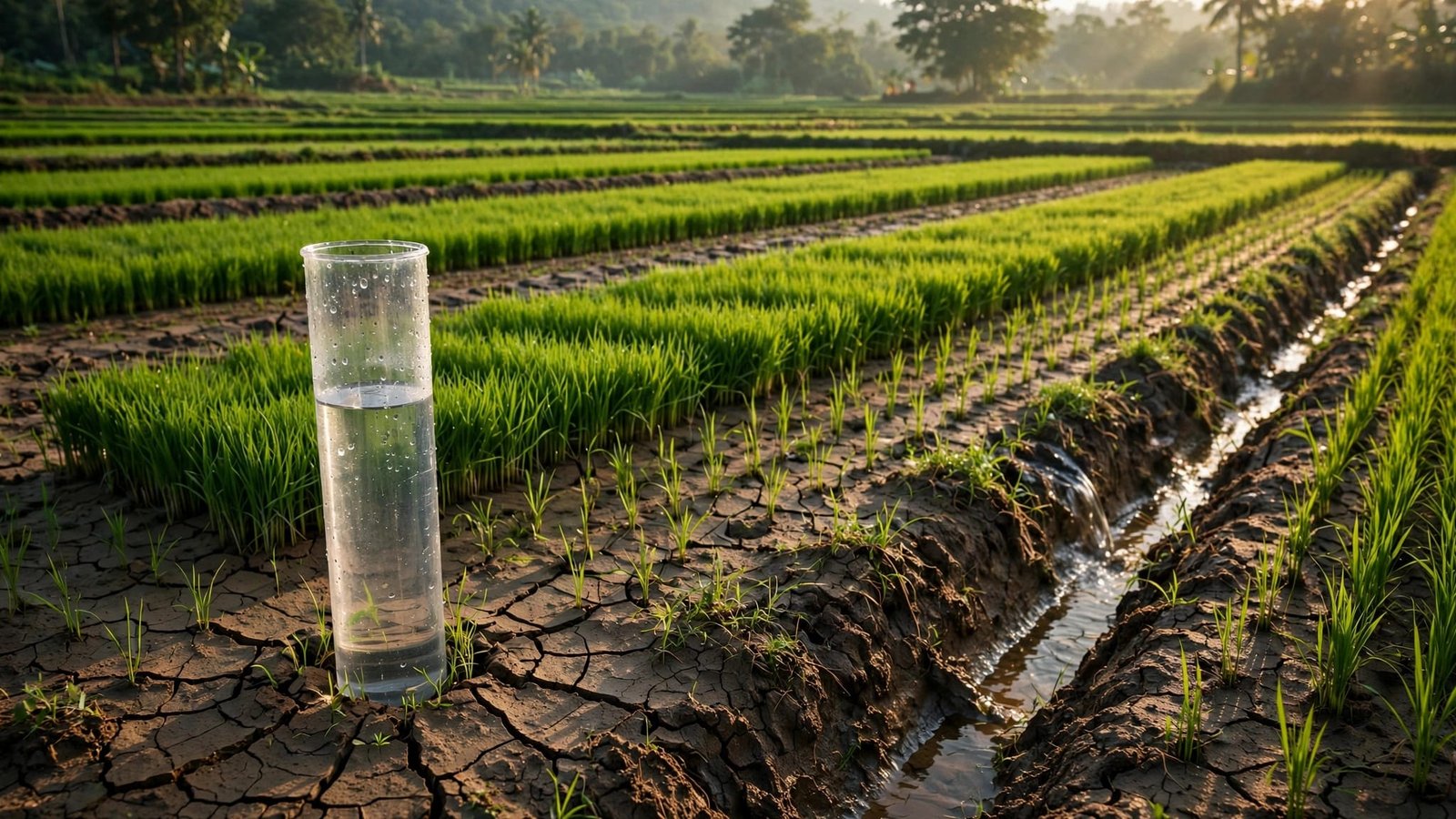
Rice can produce a harvest without permanent flooding. With alternate wetting and drying (AWD), farmers pause irrigation between wet periods and track water levels and crop stages.
The method is simple: let standing water disappear, then irrigate before roots face damaging stress. But farmers can’t risk a season’s income on a climate promise.
Advice must respect that risk, and policies must share responsibility. Start with what happens beneath the water.
Key Takeaways
- Alternate wetting and drying (AWD) interrupts standing water so oxygen can enter the soil and slow methane production. Farmers use a water tube to track the level and irrigate before drying causes crop stress.
- AWD works best in irrigated lowland fields with level ground, sound bunds and dependable access to the next irrigation. Rainfed fields and fields with unreliable water delivery need locally adapted management.
- Under safe AWD, irrigate when the tube reads 15 cm below the soil surface and re-flood to about 5 cm above it. Keep fields flooded from one week before through one week after peak flowering.
- Studies report lower irrigation use and methane emissions under AWD, but results vary and yield losses are possible. Track N2O as well as methane, and compare harvests, water use and costs.
- Farmers need reliable irrigation, training and protection against avoidable crop losses. Carbon-credit contracts should state payment terms, deductions, data rights and responsibility for losses.
Why Alternate Wetting and Drying Cuts Rice Methane
Continuous flooding creates oxygen-poor, or anaerobic, soil conditions. Microbes breaking down organic matter in flooded soil release gases that drive methane emissions.
Alternate wetting and drying, usually called AWD, introduces periods without standing water. Oxygen enters the soil and slows gas production. Rice roots can still access moisture when the surface looks dry.
A dry surface doesn’t automatically mean a thirsty crop. The water below it matters.
Research on rice-field hydrology and water management helps explain why field preparation, soil properties and irrigation timing affect results.
The stakes extend beyond carbon. Producing one kilogram of rice can require up to 3,000 litres of water. That broad estimate varies with location and accounting method; it isn’t a universal measure of groundwater pumped.
AWD can reduce the amount of irrigation water needed. It doesn’t remove the need to question where rice is grown and how water is allocated.
Which Indian Rice Fields Are Suitable?
Alternate wetting and drying works best in irrigated lowland rice fields where farmers can control irrigation and drainage. Level fields and sound bunds help water spread evenly.
Reliable access to the next irrigation matters more than sophisticated equipment. Farmers who depend on unpredictable canal rotations may be unable to re-flood at the safe threshold.
Heavy monsoon rain can keep fields flooded and prevent drying. Sandy or highly permeable soils can lose water rapidly. Poorly levelled fields can leave one corner flooded while another experiences stress.
Start AWD on a manageable plot with dependable water access, then assess the effect on rice yield. Rainfed fields, saline soils and fields with unreliable water delivery need locally adapted management, not automatic use of the standard threshold.
The literature on water-wise rice production treats irrigation management as a field-specific practice. AWD means controlled drying, not simply withholding water.
Build a Water Tube Without Mixing Specifications
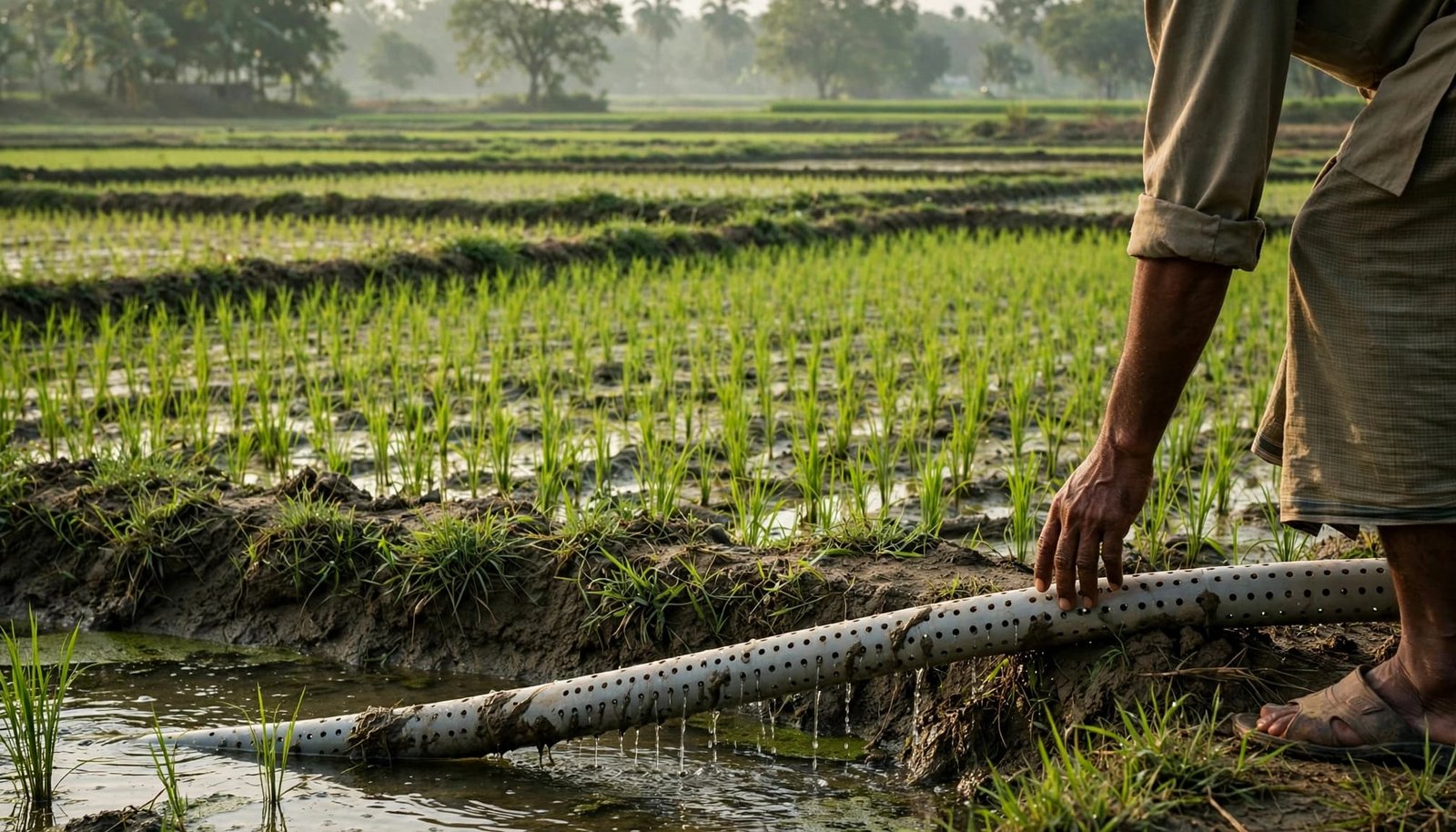
Tube designs differ between guides
A commonly described design uses a 4-inch PVC pipe cut to 30 cm, with the lower 15 cm perforated. One IWMI explainer lists holes about 0.5 mm wide, spaced about 2 cm apart.
Indian institutional guidance isn’t identical. ICAR-CRRI’s Farmer’s Guide to Alternate Wetting and Drying describes a 40 cm tube, 7 to 10 cm in diameter, with 0.5 cm holes spaced 2 cm apart along the lower 30 cm.
The hole sizes differ tenfold. Keep each design’s dimensions together rather than combining instructions. Each water tube lets surrounding water enter an accessible observation point.
Install it where the reading represents the field
Place the tube at least one metre from the bund, away from an inlet, unusually low patch or high spot.
Bury the perforated section below the soil surface and leave the upper opening accessible. Remove soil from inside so water can enter through the holes.
Measure the water level relative to the soil surface, not the pipe’s upper rim. This keeps the reading tied to the field’s actual surface and the safe threshold.
For uneven fields, use additional observation points. One tube cannot describe several different elevations.
When to Irrigate: Follow the Level, Not a Calendar
Under safe AWD, irrigate when the tube’s water level reaches 15 cm below the soil surface. Re-flood to about 5 cm above the surface, then let the water recede again.
Start drying after transplanted seedlings establish, often one to two weeks after transplanting. Some recommendations keep fields flooded for 15 to 20 days, especially when seedlings need time to establish or weeds need control.
Crop condition takes priority over a fixed starting date.
Use this seasonal guide alongside the tube reading:
| Crop stage | Water-management approach |
|---|---|
| Establishment after transplanting | Maintain shallow water while seedlings establish and early weeds are managed. |
| Established vegetative growth | Repeat drying and irrigation cycles using the 15 cm threshold. |
| One week before through one week after peak flowering | Maintain continuous flooding at 3 to 5 cm. |
| After the protected flowering period | Resume safe AWD where crop condition and water access allow. |
The flowering restriction protects grain formation. Don’t extend drying through flowering to chase larger savings.
Read the tube daily during drying periods, preferably at a consistent time. If irrigation delivery takes time, arrange it before the threshold is crossed.
Rain can delay irrigation, but surface appearance alone cannot replace a reading. Record rainfall, irrigation dates and tube levels to understand how quickly the field loses water.
How Much Water, Methane and Yield Can Change
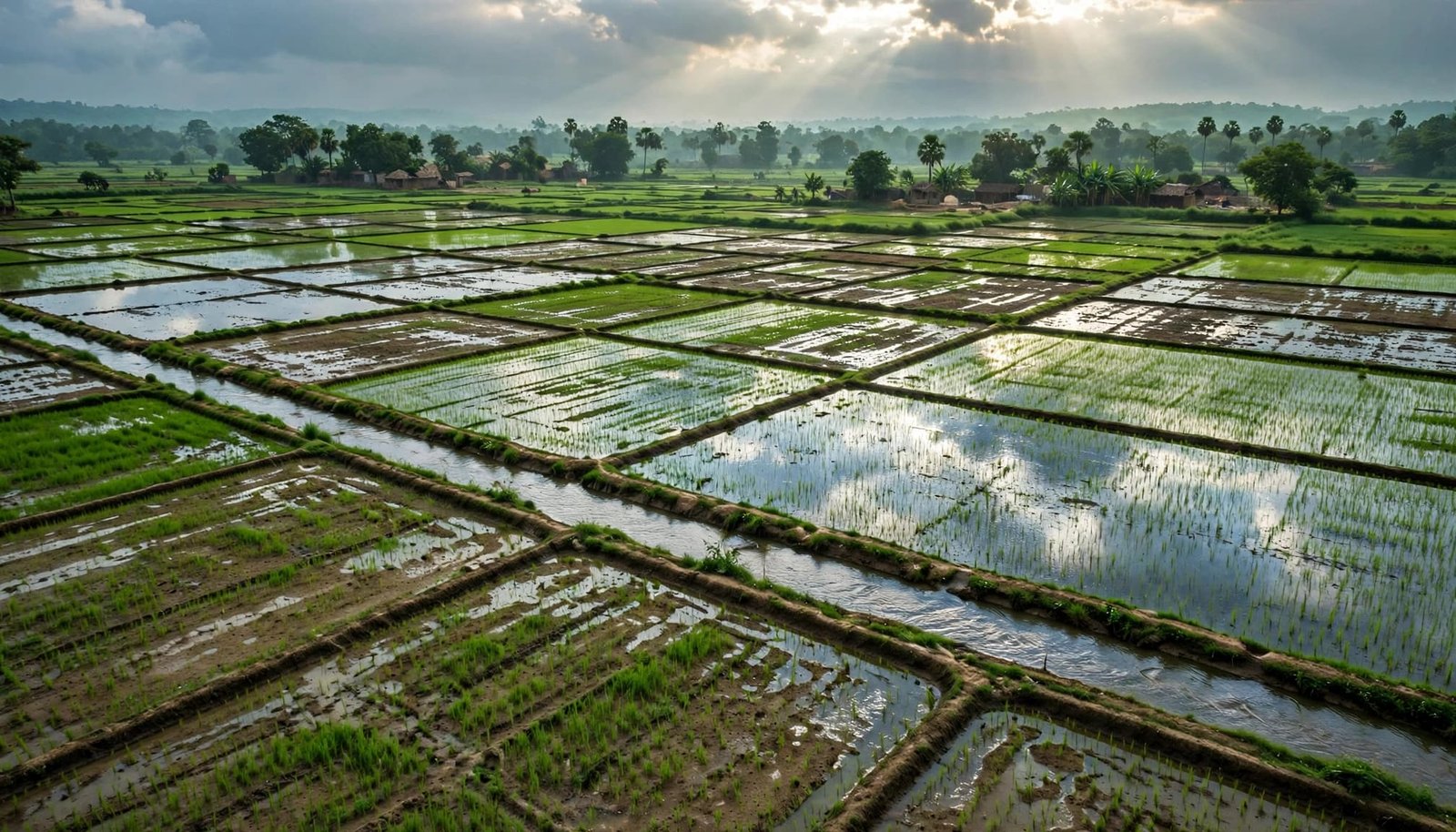
IWMI guidance commonly reports 15% to 30% less irrigation water than under continuous flooding. ICAR-IIRR reports a similar water saving for lowland rice cultivars, without a rice yield loss under its recommended management.
Results depend on rainfall, soil, seepage and irrigation control. Reduced pumping can also lower energy expenses where farmers pay for fuel or electricity.
Methane emissions reductions of 30% to 70% are reported under AWD. Well-managed safe practices can achieve these reductions without compromising production, but neither outcome is guaranteed in every field.
A global meta-analysis reported an average rice yield reduction of about 1.56%. Carrijo and colleagues’ earlier meta-analysis found an overall yield reduction of about 5.4%, while mild drying avoided a significant penalty.
These meta-analysis results reflect differences in drying intensity, soils and management.
For a household on thin margins, even a small loss matters. Compare harvested grain, irrigation inputs and cultivation costs on the same basis. A larger reduction doesn’t compensate a farmer unless the financial arrangement does.
Count Nitrous Oxide and Contamination Too
Lower methane doesn’t settle the climate balance
Drying and rewetting alter nitrogen transformations. Nitrous oxide (N2O) emissions can rise, especially when available nitrogen coincides with wetting cycles.
Jiang and colleagues’ meta-analysis found roughly 53% lower methane and 105% higher N2O under non-continuous flooding. The meta-analysis covered fields that alternated between flooded and non-flooded conditions.
Those percentages can’t be subtracted directly. N2O and methane have different warming effects and starting quantities, so assess both in carbon dioxide-equivalent terms.
N2O increases can offset methane savings and, in some conditions, raise net greenhouse gas emissions. Assessments of AWD’s environmental and economic sustainability need that wider accounting.
Use locally recommended split nitrogen applications. Don’t add extra fertiliser just because the field no longer looks flooded.
Heavy-metal benefits need a qualified claim
AWD can reduce arsenic availability and accumulation in rice grain. Reports also describe reductions in lead and cadmium under particular conditions.
But the metals don’t respond uniformly. More oxidising soil conditions can increase cadmium availability, so an arsenic benefit may come with a cadmium trade-off.
Water management also can’t remove contamination from industrial effluent or untreated sewage entering irrigation water.
The ecological impact depends on soil chemistry, irrigation-water quality and drying intensity. Where contamination is known, agronomic and food-safety testing are warranted. A greener-looking crop isn’t evidence of cleaner grain.
Troubleshoot Before Small Problems Become Yield Losses
Periods when fields aren’t flooded can encourage weeds. Control them early with locally appropriate mechanical, manual or targeted chemical methods. Waiting until weeds dominate can erase savings through added labour and crop competition.
Use these field observations to guide action:
| What you observe | What to do |
|---|---|
| Tube water level drops unusually quickly | Inspect bund leaks and field variation; irrigate sooner where rapid loss threatens crop stress. |
| Tube reading barely changes despite drying nearby | Clear blocked holes and accumulated soil, then assess whether placement is representative. |
| Some patches wilt while others remain wet | Address uneven levelling and use additional monitoring points. |
| Water reaches 15 cm below the surface but irrigation is unavailable | Prioritise rewatering; suspend AWD until delivery becomes dependable. |
Soil type changes the monitoring routine, not a farmer’s right to protection. In fast-draining soils, inspect more often and use a shallower drying limit where local agronomic guidance requires it.
Visible rolling or wilting is a warning, not a target. AWD should interrupt flooding before crop stress threatens yield.
Who Pays for the Work and Who Gets the Benefit?
Water savings need shared rules
Systemic change depends on predictable irrigation delivery, accessible training and protection against avoidable crop losses. Tenant farmers need access too.
Our discussion of solar pumps and groundwater depletion shows why efficiency alone cannot protect an aquifer. Water saved per hectare can be lost if irrigated acreage expands.
Straw management belongs in the same conversation. Fresh organic residues under flooded conditions can feed methane production. A circular economy needs affordable residue handling, not burning or unmanaged dumping. Our article on crop residue management examines those practical barriers.
Carbon credits must account for farmer risk
AWD programmes that issue carbon credits need credible measurement, reporting and verification. Records should cover irrigation, drying periods, fertiliser, yields and baseline practice.
Before enrolment, contracts for carbon credits should state payment conditions, deductions, data rights and responsibility for crop losses. Sustainable business models pay for monitoring work rather than treating farmers’ time as free.
For readers beyond farming, climate literacy means understanding these limits. Our community work connects that awareness with tangible action for ecosystems and urban biodiversity. You can Explore Our Active Missions to support that work.
Frequently Asked Questions
What is alternate wetting and drying?
AWD is an irrigation method that lets standing water disappear between wet periods. Farmers monitor the water level in a tube and irrigate before drying threatens the crop.
When should farmers irrigate under safe AWD?
Irrigate when the tube’s water level reaches 15 cm below the soil surface, then re-flood to about 5 cm above the surface. Keep the field continuously flooded from one week before through one week after peak flowering.
Which rice fields are suitable for AWD?
AWD works best in irrigated lowland fields where farmers can control water delivery and drainage. Level fields, sound bunds and reliable access to the next irrigation help farmers manage drying safely.
Does AWD reduce methane without reducing rice yield?
Studies report methane reductions of 30% to 70% and irrigation water savings of 15% to 30%, but results vary by field and management. Yield losses are possible, so farmers should compare harvests, irrigation use and cultivation costs on the same basis.
What else should farmers monitor besides methane?
Drying and rewetting can raise nitrous oxide emissions, which can offset methane savings, so assessments need to account for both gases. AWD can also change the availability of arsenic, cadmium and other metals, while contaminated irrigation water remains a separate risk.
Protect the Harvest While Cutting Methane
AWD can lower methane and irrigation demand. Track greenhouse gas emissions, including N2O, and yield to protect the harvest and the farmer’s income.
A tube reading matters. So does whether water arrives when the farmer needs it.
Start with one controllable plot and record water use, costs and harvest results. Expand when the results support both the climate claim and the household depending on that harvest.