The Climate Solution Nobody Plants: Why Educating Girls Belongs in Every Climate Strategy
-
by
 Saket Sambhav
 - No Comments on The Climate Solution Nobody Plants: Why Educating Girls Belongs in Every Climate Strategy
Learning together can help build healthier, safer and more climate-resilient communities.
We fund tree-planting drives, solar parks and electric vehicle subsidies. We build sea walls and improve weather forecasting.
All of these actions matter.
But one of the most powerful climate investments has no carbon-capture machine at all.
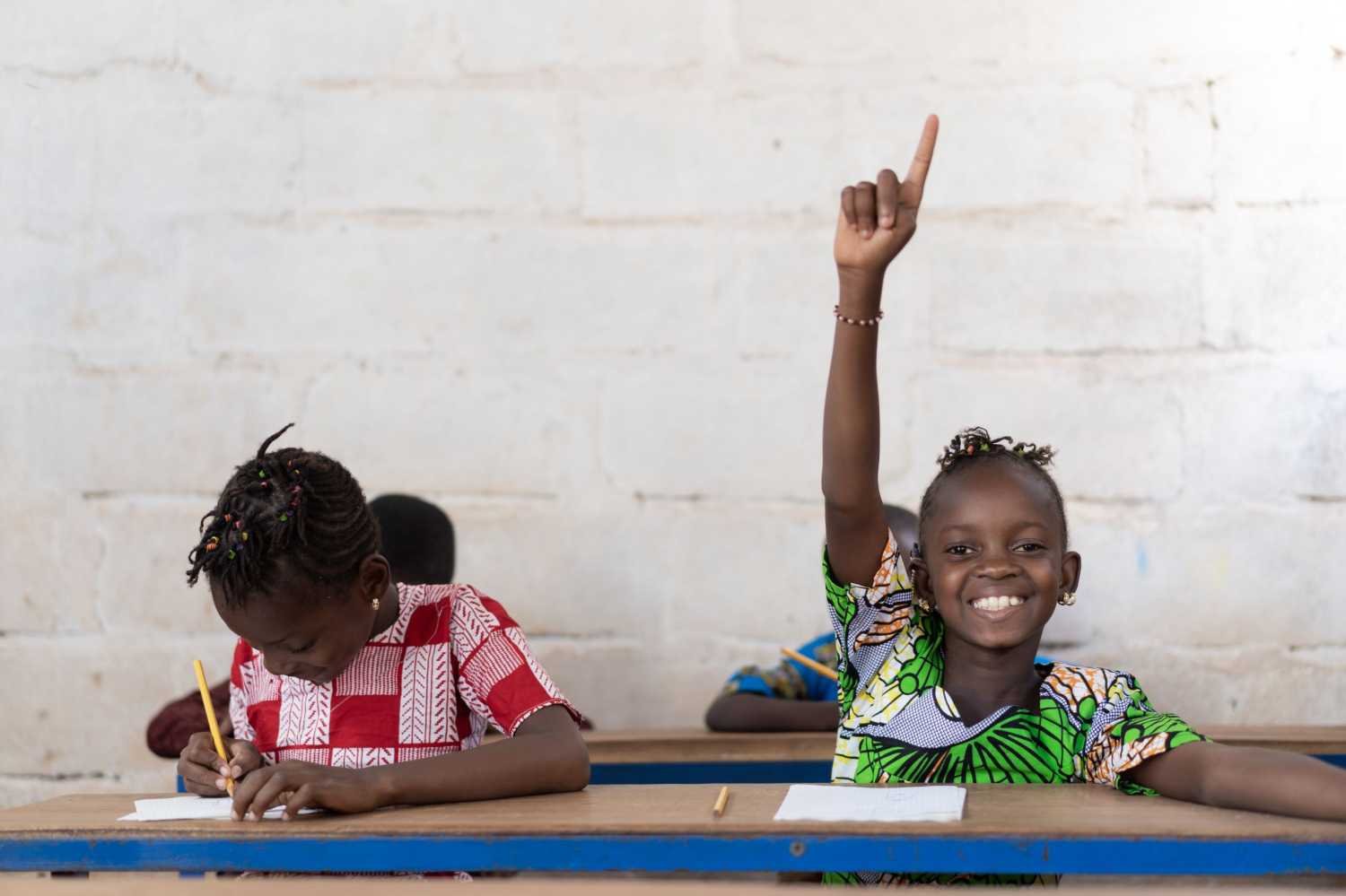
It is a school desk.
Educating girls is often discussed as a human rights or development issue. It is both. But it is also climate infrastructure. It helps reduce long-term emissions, strengthens household resilience and gives communities more people who can understand risks, organise solutions and lead change.
Key Takeaways
- Project Drawdown models universal girls’ education combined with voluntary family planning as a climate solution that could avoid approximately 68.9 gigatons of CO₂-equivalent emissions between 2020 and 2050.
- Education can delay child marriage, expand choice and improve access to information, health services and livelihoods.
- Girls’ education also helps communities prepare for floods, cyclones, heatwaves and other climate shocks.
- In India, keeping girls in school means investing in climate resilience one learner, classroom and safe journey at a time.
The number that should change how we talk about climate
The figure is 68.9 gigatons of CO₂-equivalent emissions.
That is the amount Project Drawdown models could be avoided between 2020 and 2050 through the combined climate benefits of universal education and voluntary family planning. The estimate comes from modelling how education, health, reproductive choice and future population patterns affect demand across sectors such as food, transport, buildings and energy.
This is not a claim that one girl in one classroom captures carbon like a forest.
It is a reminder that climate solutions are not only machines and infrastructure. They are also the conditions that help people make informed decisions, stay healthy, earn secure incomes and take part in their communities.
Project Drawdown describes universal education and voluntary family planning as essential human rights with benefits that reach across generations. Read the Project Drawdown solution overview and its Health and Education policy brief.
Why education can lower emissions
The link is not a simple switch. Education does not automatically make every person a low-carbon consumer.
The connection works through several pathways.
Choice and agency. Girls who stay in school are more likely to delay marriage and childbirth. Education can also improve knowledge of health services and strengthen a woman’s ability to make decisions about her own life. The right to education must be paired with accessible, voluntary and rights-based reproductive healthcare.
This matters because climate action must never become a reason to control people’s bodies or dictate family size. The point is not population control. The point is freedom, health and informed choice.
Research summarised by the Population Reference Bureau links girls’ education with later marriage, delayed childbearing, greater use of contraception and smaller families. When people can plan the timing and spacing of children, future pressure on land, water, food and energy systems may also be lower.
Economic opportunity. Education can open doors to paid work, better livelihoods and safer housing. It gives people more tools to understand information and compare choices, including decisions about cooking fuel, water use, farming and energy.
Climate knowledge. Literacy and numeracy are foundations for understanding early warnings, rainfall patterns, public information and changing seasons. A girl who learns how to read a flood alert or calculate household water use is better equipped to act on that knowledge.
The important word is can. Education works best when it is safe, good quality and connected to health services, public infrastructure and real economic opportunity.
The resilience multiplier
Climate change does not affect everyone in the same way.
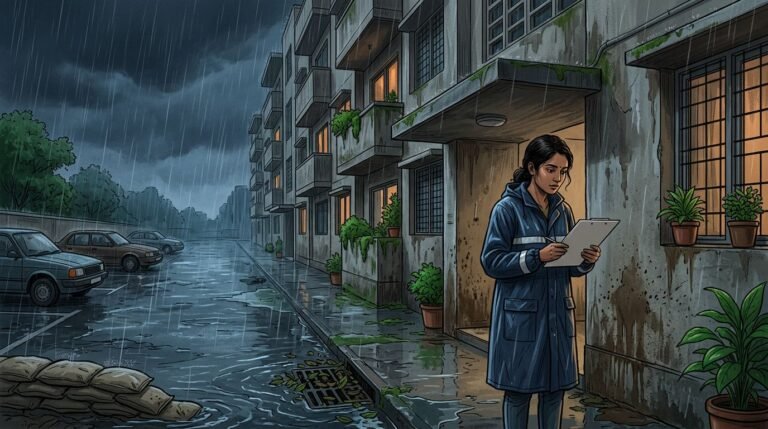
A flood, cyclone or heatwave can be far more dangerous for a household with limited income, poor access to information and no safe route to higher ground. Girls and women may also carry more unpaid care work during a crisis, while facing greater risks of violence, displacement and interrupted healthcare.
Education helps change those conditions.
A study of disaster vulnerability in India found that a 10% rise in inequality-adjusted human development, which includes education, was associated with 12 fewer female flood deaths. The finding does not mean education alone prevents deaths. It shows how education, health and equality can work together as protective layers. Read the study in World Development.
There is also strong evidence for education’s health effects across generations. Research from Bangladesh found that maternal schooling causally reduced child mortality by about 20% for each additional year of education. Healthier children and better-informed households are often better able to withstand shocks such as disease outbreaks, food shortages and extreme weather. Read the study in Population and Development Review.
This is why UNESCO, the UN Girls’ Education Initiative and Brookings describe girls’ education as a major social determinant of climate resilience.
A school is not only a place for lessons. It can be a source of information, routine, safety and community organisation.
India’s unfinished education story
India has made important progress. But the gap is still too large to ignore.
The female literacy rate stands at 70.3%, according to NFHS-5 for 2019–21. That means roughly one in three adult women has not completed basic literacy. The NFHS-5 India report provides the national data.
Child marriage has also fallen sharply, from 49% in 2001 to 23% in 2021. That is meaningful progress. Yet it still means roughly one in four young women was married before the age of 18. UNICEF’s India profile on child marriage shows both the progress and the work that remains.
School dropout remains another barrier. UNICEF India reports that about 29% of girls and boys drop out before completing the full cycle of elementary education. See UNICEF India’s key data.
Behind every percentage is a practical problem.
A girl may live too far from school. Her family may not be able to afford transport, books or uniforms. She may leave school to care for younger children. A lack of toilets, safety concerns or climate-related disruption may make attendance harder.
This is where climate strategy becomes real.
It can mean a safe school journey. A functioning girls’ washroom. Learning support after a flood. A teacher who helps a student catch up. A classroom that remains open when a family is under pressure.
One desk at a time, these interventions protect a girl’s right to learn and strengthen the resilience of the wider community.
From literacy to climate literacy
Basic literacy is essential. But the climate crisis also demands a new kind of learning.
Climate literacy means understanding what is changing locally and knowing what can be done about it.
It might involve students mapping areas that flood first, measuring heat around their school, learning how waste affects a nearby waterway or recording which native plants support local biodiversity.
The goal is not to turn every child into a climate scientist.
It is to help young people move from fear to understanding, and from understanding to action.
That is the thinking behind The Better Human’s climate literacy community, where young people can build knowledge and practise environmental advocacy through writing, competitions and social missions.
Girls must be central to this work. They should not be treated only as people at risk. They are also organisers, researchers, communicators, farmers, engineers, teachers and future decision-makers.
What action can look like
Climate philanthropy often asks, “How many trees were planted?”
That is a useful question. It is not the only one.
For education missions, we should also ask:
- Are children attending school more regularly?
- Are girls staying enrolled during the difficult transition to secondary education?
- Are learning outcomes improving?
- Is transport safe and reliable?
- Are families receiving support during floods, heatwaves or other disruptions?
- Can the work be checked through field evidence?
The Better Human’s Mission S.E.E.D. connects school continuity with ecosystem action in the Sundarbans. Supporters can follow field updates and ask for evidence of the education outcomes, not only the environmental activity.
That is the kind of climate action we need more of: direct, measurable and rooted in local reality.
A school desk will not replace solar power. Education will not replace ecosystem restoration. We need all of these solutions.
But without educated, informed and empowered people, even the best climate infrastructure can fail.
The climate solution nobody plants may be the one that helps every other solution take root.
Frequently Asked Questions
How does educating girls reduce emissions?
Education can delay marriage and childbearing, improve access to voluntary family planning, expand economic opportunity and strengthen climate-related decision-making. Project Drawdown models universal education combined with voluntary family planning as avoiding approximately 68.9 gigatons of CO₂-equivalent emissions between 2020 and 2050. The estimate reflects long-term changes across population, consumption and economic activity. It is not a claim that education alone removes carbon from the atmosphere.
Isn’t this really about population control?
No. A rights-based approach is essential. Girls’ education should protect freedom, health, safety and personal choice. Voluntary family planning means people can decide whether, when and how many children to have without pressure or coercion. Climate policy must never use environmental concerns to control people’s bodies.
What is the best first step?
Start by helping a girl stay in school. Practical support may include safe transport, learning materials, school sanitation, tutoring or protection from climate-related disruption. The most effective action depends on the local barrier. The key is to measure attendance, learning and safety alongside the money spent.
How is The Better Human involved?
The Better Human supports direct-action projects that connect education, community wellbeing and ecological protection. Its education-and-ecosystems work includes school support in the Sundarbans, while its climate literacy platform helps young people turn environmental knowledge into advocacy and local action.