
India Pesticide Regulations Still Miss Children’s Daily Exposure
 TBH Editorial
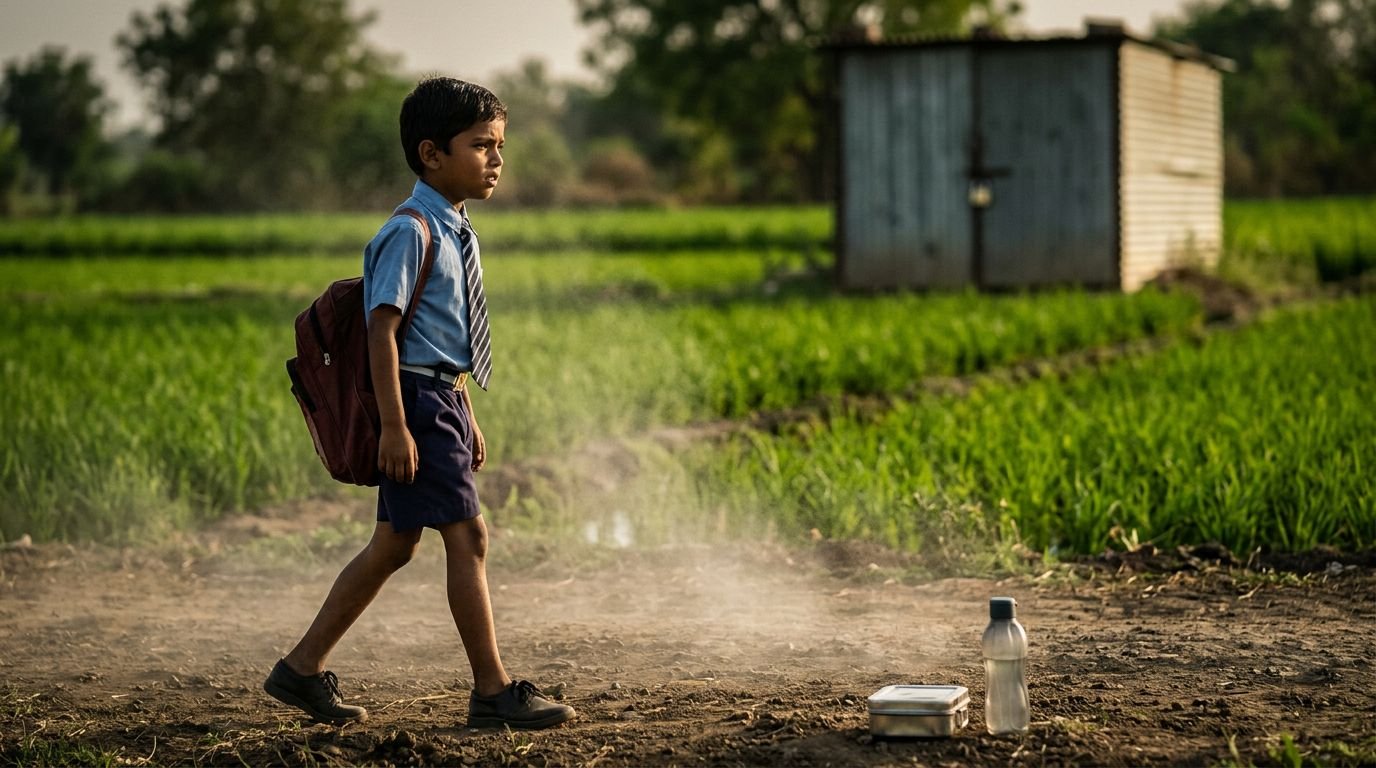
A child doesn’t need to touch a pesticide bottle to carry the risk. They can breathe spray drift on the walk home, eat residue on a staple food, play beside a treated field, or sleep near a store room where hazardous pesticides are kept.
That is the hard truth behind India pesticide regulations. The rules focus heavily on what gets registered, sold, labelled, and tested. Far less attention goes to the ordinary routes through which children meet these chemicals every day.
We keep treating the harm from chemical pesticides as an accident that happens after a dramatic poisoning, even though this ongoing exposure is really a quiet public health crisis. For many families, exposure is slower, less visible, and built into daily life.
Key Takeaways
- India’s pesticide framework still rests on the Insecticides Act 1968 and rules written for a different public-health reality.
- Children face exposure through food, spray drift, contaminated dust, unsafe storage, and water, which can lead to chronic pesticide poisoning rather than just acute emergencies.
- Residue limits and product labels matter, but legal limits for pesticide residue don’t show what a child breathes or absorbs across a week.
- Better protection needs local monitoring, safer farming support, transparent records, and child-centred health surveillance backed by a modern regulatory framework.
- Systemic change means shifting responsibility away from families and onto pesticide manufacturers, regulators, buyers, and public institutions.
Where India pesticide regulations fall short for children
India’s core statutory framework is still the Insecticides Act 1968, supported by the Insecticides Rules 1971. It governs registration, manufacture, sale, transport, distribution, and use. That structure matters. A country cannot regulate chemicals without deciding what products may enter the market through bodies like the Central Insecticides Board and the Registration Committee, which operate under the ministry of agriculture.
But a product approval system is not the same as a child’s safety system.
A label can tell agricultural workers to wear personal protective equipment. It can’t guarantee that someone has gloves, clean water, a separate place to wash clothes, or the power to refuse unsafe work involving hazardous pesticides. It can’t stop a child from entering a recently sprayed plot because there is nowhere else to play.
The proposed Pesticide Management Bill has promised stronger liability, recalls, worker safety provisions, digital product records, and clearer standards. The ongoing discussions around any future Pesticide Management Bill highlight the limits of past oversight. Yet the central question remains uncomfortable: where is the rule that measures and prevents children’s cumulative exposure?
A human-rights review of pesticide exposure in India found no law or policy directly addressing pesticide poisoning among children. That gap is not a technical footnote. It is a design failure.
A regulation can track the pesticide packet while losing sight of the child who lives beside its entire supply chain.
Children are not smaller adults. Their bodies are still developing. They eat, drink, breathe, and absorb chemicals differently for their body weight. They also spend more time close to dust, soil, floors, and low-growing crops.
When a rule assumes exposure happens only at the moment of spraying, it misses most of the story.
Daily exposure does not look like one emergency
Pesticide poisoning is the part we notice. A child falls ill, reaches a clinic, or becomes part of a police or hospital record. But the daily routes are more ordinary.
A child may eat rice, vegetables, fruit, pulses, or potatoes that carry pesticide residues within legal limits. They may still encounter several residues across several foods. The limit is assessed pesticide by pesticide, food by food, while food safety standards often miss the cumulative reality. Life is not eaten one chemical at a time.
Government residue monitoring has found pesticide residue in a meaningful share of tested food samples. The 2017-18 national monitoring programme tested 23,660 samples, with residues detected in 19.1% and 2.2% above legal limits. More recent government figures reported 2.8% of over 86,000 samples tested between 2022 and 2025 above the permitted limit.
Those numbers shouldn’t be used to scare people away from fruits and vegetables. They should force a more honest question: are food checks designed around the diets and body weights of children, especially children with limited food choices?
Research on pesticide exposure has linked chronic contact with a range of health harms, including neurological effects and cancer risks. A 2024 systematic review on pesticide exposure also points to the higher risks faced by people with repeated occupational contact.
For children, exposure can come through:
- Spray drifting from farms, orchards, rail corridors, parks, and mosquito-control activity.
- Pesticides stored in reused drink bottles or left inside homes and sheds.
- Dust brought indoors on shoes, work clothes, crates, and farm tools.
- Food residues across a daily diet, including cereal and pulse staples, often used to manage agricultural pests.
- Contaminated water near agricultural areas or disposal sites.
The National Poisons Information Centre’s historical call data found that more than 36% of pesticide poisoning cases between 1999 and 2012 involved children under 16. That is the visible edge of a much larger problem concerning banned pesticides and chemical pesticides at large. Many low-level exposures never become public health concerns because no one connects a headache, learning difficulty, skin irritation, or repeated nausea to a chemical route.
Labels and residue limits can’t carry the whole burden
India updated insecticide labelling rules in 2025 under the Insecticides Rules 1971 framework. Retail packs must carry more safety information, dosage details, warnings, customer-care information, and QR codes. Labels must appear in Hindi and English, with other language options for larger packs.
Better labels are welcome. But let’s be real about what labels can do.
A QR code is useless to agricultural workers without reliable internet, time, literacy support, or bargaining power. “Read leaflet before use” means little if a pesticide dealer gives rushed advice, personal protective equipment costs money, and the crop is under pest pressure.
The same problem sits inside Maximum Residue Limits, or MRLs. These legal limits are necessary. They help regulators identify food that should not enter the market. But MRL compliance does not measure a child’s full exposure across food, dust, air, and water.
It also doesn’t answer whether monitoring samples enough foods from the places where children face the highest burden. Behind these limits, pesticide registration overseen by the Central Insecticides Board and the Registration Committee focuses heavily on agricultural yields rather than domestic children’s health.
This is where regulation becomes too neat. It treats the farm as one zone, the market as another, the household as another, and the school as another. A child moves through all four before lunchtime.
The India case study on pesticide poisoning in children makes a direct case for recognising children’s right to protection from these harms. That should include stronger poison surveillance, better data from hospitals, and public reporting that communities can understand.
We need to stop asking only, “Was this product legal?” A modernized Pesticide Management Bill should prioritize consumer protection instead of leaning solely on product approvals. The better question is, “Who was exposed, how often, and what happened next?”
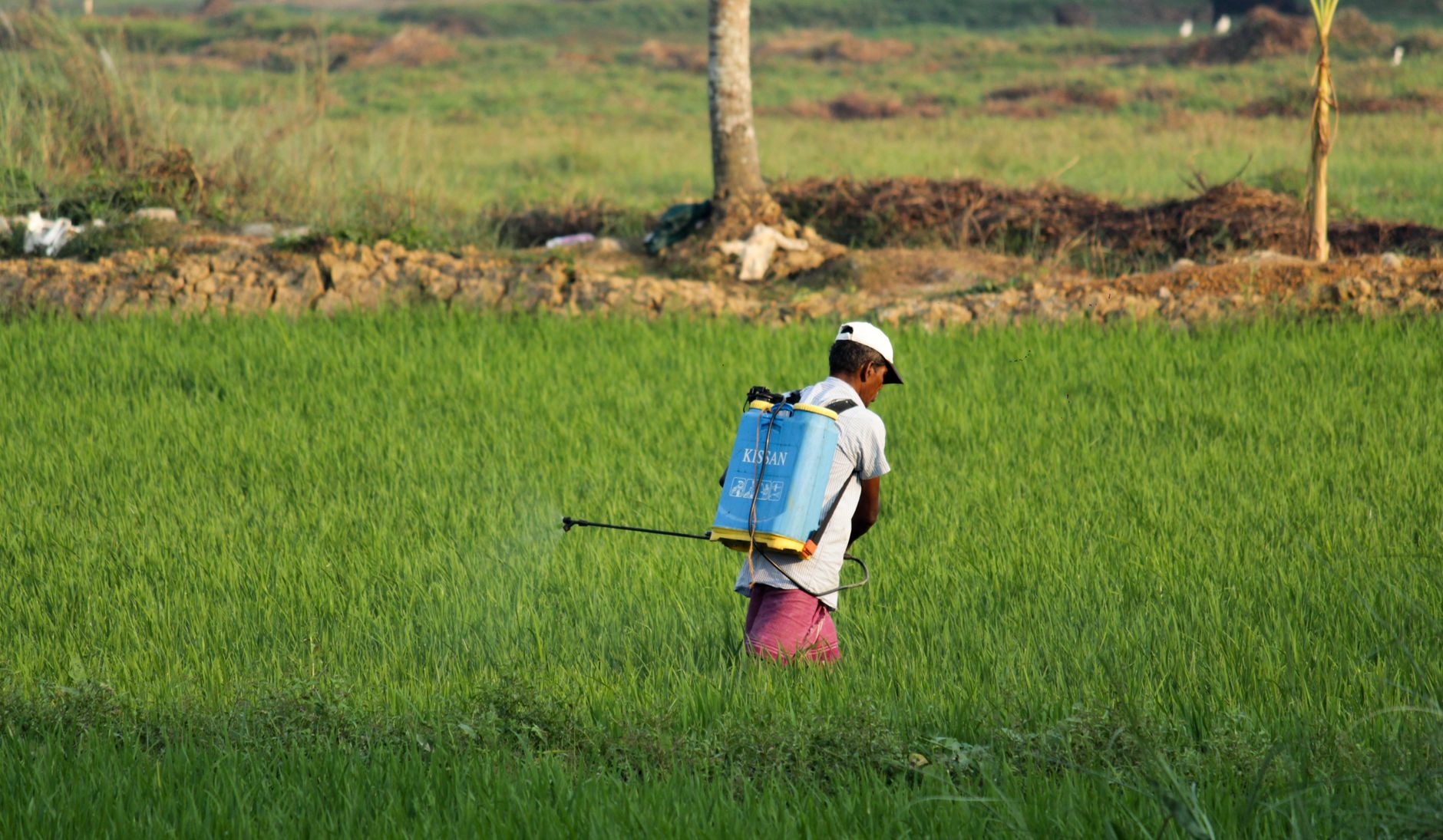
Photo by Arjun MJ
The environmental cost returns to children
Pesticides do not stay obediently inside crop rows. They move through soil, runoff, air, insects, birds, fungi, and food systems, leading to widespread environmental contamination. Every failure in that chain can return to a child’s plate, drinking water, or breathing space.
The ecological impact matters because living systems provide protection long before a hospital visit. Effective crop protection and balanced pest management rely on healthy soil that can hold water. Pollinators support food production, and predatory insects can reduce pest pressure. Birds and amphibians help keep ecological relationships intact.
Chemical-intensive farming can weaken those relationships and create a cycle of dependence, often driven by the overuse of hazardous pesticides. When soil organisms are damaged, farmers may need more external inputs to maintain production. Read more about pesticide impact on soil biodiversity and the underground systems that rarely appear on a pesticide label.
This is also a question of urban biodiversity. Spray use around city edges, public gardens, housing sites, and drainage corridors affects insects and birds that move between farms and neighbourhoods, compounding environmental contamination in populated areas. Children inherit the thinner, hotter, less diverse city that follows.
A real circular economy cannot treat agricultural waste as an afterthought either. Empty containers, contaminated plastic mulch, and chemical packaging need safe collection routes. Burning or dumping them near homes transfers risk to whoever has the least control over the air.
That is not resource recovery. It is exposure being passed downhill.
What child-centred pesticide accountability looks like
Families deserve practical information. Farmers deserve safe alternatives that don’t put their income at risk. Neither group should carry the burden alone while pesticide manufacturers and regulators remain distant.
Child-centred policy starts with data that follows real life. District health systems should record pesticide-related symptoms and suspected exposures consistently. Schools and anganwadis near intensive agriculture should have clear reporting routes. State agencies should publish local residue, water, and poisoning data in plain language. At the federal level, the ministry of agriculture must work alongside the Central Insecticides Board and the Registration Committee to modernize the regulatory framework, replacing outdated measures from the Insecticides Act 1968 and the Insecticides Rules 1971 with the long-awaited Pesticide Management Bill.
Farm support must change too. Integrated pest management, crop-specific advisory services, biological controls, and better procurement can reduce dependence on routine chemical use, ensuring that farming safety and farmers protection remain central to agricultural policy. This is where sustainable business models have a job to do. Buyers and food companies can reward lower-risk production instead of demanding spotless produce at prices that punish careful farming.
Consumers can support plant-based living without pretending every household has equal access to clean, affordable food. The goal is not purity. It is a food system where farmers are not forced to spray more simply to survive a buyer’s cosmetic standards, especially when lax oversight over pesticide distribution leaves rural communities vulnerable.
There is room for everyday mindfulness too. Keep chemicals out of reach. Never store them in food or drink containers. Practice the safe use of pesticides by washing produce under running water and keeping farm work clothes separate from children’s bedding. Ensure the safe use of pesticides around homes, and ask local schools and panchayats where spraying occurs and how residents are warned.
But personal caution has limits. A parent cannot wash pesticide drift out of the air.
That is why climate literacy must include chemical literacy. We need to understand that food, soil, workers’ rights, public health, and neighbourhood ecology are tied together. If you want to support local work that connects people, ecosystems, and accountability, Explore Our Active Missions.
Frequently Asked Questions
Why are India’s current pesticide regulations considered inadequate for children?
The core statutory framework relies heavily on the Insecticides Act 1968, which focuses mainly on product registration, labelling, and agricultural yields rather than domestic child safety. These rules assume exposure happens only at the moment of spraying, completely missing daily, cumulative routes like food residues, contaminated dust, and spray drift.
How do children encounter chemical pesticides on a daily basis?
Children face ordinary, continuous exposure through multiple everyday sources beyond direct contact with treated fields. This includes consuming food and water with chemical residues, breathing in spray drift near homes or schools, and coming into contact with contaminated dust brought indoors on work clothes.
Do food residue limits and product labels adequately protect children?
Labels and Maximum Residue Limits help regulators identify unsafe food, but they cannot carry the whole burden of protection. Labels assume workers have resources and literacy support, while residue limits assess foods individually rather than measuring the cumulative chemical burden a child absorbs across a full day.
What steps are needed to build a child-centred pesticide accountability system?
Protecting children requires modernizing the regulatory framework through a stronger Pesticide Management Bill that prioritizes public health and consumer protection. It also demands better district health surveillance, transparent local residue monitoring, and robust support for safer farming alternatives like integrated pest management.
Children deserve rules built around real life
India pesticide regulations cannot keep measuring success by registered products, printed warnings, and scattered food samples alone. Those tools matter, but they are not enough.
A child is exposed through the whole system, the farm, the market, the household, the school route, and the soil under their feet. Protection has to follow that child, not stop at the pesticide shop counter.
The most honest standard is simple: if crop protection cannot show how it reduces a child’s daily exposure, it is not yet doing its job.