Disposable Diaper Waste India: The Plastic Crisis We Keep Bagging Away
-
by
 TBH Editorial
 - No Comments on Disposable Diaper Waste India: The Plastic Crisis We Keep Bagging Away
A disposable diaper disappears from sight in seconds. Its ecological life can outlast the child who wore it by centuries, creating a lasting environmental impact that catches up with cities quickly.
Disposable diaper waste India is not a parenting failure. It is a design, collection, and accountability failure. Families buy the convenience that modern baby diapers and standard disposable diapers provide during hectic workdays, then cities ask sanitation workers and landfill communities to absorb the cost.
The daily challenge of diaper disposal begins at the bin, but it doesn’t end there.
Key Takeaways
- India generates an estimated 548 tonnes of baby diapers waste every day, according to Centre for Science and Environment estimates, highlighting the massive scale of baby diapers disposal across the country.
- A used diaper mixes plastic, absorbent chemicals, paper pulp, and human waste, which makes disposable diapers a major challenge for modern waste management and the safe collection of solid waste.
- When diapers enter mixed waste, they contaminate recoverable materials, add to growing landfill waste, and place sanitation workers handling sanitary waste at greater health risk.
- Burning and dumping are not solutions. Both move pollution into air, soil, water, and nearby communities.
- Real progress needs systemic change, including producer responsibility, separate collection, safer treatment, and honest public data.
Why Disposable Diaper Waste India Is So Hard to Manage
A diaper looks soft, light, and harmless. That is the trick.
Most baby diapers contain layers of plastic, including polyethylene and polypropylene, making them a persistent source of plastic waste. Inside sits wood pulp and superabsorbent polymer, usually sodium polyacrylate, which locks in liquid and can trap toxic chemicals. Add bodily waste, adhesive, elastic, dyes, and packaging, and you have a product built from several materials that are difficult to separate after use.
That makes disposable diaper waste India far more complicated than an ordinary plastic wrapper. When disposable diapers get mixed into everyday urban household waste, a waste picker can no longer handle them safely. Nobody should have to open a soiled diaper in the hope of finding recyclable material.
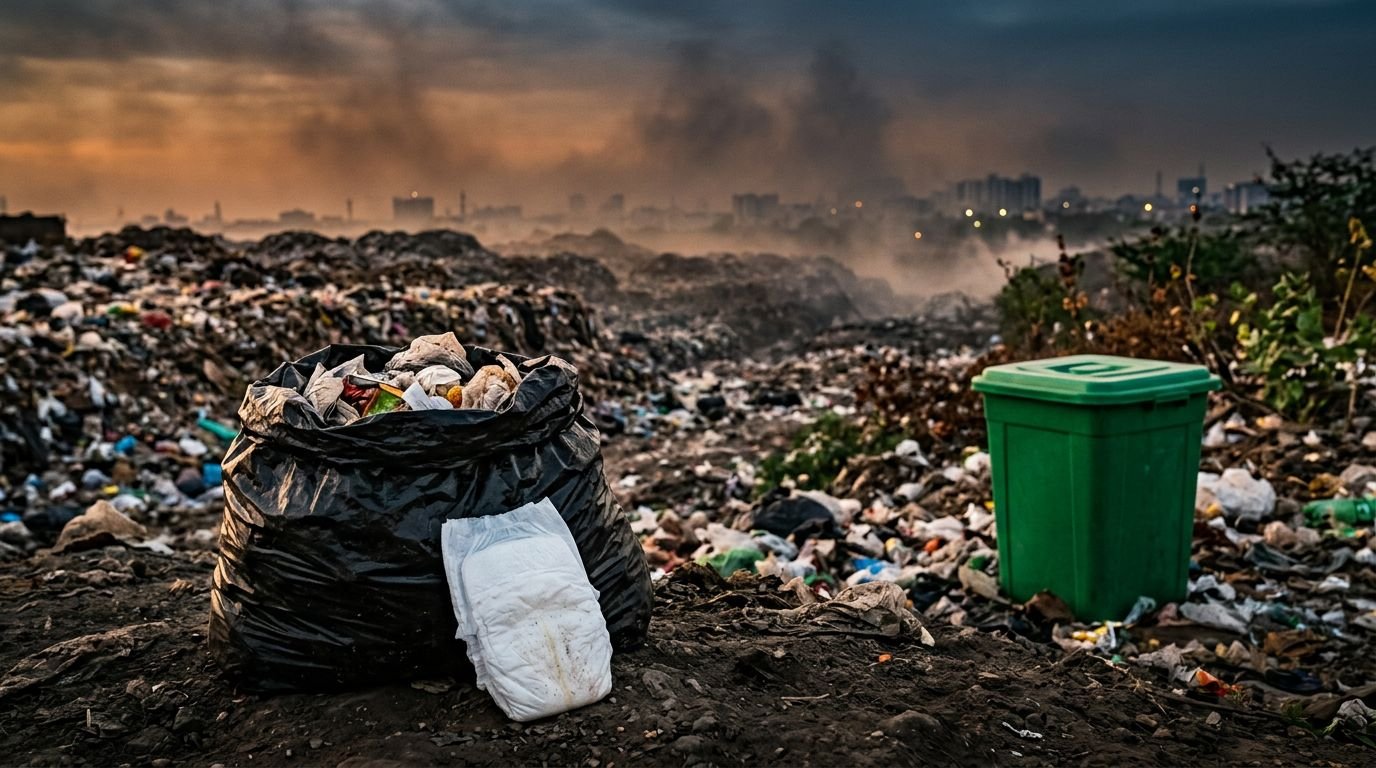
The Centre for Science and Environment has estimated that India produces about 548 tonnes of baby diaper waste each day, around 2 lakh tonnes annually. Combined sanitary napkin and baby-diaper waste is estimated at 925 tonnes a day, dramatically increasing the overall environmental impact of municipal refuse. The figure may sound small next to India’s wider municipal waste load. It isn’t small when every tonne is contaminated, low-value, and hard to process safely.
A review of single-use diaper end-of-life management makes the wider issue clear: disposal is not an afterthought. It is part of a diaper’s environmental footprint from the beginning.
In Indian homes, used diapers often go into the same bin as food scraps, packaging, paper, and glass. Once that waste reaches a transfer point or landfill, the diaper has already damaged the chance of clean recovery.
A product cannot be called convenient if its convenience depends on another person touching hazardous waste without protection.
The Waste System Was Not Built for This Product
India’s Solid Waste Management Rules, 2016, ask households to separate solid waste into wet, dry, and domestic hazardous streams. Diapers and sanitary waste fall into the domestic hazardous category. On paper, that is sensible.
On the ground, the route often breaks down.
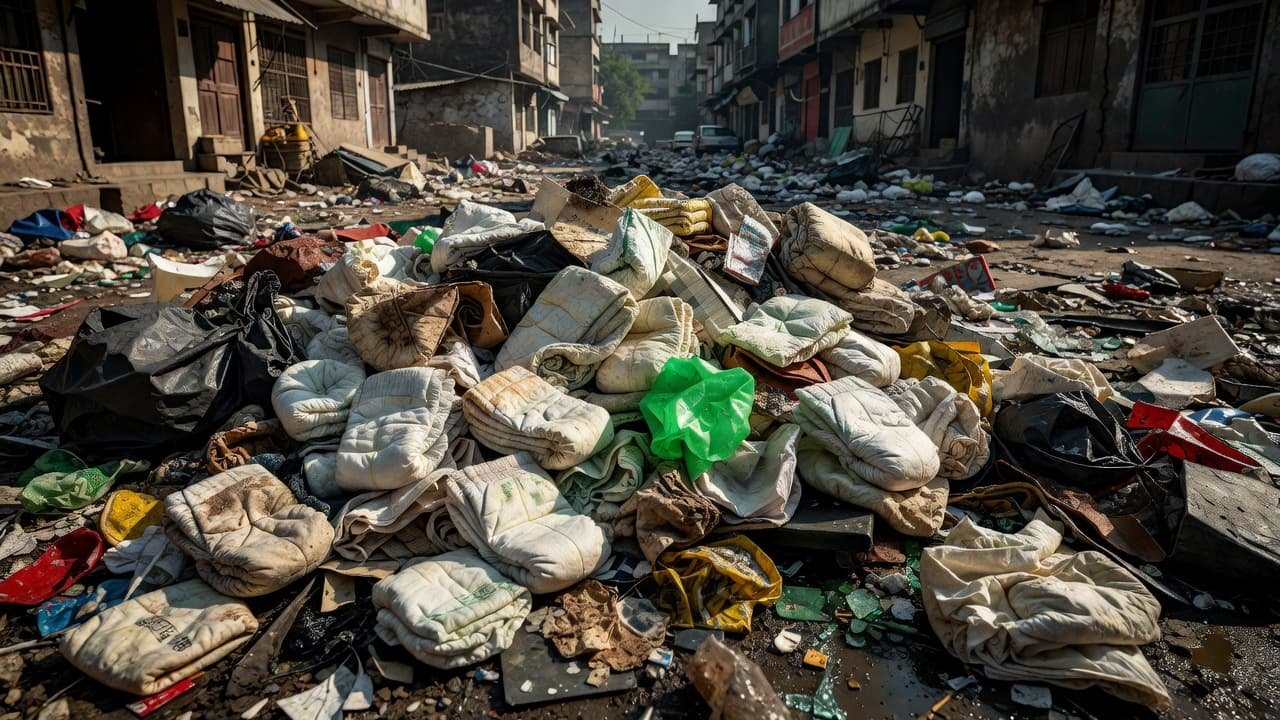
Many households don’t have a separate collection option for sanitary waste. Municipal corporations may receive mixed bags with no protective wrapping. Waste pickers working near transfer stations face exposure they did not choose. At landfill sites, diapers sit with food waste and plastic film, then get buried, scattered by animals, or caught in drains.
There is another uncomfortable truth. We don’t even have clean national data on diaper waste. The Ministry of Housing and Urban Affairs has been reported as lacking a dedicated sanitary-waste generation dataset. A system that cannot count the material properly will struggle to collect or treat it properly.
Cities such as Pune, Panaji, and Jamshedpur have tried forms of sanitary-waste segregation, but pilots are not national infrastructure. A few collection points cannot carry a country where disposable products are sold in every pharmacy, supermarket, and online cart.
The waste journey usually looks like this:
- A used baby item goes through proper diaper disposal steps, or it is wrapped loosely in diaper disposal bags and dropped into mixed household waste.
- Collection workers handle bags without knowing what is inside.
- Recyclable paper and plastic become contaminated by food and faecal matter.
- The load reaches a dump site, landfill, waste-to-energy plant relying on incineration, or an informal burning point.
- The risk moves downhill, toward workers, nearby homes, drains, soil, and air.
This is why effective waste management and a circular economy cannot mean placing a recycling symbol on a package and hoping for the best. Circularity needs safe material recovery, stable collection systems, and a product designed to come apart. Disposable diapers rarely meet those conditions.
Landfills Do Not Make the Plastic Problem Disappear
A landfill is not a black hole. It is a delayed-release pollution site where ongoing landfill waste accumulates year after year.
When disposable diapers are buried with wet organic waste, they contribute to greenhouse gas emissions and methane-generating conditions. Their plastic layers do not biodegrade like leaves or food scraps. Over time, sunlight, heat, friction, and weather can break exposed plastic into smaller pieces. Those fragments enter soil and runoff, worsening local landfill waste concerns.
A life-cycle review of disposable diaper waste points to a hard reality: no end-of-life option is harmless when the product is designed for one brief use and discarded at massive scale.
Open burning is worse than it looks, and open dumping creates hazards near neglected sites. A smouldering pile of mixed waste does not offer controlled treatment. It produces smoke near homes, roads, schools, and workers. The person who used the baby diapers is rarely standing beside that fire. The person sorting waste or living near the dump often is.
The environmental impact also reaches beyond human lungs. Plastic fragments, leachate, and chemical runoff can enter drains and water pollution zones. Birds, stray animals, insects, and fragile patches of urban biodiversity live beside the same waste routes we ignore. A clogged drain is not only a flooding issue. It is a message about what a city is willing to send downstream.
We should be careful with easy claims here. Switching every family to cloth diapers overnight is neither realistic nor fair. When using conventional disposable diapers versus modern cloth diapers, reliable water, time, washing space, childcare support, and laundry access are unevenly distributed for baby diapers. Any serious conversation must respect that.
But convenience for one household cannot become permanent exposure for another.
The Cost Lands on People With the Least Protection
Waste is never anonymous once you stand near a sorting shed.
Sanitation workers, informal waste pickers, landfill-adjacent families, street vendors, and children near dump roads carry the closest risk. They often handle hazardous plastic waste daily, working hard to keep cities moving while needing much stronger operational and safety backing from municipal corporations. They may deal with leaking bags, flies, sharp objects, smoke, and odour daily, yet too often without gloves, masks, toilets, insurance, or fair pay.
This is where plastic policy becomes a question of dignity.
Brands sell absorbency, sleep, mobility, and hygiene. Those benefits matter. But the same brands must answer a basic question: what happens after the bin? If collection is impossible, recycling is unsafe, and disposal means burial or burning, the business model has transferred its final cost to the public.
That is not innovation. It is unpaid waste management.
Sustainable business models would look different. They would fund take-back systems, support municipal collection, disclose material composition, and invest in sustainable alternatives such as biodegradable diapers and eco-friendly diapers designed with plant-based materials. They would also stop treating the informal sector as invisible while depending on it to recover India’s waste.
Extended Producer Responsibility has become familiar in plastic packaging debates. Hygiene products need equally serious accountability, alongside a strong push for parent awareness regarding disposal impacts. Producers have the money, supply chains, and material knowledge that local ward offices often lack.
The real question isn’t whether parents should feel guilty. It is why companies can sell billions of hard-to-process products without paying for a safe route after use.
What Can Change Without Blaming Families
Parents need reliable choices, not lectures. Cities need systems that work on an exhausted weekday, not only during a clean-up drive.
Households can start with practical steps. When managing daily diaper disposal, use designated paper-wrapped diaper disposal bags where available. A sealed diaper pail helps contain diaper odor in small apartments, while keeping baby diapers separate from paper, bottles, and food waste. Ask your housing society or municipal ward whether sanitary waste has a separate pickup route. Small actions matter because they reduce direct exposure for workers, and rising parent awareness helps households navigate the trade-offs between traditional disposable diapers and more sustainable alternatives.
Families exploring sustainable alternatives can also look into modern reusable diapers, washables, or certified eco-friendly diapers and biodegradable diapers to lower their overall environmental impact. Many households find that mixing traditional baby diapers with cloth diapers or hybrid reusable diapers helps lighten the load on municipal waste management systems. However, everyday mindfulness still has limits because you cannot sort your way out of a broken collection chain.
Public pressure should focus on the institutions with power:
- Municipal bodies should provide clearly marked, regular sanitary-waste collection and publish ward-level treatment data to improve overall waste management.
- Brands should finance collection and safer treatment instead of leaving disposal to households.
- Hospitals, day-care centres, and large housing societies should separate hygiene waste at the source.
- Governments should support transparent trials for diaper recovery, while refusing unsafe incineration and token projects.
- Schools and communities should build climate literacy around waste, labour, consumption, and public health.
Personal choices can still align with wider values. Lower-waste habits, public transport, and plant-based living can reduce pressure across resource systems. Yet nobody should pretend these choices replace public responsibility for hazardous waste.
Community action matters when it connects concern to a real place and a real outcome. Explore Our Active Missions to support on-the-ground work that links climate literacy, local ecosystems, and community protection.
Frequently Asked Questions
Why are disposable diapers so difficult to recycle?
Disposable diapers combine multiple materials like plastics, wood pulp, superabsorbent polymers, and biological waste that are tightly bonded together. Because these components cannot be easily separated after use, they contaminate recyclable materials and pose serious health hazards to waste pickers.
How does diaper waste impact sanitation workers?
When households mix used diapers into general waste, sanitation workers and informal waste pickers are directly exposed to hazardous materials without adequate protection. Handling unsealed, soiled diapers puts these workers at constant risk of infections, injuries, and health complications.
Are biodegradable diapers a complete solution for India?
While certified eco-friendly and biodegradable diapers offer a promising alternative to conventional plastic models, they still require proper industrial composting infrastructure to break down safely. Without supportive municipal collection systems and public waste management facilities, even plant-based diapers can end up in landfills and open dumps.
A Plastic Problem With a Human Face
Disposable diapers meet a genuine need. The current disposal system does not meet its responsibility.
Tackling disposable diaper waste India shows what happens when convenience meets a neglected infrastructure. Millions of baby diapers, composed largely of non-biodegradable materials, enter a system that lacks true circularity. When disposable diapers are discarded, they contribute massively to municipal plastic waste instead of vanishing. Workers face severe contamination, and communities near disposal sites breathe the consequences. Relying on open dumping or toxic incineration only moves the cost out of the nursery and into public life.
We need less guilt directed at parents and more accountability directed at manufacturers, municipalities, and policymakers. A clean bin is not proof of a clean system. It only tells us the waste has gone somewhere else.