Tanker Water Quality India: What Homes Must Check
 TBH Editorial
A tanker arriving at your gate can feel like relief. In many Indian cities dealing with severe water scarcity issues, it also arrives with a question nobody should ignore: tanker water quality India is not guaranteed by the sound of a pump or the colour of the water.
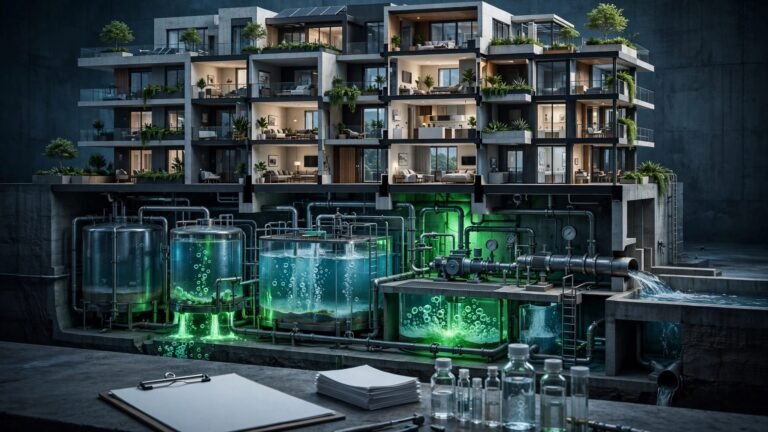
Water can look clear, fill a tank quickly, and still carry bacteria, excess nitrate, fluoride, or metals from an unverified source. The risk is not only inside the tanker. It can begin at a borewell, build up inside a dirty vehicle, and grow worse in an unclean rooftop tank.
If your household relies on tanker supply, treat it as a public health system, not a delivery service, because these water security challenges create hidden public health risks that require constant vigilance.
Key Takeaways
- Tanker water quality in India varies significantly and cannot be guaranteed by appearance or branding alone, requiring rigorous testing for both chemicals and bacteria.
- Bacterial contamination from poor sanitation or dirty storage can cause acute gastrointestinal illnesses, disproportionately affecting vulnerable residents.
- Rooftop storage tanks often undermine safe deliveries if sediment builds up, lids crack, or cleaning schedules are ignored by housing society management.
- Simple total dissolved solids (TDS) meters are insufficient on their own; comprehensive water quality testing must include checks for heavy metals, nitrates, fluoride, and pathogens.
- Ensuring safe domestic water requires systemic accountability, including documented source tracking, regular lab reports, and proper regulatory oversight of water tankers.
Tanker Water Quality India Depends on the Full Supply Chain
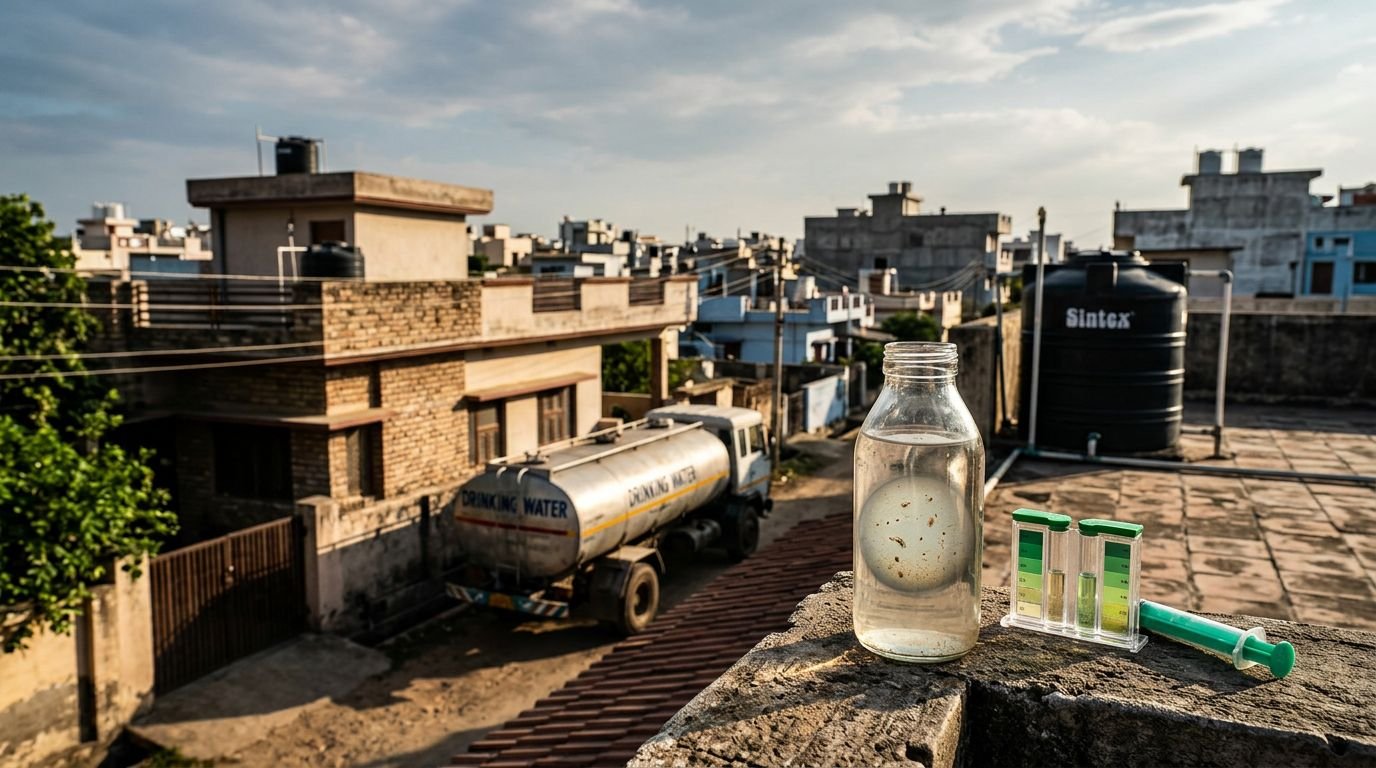
A tanker is a vehicle, not proof of safe water. It may carry treated municipal water supply, borewell water, construction-grade water, or water from a source the buyer never gets to see. That difference matters more than the tanker company branding.
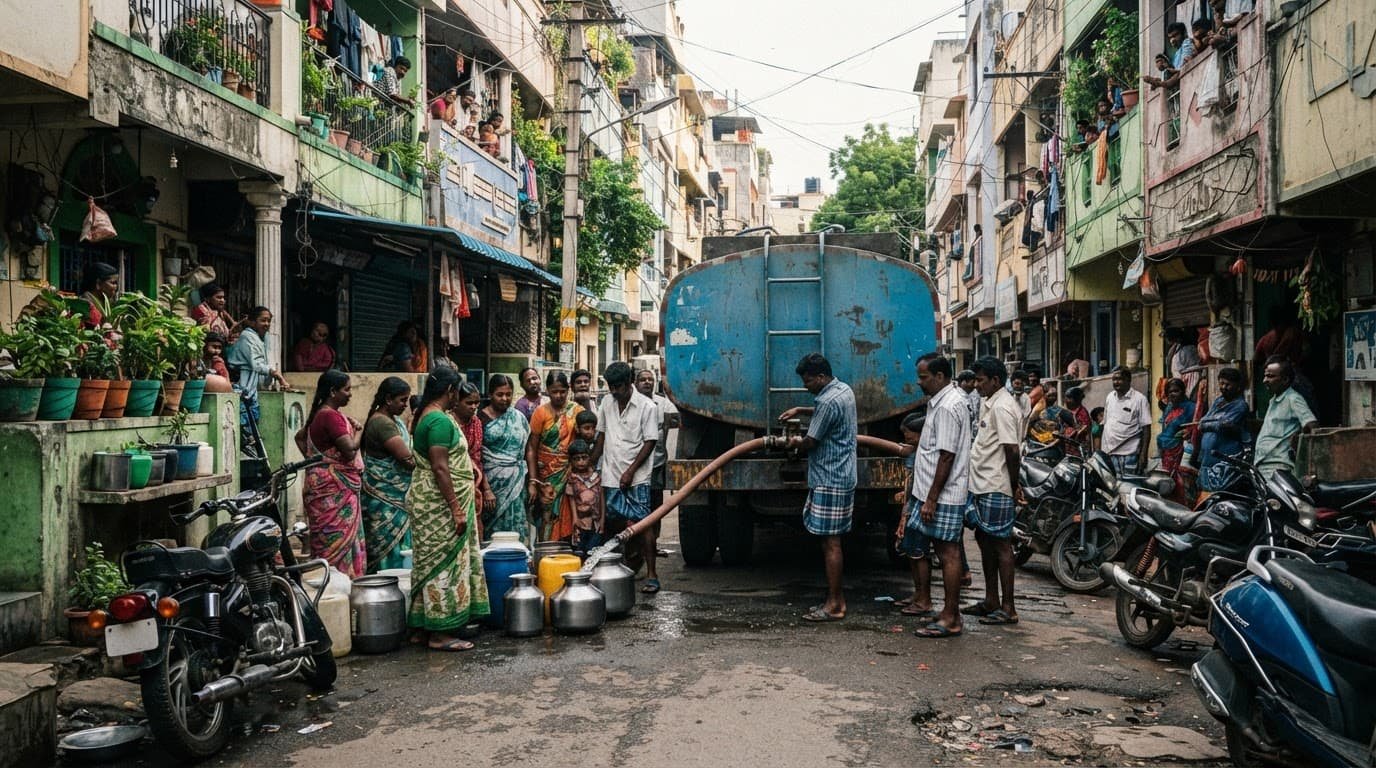
India drinking water standards rely on Bureau of Indian Standards IS 10500:2012. Yet a tanker does not become safe because it reaches a residential building. The water still needs to meet the same physical, chemical, and microbiological expectations at the point where people drink it.
A Bengaluru study of tanker water quality examined both chemical and microbiological suitability for domestic use. Its existence tells us something uncomfortable. Tanker water needs scrutiny because its quality can vary, even within one city.
That variability has a human cost. A high-income tower can buy a filtration unit, but a tenant in a crowded building may have no control over the source, tank cleaning, or vendor selection. A domestic worker, security guard, child, or delivery rider often drinks what the building provides. Water safety cannot be treated as a private upgrade for people who can afford it.
The first question is not whether the water comes from a tanker. Ask instead where it was filled, when the vehicle was last cleaned, and what the latest test report shows.
Some operators draw from legal, monitored sources, while informal water tankers and private water tankers operate in a murkier system of borewells and unmonitored extraction often controlled by a water tanker mafia. Research on informal tanker supply in Chennai and Mumbai shows why this water tanker ecosystem exists, driven by the fact that municipal water supply is frequently unreliable, costly, or inadequate.
That makes water tanker supply an urban governance problem rather than a simple consumer mistake. When housing society management relies on these deliveries, addressing the broader failures of urban water governance becomes essential for public health.
A sealed tanker can still carry unsafe water. The source, the hose, the vehicle, and the building tank all shape what reaches your glass.
What Can Be Hiding in Tanker-Supplied Water?
The most immediate danger is bacterial contamination. Under drinking water standards, E. coli and total coliform bacteria should not be detectable in a 100 mL drinking-water sample. Their presence can point to faecal contamination, poor sanitation near the source, dirty storage, or contaminated hoses, often worsened by sewage line leaks.
Bacterial contamination and other public health risks matter because they can lead to acute illness. Loose stools, vomiting, fever, stomach pain, and recurring gastrointestinal infections should never be brushed off as seasonal. Young children, older adults, pregnant people, and anyone with a weakened immune system face greater public health risks.
Chemical contamination can be slower and less obvious. Water may not smell bad. It may not leave a dramatic stain. Still, it can carry substances that need attention.
| Parameter | BIS acceptable level | Why residents should care |
|---|---|---|
| Total dissolved solids | 500 mg/L | High total dissolved solids can affect taste and point to excess dissolved salts |
| Turbidity | 1 NTU | Cloudiness can signal suspended matter and weaken disinfection |
| Fluoride | 1.0 mg/L | Long-term excess can harm teeth and bones |
| Nitrate | 45 mg/L | High levels can be dangerous, especially for infants |
| Iron | 0.3 mg/L | Can cause staining, taste issues, and indicate source concerns |
| Arsenic | 0.01 mg/L | Long-term exposure can cause serious health harm, often linked to heavy metal contamination |
The permissible limits sometimes quoted for water are not targets. They are allowances used when no alternate source exists. Nobody should market water at the edge of a maximum limit as premium quality.
Groundwater-heavy tanker systems deserve particular care because groundwater contamination is a growing concern. Fluoride, nitrate, salinity, arsenic, and iron depend on local geology, sewage leakage, agricultural runoff, industrial activity, and historic contamination. A tanker driver cannot see these contaminants, and a standard municipal water treatment plant cannot fix them at your tap. Neither can you.
This is why water quality testing matters so much. Assessing tanker water quality India must mean more than checking whether the water looks clean. It means asking for a current laboratory report that covers bacteria and chemistry.
A useful lesson comes from Chennai’s water-stressed reality. Stanford research on water supply in Chennai explored a dual-quality approach, where different water grades serve different uses. That is more honest than pretending every litre delivered to a home for domestic water use has the same purpose.
Water for flushing, mopping, gardening, bathing, cooking, and domestic water use should not be treated as identical by default. Drinking and cooking water demand the highest level of confidence through regular water quality testing.
Your Rooftop Tank Can Undo a Good Delivery
A tanker may arrive with acceptable water, but the building’s own tank can ruin it. This vulnerability is a weak link in the wider water tanker ecosystem.
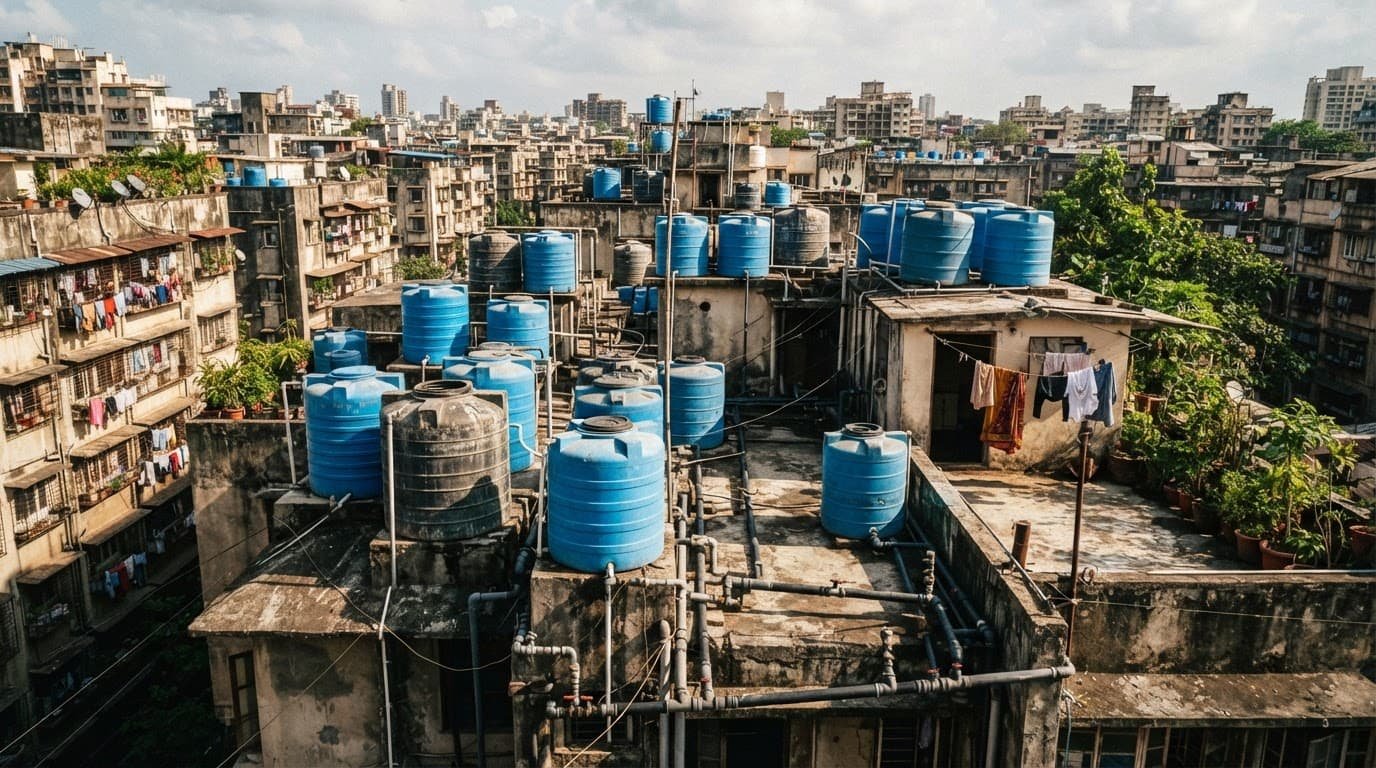
This is where many homes lose the plot. They argue about the tanker bill, but nobody opens the overhead tank for months. Sediment settles at the bottom, and biofilm can form on internal surfaces, sometimes leading to bacterial contamination if left unchecked. Insects enter through broken lids, while bird droppings, dust, leaves, and rainwater get in through uncovered vents or overflow pipes.
The same accountability failure appears across urban environmental problems. A construction site may hang a green dust screen, then leave debris piles open and trucks uncovered. The visible object becomes proof of action, even when the actual exposure continues.
A water tank can become the same kind of prop. A large blue plastic tank on a roof looks like water security. It isn’t, if housing society management fails to own cleaning, inspection, and repair.
Road dust makes the situation worse in dense neighbourhoods. Fine particles from traffic, construction debris, brake wear, tyre wear, and open soil can settle on roofs and tank surfaces. A cracked lid is not a minor maintenance issue, because it is an open door for urban residue that often requires rigorous borewell water testing or tank inspection to catch.
Residents should look for ordinary failures:
- Tank lids should fit tightly, without cracks or gaps around the edge.
- Overflow pipes need a proper mesh screen to keep out insects and debris.
- The inside should be cleaned on a defined schedule, with cleaning records available to residents.
- Hoses used for a water tanker supply must not lie in stagnant water, drains, mud, or roadside dust.
- The tank room and roof should not double as storage for waste, chemicals, or construction material, matching the basic water safety standards expected in modern apartments.
Effective housing society management ensures that water safety standards are met from the municipal source to the tap. A building that cannot produce a water tank cleaning record should not expect residents to simply trust the water delivered by any tanker supply.
How to Check Tanker Water Quality Without Guesswork
You don’t need to become a chemist. You do need a habit of asking for evidence.

Start with the Residents’ Welfare Association, landlord, facility manager, or housing society management. Ask who supplies the water and what source the private water tankers use. “Borewell water” is not a full answer. Ask where the borewell is located and whether routine borewell water testing has been performed.
Then take these steps:
- Request the latest laboratory report. It should identify the sample source, date, laboratory, and test parameters. A vague PDF without sampling details is not enough.
- Check for microbial testing. Ask whether the report includes total coliform and E. coli. A measurement of total dissolved solids alone cannot tell you if water contains disease-causing organisms.
- Test the water where you use it. A source sample is useful, but regular water quality testing should also happen at the kitchen tap. Storage, pipes, and water purification systems can change the result.
- Test after a fresh tanker delivery. If your building alternates between municipal supply and private water tankers, label the samples clearly. You need to know which supply caused which result.
- Match the test to your local risks. In regions affected by groundwater contamination, ask for fluoride, nitrate, iron, arsenic, hardness, and heavy metals where relevant. In industrial belts, ask a qualified lab what additional parameters make sense through comprehensive water quality testing.
- Keep a record. Save reports, invoices, tank-cleaning dates, resident complaints, and vendor details. Patterns matter when problems recur.
A handheld meter for total dissolved solids can be useful for tracking changes over time. It can show whether total dissolved solids suddenly rise after a tanker delivery. But it cannot detect bacteria, pesticides, arsenic, lead, or most harmful chemicals. Treat it as an early warning device, not a safety certificate.
Smell and appearance can also provide clues. A rotten-egg smell may suggest sulphur compounds. A chemical odour deserves attention. Brown staining may point to iron or pipe corrosion. Cloudiness needs investigation, especially when dealing with groundwater contamination. Still, clear and odourless water can be contaminated, which is why routine borewell water testing and overall water quality testing matter.
If residents report illness after a new tanker source is introduced, act fast. Stop using that water for drinking and cooking until a reliable test is available. Inform the building management in writing. Document the date, delivery vehicle details, symptoms, and affected flats.
Filters Help, But They Don’t Fix a Broken System
A filter can reduce some risks. It can’t clean up careless sourcing, dirty tanks, or zero accountability.
Boiling water can kill many microbes when done correctly. It does not remove fluoride, nitrate, salts, heavy metals, or most dissolved chemicals. If the source has chemical contamination, boiling may even concentrate dissolved substances as water evaporates.
Reverse osmosis filtration systems can reduce several dissolved contaminants, but they also waste water and need regular maintenance. A neglected filter can become its own contamination point. Sediment filters need replacement. UV units need working lamps and electricity. Activated carbon has limits and requires timely change.
Choose treatment after testing, not before. A high total dissolved solids reading does not automatically mean you need reverse osmosis filtration. Likewise, a low total dissolved solids reading does not prove water is safe to drink.
Advanced water purification systems help manage domestic water use, but they operate at a smaller scale than a municipal water treatment plant. When evaluating reverse osmosis filtration, homeowners must remember that point-of-use units cannot replace a proper municipal water treatment plant for the entire neighborhood.
This is where everyday mindfulness helps, but only in proportion. Clean your bottle. Keep drinking-water vessels covered. Replace filter cartridges on time. Use a separate, verified source for infant formula or cooking if the building’s supply is uncertain.
Modern water purification systems and other water purification systems support domestic water use safely only when total dissolved solids levels are monitored continuously.
Do not let personal caution become an excuse for institutional laziness. Families cannot filter their way out of a building that refuses to test its supply.
Water Safety Needs Systemic Change, Not Polite Trust
A tanker market grows where public systems leave gaps. Those gaps are filled by drivers, vendors, borewell owners, building managers, and households under pressure, all navigating persistent water scarcity issues. But a system that moves essential water without clear source records forces residents to manage severe public health risks blindly, often caught in the grip of the water tanker mafia.
Research on tanker water markets and sustainable water services makes an important point: tankers are part of urban water access for people outside dependable infrastructure. The answer is not to shame households for using them. The answer is to demand traceability, testing, legal extraction, and robust urban water governance backed by clear regulatory policy frameworks.
Real systemic change looks boring. That is why it is often ignored. It looks like supplier registers, source declarations, regular testing, tank cleaning contracts, maintenance budgets, and complaint records. It looks like a building committee that asks difficult questions before signing the next vendor from the water tanker ecosystem.
Sustainable business models in water delivery should reward verified sources and clean equipment, not the cheapest tanker at the gate. A serious circular economy also means reducing wasteful water use inside buildings, repairing leaks, harvesting rainwater safely, and separating potable needs from non-potable uses where systems allow, which is vital for addressing broader water security challenges.
The wider ecological impact is easy to miss when relying on informal water tankers. Unregulated groundwater extraction can lower local water tables, while poor wastewater management and sewage line leaks accelerate groundwater contamination. Furthermore, risks like heavy metal contamination often stem from unchecked extraction, while tanker traffic adds diesel emissions and road pressure. Weak water systems also hurt urban biodiversity, because lakes, wetlands, trees, birds, and soil life do not survive on public promises alone.
Personal choices still have a place, and addressing systemic water scarcity issues also involves lifestyle shifts. Plant-based living can reduce the water footprint tied to food systems, and lower-waste habits reduce pressure on drains and landfills. But no lifestyle choice makes an untested water supply safe. Climate literacy means knowing where household water comes from, who controls it, and who carries the risk when regulatory policy frameworks fail to protect the public.
Community pressure works better when it is documented, particularly as local water security challenges grow. Ask your building management for water reports, and demand that municipal bodies enforce stricter oversight over informal water tankers. If a public authority has inspection records, testing results, complaint logs, or action-taken reports, use the Right to Information process to request defined documents for a stated period.
Water safety is climate justice in practical clothes. The person who can least afford bottled water should not receive the least accountable supply, and reforming urban water governance requires stronger regulatory policy frameworks to eliminate the predatory pricing of the water tanker mafia.
Communities that care about clean water also tend to care about the living systems around them. Explore Our Active Missions to support on-the-ground work connecting climate literacy, community protection, and healthier ecosystems.
Frequently Asked Questions
Why can’t I rely on water that looks clear and clean?
Clear water can still carry invisible dissolved chemicals, heavy metals, nitrates, or harmful bacteria like E. coli from contaminated borewells, dirty tankers, or unhygienic storage tanks.
How often should my building’s rooftop water tank be cleaned?
Rooftop storage tanks should be professionally cleaned and inspected on a strict, defined schedule (typically every six months) to prevent sediment buildup, biofilm formation, and insect entry.
Does boiling tanker water make it completely safe to drink?
Boiling effectively kills most disease-causing microbes, but it does not remove dissolved chemical contaminants, heavy metals, or excess salts like fluoride and nitrate, which may even become concentrated as water evaporates.
What is the best way to check tanker water quality?
You should request a certified laboratory test report from your housing society or vendor that covers microbiological parameters (coliform and E. coli) as well as relevant chemical parameters matching your local region’s specific contamination risks.
A Tanker Delivery Should Come With Proof
The next tanker at your gate is not automatically unsafe. But trust without testing is not a water-quality plan, especially when relying on private water tankers.
Ask where the water came from. Ask for the report. Check the rooftop tank. Push for records that every resident can see, and demand better adherence to water safety standards across the board. Monitoring tanker water quality India requires a collective effort from every community.
Safe water is not a luxury service. It is a basic duty that must be measured, maintained, and defended.