Why New Indian Apartments Need Radon Testing
 TBH Editorial
A new apartment can smell of fresh paint and still contain invisible radon gas. A polished lobby and a handover file cannot prove good indoor air quality.
India is building taller, denser housing at speed. That makes radon testing India a recommended pre-handover requirement for new apartments, not a universal rule. The first question should be simple: has anyone measured the air before families moved in?
Key Takeaways
- New apartments can contain invisible radon gas, regardless of their appearance, height, or age, so indoor air quality should be measured before handover.
- Use passive radon detectors for at least three months in the lowest regularly used living areas, and assess multiple units, basements, shared spaces, and different vertical stacks.
- WHO recommends a residential reference level of 100 Bq/m3 and says the chosen national level should not exceed 300 Bq/m3; results above these benchmarks should trigger investigation and, where needed, remediation.
- Radon mitigation may include sub-slab depressurisation, sealing foundation openings, and professionally designed ventilation, followed by a post-remediation test.
- Buyers and renters should request dated testing records showing the units tested, detector duration, radon levels, provider details, and any remediation history before moving in.
Radon Testing India Needs Before Apartment Handover
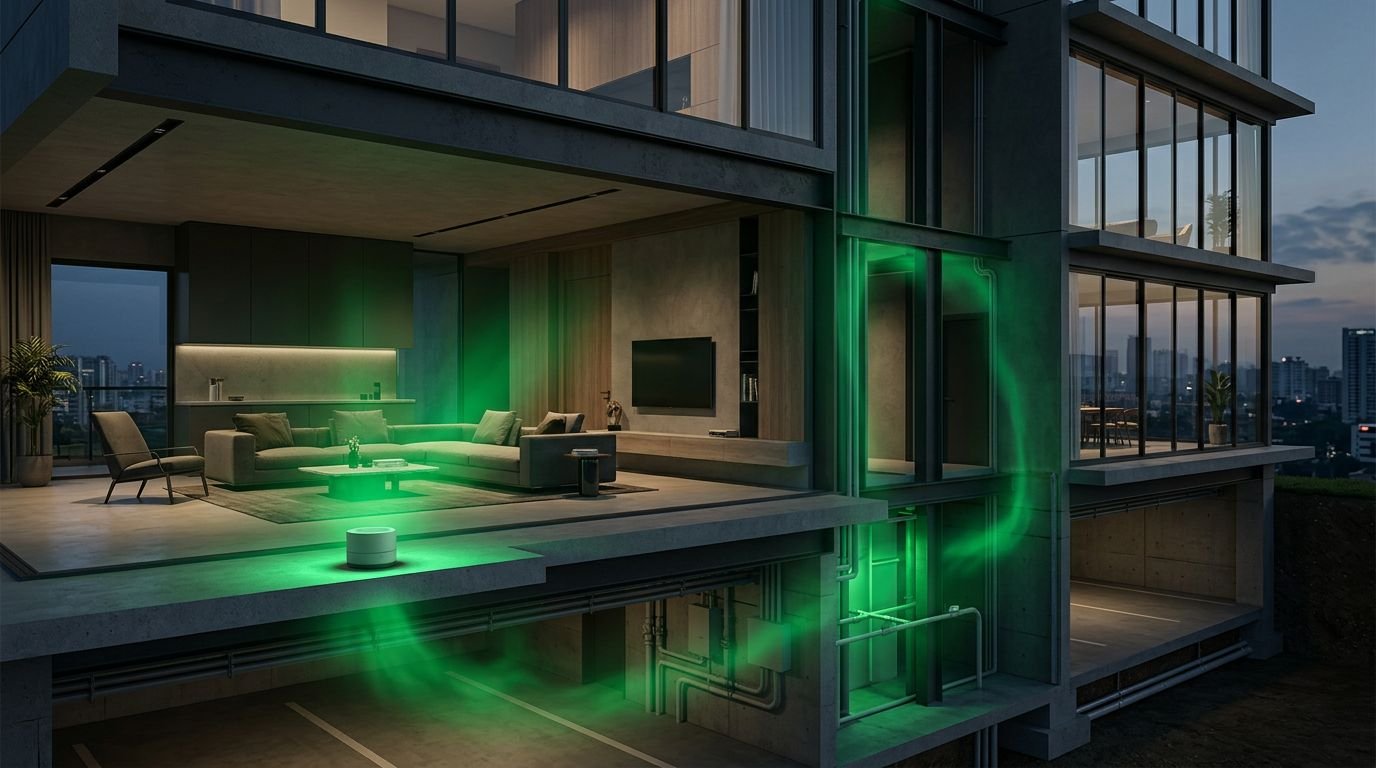
Radon is a naturally occurring radioactive gas. This radon gas forms through natural radioactive decay as uranium breaks down in soil, rock, and sometimes groundwater. That radon gas can move through a building when pressure differences pull soil gas through foundation cracks, pipe gaps, drains, lift shafts, and unsealed joints.
A tower isn’t automatically safe because it sits high above the ground. Lower floors, flats above basements, and units connected to shared service shafts may face greater risk. Yet upper floors should not be waved away either. Air can move through a building in strange ways. Lifts, exhaust fans, ventilation systems, and tightly sealed windows can change indoor pressure and move gas through shared shafts.

New construction can make this harder to spot. A polished lobby says nothing about gaps beneath flooring. Better insulation and sealed windows can reduce energy waste, but they can also reduce natural air exchange. Building materials may add a smaller radon contribution. Soil gas usually remains the main concern.
Indian measurements do not tell one neat national story. A Delhi dwelling study reported radon levels up to 334.7 Bq/m3, with an annual mean concentration of 166.9 Bq/m3. A Punjab and Himachal Pradesh survey found annual averages between 114 and 400 Bq/m3. This variation points to location-specific health risks shaped by postcode, geology, floor level, and construction details. The absence of respiratory symptoms cannot establish that an apartment is safe.
The WHO handbook on indoor radon calls for national radon programmes that connect measurement, public information, and building-code prevention. India needs that same chain of responsibility at apartment handover, with remediation work recorded alongside measurements.
The Health Risks Have No Smell or Symptom
Radon exposure is not usually what people mean when they say “radon poisoning.” The phrase “radon poisoning” can misleadingly suggest an immediate, recognizable poisoning event. You won’t feel dizzy after one evening in a high-radon flat. Reliable respiratory symptoms won’t tell you to leave.
The danger builds over years. Radon gas decays into radioactive particles that can lodge in the lungs. Those particles can damage lung tissue and raise the risk of lung cancer. These health risks increase with higher or sustained radon levels. WHO estimates that radon contributes to 3% to 14% of lung cancer cases, depending on national exposure patterns and smoking rates.
Smoking makes the picture worse. Cigarette smoke already damages lung tissue and raises the risk of lung cancer. Adding long-term radon exposure is not a trade-off, and the absence of respiratory symptoms doesn’t make the combined risk acceptable. Quitting smoking lowers risk, but it doesn’t make a high radon result acceptable.
A beautiful flat with poor radon control is not a healthy home. The risk is invisible, but the exposure is real.
This is also about fairness. A buyer may have the money to switch flats or install a mitigation system. A renter, security guard, cleaner, or basement worker may not. A climate justice framework asks who carries the harm when the people controlling the concrete never measured the air.
Test Apartments Long Enough to Get the Truth
Short-term radon testing can be useful, but it is only a snapshot. Radon detectors capture conditions over different time windows, and radon gas measurements can shift with rain, season, occupancy, ventilation, and pressure. A detector left out for a weekend cannot show what a family may breathe across a year, which matters when assessing lung cancer risk.
For a meaningful baseline, use passive detectors for at least three months. Long-term radon testing should occur during normal occupancy or realistic closed-building conditions, helping establish a baseline radon concentration. Place the detector in the lowest regularly used living area to capture typical radon levels, away from kitchens, bathrooms, direct sunlight, windows, and exhaust vents.
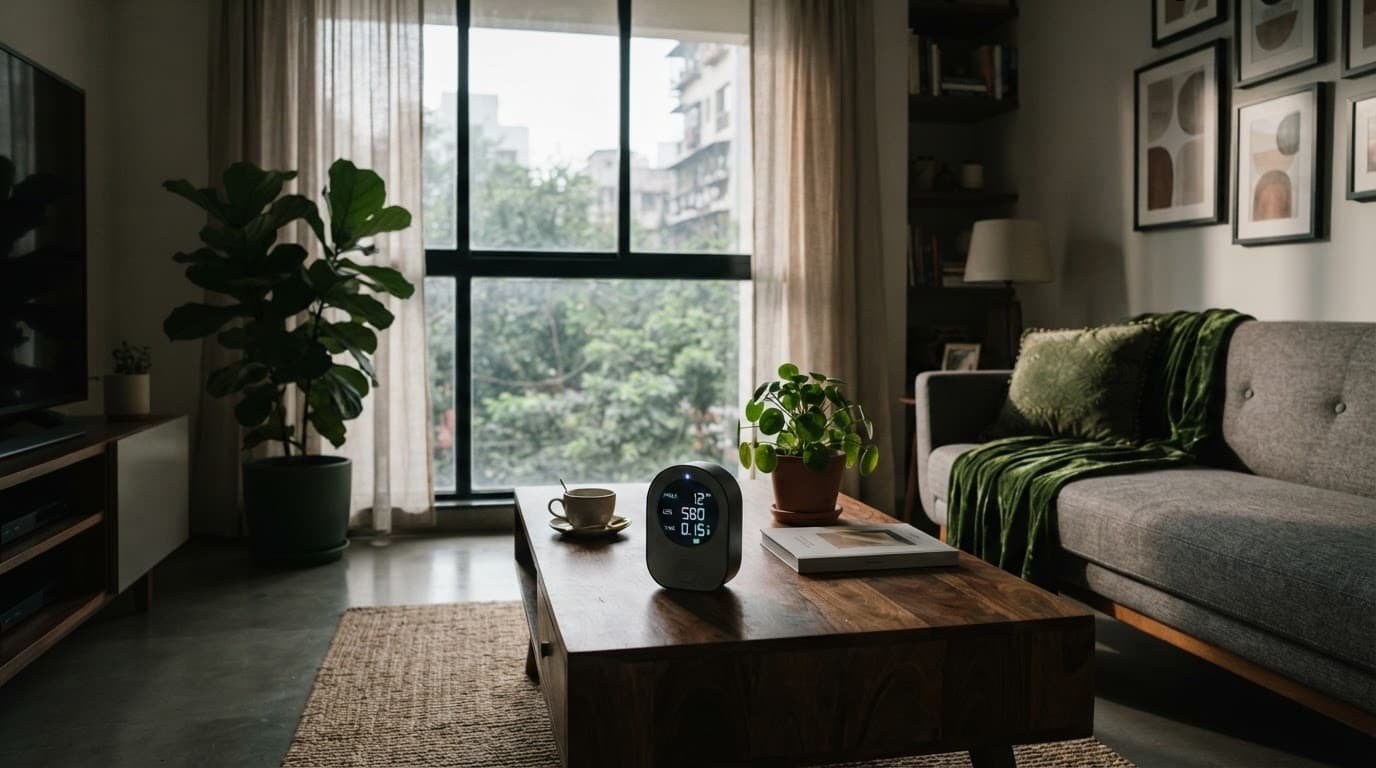
A single result from one flat cannot clear an entire tower. Compare radon levels across units closest to the soil, flats above basements, and different vertical stacks. Shared parking levels, offices, creches, and staff rooms deserve their own assessment.
Radon detectors serve different purposes, depending on the testing duration and detail required:
| Test option | What it can reveal | Best role |
|---|---|---|
| Passive detector for 90 days or more | A more reliable long-term average | Pre-handover baseline and follow-up testing |
| Short-term detector | A brief reading under current conditions | Early screening or urgent investigation |
| Digital continuous monitor | Daily and hourly changes in radon levels | Finding patterns and checking mitigation work |
A digital monitor is useful, especially after repairs. It can show whether radon levels rise overnight or change when ventilation systems run. It is not an automatic replacement for a standard long-term passive test. A screen that updates every hour can still mislead if it only captures an unusual week.
A radon testing India procurement standard should require more than a cheap device. Choose testing services from a provider that documents the units tested and testing duration. It should report in Bq/m3, explain placement for radon detectors, use a traceable calibration process, include laboratory analysis where needed, and provide written interpretation. Compare the full cost, not only the detector price.
The WHO’s detailed radon guidance makes the larger point clear: measurement should lead to prevention and remediation work, not a report that disappears into a facility manager’s inbox.
Use Reference Levels to Trigger Action, Not Excuses
WHO recommends a residential reference level of 100 Bq/m3. Where that cannot be achieved under national conditions, WHO says the chosen level should not exceed 300 Bq/m3.
Don’t turn those numbers into a loophole. Radon levels at 200 Bq/m3 are not a clean bill of health, even though they sit below 300. They remain above WHO’s preferred benchmark and deserve investigation through radon testing. A high result indicates elevated radon gas exposure and can increase lung cancer risk. Readings above 300 Bq/m3 call for prompt remediation work and radon mitigation, followed by a post-remediation test.
The WHO executive summary on radon reference levels makes this distinction plain. A reference level is a point for action, not permission to leave residents exposed until the highest possible number appears.
Workplaces need equal seriousness. India does not have a widely used nationwide radon handover rule for offices, retail units, or apartment staff areas. Building owners should still check radon levels in basements, enclosed workrooms, and lower-ground commercial spaces, not rely on vague assurances that ventilation is “good enough.” International workplace benchmarks vary, so employers need a written policy defining a reference level, occupational exposure controls, safety standards, and responsibility for remediation work.
Fix the Building, Then Test It Again
Sealing a visible crack is one part of the remediation work, but it rarely solves a serious radon problem alone. The aim of radon mitigation is to stop radon gas entering the building and move it safely outside.
A proper radon mitigation plan should define the scope of remediation work and respond to the reference level.
It may include:
- A soil-gas collection layer or sub-slab depressurisation system that draws radon from beneath the floor and vents it above the roofline.
- Sealing around service pipes, floor joints, drains, sumps, foundation cracks, and other foundation openings as supporting work.
- Mechanical ventilation systems and pressure adjustments designed by a qualified professional, rather than relying on a ceiling fan or recirculating air-conditioner.
High-rise radon mitigation needs building-wide thinking. One flat’s fan-driven system may alter pressure in a neighbouring unit or shared shaft. The developer, housing society, and facilities team need to coordinate remediation work and map the route of the gas before drilling holes and calling it remediation.
Then use radon testing to verify the result. A post-remediation test is proof that the completed remediation work lowered exposure and reduced radon levels. Fresh paint is not proof. A new exhaust fan is not proof. A contractor’s assurance is not proof.
This is systemic change in its least glamorous form: test records, repair budgets, clear responsibility, and someone answerable after residents move in.
Indoor Air Quality Is Part of Ecological Accountability
The ecological impact of a building does not end with solar panels, recycled brochures, or a landscaped entrance. It includes the air residents, guards, domestic workers, and children breathe each day, including radon gas that can accumulate indoors.
A circular economy for housing values repairable, long-life buildings over quick construction and repeat patchwork. Sustainable business models in real estate should include indoor-air checks in project delivery, rather than sell “wellness” later as an upgrade.
Plant-based living, lower consumption, and urban biodiversity restoration all matter. They do not lower a reading in a sealed bedroom. Climate literacy helps residents see that housing health is part of environmental responsibility. Individual awareness cannot replace an accountable builder.
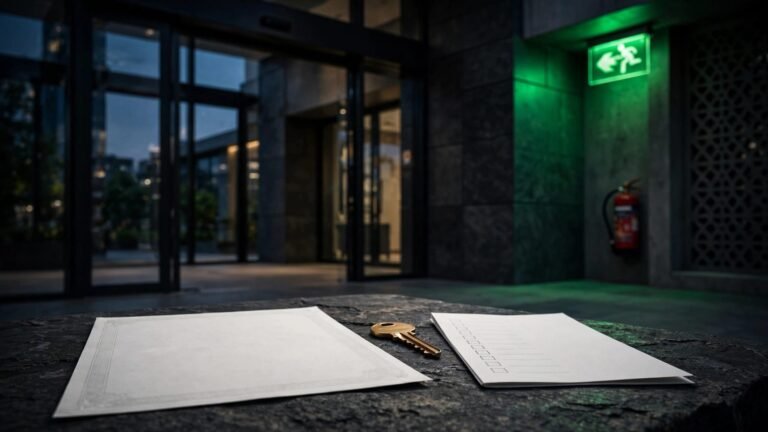
Renters should ask for the testing record in a dated email, which creates a paper trail but cannot measure radon. Buyers should request the detector duration, unit location, and recorded radon levels before signing. They should also ask which radon detectors were used, verify the provider and its testing services, and review any mitigation history. A dated email cannot measure radon, but it creates a paper trail identifying who will fund, manage, and follow through on remediation work.
For grounded work that connects climate literacy, healthier communities, and urban biodiversity, Explore Our Active Missions.
Frequently Asked Questions
Is radon testing necessary for a new apartment?
Yes. New construction, sealed windows, basements, and shared service shafts can allow radon gas to accumulate or move through a building. A fresh interior or polished handover file cannot prove safe indoor air quality.
How long should an apartment be tested for radon?
A passive detector should be used for at least three months to establish a more meaningful long-term baseline. Short-term tests and digital monitors can help with screening or follow-up, but they do not always represent exposure across a full year.
Where should a radon detector be placed?
Place it in the lowest regularly used living area, away from kitchens, bathrooms, windows, direct sunlight, and exhaust vents. In a high-rise building, testing should also consider flats above basements, lower floors, shared parking areas, staff rooms, and different vertical stacks.
What radon level is considered unsafe?
WHO recommends a residential reference level of 100 Bq/m3 and says that national reference levels should not exceed 300 Bq/m3 where the lower level cannot be achieved. A result above 300 Bq/m3 calls for prompt remediation, while lower results above 100 Bq/m3 still deserve investigation rather than being treated as a clean bill of health.
What should happen after radon mitigation work?
The building should be tested again after remediation to confirm that radon levels have fallen. Sealing a crack, installing an exhaust fan, or receiving a contractor’s assurance is not proof that exposure has been reduced.
A Healthy Home Needs Proof
Radon gas is not a reason to panic about every new apartment. It is a reason to verify indoor air quality, recognize health risks, and help prevent lung cancer. Residents should not wait for respiratory symptoms before asking for evidence.
India can make radon testing routine before handover, using calibrated radon detectors and results to fix buildings rather than blame residents.
Ask for a 90-day test and a written result. It should show radon levels against a reference level, document remediation work, and include a post-remediation test.