Crop Residue Burning India: The Soil Cost We Ignore
 TBH Editorial
A field can look clean after a fire. The soil beneath it is not.
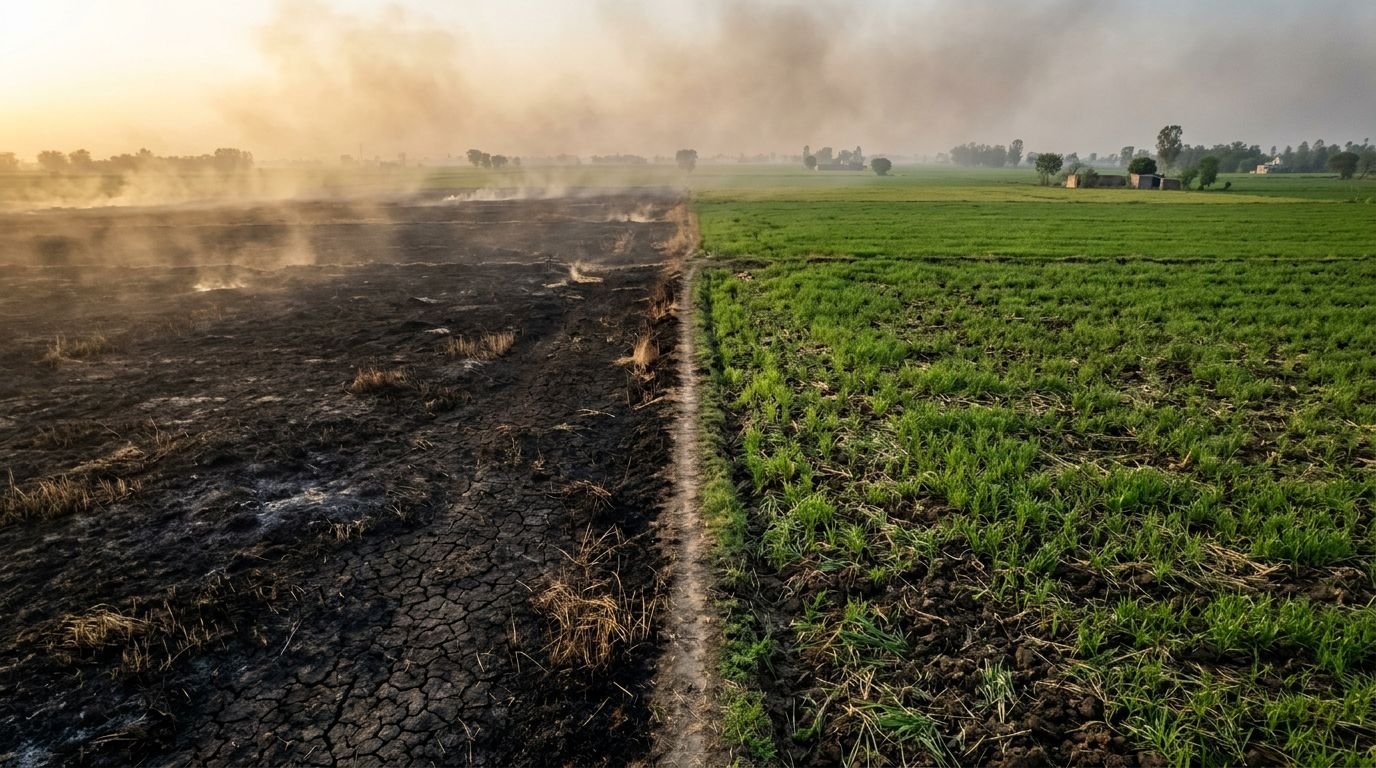
Crop residue burning India is often discussed as an air pollution emergency, especially when smoke from stubble burning reaches Delhi and other northern cities. That is real. But the fire also damages the farm’s living foundation, the thin, busy layer of soil where roots, microbes, moisture, and nutrients keep a crop alive. When the clearing of agricultural waste relies on fire, the resulting stubble burning creates widespread air pollution that masks a deeper ecological emergency.
When we treat stubble burning as only a seasonal smog story, we miss the debt building under our food system.
Key Takeaways
- Crop fires burn away organic carbon that helps soil hold water, store carbon, and stay loose enough for roots, while stubble burning worsens this depletion.
- Heat harms the bacteria, fungi, and enzymes that turn crop residues into usable plant nutrients, ultimately damaging long-term soil fertility.
- Farmers often burn because the rice-wheat turnaround is brutally short, forcing many to clear paddy straw quickly, not because they don’t care about soil.
- Repeated burning shifts costs onto farmers, rural workers, nearby communities, and future harvests.
- Proper crop residue management using tools like the happy seeder can eliminate stubble burning, but only when supported by machines, residue markets, fair payments, and local help.
Why crop residue burning India damages soil health
After rice harvest, a combine can leave a thick mat of straw across the field. In Punjab, Haryana, and western Uttar Pradesh, farmers may have only a short window before wheat sowing, meaning that burning paddy residue is often chosen over manual removal. Labour is expensive. Machinery isn’t always available when it is needed. A match can feel faster than a solution.
That pressure is real. It also does not make stubble burning harmless.
Fire turns residue into ash in minutes. Setting fire to agricultural waste leads to acute nutrient depletion, as nitrogen and sulphur escape into the air. The field loses material that could have become mulch, compost, animal bedding, bioenergy feedstock, or soil carbon. Some minerals remain in ash, but the losses are harder to replace. Carbon that could have improved soil structure disappears as smoke.
Soil organic carbon is not a decorative number in a report. It helps soil act like a sponge, holding moisture through dry spells, supporting aggregation, and protecting long term soil fertility. Burn the cover year after year and the soil becomes more dependent on purchased fertiliser and irrigation.
A 2025 review of agroecological impacts links systematic stubble burning with depleted soil nutrients, persistent nutrient depletion, reduced microbial diversity, and higher pest pressure. The point is blunt: fire removes a problem visible on the surface by creating problems below it.
A residue fire does not reset a field. It strips away part of the system that lets the next crop survive heat, drought, and nutrient stress.
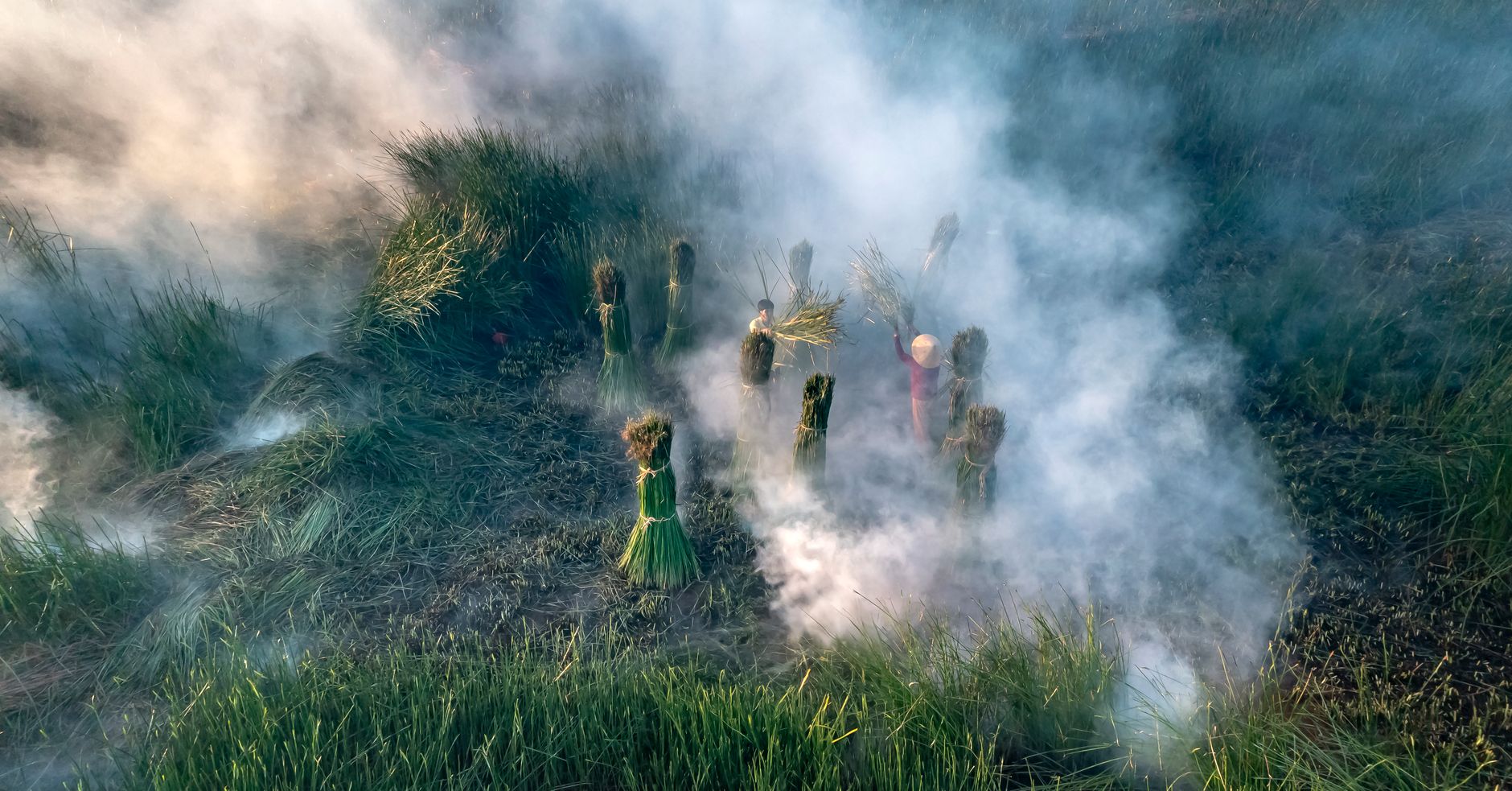
Photo by Quang Nguyen Vinh
The fire hits the soil’s smallest workers first
Healthy soil is alive. A spoonful can contain bacteria, fungi, actinomycetes, protozoa, and other organisms doing work no bag of fertiliser can fully replace, especially when handling the microbial degradation of plant materials.
They break down residue. They cycle nitrogen and phosphorus. They help roots access nutrients. Fungal networks can improve soil structure, while microbes help plants respond to disease and stress. You don’t see this workforce, which is why it is easy to sacrifice.
Stubble burning creates a heat shock at the surface. Studies reviewed in Indian farming systems report sharp falls in microbial populations in the top few centimetres of burned soil. That is where fresh organic matter enters and where much early root activity happens.
The damage goes beyond a simple headcount of bacteria. Stubble burning can reduce enzyme activity, including dehydrogenase, urease, and phosphatase activity. Those enzymes drive nutrient transformations. When they weaken, soil may contain nutrients on paper but release them less effectively to plants, accelerating nutrient depletion.
Research in rice-wheat fields has found lower microbial biomass carbon and weaker biological activity under stubble burning than under residue retention, leading to a steady drop in organic carbon. The published research on soil properties after residue burning also connects repeated fires with declining soil fertility, microbial imbalance, reduced carbon sequestration, and an overall loss of carbon sequestration potential over time.
This is why the phrase crop residue burning India should not be separated from soil health. The smoke may last days. A damaged soil food web can take much longer to recover.
Organic matter is the field’s water bank
Think of residue as a blanket and a food supply. When chopped and retained, it protects soil from direct sun, reduces moisture loss, and feeds organisms as it decomposes. When incorporated well, it can improve the field over time.
Stubble burning removes that cover before the next crop begins.
Without surface residue, raindrops hit bare ground harder. Fine particles break free, pores clog, and water runs off instead of soaking in. During hot months, exposed soil heats faster and loses moisture quicker. Farmers then face a familiar cycle: weaker soil, more irrigation, more fertiliser, more cost.
When stubble burning takes place on a massive scale, it releases thick smoke, greenhouse gases, and hazardous particulate matter into the atmosphere. This intense air pollution drives up the local air quality index to dangerous levels, especially during winter months when a temperature inversion traps pollutants close to the ground.
A review of environmental and health impacts reports that health problems can worsen during crop-burning periods. This is not a choice with only one victim. The person lighting the fire may also breathe the smoke. So do neighbours with no say in the harvest schedule.
The ecological impact also travels far beyond the farm boundary. Air pollution and heavy particulate matter deposit on nearby leaves and water bodies, while greenhouse gases contribute to broader climatic shifts. This seasonal smoke adds another layer of pressure to urban biodiversity, where birds, insects, roadside trees, and small green spaces are already working through heat, traffic fumes, and shrinking habitat.
Stop blaming farmers for a broken timetable
There is a lazy version of this story. It says farmers burn because they are careless. That story lets everyone else off the hook.
The rice-wheat system has been shaped by procurement rules, groundwater scarcity patterns, combine harvesting, input incentives, and tight sowing deadlines. Stubborn economic constraints push growers to clear fields rapidly. Stubble burning often results from these systemic pressures. A farmer who misses the wheat window can lose yield. Hiring a baler, Super SMS attachment, Happy Seeder, or mulcher may cost money upfront. Access can be patchy. A machine parked 30 kilometres away is not a solution at harvest time.
This is where accountability matters. If policies reward speed but do not fund crop residue management, fire becomes the cheapest emergency tool. Directives from the national green tribunal demand compliance, yet fail to address the root economic constraints that force these choices. Asking farmers to absorb every cost is not climate policy. It is cost-shifting.
A better approach has to include:
- Reliable local access to advanced agricultural machinery, including the happy seeder, balers, mulchers, and straw-management equipment during the harvest rush.
- Payments that make residue retention and collection financially sensible, not merely morally praised.
- Village-level collection, storage, and transport systems for straw that cannot stay in the field.
- Reform of the minimum support price framework to encourage crop diversification away from water-intensive paddy, which would ease groundwater scarcity and reduce the need for stubble burning.
- Clear public tracking of which subsidies, machines, and services actually reach small and tenant farmers.
We need climate literacy that respects the full chain of cause and effect. Smoke harms lungs. Fire harms soil. Weak soil raises farm risk. Farm risk makes another quick burn more likely, while proper crop residue management breaks this damaging cycle.
A circular economy has to work in the village
Agricultural waste is not useless by default. It becomes a burden when there is no affordable route to process it through sustainable management practices.
Straw can support composting, mulching, mushroom cultivation, bio-CNG, biomass pellets, packaging material, and livestock applications where suitable. None of these options are magic. Transport is expensive because straw is bulky. Biomass plants need a steady supply. Farmers need payment on time, not promises after the season ends.
Still, this is where a real circular economy can do more than create a nice phrase for a conference banner. It can keep organic matter in the soil or move surplus agricultural waste into local value chains. Expanding bio-energy infrastructure, including regional biogas plants that rely on anaerobic digestion and decentralized biochar production, helps transform leftover straw into clean energy and soil amendments. These sustainable management practices can replace open fires and end stubble burning entirely.
Farm equipment cooperatives, straw collection centres, and local processing units can create work while lowering the need for fire. They also support sustainable business models that pay people for restoring value rather than destroying it. Instead of resorting to stubble burning, communities can route excess agricultural waste into productive commercial channels.
Consumer choices belong in the wider picture, but they need honesty. Plant-based living can lower pressure from emissions-intensive food systems. It cannot solve a farmer’s ten-day sowing deadline. Personal action matters most when institutions make the responsible option possible.
The same rule applies to everyday mindfulness. Notice the smoke. Ask where it came from. Support local efforts that protect soil and farm livelihoods. But don’t confuse individual concern with a replacement for public investment, fair procurement, and enforceable policy.
Soil protection is community protection
The cleanest field is not the one with no straw visible. It is the one that can grow food without exhausting its soil, its farmers, or the people downwind.
Farm burning exposes a wider failure in how India measures success. We celebrate yield while ignoring what it takes from groundwater, soil carbon, rural health, and future resilience. Authorities now track seasonal burn spikes using remote sensing technology to enforce national green tribunal guidelines, yet we still announce bans without building workable alternatives. Then we act surprised when the fires return. Curbing dangerous air pollution and stopping stubble burning will ultimately require incentivizing the widespread adoption of sustainable management practices across rural communities.
Community action matters when it links care to proof. Explore Our Active Missions to see work that connects climate literacy, local ecosystems, and direct action on the ground. A healthier future needs people who ask harder questions about where environmental harm begins and who carries its cost.
Frequently Asked Questions
Why do farmers choose to burn crop residue despite knowing it damages the soil?
Farmers often face a brutally short turnaround time between the rice harvest and wheat sowing, coupled with expensive labor and limited access to machinery. When faced with these tight deadlines, a match becomes the fastest and cheapest way to clear the field for the next crop.
How does stubble burning physically damage the soil?
Fire creates an intense heat shock at the surface that destroys vital bacteria, fungi, and enzymes needed for nutrient cycling. Repeated burning also burns away organic carbon, making the soil less capable of holding moisture and retaining long-term fertility.
What are some practical alternatives to burning agricultural waste?
Alternatives include using machinery like the happy seeder, mulchers, and balers to incorporate residue directly into the soil or collect it. Additionally, channeling excess straw into local value chains such as composting, bio-energy production, and biomass pellets can help eliminate open fires entirely.
The field remembers the fire
Crop residue burning may clear a field quickly, but soil pays in carbon, moisture, microbial life, and long-term soil fertility. The smoke is visible. The slow loss underfoot is easier to ignore.
Ending crop residue burning India will depend on practical alternatives for clearing paddy residue, combined with effective crop residue management that is cheaper and available on time. Stopping stubble burning and shifting away from stubble burning is necessary so that policy treats farmers as partners rather than culprits.
A fire ends in an afternoon. Restoring living soil takes seasons.