
Non-Profit Transparency Secrets Revealed: What Most Charities Don’t Tell You About Your Donations
-
by
 Saket Sambhav
 - No Comments on Non-Profit Transparency Secrets Revealed: What Most Charities Don’t Tell You About Your Donations
Most modern charity is a performance. It is a carefully choreographed routine of gala dinners, glossy brochures, and “awareness” campaigns that function more like a high-end PR machine than an ecological intervention. We call this Green Theater.
When you click “donate,” you aren’t just sending money; you are entering into a contract. But in the traditional non-profit world, that contract is written in disappearing ink. You are sold the symptom: the starving animal, the dry well: while the mechanics of the solution remain buried under layers of administrative “leakage” and murky accounting.
At The Better Human™ Life Foundation, we believe the current charity model is an accounting failure. It is time to look past the ceremony and demand a more honest, data-verified reality.
The Accounting Mirage: Why “Overhead” is a Distraction
For decades, the standard metric for a “good” charity has been its overhead ratio. This is a logic error. By focusing on how little a non-profit spends on its staff or rent, donors ignore the more visceral question: What is the money actually doing on the ground?
Low overhead is often a mask for low impact. A charity can have 2% overhead and still achieve 0% ecological restoration if their strategy is fundamentally flawed. They might plant ten thousand trees in a monoculture that dies within six months because they ignored the local hydrology or soil bulk density.
The “overhead myth” pushes organizations to cut the very things that drive real change: data collection, site verification, and skilled field labor.
Key Takeaway: The Transparency Gap
- Traditional Charities: Use “awareness” as a primary metric. Success is measured in clicks and impressions.
- Direct-Action Models: Use “impact units” (geo-tagged trees, liters of clean water, student miles). Success is measured in physical changes to the landscape.
Green Theater vs. Direct Intervention
“Green Theater” is the art of looking like you are solving a problem without actually touching the source of the damage. It is a world of symbolic gestures. Planting a tree in a pot during a corporate ceremony is theater. Fighting hypersalinity in the Sundarbans by restoring the natural tidal flow through mangrove reforestation is an intervention.

Typical environmental advocacy often stops at the “awareness” phase. They want you to feel the environmental anxiety so you’ll keep giving. But anxiety is not a strategy. Real change requires a “systems-first” perspective. You cannot fix a forest if you do not understand the land-use debt cycles or the broken coastal drains that are suffocating the soil’s skin.
The Secret Most Charities Hide: Administrative Leakage
Here is the blunt truth: In most non-profits, your donation is a “tax” that pays for the fundraiser who asked you for the donation. It’s a closed loop of self-preservation. This is administrative leakage.
When a charity says 80% of your money goes to “programs,” that category is often a catch-all for anything that isn’t rent. It includes the travel costs of executives and the printing of more glossy brochures.
We’ve built a different logic. At The Better Human™ Life Foundation, our founders cover 100% of operational costs. This isn’t a marketing slogan; it’s a structural mandate. If you donate $100 to plant mangroves, $100 goes to the field. No admin leakage. No “green” tax.
| Feature | Traditional Non-Profit | The Better Human™ Model |
|---|---|---|
| Fund Allocation | Usually 60-80% to “programs” | 100% to the field |
| Verification | Annual reports (vague summaries) | Live Mission Tracker (geo-tagged) |
| Focus | “Raising Awareness” | Direct Ecological Intervention |
| Operational Costs | Deducted from donations | Covered by Founders |
Geo-Tagging: The End of Vague Reporting
If a charity cannot tell you exactly where your money went: down to the GPS coordinate: they haven’t done the work. They are just selling you repeating wallpaper of “good vibes.”
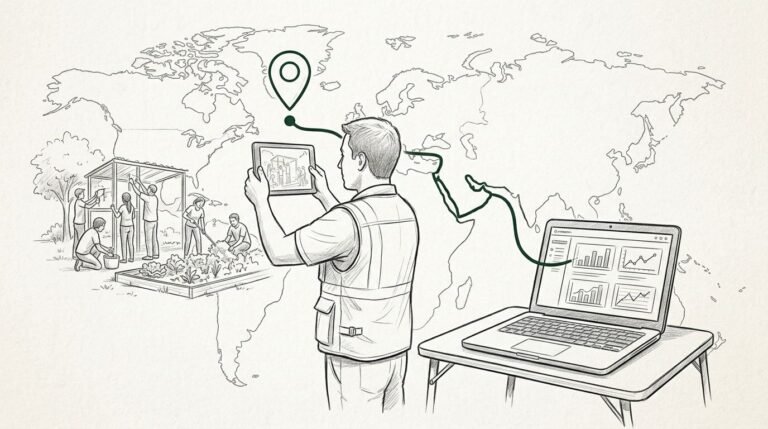
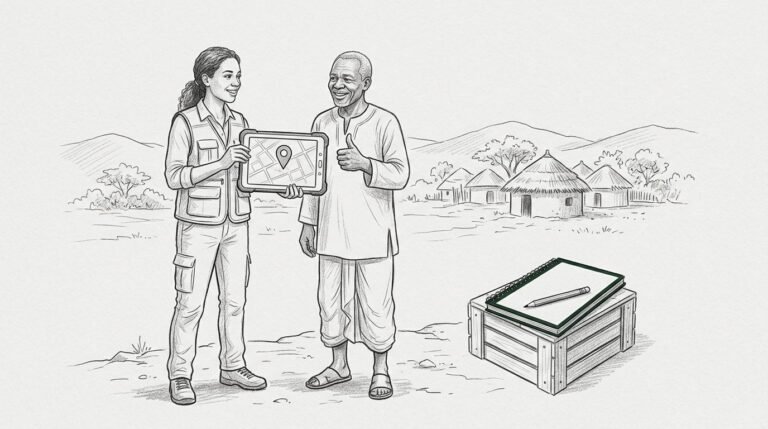
We use Geo-tagged Impact Projects to bridge the trust gap. Whether it’s building washrooms in rural schools or providing school transport for children, every act is numbered and tracked. We don’t want your blind faith; we want your literacy.

When we restore mangroves, we don’t just say “we planted trees.” We provide the data: the species (propagules), the GPS coordinates, and the date of planting. This is the difference between a “story” and a “factual baseline.”
The Live Mission Tracker: Turning Anxiety into Leadership
The antidote to environmental anxiety is not “hope”: it is accountability. Our Live Mission Tracker is a real-time window into the field. It is a tool for the literate contributor who understands that climate action is an accounting problem of carbon and biodiversity.
We are moving past the era of the “passive donor.” We are looking for leaders. Through platforms like our Climate Literacy competitions, we engage youth to turn their dread into direct action. They aren’t just learning about the problem; they are documenting the “source” of the damage: the soil mining, the blocked water, the land liquidation.
Final Warning: Don’t Buy the Ceremony
The next time you see a celebrity spokesperson or a massive billboard for a “clean the ocean” campaign, ask the sharper questions:
- Where is the 100% transparency?
- Can I see the geo-tagged data for my specific contribution?
- Is this money stopping the source of the damage, or just treating the symptoms?
If the answer is a vague appeal to “join the movement,” you are witnessing theater.
The earth does not need your awareness. It needs your intervention. It needs a system where every dollar is a verified brick in the wall against ecological collapse.
Stop donating to the theater. Start investing in the impact.
Explore our active missions and see what 100% transparency actually looks like.