Indian Cities Need Public Cooling Shelters Before Heatwaves Hit
 TBH Editorial
A heatwave doesn’t begin when someone collapses on a pavement. It begins when a city has already decided that shade, water, safe rest, and electricity are private purchases.
That is why these facilities matter. They give people a place to recover before heat stress becomes heat stroke, missed wages, hospitalisation, or death. For millions of Indians, staying indoors is not an option. Work happens on roads, construction sites, delivery routes, market lanes, factory floors, and packed homes with trapped heat.
Cities must stop treating extreme heat as a seasonal inconvenience. Climate change makes it a recurring urban planning issue, so cooling programs must be planned like drinking water, transport, and emergency care.
Key Takeaways
- Public cooling shelters should open before peak heat, remain available into the evening, and extend hours during dangerous hot nights.
- Effective shelters need safe drinking water, seating, toilets, trained staff, first-aid access, inclusive spaces, and backup power.
- Cooling programs must prioritise people facing the greatest risk, including outdoor workers, older adults, children, pregnant people, disabled residents, and those in overheated homes.
- Every ward needs a clear heat protocol with named responsibilities, mapped facilities, operating funds, emergency procedures, and public performance data.
- Shelters are essential, but lasting protection also requires shade, trees, cool roofs, better housing, reliable electricity, and heat-safe urban planning.
Public cooling shelters must open before the crisis
A shelter that opens after the worst afternoon has passed is not public protection. It is a late announcement with a fan.
India already has a warning framework. The National Disaster Management Authority explains that heat wave assessments depend on local temperature and departure from normal temperatures. In the plains, temperatures of 40 degrees Celsius and above can meet the baseline conditions for an assessment. NDMA’s heatwave guidance also recognises severe heatwaves when temperatures rise far beyond normal levels.
Weather thresholds should guide city cooling programs, but they should trigger action early, not delay it.
An official heat advisory should open a nearby cooling center before the most dangerous afternoon conditions. The same warning should extend the center’s hours when hot nights persist.
Waiting for a record temperature is a mistake
Extreme heat can harm people before a headline-breaking temperature is reported.
Humidity, hot nights, poor airflow, and direct sun all raise risk. The heat index offers a more useful measure of how conditions feel and affect health. Dehydration, medication, and hard physical work can turn a “normal” hot day into a medical emergency.
Research has linked heat exposure in India with increased daily mortality. The warning is blunt: a heat plan cannot react only to the thermometer at one airport.
Cities need ward-level risk maps, not one citywide alert that hides unequal exposure. Ward-level data show which neighborhoods face the greatest danger and help agencies assign responsibility. CEEW’s work with Indian cities calls for locally grounded heat-health thresholds, clear agency responsibilities, and risk assessments at ward level. Early activation, public communication, and coordination with health services are core emergency management duties.
Cooling is public health infrastructure
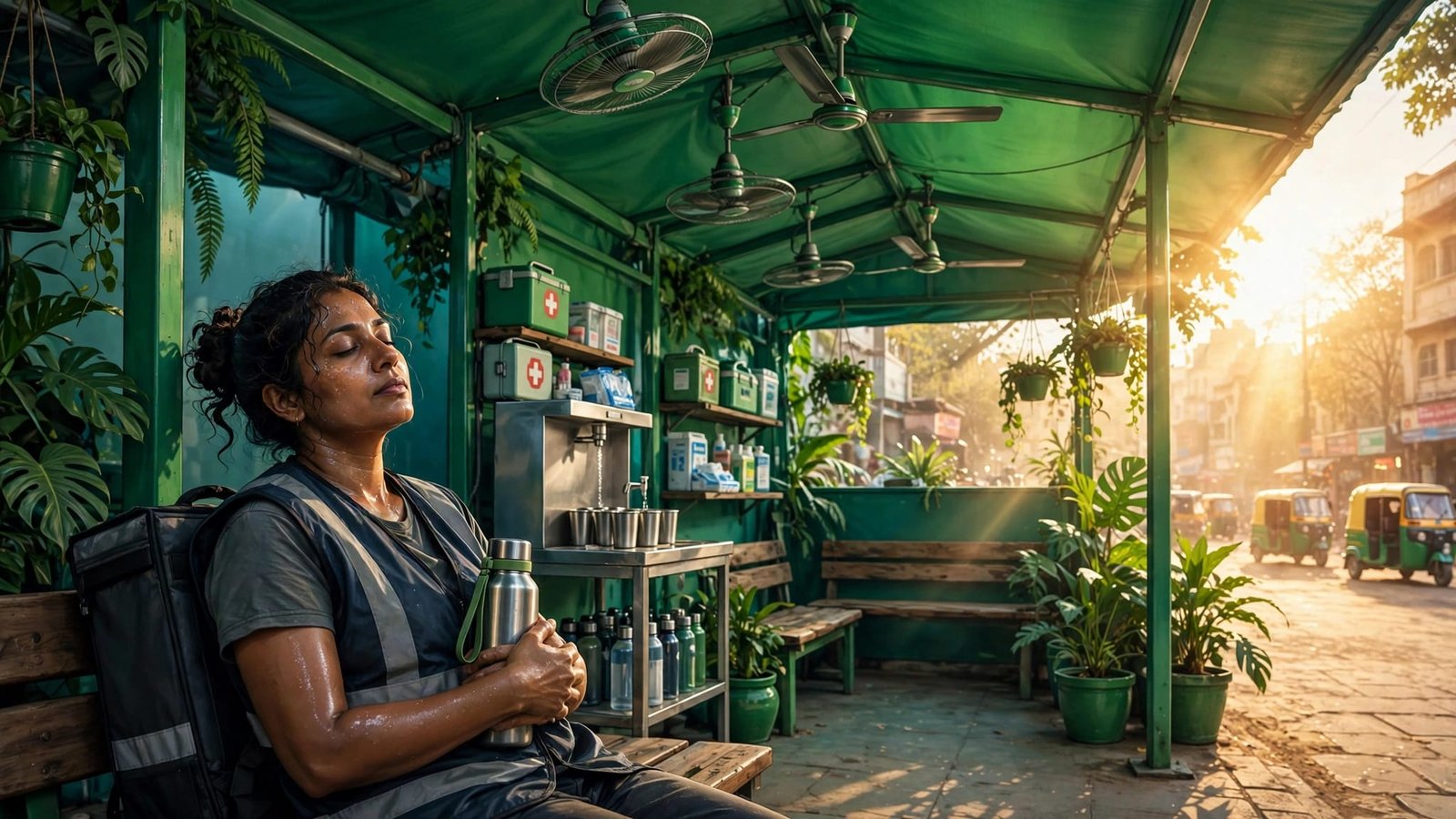
A public cooling shelter is a place where someone can lower their body temperature, drink safe water, and sit down. Staff should be ready to help if a person’s condition worsens. Cooling can prevent heat stress from progressing to heat stroke.
It should open before peak heat, stay open through the evening, and extend hours when nights remain hot.
This is not charity. It is Systemic change in its most practical form: a public building, a staffed room, an open door, and a budget that does not vanish after the first rain.
A city cannot call heat “natural” while forcing its poorest residents to buy their own protection from concrete, traffic, and failed planning.
What public cooling shelters should actually provide
Air-conditioned facilities can help when power capacity and maintenance are reliable, but they are not the whole answer. A cooling center must help people lower their body temperature safely during extreme heat. It must also be easy to reach, safe to enter, and reliable during a power cut.
Public libraries, community centers, primary health centres, transit hubs, schools used outside class hours, and senior centers can all work. The best location is often the one people already know. Shopping malls can serve as partner sites with non-purchase access, water, seating, and clear public terms. Informal cooling centers used by local communities can supplement designated municipal sites, but they cannot replace accountable public provision.
A cooling room needs more than one appliance
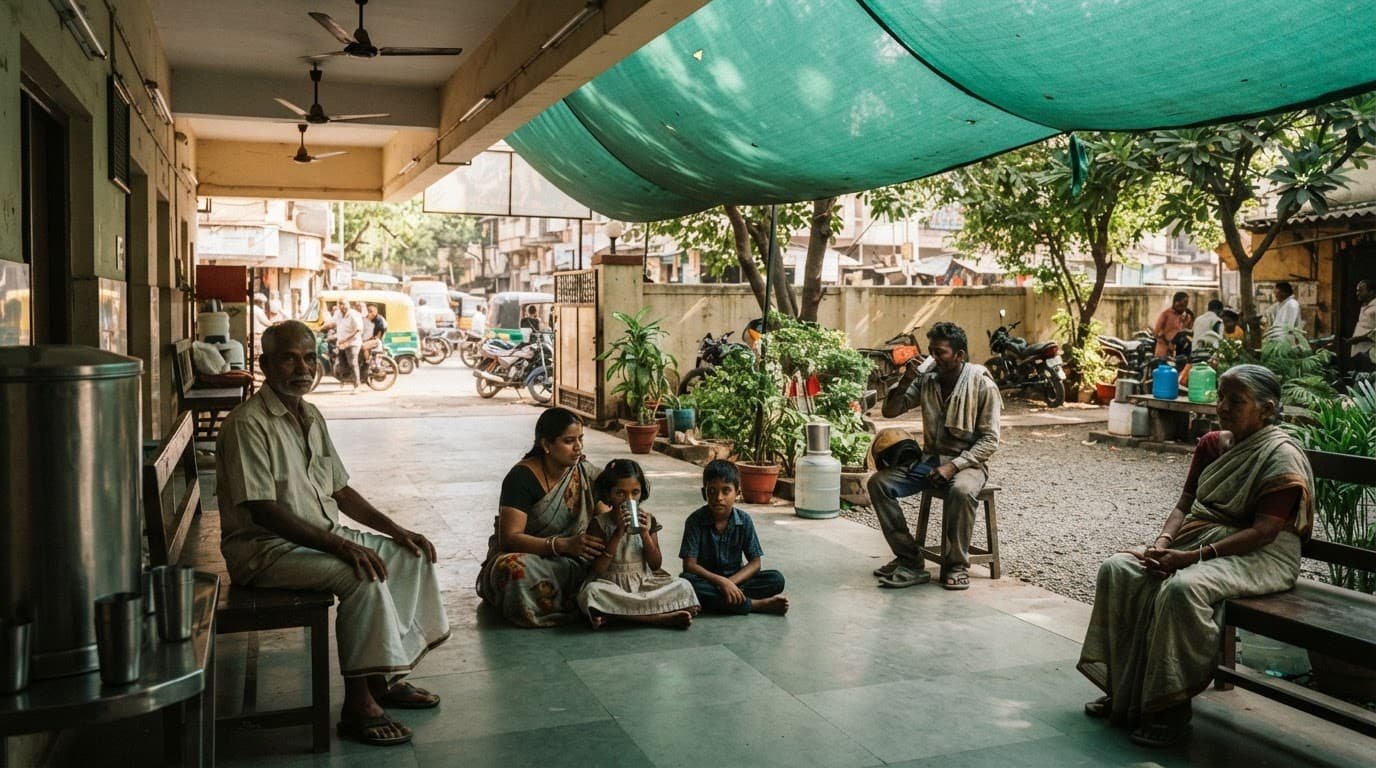
Fans move air, but they do not always provide enough relief during dangerous heat. A serious shelter combines active and passive cooling. It may use air-conditioning where power capacity allows, shaded entrances, cross-ventilation, insulated roofs, cool surfaces, drinking-water stations, and trees around the building. Swimming pools can supplement these measures only when access, supervision, water quality, and inclusion are addressed.
Every shelter should offer:
- Clean drinking water, cups or refill points, toilets, seating, and a clearly marked first-aid route.
- Staff who can recognise heat-related illness, spot confusion, fainting, vomiting, seizures, or loss of consciousness, and arrange prompt medical referral.
- Space for older adults, pregnant people, children, disabled residents, and workers carrying bags or tools.
- Backup power for lighting, fans, water access, and essential communication.
Heat stroke is an emergency. If someone is confused, unconscious, having a seizure, or has very hot skin after heat exposure, call 112 or local emergency services. Move them to a cooler place and begin cooling while help is on the way. Do not make a sick person wait for paperwork.
Keep the doors open when people need them
Shelters fail when their hours mirror office hours. The person who needs relief may be a street vendor at 3 pm, a domestic worker between homes, or a tenant in a top-floor room at 10 pm.
Cities should publish opening times, accessibility details, water availability, nearest clinic, and a phone number for each location. Effective cooling programs coordinate these details with shelter staffing, water supplies, and medical referrals. Share them on bus stops, ration shops, clinics, worksites, ward offices, radio updates, and WhatsApp groups, not in a PDF that appears after the heat alert.
Protect the people who cannot simply stay home
Extreme heat follows unequal housing, low wages, outdoor work, poor transit, limited health care, and neighbourhoods stripped of shade.
Older adults, infants, pregnant women, and people with heart or respiratory conditions face heightened risk. So do people taking certain medications and people with disabilities. Workers exposed to the sun for hours face serious danger too. Delivery riders, sanitation workers, construction crews, traffic police, street vendors, waste pickers, and informal workers often cannot pause without losing income.
Outdoor workers need rest without punishment
Water breaks are not enough when a worker has nowhere cool to sit or faces wage loss for stopping. Public cooling programs should include shelters near labour nakas, markets, bus depots, industrial areas, worksites, and dense informal settlements.
The government has urged states and Union Territories to include street vendors and other outdoor workers in heat action plans. That direction is recorded in a Parliamentary briefing on urban heat planning. Cities now need to show the public where those protections exist.
Employers must carry their share. A shelter does not excuse contractors who send people onto roofs at 2 pm without water, rest cycles, shade, or a heat emergency protocol.
Familiar places matter, but they are not enough
People will seek relief in shopping malls, cinemas, religious buildings, shaded markets, hospitals, railway stations, swimming pools, and relatives’ homes. These informal cooling centers can help when an emergency is immediate, but they are often unregulated.
Swimming pools may offer relief, but access and safety rules determine whether they help. A shopping mall may deny entry or require a purchase. A cafe can expect a purchase, and a station can be overcrowded. Private comfort is not a substitute for public duty.
Practical neighbour checks can help identify danger early, deliver water, and connect people with medical help. Workers also need enforceable protections, including shade, rest cycles, water, and freedom to stop during dangerous conditions. These actions matter, but they cannot replace public facilities. Asking people to be careful while removing public shade is moral theatre.
Heat action plans need a named person, place, and budget
India has expanded heat planning across states, districts, and cities. Ahmedabad, Bhubaneswar, and Surat are among the cities with documented heat action plans, as outlined in a review of plans in eight Indian cities. Documented plans show progress, but they don’t prove that shelters operate when needed.
Plans often include early warnings, public messaging, health-system preparation, and agency coordination. The relevant state department of health should guide clinical care, surveillance, and referrals. Emergency management should coordinate municipal, health, electricity, and transport agencies. These are useful foundations for a broader heat mitigation strategy, but they must address extreme heat in practice. A plan sets direction, an operating protocol assigns tasks, and measured delivery shows whether residents received help. Without designated shelters, public maps, operating funds for cooling programs, and accountability, residents get advice instead of relief.
Give each ward a practical heat protocol
Every ward should know which buildings become cooling shelters, who calls emergency services, and who handles supplies. Its inventory should include schools, public libraries, and other safe buildings, while mapping formal and informal cooling centers by hours, capacity, and access.
Test this protocol before April as part of emergency preparedness, not invent it in May. Drills should cover power outages, staffing gaps, and dangerous heat after sunset.
A useful protocol answers simple questions:
- Which site opens as a cooling center, who unlocks it, and who checks its readiness?
- Which residents live more than a 10-minute walk from a safe cooling space during extreme heat?
- Who covers staff, water, electricity, cleaning, and transport costs for cooling programs?
- What happens if a power outage hits during a heat alert?
- Where do people go after sunset when their homes remain dangerously hot?
Measure whether the shelter worked
A coat of paint can hide dampness. It cannot repair the pipe behind it. Heat policy has the same problem. A poster campaign can look responsible while people still faint at bus stops.
Cities should publish performance data for cooling programs, including shelter locations, daily hours, footfall, water outages, power failures, ambulance calls, and complaints. They should record which wards were left without access. Informal cooling centers included in the response also need inspection, public information, and referral pathways. This paper trail is not glamorous, but it makes failure visible.
Cool the city itself, not only the emergency room
Cooling facilities are necessary, but no city can shelter its way out of extreme heat, reckless construction, and sealed concrete.
A street without trees, open soil, shade, water access, or safe walking routes turns daily movement into heat exposure. Dark roofs and top-floor homes store heat long after sunset. Around shopping malls, heavily paved parking areas throw heat back at people, while tree canopy, shade, and permeable surfaces offer relief.
Urban biodiversity is cooling infrastructure
Healthy urban biodiversity is not decorative. Native tree canopy can shade streets, parks, bus stops, and other public spaces. Wetlands, open soil, pollinator patches, and connected green spaces support evapotranspiration and local cooling where water is available. These features also protect birds, insects, and small ecosystems already under pressure from dust, traffic, and habitat loss.
Still, planting saplings beside a six-lane road doesn’t fix a city that keeps cutting mature trees and sealing every patch of ground. We need maintenance budgets, protected roots, shaded bus stops, and weatherization programs for heat-exposed homes. These programs can improve roof insulation and ventilation, and support reflective or cool roofs. Rules must stop builders from passing their ecological impact onto residents.
For a fuller look at the limits of symbolic greening, read about India’s urban heat island challenge.
Personal choices have limits
Plant-based living, public transport, lower waste, and reduced consumption matter for emissions. A circular economy that repairs fans, upgrades roofs, recovers materials safely, and extends building life matters too. Energy assistance can complement those efforts, helping vulnerable households run fans or cooling equipment safely.
But none of that cools a one-room rental tonight if the roof is burning hot and the electricity has failed.
That is where sustainable business models have a real job. Cooling programs should connect emergency shelters with building upgrades and neighbourhood greening. Builders, employers, utilities, housing societies, and city agencies must fund heat-safe buildings and services. Climate change makes these investments more urgent as heat risk intensifies. Climate literacy means recognising who holds power over the conditions people endure.
Frequently Asked Questions
When should a public cooling shelter open?
A cooling shelter should open when an official heat advisory or local risk threshold indicates dangerous conditions, before the most intense afternoon heat. Its hours should extend into the evening when hot nights prevent homes from cooling.
What should a cooling shelter provide?
It should provide safe drinking water, seating, toilets, shade or active cooling, first-aid access, and staff trained to recognise heat-related illness. Shelters also need accessible spaces, clear medical referral pathways, and backup power for essential services.
Who should use a public cooling shelter?
Anyone who needs relief from dangerous heat can use one, especially outdoor workers, older adults, children, pregnant people, disabled residents, and people with health conditions. A shelter should not require a purchase, paperwork, or proof that someone is already ill.
Are shopping malls, cafes, or swimming pools a substitute for public shelters?
They can offer temporary relief, but access may depend on purchases, crowding, safety rules, or private policies. Informal cooling centers can supplement designated municipal sites, but they cannot replace accountable public provision.
How can cities tell whether a cooling program worked?
Cities should publish shelter locations, opening hours, attendance, water outages, power failures, ambulance calls, complaints, and wards left without access. This information shows whether facilities operated when needed and where the response failed.
Build public cooling shelters before the next alert
We already know who extreme heat reaches first. The delivery worker in traffic. The older neighbour on the top floor. The child walking home beside an unshaded road. The street vendor who cannot afford to stop.
Public cooling shelters turn a heat warning into something human: water, shade, rest, safety, and time to recover. They must open before bodies begin to fail.
Explore Our Active Missions and support grounded work on urban biodiversity and climate literacy, while strengthening public accountability as communities respond to climate change at street level.