
PFAS in India and the Drinking Water Blind Spot
 TBH Editorial
A glass of water can look perfect and still carry a chemical story nobody tested for. That is the heart of the PFAS India problem in 2026.
These forever chemicals are now part of a global health debate, yet the nation still lacks a national limit for their presence in our drinking water. When testing skips a pollutant, the risk does not disappear; it simply moves off the page and into daily life.
Key Takeaways
- Regulatory Gap: India currently lacks national drinking water standards or mandatory monitoring requirements for PFAS, leaving these persistent chemicals largely invisible in standard water quality reports.
- Pervasive Contamination: Often called ‘forever chemicals,’ PFAS originate from industrial discharge, firefighting foams, and consumer products like food packaging and textiles, eventually seeping into groundwater and food chains.
- Health and Equity: These chemicals pose significant long-term health risks, including immune and endocrine disruption; however, the burden of exposure falls disproportionately on vulnerable communities relying on untreated groundwater.
- Systemic Solutions: Individual filters and bottled water are insufficient safeguards. True protection requires source-level industrial regulation, mandatory public disclosure of chemical use, and a move toward safer material alternatives.
PFAS are built to stay, and that is the danger
PFAS, short for per- and polyfluoroalkyl substances, are a large family of synthetic chemicals made to resist water, oil, grease, and heat. While these traits seem useful in a product brochure, the extreme persistence of these compounds turns them into a long-term environmental threat. Because they do not break down in nature, their inherent toxicity accumulates in soil, rivers, and human blood.
These hazardous chemicals show up in stain-resistant textiles, grease-proof food packaging, industrial coatings, firefighting foams, and other treated goods. Because they do not degrade, they travel through waste streams, seep into groundwater, and cycle through food and water for years.
India is exposed from both ends. It manufactures goods that use PFAS, and it consumes them through packaging, clothing, furnishings, and industrial supply chains. At the same time, global rules are moving faster elsewhere. The European Union has tightened oversight and pushed member states into monitoring, while India still lacks a matching drinking water framework.
That gap matters because these substances are not easy to spot. They do not announce themselves with color, smell, or taste. Clear water can still be chemically dirty.
A recent critical review of PFAS contamination in Indian states lays out the same concern, as pollution sources are spread across industry and waste systems, while exposure routes reach water, food, and people. Once that pattern takes hold, cleanup becomes far harder than prevention.
The old idea of pollution as a smokestack problem does not fit here. These substances move through pipes, products, drains, sludge, landfill leaks, and consumer waste. In other words, the contamination trail is woven into ordinary life.
Why drinking water in India remains a blind spot
India’s biggest weakness regarding chemical contamination is not just the presence of pollutants. It is the lack of routine visibility. As of June 2026, India still has no national standard for PFAS and no dedicated rule that makes regular monitoring unavoidable. Significant regulatory gaps continue to persist, leaving the country without a clear oversight framework to address these persistent substances.
Most water testing programs focus on germs, fluoride, arsenic, nitrates, hardness, and a familiar set of pollutants. Those checks matter. Still, a test sheet shapes public reality. If harmful compounds are not on it, utilities can report water quality without ever looking for them.

If contaminants are missing from the test sheet, they disappear from policy, not from water.
This becomes clearer when you compare India with other regions that are prioritizing public health through more robust environmental regulation.
| Region | 2026 status | What it means for the public |
|---|---|---|
| India | No national limit or dedicated monitoring rule | Water can be declared compliant without testing |
| United States | Federal limits for six chemicals were set in 2024 | Utilities at least have formal targets and reporting duties |
| European Union | Member states had to begin monitoring in drinking water by January 2026 | Monitoring becomes part of routine oversight |
The takeaway is simple. Other regions are arguing over limits, deadlines, and cleanup costs because they have already admitted that PFAS belong in the conversation. India is still at the earlier step of making these chemicals visible in the first place.
That is why the problem is a blind spot, not a mystery. The science is moving. Public systems are not moving with it.
Where PFAS may be entering Indian water
PFAS do not need one giant disaster to enter water. They can leak in through many ordinary channels, each easy to ignore on its own.
Industrial discharge is a primary route. PFAS are used in textile finishing, coated paper, metal treatment, electronics manufacturing, and specialty chemical applications. When wastewater treatment systems are not designed to filter these compounds, they pass through and migrate into rivers, canals, or vital groundwater reserves. The risks are sometimes tied to global industrial shifts, such as when industrial equipment from shuttered facilities is relocated. For instance, concerns were raised regarding the potential transfer of materials from the Miteni plant in Europe to Lote Parshuram in Maharashtra. This highlights how the movement of technology and PFAS production capabilities can introduce new environmental burdens. Whether through accidental spills or regular operational discharge, a local chemical plant often lacks the specialized filtration needed to prevent persistent chemicals from reaching the surrounding ecosystem.
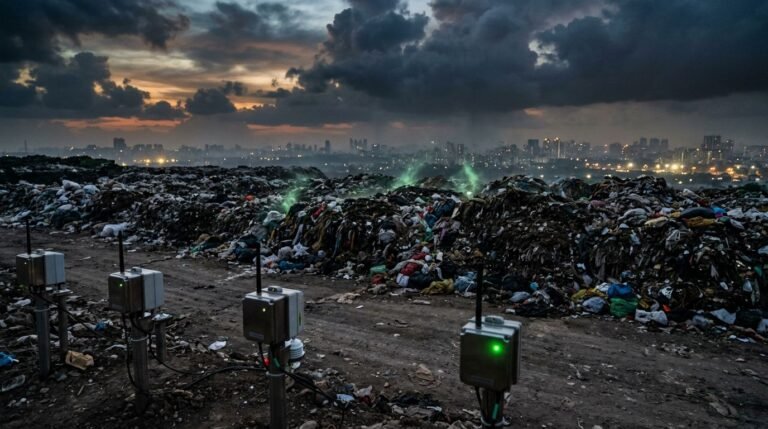
Waste systems add another layer of complexity. Grease-proof packaging, treated fabrics, industrial sludge, and discarded products do not become safe when they leave a factory gate. Landfills can leach chemicals into the soil, and informal dumping often spreads contamination across local drains. Burning waste frequently shifts the pollution into ash and air rather than eliminating it.
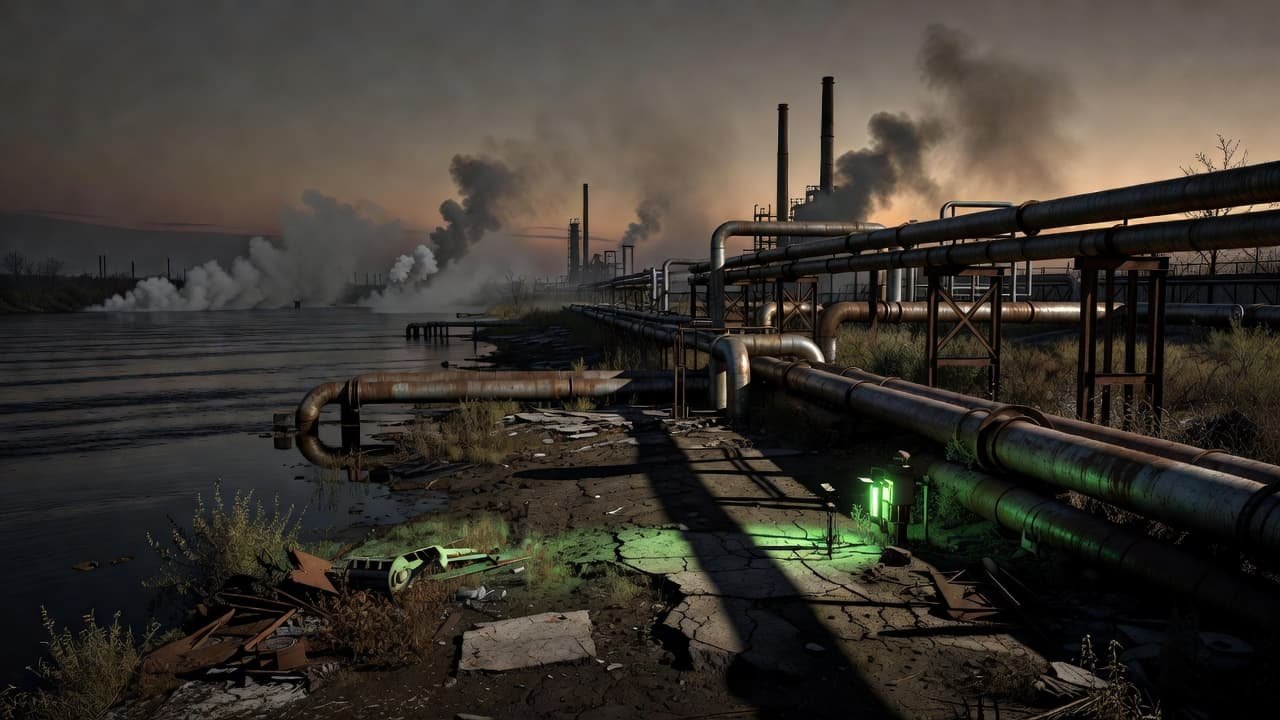
Airports, defense sites, and industrial fire training areas also matter, as firefighting foams have been a known source of pollutants in many countries. Even companies like Laxmi Organic Industries operate within a broader industrial landscape where the cumulative impact of these various activities is difficult to track. India has not yet mapped these risks in a way that the public can easily monitor.
The pattern feels familiar. Cities often answer visible pollution with visible cleanup, while the system keeps generating new risks underneath. One-off water sampling works the same way. A single test or a pilot plant may create headlines, but exposure only changes when the source changes.
That is where systemic change starts. It begins at discharge points, factory purchasing decisions, waste handling rules, and product design. A flashy household fix cannot protect a downstream settlement if upstream release continues.
The broader case for action is laid out in a 2026 call for comprehensive PFAS action in India. The message is not abstract. Without national monitoring, source tracking, and regulation, India is left guessing while pollutants continue to spread.
The people carrying the highest risk rarely chose it
A dirty exposure pathway is not equal for everyone. That is true for road dust, smoke, landfill fires, and it is true for PFAS in water.
Families with bottled water budgets, premium filters, and multiple taps are not living the same chemical reality as people who depend on borewells, tanker deliveries, school taps, roadside storage, or hand pumps near industrial belts. Workers in textile finishing units, packaging plants, waste yards, and fire response roles may face added contact through air, skin, and repeated water use.
Children carry a special share of the risk because their bodies are still developing and their water intake per body weight is higher. Pregnant women, nursing infants, and people with weak health care access also sit in a harder place. When human exposure is chronic, small daily doses matter.
Health research on chemicals does not claim every compound acts the same way. The family is too large for that. Still, evidence from well studied substances links long term exposure with immune effects, thyroid disruption, liver changes, altered cholesterol, pregnancy related harm, and cancer-linked health issues. Uncertainty about the full family is not a safety certificate.
The concern is no longer theoretical in India. A groundwater assessment in Assam’s Kamrup region found contamination and raised health concerns tied to drinking water exposure. That kind of local evidence matters because it moves the issue from imported anxiety to documented Indian conditions.
A commuter, a street vendor, or a schoolchild does not consume water in a lab. They rely on the systems available to them. When those systems fail to monitor emerging contaminants, the burden of environmental justice lands on the people with the least room to opt out, particularly those relying on untreated groundwater sources.
PFAS do not stop at the tap
The public usually meets PFAS as a human health story. That is only part of it. These chemicals move through rivers, ponds, sediments, fish, crop water, and wetland food webs.
Once these substances enter the surface water, they can spread far beyond the original discharge point. Some attach to sediments. Some circulate in aquatic life, leading to the process of bioaccumulation where toxins concentrate as they move up the food chain. Some move into irrigation systems and soil. That means the ecological impact is wider than one treatment plant or one neighborhood.
This matters for urban biodiversity too. City lakes, peri-urban marshes, drains that feed wetlands, and small river edges are already stressed by sewage, heat, and heavy runoff. Add persistent chemical contamination, and the quality of habitat drops again. Birds, fish, amphibians, insects, and soil organisms all depend on water webs that planners rarely monitor.
The damage is easy to miss because it does not always look dramatic. A water body can appear calmer than it is. A fish market can function as usual. A park lake can still attract birds. Yet pollution that moves through food and sediment can thin out ecological health over time.
A serious water policy cannot treat biodiversity as a decorative extra. It is part of public safety. Contaminated wetlands do not only hurt wildlife; they weaken local cooling, reduce natural filtration, and put more pressure on already fragile urban systems.
That is why water justice and ecosystem protection belong in the same frame. When chemical oversight stays narrow, both people and living systems carry the cost.
Why personal caution cannot carry a public water crisis
Many readers want a practical step, and some personal action does help. Everyday mindfulness can cut a slice of exposure. You can check whether your local water supplier publishes test data, reduce the use of grease-resistant disposable packaging, replace damaged nonstick cookware, and avoid buying products marketed for extreme stain-proof or water-proof performance when you do not need them. These steps help you avoid common hazardous chemicals found in many everyday consumer products.
Some home systems can also reduce certain PFAS. Activated carbon, ion exchange, and reverse osmosis are the methods most often discussed. Yet each comes with limits. Performance varies by compound, maintenance matters, and replacement filters create their own disposal problem. A neglected filter is not much of a safeguard.
Bottled water is an even weaker answer. It shifts cost onto households, adds plastic waste, and leaves community taps untouched. If only wealthier families can buy cleaner water, the result is not safety. It is chemical inequality with better packaging.
The same caution applies to lifestyle shifts. Plant-based living may lower contact with some highly packaged, grease-proof food habits, and it often fits a lower-waste life. Still, diet choices cannot clean an aquifer. Consumer virtue is too small to address a pervasive public health issue caused by industrial-scale pollution.
A real fix has to reduce contamination at the source, track it in public systems, and keep polluters from passing treatment costs downstream. Otherwise the country ends up polishing the symptom while the cause keeps flowing.
That is the pattern people should watch for. Visible household fixes feel active, but they do not replace accountability.
What Systemic change would look like for PFAS in India
India does not need a perfect master plan before it starts. It needs a clear first set of public rules.
The first step is a robust regulatory framework for drinking water, or at least an interim monitoring mandate for a defined set of PFAS. Without this, state boards, utilities, and labs will continue treating PFAS as optional. India also needs public reporting for high-risk zones, including industrial clusters, airports, landfill edges, and groundwater dependent communities.
Next comes source control. Manufacturers using these chemicals should disclose their use, and every new project should undergo a rigorous environmental impact assessment. Wastewater permits must require testing where contamination is likely. Product categories with safer substitutes should phase out these chemicals first. Public procurement can push that shift faster by refusing unnecessary chemically treated goods.
A credible circular economy cannot keep toxic inputs invisible and then celebrate reuse at the back end. We must also recognize the reality of environmental colonialism, where the burden of toxic production is frequently shifted to developing nations. If coatings, packaging, sludge, and industrial residues circulate without chemical transparency, the loop only spreads contamination. Cleaner material cycles need stronger design rules, safer chemistry, and environmental monitoring standards that match the hazard.
That is also where sustainable business models matter. Companies that claim environmental values should be ready to map hazardous chemicals across their supply chains, publish phase-out plans, and pay for safer alternatives. A business is not sustainable if its margins depend on offloading health costs onto water users.

Public awareness matters too, but it should go beyond doom. Better climate literacy should include chemical literacy, because water safety, waste systems, and industrial choices shape the same future people are trying to protect. Grounded civic work builds that trust. If you want to see projects that connect ecosystems, public accountability, and community care, Explore Our Active Missions. Work like Mission S.E.E.D. in the Sunderbans also shows how education and ecological repair can move together on the ground.
The wider lesson is simple. PFAS policy is not a niche technical debate. It is about who gets counted, who gets protected, and whose water can stay untested without public outrage.
Frequently Asked Questions
Why are PFAS called ‘forever chemicals’?
These substances possess strong chemical bonds that prevent them from breaking down in the environment. Because they resist natural degradation, they accumulate in soil, water, and human tissue over long periods.
Can I remove PFAS from my tap water at home?
While some technologies like activated carbon or reverse osmosis systems can reduce certain PFAS levels, their effectiveness varies significantly based on the specific compound and maintenance. These systems are not a permanent solution and often create a secondary waste disposal challenge for the filter materials.
Does a lack of national standards mean my water is safe?
No, it simply means that utility providers are not currently required to test for or report these chemicals. A water sample can be considered compliant under current regulations while still containing significant levels of unregulated contaminants like PFAS.
How does industrial activity contribute to PFAS in my local water?
PFAS are used extensively in manufacturing, including textile finishing, metal plating, and electronics. When industrial wastewater treatment facilities are not equipped to filter these specialized chemicals, they are discharged directly into local rivers and groundwater reserves.
Conclusion
Clear water is not proof of clean water. In India, the PFAS blind spot persists because regulation, routine testing, and public disclosure still lag behind the risk. The reality of PFAS India is that we must move beyond reacting to localized pollution scandals and instead commit to comprehensive, long-term environmental regulation.
The strongest takeaway is this: invisible pollution is still real pollution. PFAS are famously known as forever chemicals, and until they become a standard part of water governance, the cost will continue to land on households, workers, and ecosystems that never agreed to carry the burden.