Why Mangrove Planting in India Fails Without Tidal Flow
 Saket Sambhav
A dead mangrove sapling can still make a good photo. That is part of the problem with mangrove planting in India, where plantation counts often get celebrated before anyone asks whether the tide can still reach the site.
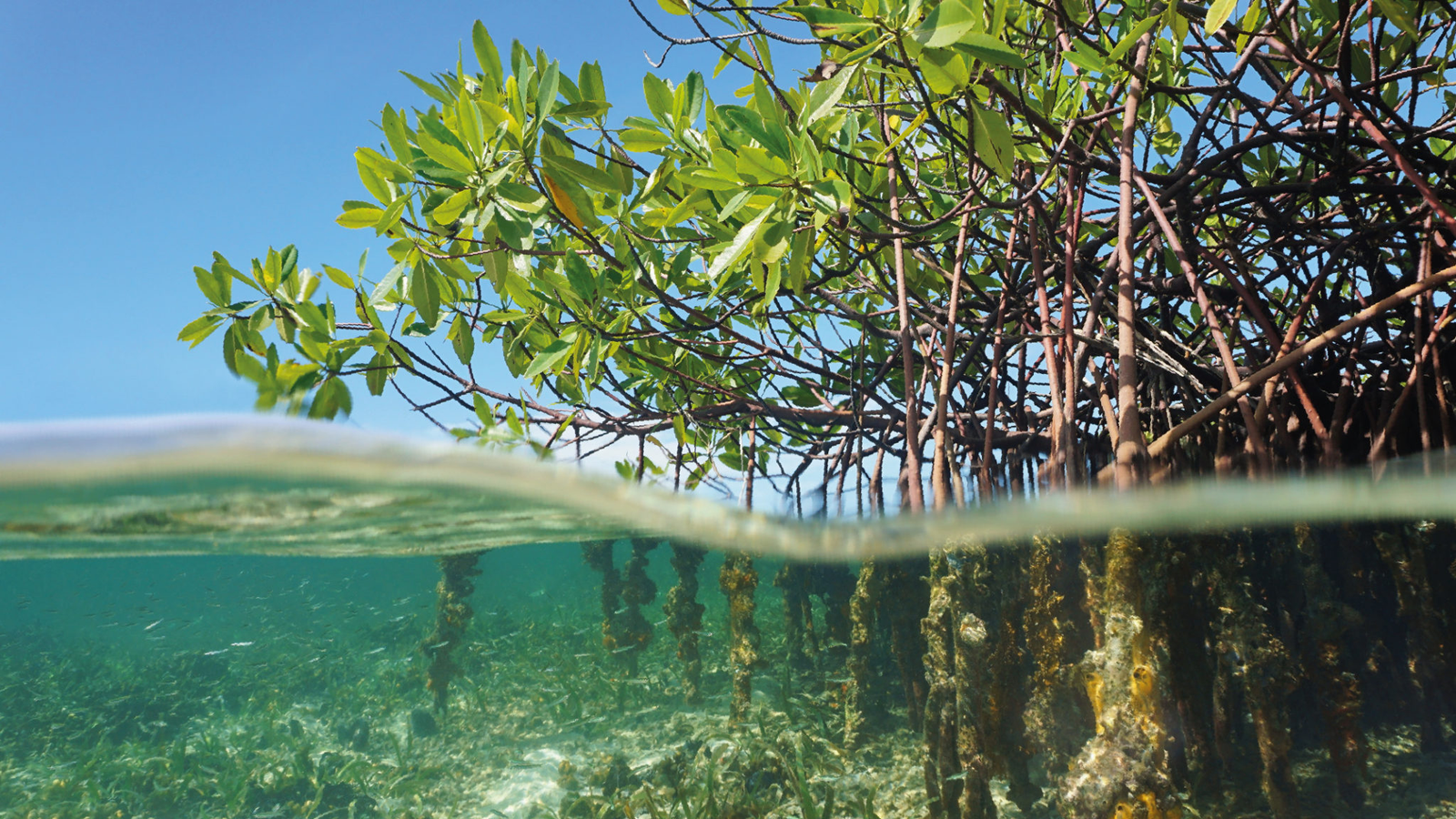
Mangroves are not land trees pushed into wet soil. They are intertidal systems, built by a repeating rhythm of flooding, draining, salinity shifts, sediment movement, and time.
Break that rhythm, and the plantation drive turns into ceremony.
If we want living coastlines instead of upright dead sticks, we have to start with water, as successful mangrove restoration is the only way to ensure long-term coastal protection.
Key Takeaways
- Tidal influence is the first test of any mangrove restoration site. If water cannot move in and out naturally, seedlings usually fail.
- Planting the wrong species, at the wrong elevation, in the wrong hydrology is a common reason large projects collapse.
- Indian restoration failures often trace back to blocked creeks, land filling, rushed targets, weak monitoring, and a poor survival rate that reflects low community ownership.
- The best restoration work starts with habitat restoration, not sapling procurement.
- Real systemic change means fixing hydrology, reducing pressure on the site, and tracking survival for years, not for a photo cycle.
The biggest mistake in mangrove planting across India
We keep treating mangroves like a tree problem. They are a water problem first.
That sounds small, but it changes everything. When a degraded coast loses tidal exchange, you cannot solve it by bringing in thousands of nursery-raised seedlings, a common practice seen in massive initiatives like the MISHTI scheme. You have to ask a tougher question: what broke the site in the first place?
A lot of mangrove restoration work fails because the wrong success metric gets used. The headline becomes how many saplings were planted, not how many survived three monsoons, not whether fish returned, not whether sediment started settling again, and not whether nearby families became safer from coastal erosion.
Recent reporting, including Knowable Magazine’s look at failed mangrove restoration, keeps circling the same truth.
Mangroves die when people plant them in places that no longer function as mangrove habitat. The mud may still be there, but the tidal logic is not.
Without proper hydrology, these areas fail to support effective shoreline stabilization, which is the true goal of a healthy ecosystem.
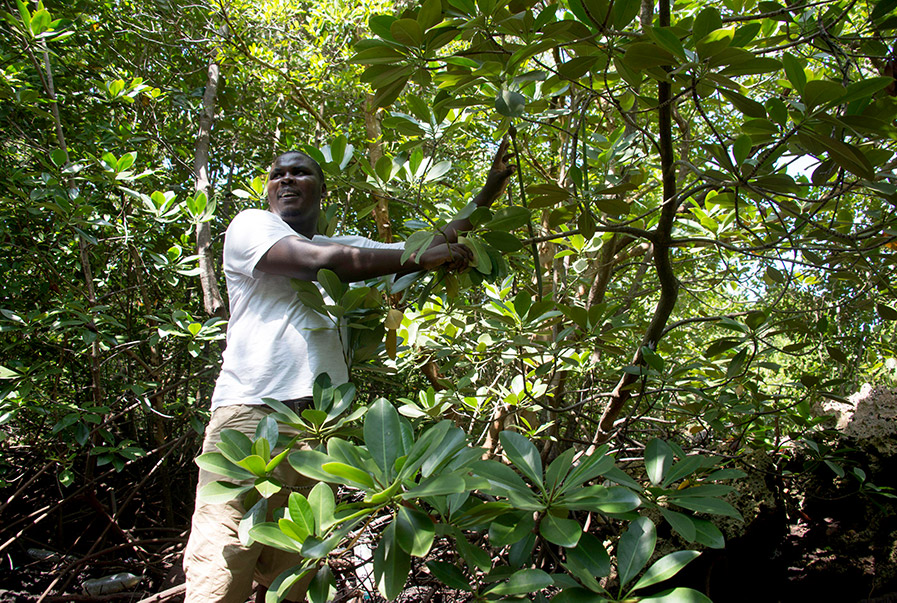
CREDIT: GIOIA FORSTER / DPA / ALAMY LIVE NEWS
That matters in India because many damaged sites are not empty nature waiting for a tree drive. They are altered coasts, cut by roads, pinched by embankments, filled for construction, or stressed by grazing and waste.
A sapling placed there may look hopeful for a month. After that, hydrology takes over.
If the tide cannot enter and leave, you are not restoring a mangrove forest. You are planting into a broken coastal drain.
That is why the old idea of more planting equals more restoration keeps falling apart. It is the same mistake cities make with flashy clean-up gadgets. The visible object gets attention. The source of damage stays open. In coastal work, the source is often blocked water.
Why tidal flow decides whether mangroves live
Mangroves survive in a narrow band between land and sea where they rely on consistent tidal influence to regulate salinity levels. Their roots need periodic flooding, followed by exposure.
They require specific salt concentrations, but they cannot thrive if the balance is disrupted. They need sediment deposition, but they cannot withstand scouring waves; similarly, they require water movement without falling into permanent stagnation.
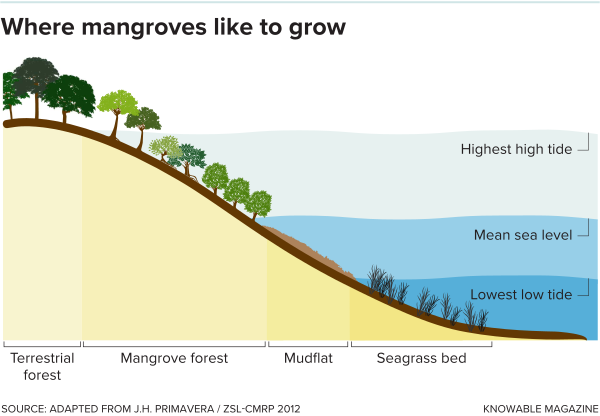
Tides do more than wet the mud. They serve as a delivery system for fine sediments, essential nutrients, oxygen exchange, and natural propagules.
They also flush out stagnant water that would otherwise kill the plants.
When you cut off that motion, the site begins to behave like a dry salt pan, a waterlogged basin, or barren mudflats.
This is why hydrology beats sapling count every time. A scientific analysis of mangrove planting on mudflats warned years ago that planting into the wrong physical setting can damage fragile coasts rather than restore them.
A study of young planted mangroves in a calm bay environment also points to the same scientific conservation, as survival depends on the right intertidal conditions rather than planting effort alone.
A simple comparison makes the problem easier to see.
| Site condition | What happens to water | Likely result |
|---|---|---|
| Open creek with natural exchange | Regular flooding and drainage | Better survival, more natural regeneration |
| Site blocked by bunds or fill | Stagnation, hypersalinity, or dryness | Stress, stunting, seedling death |
| Low mudflat with wrong species | Too much inundation and wave stress | Uprooting and rot |
| Raised bank with little tidal reach | Too little moisture and poor sediment input | Weak growth or collapse |
The pattern is blunt. Mangroves need a working tide, not symbolic mud.
This also explains why one mangrove species cannot be planted everywhere.
Different varieties occupy different elevations and salinity zones. Some tolerate more flooding, while others prefer slightly higher ground.
Ignore that, and even a native species becomes the wrong choice for the local environment.
What goes wrong when Indian coasts lose their tidal pulse
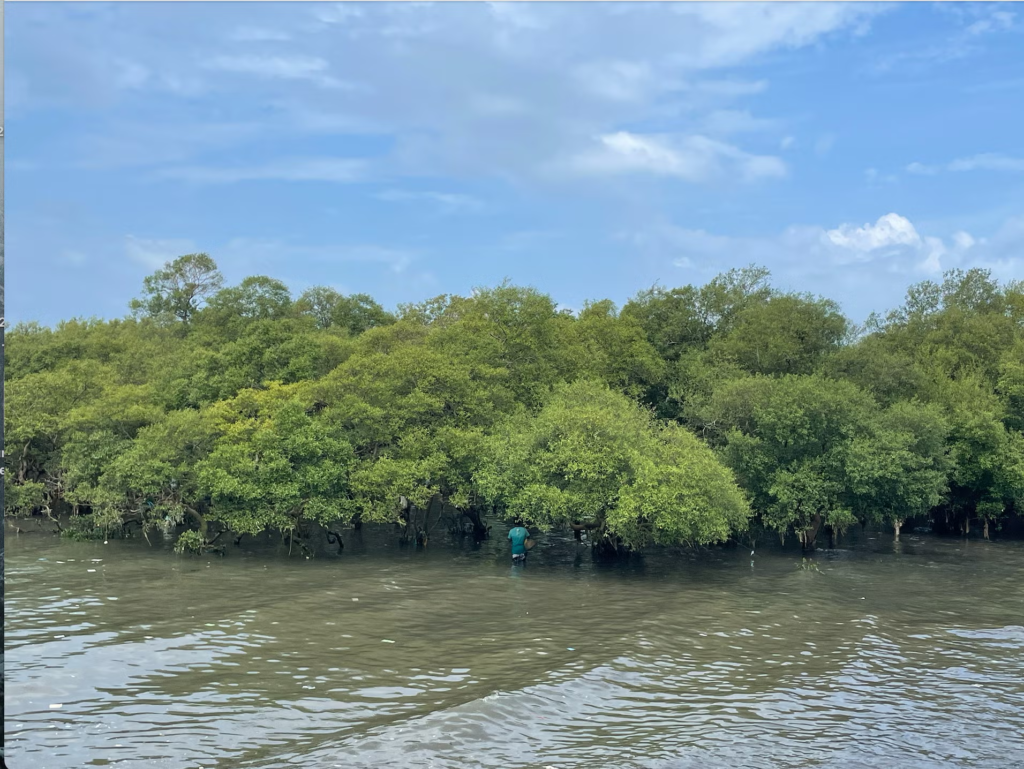
India offers too many examples of restoration being asked to fix damage it did not cause. Around urban and industrial coasts,
- creeks are narrowed,
- edges are hardened, and
- old mangrove lands get filled or cut off.
Then a plantation is announced on the leftovers.
Mumbai is a hard lesson here. Recent reporting on the restoration push in Maharashtra found that of 157 hectares targeted for increasing mangrove cover, only about 30 hectares showed success, while more than half the sites had no growth at all.
This failure rate stands in stark contrast to the optimistic projections often seen in the State of Forest Report.
That is not a small miss. That is a warning flare about site selection and hydrology that applies far beyond Mumbai.
Similar hydrological disruptions are threatening critical regions like West Bengal and the lush deltaic expanses of Bhitarkanika, where blocked water flow turns vibrant estuaries into stagnant zones.
Some of these places were historically mangrove land. That fact alone does not make them plantable now. Once filling, dumping, bunding, and urban conversion block tidal exchange, the site may stop acting like mangrove habitat unless the water pathways are reopened first.
The same issue shows up across deltas and estuaries in other forms. Embankments built for flood control can alter how water enters degraded margins.
Small roads with bad culverts can choke off creeks.
- Aquaculture,
- brick dumping, and
- construction spoil can flatten or isolate the intertidal gradient.
Once that happens, the site stops receiving the sediment and nutrient flows that young mangroves depend on, eventually leading to accelerated coastal erosion.
Then the social cost lands on coastal communities who did not design the failure. Fishers lose nursery habitat, and women collecting shellfish or fuel face thinner returns.
Villages lose natural buffers against waves and salinity intrusion, leaving them vulnerable to severe cyclone impacts.
Children inherit a landscape that no longer provides basic coastal protection.
That is why the ecological impact of failed plantations is larger than dead saplings. A broken mangrove belt also weakens food webs, local livelihoods, and storm protection.
In estuaries near major cities, it chips away at urban biodiversity too, because mangrove creeks support birds, crabs, juvenile fish, and all the quiet life that coastal concrete often tries to erase.
Monoculture planting and rushed targets make failure worse
Hydrology is the first failure point, but it is not the only one. The second big mistake is relying on a mass plantation approach, treating restoration like a nursery sale where one species and one method are applied to meet a target before a deadline.
Across tropical restoration, teams often source a high volume of mangrove saplings, such as Rhizophora, Avicennia, or Sonneratia, and spread them widely across diverse conditions.
That looks efficient on paper. On the ground, however, it represents a departure from effective ecosystem management. Mangrove forests are zoned communities, not repeating wallpaper.
True biodiversity conservation requires mimicking the natural complexity of these habitats rather than settling for ecological laziness.
In parts of India, recent coverage has linked about half of some restoration failures to single-species planting and weak community engagement.
That pairing matters. When the species mix is wrong and local people are treated as labor rather than long-term stewards, the survival rate drops twice, once from ecology and once from governance.
Another problem is speed.
- Funding windows,
- audit calendars, and
- monsoon deadlines push managers toward visible output.
Trees can be counted fast. Baseline hydrology mapping, sediment surveys, grazing controls, and five-year monitoring cannot.
The restoration guidelines used across the Western Indian Ocean read almost like a list of avoidable mistakes: poor site choice, wrong species, ignored hydrology, and weak follow-up. India keeps running into the same wall.
Mangrove scientist M. Kathiresan has long pushed a simpler starting point. Compare the degraded site with a nearby healthy patch. Look at water movement, elevation, species pattern, and human pressure. Ask what changed. Only then decide whether planting belongs at all.
That is still not standard practice everywhere. India is moving toward a unified restoration approach through the Bureau of Indian Standards, but a draft standard alone will not save a site.
Monitoring has to stay funded. Failure data has to stay public. Otherwise, we keep mistaking procurement for ecology.
What honest mangrove restoration looks like instead
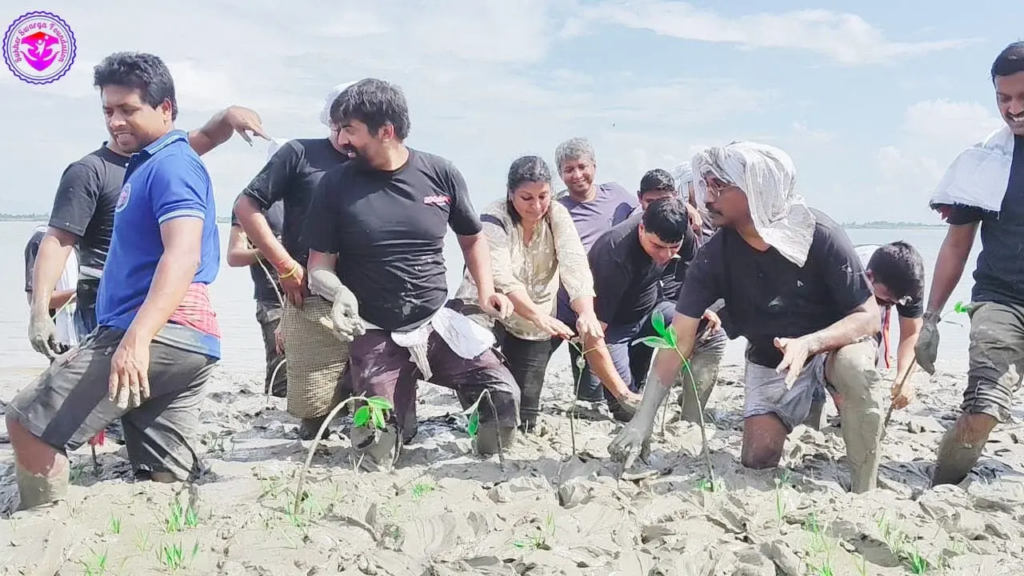
The fix is less glamorous than a plantation event. It is also more honest.
Good mangrove restoration usually follows a sequence like this:
- Re-open blocked tidal pathways before ordering seedlings.
- Match the site to a nearby healthy mangrove reference area.
- Reduce pressures such as grazing, dumping, or repeated cutting.
- Plant only where natural habitat restoration needs help, then monitor for years.
That order matters. Planting comes late, not first.
This approach is often called ecological mangrove rehabilitation. The best version of it starts by repairing the physical setting so nature can do more of the recruitment work.
In many places, once the hydrology is back, mangroves return on their own or need far fewer planted saplings.
That is better ecology and better economics. A circular economy should not tolerate waste dressed up as conservation. When projects succeed, they provide vital carbon sequestration and help buffer communities against the impacts of climate change.
Dead plantations, however, burn through nursery stock, plastic guards, boat fuel, labor, grant money, and public trust. When the same failed model repeats every season, the coast becomes a disposal site for good intentions.
The human side matters just as much. Projects hold up better when nearby communities have a real stake in them, not token attendance at launch day.
That can mean fair wages for site care, protection against cattle browsing, rights-based planning, and livelihood links that make a restored creek worth defending.
We also need sustainable business models around the coast itself. If ports, developers, shrimp ponds, and dumping practices keep blocking water channels, restoration teams are working downstream of an active problem. Planting cannot outpace fresh damage.
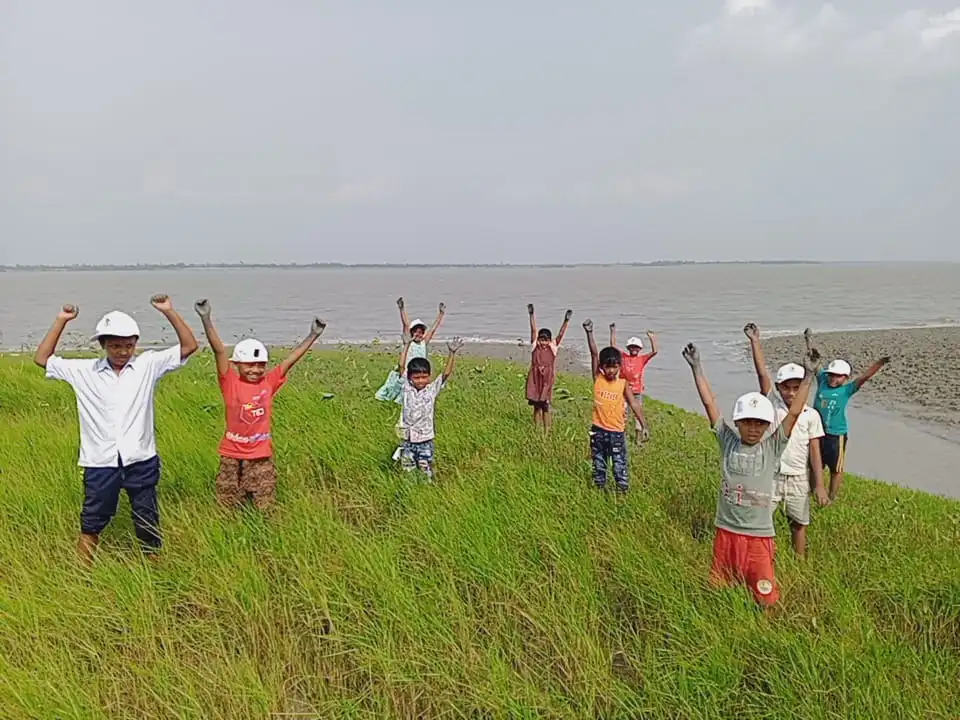
That is why I trust work that shows its field logic, not only its sapling number. In the Sundarbans, Mission S.E.E.D. in the Sundarbans connects school continuity and native mangrove recovery because ecosystem stress and human stress are tied together.
If you want to see that kind of public accountability in motion, Explore Our Active Missions and look for the projects that report where the work happened, not only that it happened.
Real climate literacy begins there. It asks harder questions. Was the creek reopened? Did the species match the elevation? Who monitored survival after the cameras left? Who benefits if the forest returns?
Why this matters beyond one muddy shoreline
Some readers will ask a fair question. Why should people far from the coast care this much about tidal flow?
Because the argument is bigger than mangroves. It is about whether we reward visible gestures or functioning systems. That choice shows up in air pollution, waste, water, transport, and our approach to climate change.
We keep looking for neat objects that photograph well, but nature keeps asking for maintenance, patience, and repair.
There is also a values lesson here. Many people already practice some form of low-impact living, whether that means plant-based living, everyday mindfulness, lower consumption, or better waste habits.
I respect that. We need those shifts. But personal virtue does not unblock a creek. Public systems do.
That is the uncomfortable part. Systemic change is slower, messier, and less photogenic than a planting drive. Yet it is the only thing that keeps a mangrove site alive once volunteers go home.
It means land-use discipline, hydrology mapping, long-term finance, transparent survival data, and rigorous coastal planning for the Indian coastline that stops treating estuaries as spare land.
This level of oversight is essential for genuine mangrove restoration, as it ensures that the environmental conditions remain hospitable for native species to thrive.
When those pieces line up, the reward is not abstract. You get better fisheries, cleaner water movement, stronger storm buffers, richer birdlife, and a robust framework for biodiversity conservation that allows the coast to work with the tide instead of pretending it can ignore it.
Frequently Asked Questions
Why is tidal flow considered more important than the number of saplings planted?
Mangroves rely on a consistent rhythm of flooding and drainage to manage salinity, transport nutrients, and distribute sediment. If a site lacks proper tidal exchange, the area becomes either stagnant or hypersaline, making it impossible for saplings to survive regardless of how many are planted.
What are the main signs that a mangrove restoration project is likely to fail?
Common warning signs include planting in areas where natural water pathways are blocked by roads, embankments, or construction. Projects that focus on high-volume, single-species planting without addressing existing land-use issues or monitoring long-term survival rates are frequently destined for failure.
How does community involvement improve the chances of restoration success?
Local residents often have the best understanding of the historical hydrology and specific stressors of their coastline. When communities are treated as long-term stewards rather than temporary labor, they provide essential protection against grazing, illegal dumping, and encroachment that threaten young forests.
Can any coastal site be restored if we plant enough trees?
No, many damaged sites have been fundamentally altered by urban development or filling, which permanently cuts them off from the intertidal environment. Restoration can only succeed if the site’s physical hydrology is first repaired to mimic natural, functioning mangrove habitat.
The coast remembers the tide
Mangroves do not fail because people care too little. They fail because too many projects start at the end of the story, with planting, instead of the beginning, with water.
The next time you hear about a big plantation target, ask a sharper question than “How many saplings?” Ask whether the tide can still enter, drain, and rebuild the site. That one question cuts through a lot of green theater.
If we want to move toward authentic accountability, we should look to the resilience of the Sundarbans as a model for how nature sustains itself.
Back work that prioritizes hydrology, survival, and community involvement. True mangrove restoration requires a living coast, which serves as much better proof of success than any simple plantation count.