
Why Landfill Leachate Pollutes Groundwater in Indian Cities
 TBH Editorial
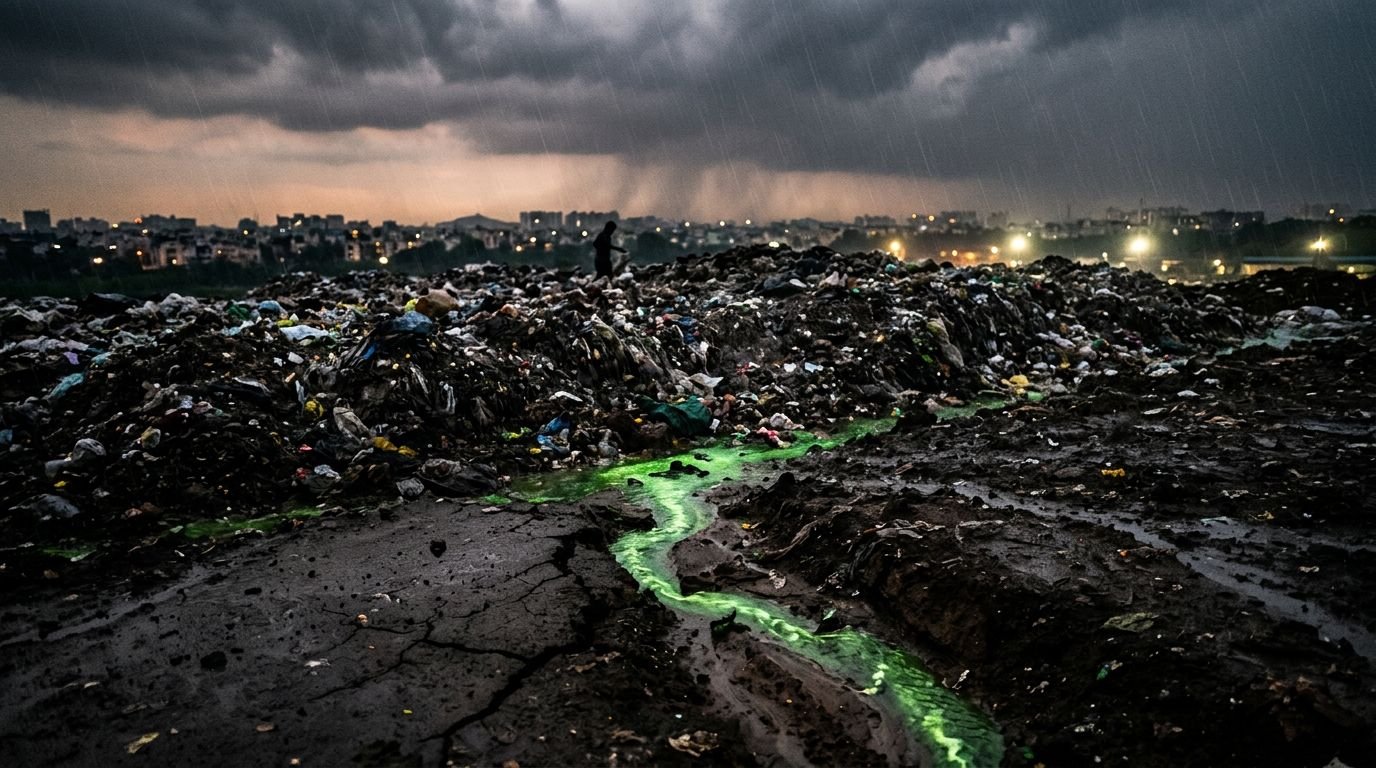
A dump does not stop at its fence. Once rainwater moves through mixed garbage, it turns into leachate, and this toxic liquid creates a significant risk for landfill leachate groundwater pollution that can travel long after the waste is out of sight.
If you live in an Indian city, this matters even if you never go near a dumpsite. The water below a landfill can connect to wells, drains, ponds, and stressed aquifers that whole neighborhoods depend on, leading to widespread groundwater contamination. To understand why landfill leachate keeps reaching local water sources, you have to look past the trash pile and study the system around it.
Key Takeaways
- Leachate is a persistent chemical threat: Formed when rain mixes with unsorted municipal waste, leachate is a complex, toxic liquid that infiltrates soil and creates long-term groundwater contamination.
- Infrastructure gaps drive the crisis: Many Indian cities rely on legacy dumps lacking essential protective layers like impermeable liners, functional leachate collection systems, and proper stormwater drainage.
- Underground plumes are dynamic: Pollution does not stay beneath the dump; it creates invisible, shifting plumes that follow natural groundwater flow, often contaminating wells and aquifers far from the site.
- Cosmetic fixes are insufficient: Surface-level cleanup efforts often fail to address the core issue, as buried, saturated waste continues to generate pollutants that migrate into the water table during every monsoon.
- Upstream solutions are mandatory: True protection requires aggressive waste segregation, the adoption of modern sanitary landfill technology, and consistent, transparent monitoring of groundwater health.
Leachate starts as rain, but the real problem is mixed waste
Leachate is the dark liquid formed when water passes through waste and picks up what the garbage sheds on its path downward. In a typical city dump, this municipal solid waste contains a volatile mix of rotting food, plastics, battery residue, sanitary waste, metal fragments, ash, oils, cleaning chemicals, and fine particles from construction debris. A review of waste-related pollution and health effects notes that leachate is a complex cocktail often carrying heavy metals, salts, organic matter, and pathogens in a single flow.
That matters because the liquid is chemically sophisticated and highly damaging. It contains high levels of biochemical oxygen demand and chemical oxygen demand, signaling the presence of decaying substances that strip water of its life-sustaining properties. Furthermore, the liquid frequently transports toxic chemicals and microplastics that leach from discarded materials, creating long-term environmental hazards. This composition changes based on the weather, the age of the waste, and the condition of the site. Fresh rain on newly dumped waste behaves differently than monsoon water moving through old, compressed layers that have been heating up for years. Fire-prone dumpsites add another layer of risk, as burnt ash, half-charred plastic, and exposed fine waste wash into the same liquid stream.
Many people picture landfill pollution as a solid problem, or simply a mountain of garbage sitting in one place. Water changes that perspective entirely. Once waste becomes saturated, the dump acts as a chemical reactor, brewing a moving pollutant load that permeates the soil.
In Indian cities, the challenge intensifies because waste often arrives unsorted. Wet waste, dry recyclables, biomedical residues, low-value plastic, and household hazardous items all land in the same zone. This significantly raises the concentration of pollutants and makes subsequent treatment much harder. A city may boast about its high waste collection numbers, but those statistics reveal little about the environmental consequences that unfold after the truck tips its load.
Leachate also does not wait for a dramatic flood to cause harm. Small, repeated infiltration events cause lasting damage. A little rain every week, consistent seepage from uncovered waste, and poor stormwater control keep feeding this toxic stream throughout the year.
How leachate reaches the water table
A well-built landfill is designed to prevent liquid from entering the ground. It requires an impermeable liner at the base, a drainage layer, a properly installed leachate collection system, controlled stormwater flow, and monitoring wells around the site. Many urban dumps in India were established without these engineering standards, and unfortunately, some later expansions still fall short of protecting the local water table.
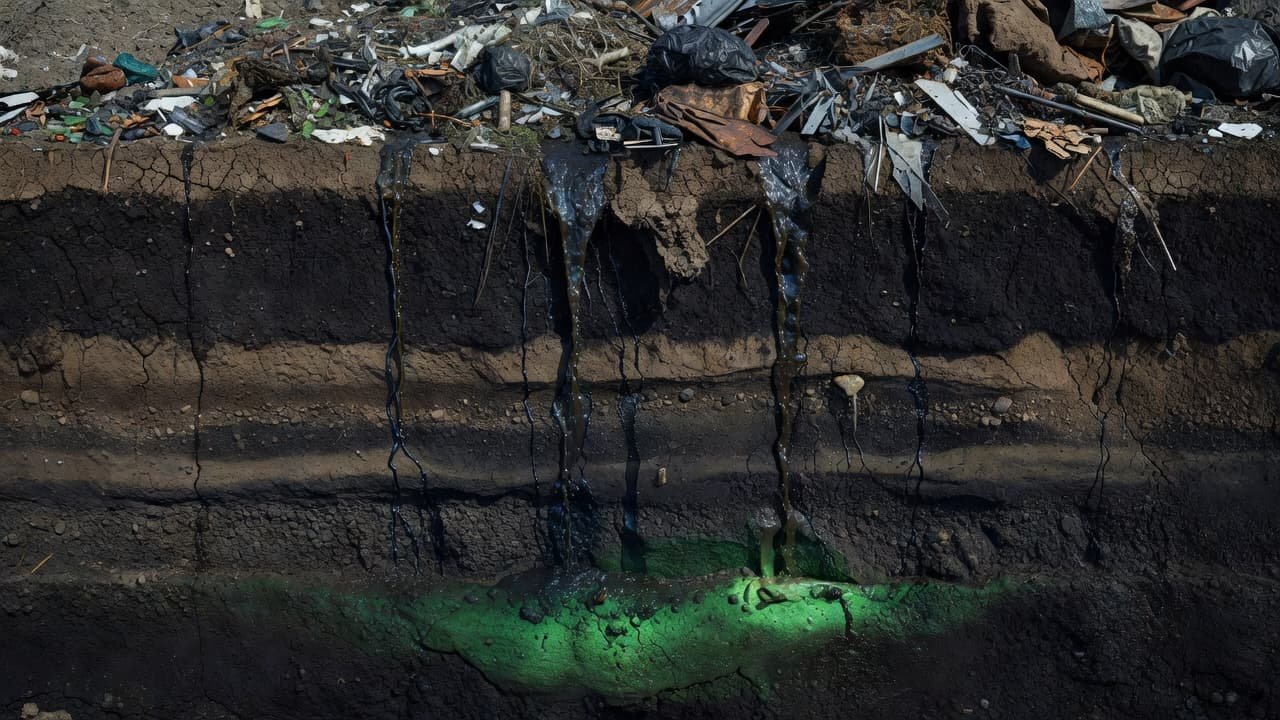
When there is no adequate barrier, or when an existing liner cracks, landfill leachate groundwater contamination occurs as the toxic liquid percolates into the soil below. Many people mistakenly assume the soil acts as a perfect filter; however, while some soil types slow the movement of pollutants, dissolved contaminants continue to migrate. Ammonia, chloride, organic compounds, and heavy metals travel through the subsurface more easily than many residents realize.
This short comparison shows where the protection chain often breaks:
| What should protect groundwater | What often happens at city dumps | Likely result |
|---|---|---|
| Impermeable liner | No liner, damaged liner, or legacy waste below new cells | Seepage into soil and rock |
| Leachate collection system | Poor maintenance or limited coverage | Liquid pools and escapes sideways |
| Stormwater diversion | Rain mixes with exposed waste | Higher leachate volume |
| Monitoring wells | Sparse or irregular testing | Plume movement goes unnoticed |
Underground, the pollution rarely spreads in a neat circle. Instead, it forms a plume of contamination that follows the natural groundwater flow. This movement explains why one handpump may test worse than another located closer to the dump site. A 2025 groundwater pollution assessment explains how leachate can alter underground water chemistry as it moves through soil and rock. In some geological settings, this shifting chemistry also makes metals like iron and manganese more soluble, which can further degrade water quality.
A case study on leachate impacts on groundwater confirms a broad pattern seen around many dumps worldwide: groundwater contamination does not stay contained beneath the waste mound. Instead, it migrates, often affecting water sources far from the original source of the waste.
Why Indian cities remain vulnerable
The term “landfill” often implies a level of control that rarely exists in practice. Many Indian cities still rely on legacy dumpsites, partially remediated mountains of refuse, or waste disposal areas that were never engineered to handle the massive volumes of municipal solid waste produced today. As of 2026, this ongoing reliance on outdated infrastructure is a primary reason why landfill leachate continues to contaminate groundwater supplies.
Monsoon rain is a significant factor, but it is not the only challenge. During heavy downpours, exposed waste absorbs water rapidly. This causes leachate volume to spike and surface runoff to intensify, exposing every structural weakness at the site. In the dry months, the heat causes cracks to form in soil covers, while internal decomposition leads to smoldering fires and elevated methane emissions. These conditions disturb the integrity of the pile, allowing the next storm to flush highly concentrated pollutants into the soil. The resulting environmental impact is often severe, as these toxins migrate from the surface deep into the earth.
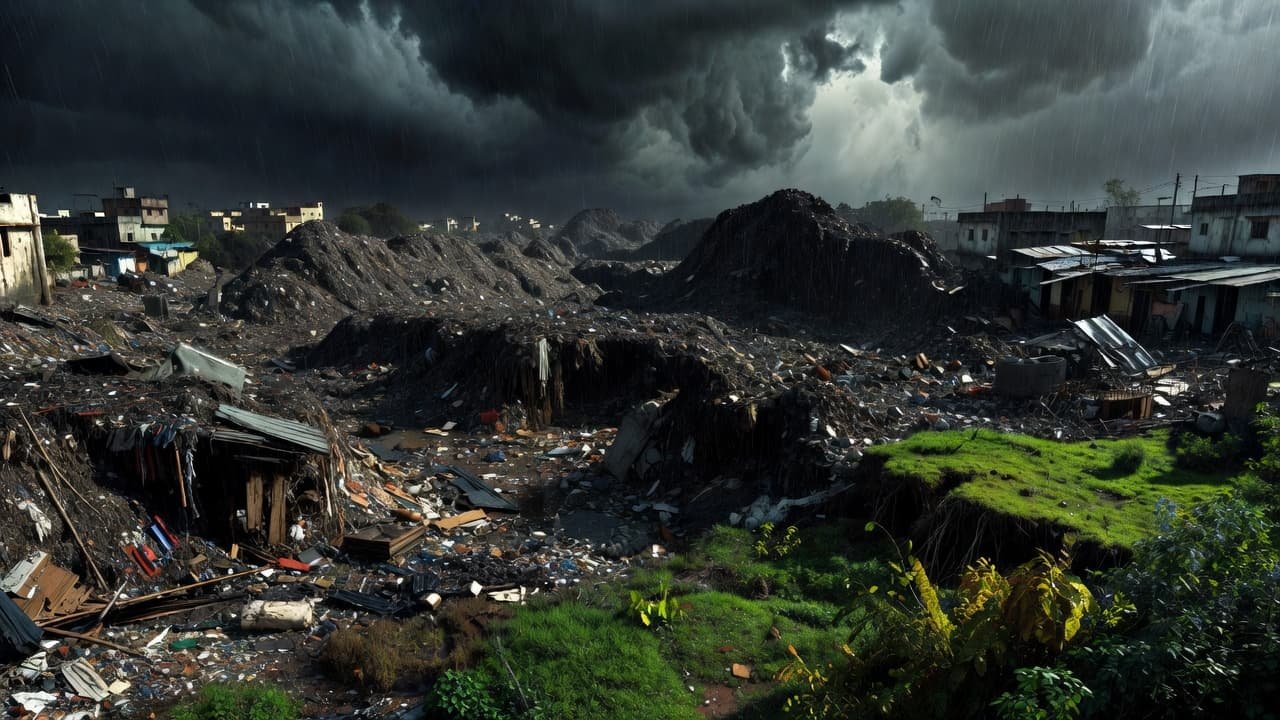
Local hydrology also plays a critical role. Many urban dumpsites are situated near floodplains, wetlands, or abandoned quarries where the water table is shallow. In these locations, there is insufficient soil depth to naturally filter or buffer seepage. Fractured rock beneath the site can rapidly accelerate the movement of contaminants, and poor site drainage only makes the situation worse. Modern sanitary landfills are designed to prevent this, but such protective layers are entirely absent in legacy sites.
The management gap further compounds these issues. Mixed waste arrives at these sites every day, and cover material is often insufficient or entirely missing. Stormwater channels frequently become clogged, while leachate ponds overflow during peak rainfall. Even when treatment plants are present, they often run below capacity or fail to operate consistently. Meanwhile, nearby urban development can disrupt natural drainage patterns, and informal waste burning leaves behind toxic residues that eventually leach into the aquifer.
Ultimately, landfill pollution is not the result of a single engineering defect; it is a cumulative chain of poor decisions. When waste segregation, site design, maintenance, and monitoring all fall below standard, the groundwater beneath the city is forced to pay the price.
The damage reaches far beyond the dump boundary
Groundwater pollution feels abstract until it shows up in a bucket, a kitchen filter, or a local borewell report. Then the issue stops looking like waste management and starts looking like a major public health crisis.
Leachate-contaminated water often carries heavy metals, nitrogen compounds, high levels of total dissolved solids, and dangerous microbes. Families relying on local drinking water supplies may notice a foul smell or discoloration, but some of the most harmful components of groundwater contamination are completely invisible. That makes the long-term risk harder to quantify and easier for officials to downplay.
A boundary wall can hide a dump, but it cannot stop polluted water moving underground.
The burden also falls unevenly. Communities living near landfills often have the least room to relocate and the least power to demand long-term remediation. They may depend on local wells, informal supply chains, or tanker water of uncertain quality. Children, sanitation workers, waste pickers, and roadside vendors can also face direct contact with stagnant leachate pools and contaminated mud.
The ecological impact spreads far beyond the immediate site, affecting both groundwater and surface water in nearby ponds and urban lakes. This migration of pollutants triggers bioaccumulation in the food chain, which significantly degrades urban biodiversity. When contamination enters these wet areas, tree pits clog, aquatic life declines, and the small green spaces that city neighborhoods rely on lose their ecological value.
This is where groundwater pollution becomes a significant justice issue. The people with the least shelter from system failure often absorb the worst exposure. A polished presentation about waste processing means little if the settlement downhill still cannot trust the safety of its water.
Why visible cleanup rarely fixes landfill groundwater pollution
Cities often respond to public anger with something you can photograph. A slope gets covered with fresh soil. A deodorizer is sprayed. A pump is switched on after complaints. A new wall goes up, and the site looks more controlled from the road. Yet those measures rarely solve the persistent issue of groundwater contamination caused by landfill leachate.
The reason is simple. Cosmetic work on the surface does not stop a buried source that keeps generating liquid. If old waste remains saturated, the pollutant load remains active. If stormwater still enters the dump, more leachate forms. If collection pipes clog or treatment stops for days, the liquid inevitably finds another path.
Testing can also create a false sense of safety. A city may sample a few borewells during one season and call the matter managed. However, a single reading ignores the fact that plume movement is seasonal, directional, and uneven. Relying on sporadic data fails to meet rigorous regulatory standards, especially when the leachate pollution index is ignored. Instead of relying on a handful of samples, cities must conduct a comprehensive health risk assessment that accounts for long term exposure. Groundwater needs repeated monitoring across pre-monsoon and post-monsoon periods, with enough wells to trace the actual flow accurately.
The same problem appears in budgets. Capital money often pays for visible assets. Routine upkeep, drain cleaning, liner repair, pump maintenance, lab testing, and field staff are easier to cut. Then the system slips back.
This is why systemic change matters more than spectacle. A shiny intervention at one edge of a dump will not protect households downhill if the site still leaks every monsoon. Pollution prevention has to begin at the source, not after the contaminated liquid is already underground.
What real protection looks like on the ground
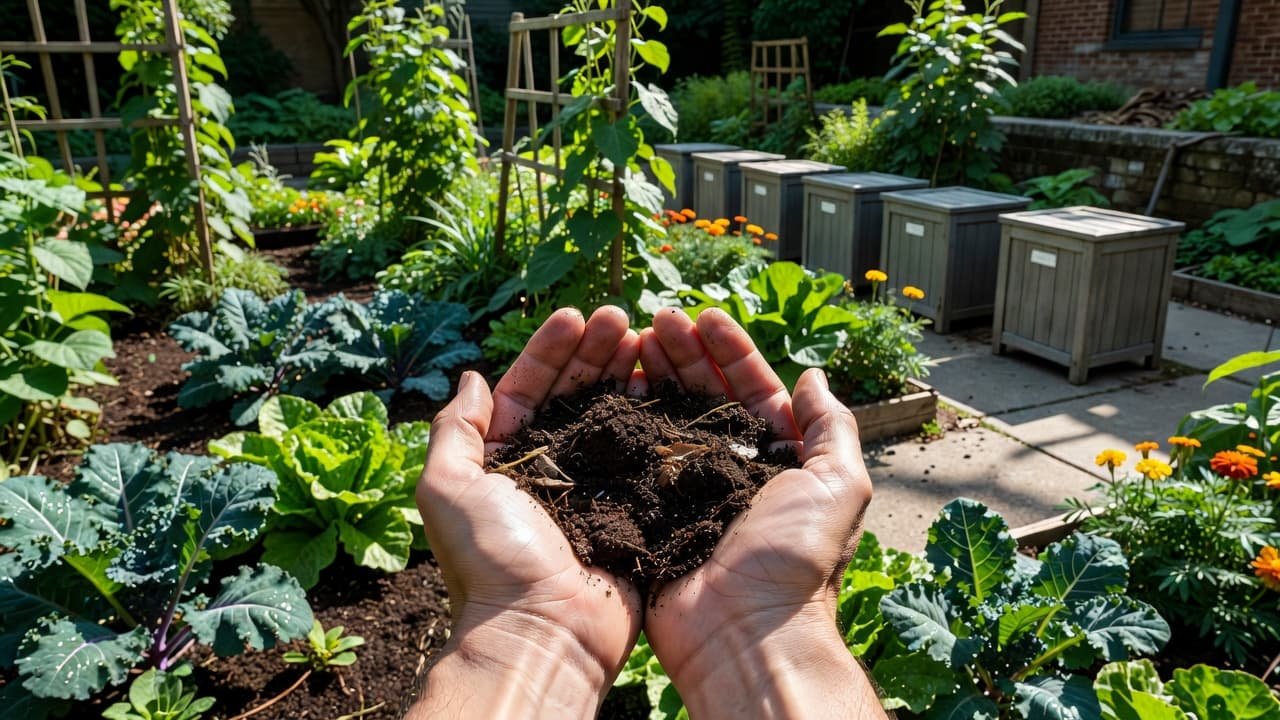
The hard truth is that no city can pump its way out of a badly planned dump forever. Real progress starts upstream. Waste has to be separated before disposal, ensuring that organic matter is diverted for composting or biomethanation while hazardous items are strictly kept out of municipal loads. When we move toward proper waste disposal, we reduce the amount of leachate generated, protecting the underlying aquifer from contamination. Legacy waste should also be managed through scientific closure or biomining where feasible.
A genuine circular economy reduces what reaches the dump in the first place. Organics should return to soil safely. Recoverables should move through clean material streams. Residual waste should be the minority, not the default. That shift also depends on sustainable business models. Producers, retailers, housing societies, food chains, and contractors need systems that price waste recovery honestly instead of passing cleanup costs to groundwater and low-income neighborhoods.
Site-level fixes are also clear. Modern sanitary landfills require lined cells, stormwater separation, and working leachate collection systems. To effectively remove toxic chemicals from the liquid waste, cities should implement advanced treatment technologies like reverse osmosis membranes alongside methane control and a real network of observation wells. Legacy dumps need capping and runoff control where excavation is not possible. None of this is glamorous. All of it matters.
Personal choices still have a place, but they are not a substitute for public duty. Everyday mindfulness can reduce household waste, keep batteries and harmful chemicals out of mixed bins, and support local composting. For some households, plant-based living may also trim part of the upstream waste and emissions burden when paired with better food planning. Still, an aquifer is protected by infrastructure, rules, and enforcement, not by virtue alone.
Why public awareness matters as much as engineering
Technical fixes fail when the public cannot see the chain of harm. Improving climate literacy helps people connect rain, waste, soil, aquifers, and public health, while helping them understand the true environmental impact of landfill leachate groundwater pollution. Without that understanding, the contamination stays hidden under the label of a garbage problem, and the response remains shallow.
Residents do not need hydrogeology degrees to ask better questions. Is the dump lined? Where does leachate go during heavy rain? How many monitoring wells exist, and where? Are results public? Has the city mapped groundwater flow around the site? Those questions move the debate from cleanup theatre to accountability.
Community pressure can also protect data from being buried. Schools, resident groups, researchers, and health workers can track repeat flooding points, leachate overflow, tanker dependence, and well complaints. That local record matters because contamination often shows up in lived patterns before it appears in a policy file.
There is also a wider civic link. Cleaner waste systems support local green cover, urban biodiversity, healthier neighborhood edges, and the protection of local surface water. If you want to support practical, on-the-ground work tied to these goals, Explore Our Active Missions. Projects that connect people, habitat, and public awareness help build pressure for the kind of city that stops poisoning its own water.
Groundwater protection will never be won by one awareness drive. It needs steady public memory. Cities count on residents forgetting once the smell fades after rain. The pollution below ground keeps moving anyway.
Frequently Asked Questions
Why can’t the soil naturally filter out leachate before it hits the water table?
While soil can slow the movement of certain particles, it is not an effective barrier against the liquid toxins found in leachate. Chemicals like heavy metals, chlorides, and dissolved organics can easily migrate through various soil types and fractured rock, eventually reaching and polluting the aquifer.
Does the lack of a visible smell mean the water near a landfill is safe?
No. Many of the most dangerous chemical contaminants and heavy metals in leachate are invisible and odorless, meaning water can look clear while still being hazardous. Relying on sensory cues provides a false sense of security; only comprehensive, multi-seasonal lab testing can confirm the safety of nearby groundwater.
Why does the composition of leachate change over time?
Leachate chemistry evolves based on the age of the waste, internal decomposition processes, and seasonal weather patterns. Fresh waste creates a different pollutant profile than old, compressed refuse, and heavy rainfall often flushes out concentrated toxic loads that were previously trapped in the waste mound.
How can residents verify if their groundwater is at risk?
Residents should push for transparency by asking local authorities for public access to monitoring well data and groundwater flow maps. Community groups can also track local signs of contamination, such as recurring water discoloration or illness patterns, to hold officials accountable for long-term site safety.
Conclusion
Landfill leachate continues to threaten groundwater contamination in Indian cities because our current approach to waste disposal allows for leaks at every stage of the process. Mixed garbage, legacy dumps, inadequate liners, and poor stormwater management create a recurring crisis where polluted liquid infiltrates the aquifer below. This landfill leachate groundwater interaction poses a severe risk to our urban drinking water supplies.
Real protection requires us to look beyond basic containment. Protecting our subterranean resources means measuring total dissolved solids, biochemical oxygen demand, and chemical oxygen demand to track the health of an aquifer. We must also rigorously manage the runoff that flows into local surface water and ensure that leachate treatment prevents contaminants from reaching downstream surface water ecosystems.
The most critical takeaway is clear. We cannot safeguard our water through temporary cleanups or superficial soil covers. Genuine security arrives when cities prioritize the reduction of mixed waste, control leachate at its origin, conduct honest monitoring of contamination plumes, and treat the safety of surrounding communities as a priority.
A dump may appear static when viewed from the road. Beneath the surface, however, the pollution remains in constant motion.