
Hospital Wastewater in India Fuels Antimicrobial Resistance
 TBH Editorial
Hospital wastewater can carry more than soap, blood, and rinse water. It often contains antibiotic residues, pharmaceutically active compounds, resistant bacteria, and stray bits of genetic material that teach other microbes how to survive medical treatment.
That matters because antimicrobial resistance does not stay inside hospital walls. In the context of hospital wastewater India, where sewage networks, treatment capacity, and enforcement often move at different speeds, this contaminated runoff can become a quiet route for a public health problem that is already too large.
Key Takeaways
- Beyond Ordinary Waste: Unlike standard municipal sewage, hospital effluent contains a dangerous cocktail of antibiotic residues, disinfectants, and drug-resistant bacteria that create selection pressure for superbugs.
- Environmental Spread: Hospital drains act as “training grounds” for resistance, where bacteria share genetic material, eventually contaminating local rivers, irrigation systems, and public water supplies.
- Regulatory Gaps: Current Indian policies are fragmented, with many hospitals lacking the specialized infrastructure to handle medical waste, leading to a reliance on municipal networks that are not equipped to filter out resistant genes.
- Infrastructure Limitations: Standard treatment plants are designed to manage organic matter rather than pharmaceutical compounds; effective control requires advanced technologies like membrane bioreactors and ozonation to truly neutralize genetic markers of resistance.
- An Issue of Justice: The environmental and health risks of poorly treated hospital waste disproportionately impact low-income communities and sanitation workers who live or work near contaminated discharge points.
Hospital sewage is not ordinary wastewater
Most city sewage is dirty because it carries organic waste, detergents, and household microbes. Hospital effluent is different. It may contain antibiotics, antifungals, disinfectants, contrast chemicals, lab waste, harmful pathogens from infected patients, and bacteria that have already survived heavy drug exposure.
A 2024 review on hospital wastewater describes this toxic mix as a major route for antibiotic resistant bacteria and antibiotic resistant genes to enter the wider environment. That last part matters. The threat is not only living pathogens. Free-floating genetic material can also move through water and sediment, spreading emerging contaminants throughout the ecosystem.
This quick comparison shows why hospital effluent in India needs stricter attention than routine sewage.
| What enters the drain | Why it matters | Why basic sewage treatment may miss it |
|---|---|---|
| Antibiotic residues | They create selection pressure for hardier microbes | Standard plants focus on biochemical oxygen demand and chemical oxygen demand, which do not account for pharmaceutically active compounds |
| Resistant bacteria | They can survive and spread downstream | Some survive treatment steps or persist in sludge |
| Resistance genes | Other bacteria can pick them up later | DNA can remain even after some cells die |
| Disinfectants and chemicals | They stress microbial communities and can co-select resistance | Removal of these pharmaceutically active compounds varies widely by process and upkeep |
In plain terms, a hospital drain can become a sorting machine for microbes. The ones that survive are the ones you least want to meet later, in a ward, a sewer line, or a neighborhood water body.
That is why this issue sits at the junction of public health, water policy, and environmental justice.
A drain can become a training ground for resistant microbes
AMR grows when microbes face repeated stress and some survive. Hospitals create that stress every day. Antibiotics are used where serious infections are treated, which is necessary. The problem begins when pharmaceutical residues and antibiotic resistant bacteria leave the clinical setting and enter wastewater systems built for a different job.
Inside pipes, holding tanks, and treatment units, microbes form biofilms. These sticky layers help them persist and provide the proximity needed for bacteria to swap antibiotic resistant genes. When these microbes are exposed to residual antibiotics and disinfectants, the environment favors those with better survival tools.
Research on carbapenem resistance in hospital releases has shown why this is alarming in places with heavy antibiotic use and strained systems. Carbapenems are often saved for severe infections. When resistance linked to those drugs moves through effluent, the risk is not theoretical.
Another study on resistant bacteria and free DNA in a hospital wastewater treatment plant points to a second layer of danger. Even when a wastewater treatment plant kills some bacteria, cell-free DNA carrying resistance genes can remain in the system. Other microbes may later absorb those genes, a process that can be tracked alongside other markers like SARS-CoV-2 RNA. Standard methods like simple disinfection or chlorination often fail to eliminate these genetic fragments entirely.
A discharge can meet basic sewage norms and still carry resistant bacteria or resistance genes.
That gap between treated and safe enough for AMR control is where many policies fall short. India is not alone in facing this problem, but the local conditions make the stakes higher.
Why the Indian context raises the stakes
India’s health system is large, uneven, and under pressure. Big hospitals, small nursing homes, diagnostic labs, and clinics all generate liquid waste, yet they do not all have the same treatment capacity. While some facilities manage to operate an effective on-site treatment system, many others depend on municipal sewage networks. Small nursing homes, in particular, often lack the space, funding, or regulatory oversight required to manage their own on-site treatment, creating a critical gap in sanitation.
Once hospital effluent enters a mixed sewer, tracking becomes significantly harder. Dilution can hide the problem on paper while spreading the risk across a larger area. During monsoon periods, overflow and stormwater intrusion can push this contaminated hospital effluent into open drains, low-lying streets, and local water bodies.
The legal setup in 2026 is active but fragmented. India still does not have a separate national law dedicated solely to hospital wastewater. Instead, institutions must navigate the Water Act, the Environment Protection Act, CPCB discharge standards, state pollution board rules, and biomedical waste regulations. India’s wastewater management policy challenges show why compliance often slips between agencies, budgets, and infrastructure gaps.
That patchwork creates room for uneven practice. A well-run private hospital may maintain its wastewater treatment plant and records diligently. Conversely, a smaller center may struggle with the maintenance, power costs, sludge handling, or lab testing necessary to keep their wastewater treatment plant running effectively. Public hospitals often face crushing patient loads that strain even the most robust systems.
Meanwhile, antibiotic use remains high, infection loads are substantial, and sewer conditions are often poor. When you combine these factors, hospital wastewater in India becomes more than just an engineering challenge. It is a governance issue that requires a more cohesive strategy to manage hospital wastewater effectively and curb the spread of resistant pathogens.
The damage spreads beyond the hospital gate
The first people exposed are rarely the people who caused the problem. Sanitation workers, drain cleaners, and waste handlers often meet contaminated flows early, facing significant environmental risk from direct contact with dangerous pathogens. Nearby residents then live with dirty drains, unpleasant odors, and floodwater that frequently carries these pathogens into homes and streets, creating an ongoing environmental risk for vulnerable populations.
The health risk also moves through ordinary geography. Hospital effluent can reach rivers, lakes, and irrigation channels, turning natural water bodies into vessels for transmission. As hospital wastewater moves through these systems, resistance genes can mix with environmental bacteria, settle into sediment, and persist far longer than many people assume. The wastewater surveillance literature keeps pointing to the same lesson: water is not just a disposal route, it is a surveillance route and a spread route for contaminated flows.
The ecological impact is easy to miss because microbes are invisible. Yet, the presence of pharmaceutically active compounds in hospital effluent can alter microbial communities, affecting nutrient cycles and the smaller biological processes that support urban biodiversity. When hospital wastewater feeds already-stressed city lakes, the burden does not stop with human infection control; it disrupts the delicate balance of local ecosystems.
There is also a fairness problem. Wealthier districts often hide pipes underground or send waste farther away. Poorer communities live near the outfall, the drain, or the polluted stream. They absorb the smell, the flooding, and the health risk without getting any part of the hospital revenue or protection.
If you care about measurable local repair, not abstract concern, Explore Our Active Missions to see how urban biodiversity and climate literacy work can stay grounded in community realities.
Why basic treatment often falls short
Many a wastewater treatment plant was originally designed to reduce suspended solids and standard pollution indicators, such as biochemical oxygen demand and chemical oxygen demand. These systems were built to manage general organic matter rather than targeting antimicrobial resistance. That distinction is critical because a facility may successfully lower biochemical oxygen demand and chemical oxygen demand while still discharging dangerous resistant microbes, drug residues, or resistance genes into the environment.
Operational reliability is a constant hurdle. Performance often hinges on consistent power supply, skilled operators, and rigorous sampling frequency. When a facility experiences mechanical failure or system overload, a design that looks efficient on paper can fail in daily practice. Furthermore, while the activated sludge process remains a common approach for standard waste, it is often insufficient for eliminating genetic material associated with resistance. More advanced membrane bioreactor technology offers higher removal rates, but these systems demand significant capital and ongoing technical expertise.
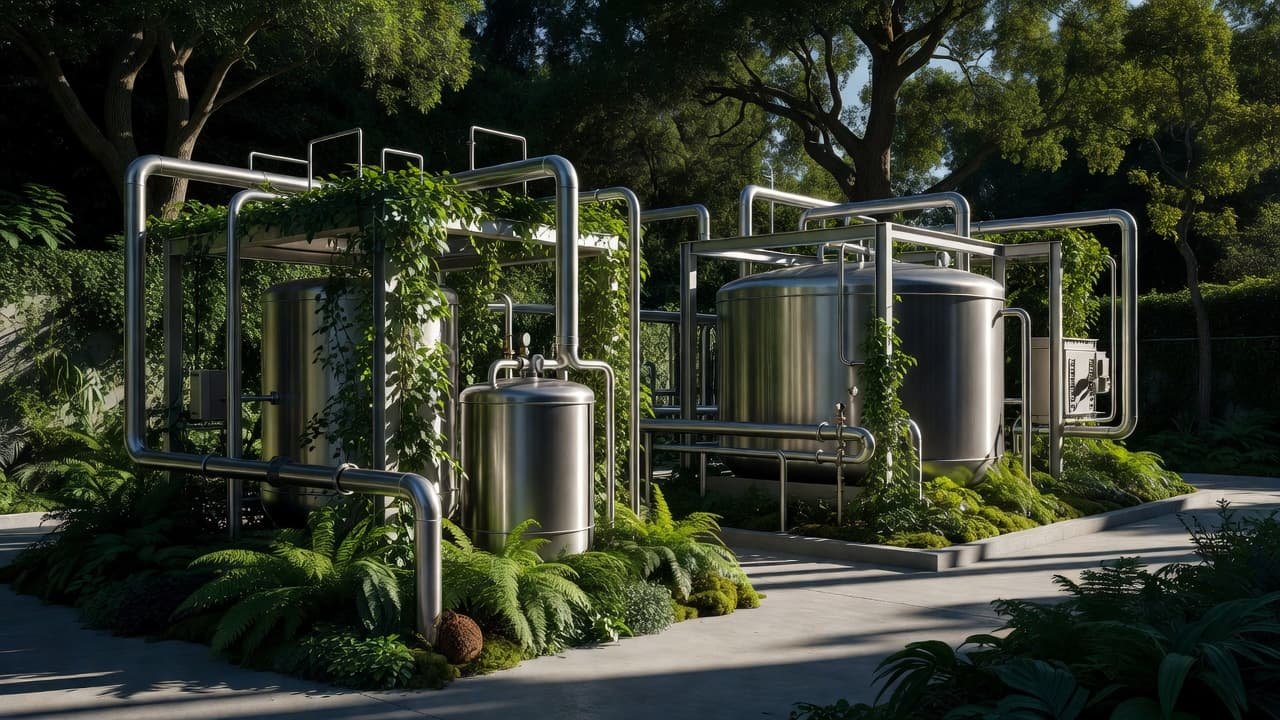
This is why simple compliance language can be misleading. Meeting general sewage discharge norms for biochemical oxygen demand or chemical oxygen demand does not necessarily mean the burden of antimicrobial resistance is being reduced. Effective disinfection is essential, yet common methods like chlorination often fail to neutralize resistant bacteria or their genetic fragments if the dosage and contact time are not precisely managed. Other advanced steps, such as ozonation, UV, activated carbon, and stronger source segregation, can improve removal, but they require robust operational oversight.
A multidrug resistance snapshot from hospital wastewater suggests that effluent can act as a mirror for the resistance profiles inside the clinical wards. This makes wastewater an invaluable diagnostic tool, as hospitals should treat their discharge as actionable data rather than just a waste stream.
Finally, sludge management remains a significant weak point. If resistant organisms or genes settle into the solid waste, the environmental threat merely changes form instead of disappearing. Consequently, effective treatment must cover the entire chain, from the initial drain to the final sludge disposal and treated water discharge.
What real solutions look like now
The fix starts upstream. Hospitals need stronger antibiotic stewardship, cleaner segregation of liquid waste, and tighter infection control. If fewer unnecessary antibiotics are used, the selection pressure in wastewater drops. If high-risk streams are separated earlier, on-site treatment becomes significantly more precise.
The next step is better engineering with honest oversight. High-risk facilities need systems sized for real flows, not brochure flows. Standard options like the activated sludge process are often insufficient for modern medical waste, so facilities should pivot toward high-performance technologies. Implementing a membrane bioreactor offers superior filtration, while a moving bed bioreactor can provide the stability needed to handle variable waste loads. To specifically target recalcitrant organics and various pharmaceutically active compounds, hospitals must look toward tertiary treatment stages. This may include advanced oxidation processes or ozone treatment to neutralize persistent pharmaceutical residues before they reach the municipal system. For facilities with more space, constructed wetlands offer a nature-based supplemental treatment that further polishes effluent quality.
Systemic change also means changing incentives. The cheapest installation bid often wins, while maintenance, sampling, and operator training get squeezed later. Treatment vendors need sustainable business models that reward performance over time. Hospitals need procurement rules that prioritize a robust membrane bioreactor setup or an optimized activated sludge process over the lowest initial concrete cost. When designing a wastewater treatment plant, procurement should focus on long-term efficiency in removing pharmaceutically active compounds.
This is where a circular economy lens can help, but only if it stays honest. Reusing treated water sounds smart in a water-stressed country. Yet water reuse without rigorous tertiary treatment and microbial safeguards can simply recycle risk. A circular system that moves contaminated water around the city is not circular progress; it is a loop with a hidden public health bill. Whether using a membrane bioreactor or constructed wetlands, the end goal must be the total destruction of recalcitrant organics.
Climate pressures make this more urgent. Heat, water scarcity, and flooding all strain urban water systems. That is why climate literacy belongs in this discussion. People often treat climate, health, and sewage as separate topics, even though they meet in the same drain. Engineers must design every wastewater treatment plant to withstand extreme weather, ensuring that even under pressure, the facility successfully removes pharmaceutical residues.

Personal habits still matter, but they are not the whole answer. Everyday mindfulness can mean not demanding antibiotics for viral illness, not dumping leftover pills into sinks, and paying attention to local water quality. Plant-based living can also reduce antibiotic pressure in industrial animal systems, which matters for resistance overall. Still, household virtue cannot clean a hospital outfall. Public systems must adopt advanced oxidation processes or other reliable technologies to ensure safe practice becomes routine rather than rare.
Frequently Asked Questions
Why can’t standard sewage treatment plants handle hospital wastewater?
Standard treatment facilities primarily focus on removing organic material and solids to meet basic biochemical oxygen demand standards. They are generally not equipped to break down complex pharmaceutical residues or filter out microscopic genetic material that carries antimicrobial resistance.
Does meeting legal discharge norms mean hospital water is safe?
No, meeting existing legal standards does not guarantee that water is free from drug-resistant bacteria or resistance genes. Current regulations often prioritize general pollution indicators, leaving a significant gap where resistant pathogens and harmful genetic fragments can still pass through the system undetected.
How does hospital waste contribute to superbugs in my neighborhood?
When resistant bacteria from hospitals enter sewer systems, they find a environment that facilitates the exchange of resistance genes among diverse microbial populations. Even if the bacteria themselves die, free-floating DNA can persist and be absorbed by other microbes, spreading the ability to resist medical treatment into the broader urban environment.
What is the biggest challenge in managing this issue in India?
The primary challenge is a combination of uneven infrastructure and lack of dedicated, comprehensive legislation. While some large, well-funded hospitals maintain effective systems, many smaller clinics lack the space, budget, and regulatory oversight to safely manage their hazardous liquid waste, allowing it to easily enter public drains.
Conclusion
Hospital wastewater in India fuels antimicrobial resistance because it mixes high drug use, heavy pathogen loads, uneven treatment, and weak accountability in one flow. Once that flow leaves the ward, it can reach workers, drains, rivers, treatment plants, and neighborhoods that never agreed to take the risk.
The strongest takeaway is simple. AMR control is water infrastructure work as much as it is medical work. If hospitals, regulators, and cities treat hospital wastewater as a side issue, resistant microbes will keep finding room to spread.
The significant environmental risk posed by dangerous pathogens and pharmaceutically active compounds requires a shift from mere paperwork to actual performance. Cleaner drains will not come from slogans. They will come from better treatment, transparent monitoring, fair worker protection, and public systems that value health before administrative convenience.