
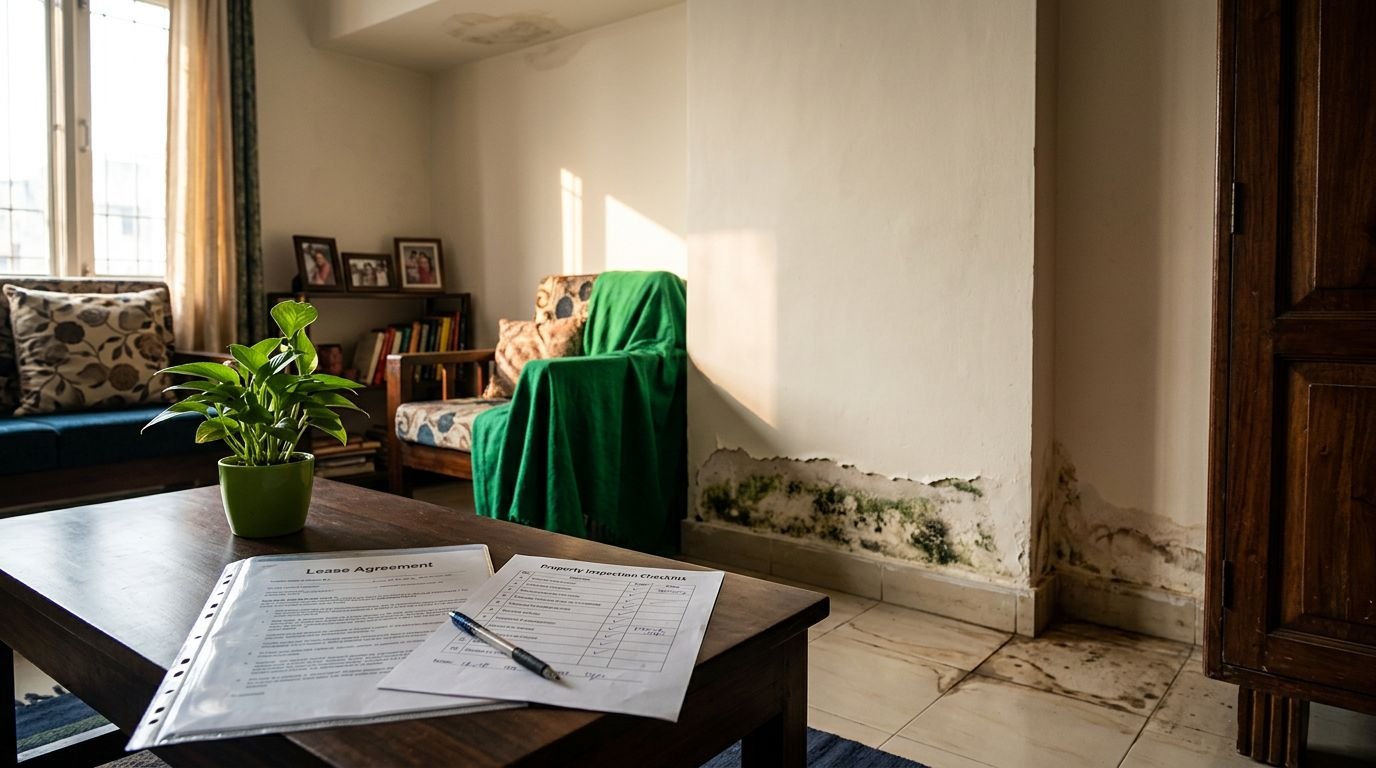
Why India Needs Mold Disclosure Rules for Rental Homes
 TBH Editorial
Most mold disputes begin after the keys are handed over and the fresh paint smell fades.
Search for mold disclosure rules India and you find a hard truth: renters are often expected to discover leaks, damp walls, and old water damage on their own. Clear mold disclosure requirements remain missing in many rental situations. The foreign term “deceptive trade practices act” should not be presented as Indian law. By then, the damage may be behind wardrobes, under flooring, or inside a ceiling that has already been painted over.
A safe home should not depend on a tenant spotting a stain during a 10-minute viewing.
Key Takeaways
- India has no single national law requiring landlords to disclose known mold, dampness, leaks, or past water damage before a tenant signs a lease.
- Disclosure should cover actual and constructive knowledge, including complaints, repair records, recurring leaks, remediation work, and common-area moisture problems.
- A useful disclosure system must connect written records to time-bound repairs, tenant protections, post-remediation information, and remedies for documented losses.
- An “as-is” clause or fresh coat of paint should not excuse the concealment of material water damage or environmental hazards.
- Tenants should document visible damage, notify landlords in writing, request repair of the moisture source, and preserve inspection, contractor, and payment records.
Why moisture, not paint, should drive disclosure
Mold is not a decorative flaw. It shows that moisture has remained where it should not. That moisture can create environmental hazards within structural components, including walls, roofs, window frames, plumbing, and ventilation systems.
That matters because mold can worsen indoor air quality, aggravate asthma symptoms, and breach health and safety standards. It can also ruin books, clothes, furniture, electrical fittings, plaster, and wood. Mold remediation costs rise quickly when a leak stays hidden for months.
India has no single national law that requires landlords to disclose known mold issues before a tenant signs a lease. Most disputes involve broader duties to provide premises that are safe and fit to live in. Those duties can be discussed through the concept of a warranty of habitability, alongside state tenancy laws and rental terms.
The Model Tenancy Act, 2021 points in a better direction. It sets out landlord repair responsibilities and creates a Rent Authority, Rent Court, and Rent Tribunal framework. Foreign laws may use tools such as a toxic mold protection act or a deceptive trade practices act, but neither is Indian law or a substitute for a clear national requirement.
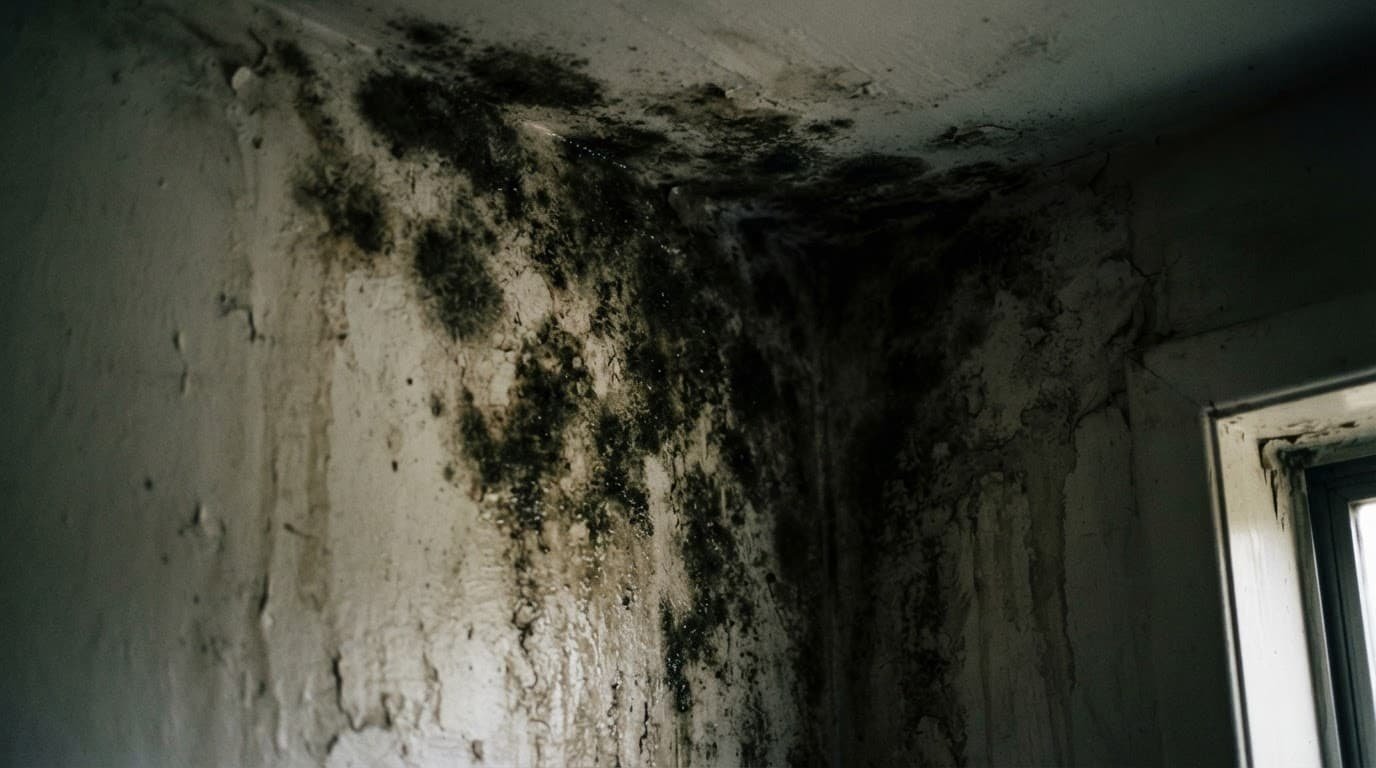
A tenant should not have to prove that a dark patch is dangerous before a landlord admits it exists. A useful comparison comes from the Minnesota Department of Health’s renter guidance, which separates tenant and landlord responsibilities by looking at the cause of the moisture problem.
That is the point India needs to adopt. The question is not, “Did the tenant see mold?” The question is, “Who knew about the water problem, and who had the power to fix it?”
Actual knowledge is not the only knowledge that counts
A landlord has actual knowledge when they know about a mold or moisture problem. That may come from a past tenant complaint, a repair invoice, a plumber’s visit, a building inspection, a mold inspection report, a water-damage claim, or a previous remediation job.
Constructive knowledge is different. It asks what a reasonable owner or property manager should have known. A ceiling that leaks every monsoon, repeated repainting around the same window, or a bathroom fan that has been broken for a year should not become invisible because nobody used the word “mold.”
This distinction matters in rental homes. A tenant may leave after recurring dampness. The owner may repaint, replace a curtain, and list the room again. The next tenant gets a clean-looking wall, while environmental hazards remain hidden beneath it.
A fresh coat of paint can hide a stain. It cannot repair the pipe, roof, drain, or ventilation failure behind it.
Property managers and real estate professionals should not be allowed to claim ignorance when their own emails, maintenance logs, or contractor records tell a different story. They do not need to diagnose mold like a laboratory. Their disclosure obligations include passing on material facts already in their files.
The same standard should apply to housing societies that control common pipes, terraces, external walls, and drainage. A landlord may own the flat, but a tenant should not bear the health or financial costs of a leaking common-area pipe. In applicable jurisdictions, records of deliberate concealment may matter under a deceptive trade practices act and support fraudulent misrepresentation if the elements are met, but neither theory automatically governs Indian rental disputes.
A disclosure form should create a paper trail
A disclosure form turns disclosure obligations into a dated record. It doesn’t need to be complicated, but it must be hard to dodge.
Before a lease is signed, landlords should provide a short, dated disclosure covering these environmental hazards:
- Known mold, dampness, water seepage, flooding, roof leaks, plumbing leaks, or ventilation failures in the home.
- Past mold remediation, water damage repairs, the areas affected, and whether the source of moisture was fixed.
- Relevant repair records, contractor invoices, a mold inspection report, other inspection reports, and pending work orders.
- Known risks from common areas, including terrace leaks, blocked drains, external cracks, or recurring pipe failures.
- A signed acknowledgement from both parties, with photos of affected areas where needed.
The form should also separate known conditions from conditions that have not been assessed. Not every mark on a wall is mold. But “we don’t know” is not permission to hide a history of leaks. Clear records can also help establish who should address mold remediation costs.

Rules must connect disclosure to repair. A landlord who reveals a leaking ceiling but offers no timeline has not solved anything. Tenants need a written notice route, a time-bound inspection, repair orders, and protection from rent retaliation or eviction after reporting a hazard.
Some jurisdictions address misleading omissions through a deceptive trade practices act. India would need its own clearly defined approach, with remedies such as reimbursement or administrative penalties.
Where the Model Tenancy Act framework applies, it offers a limited repair-and-deduct route after notice, with deductions in a month capped at 50% of rent. That is a useful guardrail, but renters should never assume they can stop paying rent without checking their state law and agreement.
A serious rule would also require post-remediation records. If a landlord says mold was removed, tenants should know when the work happened, what caused the moisture, which areas were cleaned, and whether the leak was repaired. Cosmetic cleaning is not professional mold restoration. Tenants should request post-remediation clearance testing where appropriate, but testing alone cannot repair the moisture source.
Selling “as-is” cannot erase a damp history
Rental housing is the urgent gap, but real estate transactions need the same honesty.
India does not have one national transfer disclosure statement that forces every seller to reveal known mold history. Buyers often rely on contract wording, their own inspection, and general protections against misrepresentation. A standardized transfer disclosure statement could identify material adverse facts, prior moisture events, and the records behind them. That would leave less room for silence.
An “as-is” sale should mean that a buyer accepts the property’s visible condition. It should not give a seller a free pass to conceal environmental hazards that could affect the buyer’s decision. In some jurisdictions, a deceptive trade practices act may address concealment of prior water damage, a flooded basement, repeated seepage, property damage, or a past mold inspection report.
A proper property disclosure should include previous mold remediation and the records behind it. The issue is not whether the home was once repaired. Homes can be repaired well. The issue is whether the buyer receives notice of material adverse facts before money changes hands.
Real estate professionals, including agents and brokers, should have a narrow but firm duty. They should share known records, flag contradictions, and refuse to market a property with misleading claims. They are not expected to perform mold testing. They are expected to stop hiding documents.
Failure to disclose material defects should carry consequences: repair orders, rent reduction, and reimbursement for documented losses. Repeat offenders may also incur statutory liability and penalties where applicable. If concealment is deliberate or representations contradict the records, the dispute may involve fraudulent misrepresentation, with punitive damages possible in some jurisdictions.
Renters need proof, not a lecture about better habits
Tenants do have responsibilities. Ventilate bathrooms where possible. Report leaks early. Avoid drying heavy laundry in a sealed room if there is another option. Keep exhaust fans and drains clear.
But these habits do not fix cracked external walls, broken plumbing, roof failures, blocked drainage, or a bathroom designed without ventilation. Telling a tenant to open a window while water enters through the wall is moral theatre.
When dampness appears, remember that visible signs may point to environmental hazards without proving every stain is mold. Take a practical route:
- Photograph the affected area with the date, including nearby ceilings, pipes, drains, and damaged belongings.
- Notify the landlord or property manager in writing, not only by phone.
- Ask for the source of moisture to be repaired, not merely for the wall to be repainted.
- Keep copies of messages, bills, inspection notes, and records of any contractor visit, including evidence relevant to security deposit deductions.
A renter liability overview from Nolo offers general renter-liability guidance. It makes a broader point that applies here too: responsibility often turns on cause, notice, and records. Indian state law and the rental agreement control the specific remedy. Documentation changes a complaint from “there is a smell” into a timeline someone must answer.
Everyday mindfulness can help us notice unsafe housing. It cannot replace enforceable standards. Renters should not have to become amateur building inspectors to live without damp walls.
Healthy rental homes are part of systemic change
Housing is climate infrastructure. A leaking roof wastes water, destroys materials, drives repeated repainting, and pushes tenants toward energy-heavy dehumidifiers and air conditioners. A circular economy for buildings would reward repair, drainage upgrades, ventilation, and durable retrofits instead of cosmetic patchwork.
Poor drainage creates environmental hazards beyond one flat. Water pooling around homes can enter walls, damage roads, stress street trees, and add pressure to already fragile urban biodiversity. The way paving worsens urban stormwater runoff shows why moisture problems often begin outside a rental home’s door.
Sustainable business models have a job here. Small landlords need fair retrofit finance and technical support. Property managers need maintenance budgets that do not disappear after a tenant complains. Municipal bodies need public inspection records, clear repair orders, and penalties that cost more than rushed repainting.
Plant-based living, lower waste, and climate literacy all matter. But none of them dries a leaking wall tonight. Systemic change means putting housing health into contracts, inspections, repair budgets, and public accountability.
For community work that connects climate literacy, local ecosystems, and real-world action, Explore Our Active Missions.
Frequently Asked Questions
Does India require landlords to disclose mold before renting a home?
India does not currently have one national mold disclosure law covering every rental situation. Tenant protections may instead arise from state tenancy laws, the rental agreement, general duties to provide safe and habitable premises, and the framework of the Model Tenancy Act, 2021 where applicable.
What should a mold disclosure form include?
It should identify known mold, dampness, seepage, flooding, leaks, ventilation failures, past remediation, affected areas, and whether the moisture source was repaired. It should also include relevant inspection and repair records, common-area risks, dated photographs where needed, and signatures from both parties.
Can a landlord claim ignorance if mold was hidden by paint?
Not necessarily. Constructive knowledge may apply when a reasonable owner should have known about recurring leaks, repeated repainting, maintenance complaints, or other signs of an ongoing moisture problem.
What should a tenant do after discovering dampness or suspected mold?
The tenant should photograph the affected areas, notify the landlord or property manager in writing, and request repair of the moisture source rather than cosmetic repainting. They should keep copies of messages, bills, inspection notes, contractor records, and evidence of damage to belongings.
Does an “as-is” clause remove responsibility for hidden water damage?
An “as-is” clause may address visible conditions, but it should not automatically protect a seller or landlord who deliberately conceals material defects or a known history of water damage. The specific remedy depends on applicable Indian law, the agreement, the records, and whether the facts support a claim for misrepresentation.
A home should not hide its damage
Effective mold disclosure rules aren’t about punishing every landlord for a patch of dampness. They’re about ending a system where known problems pass from one tenant to the next behind new paint.
A clear record, a repair deadline, and accountability would protect renters, honest landlords, and buyers alike. Deliberate concealment should have consequences only when it meets the legal standard for fraudulent misrepresentation under applicable law. The ecological impact of neglected housing is real, but the human cost arrives first, in the room where someone is trying to sleep, work, recover, or raise a child.
A rental home isn’t safe because it looks clean on move-in day. It’s safe when the truth about its condition comes with the keys.