How Stormwater Drains in India Turn Rivers Toxic
 TBH Editorial
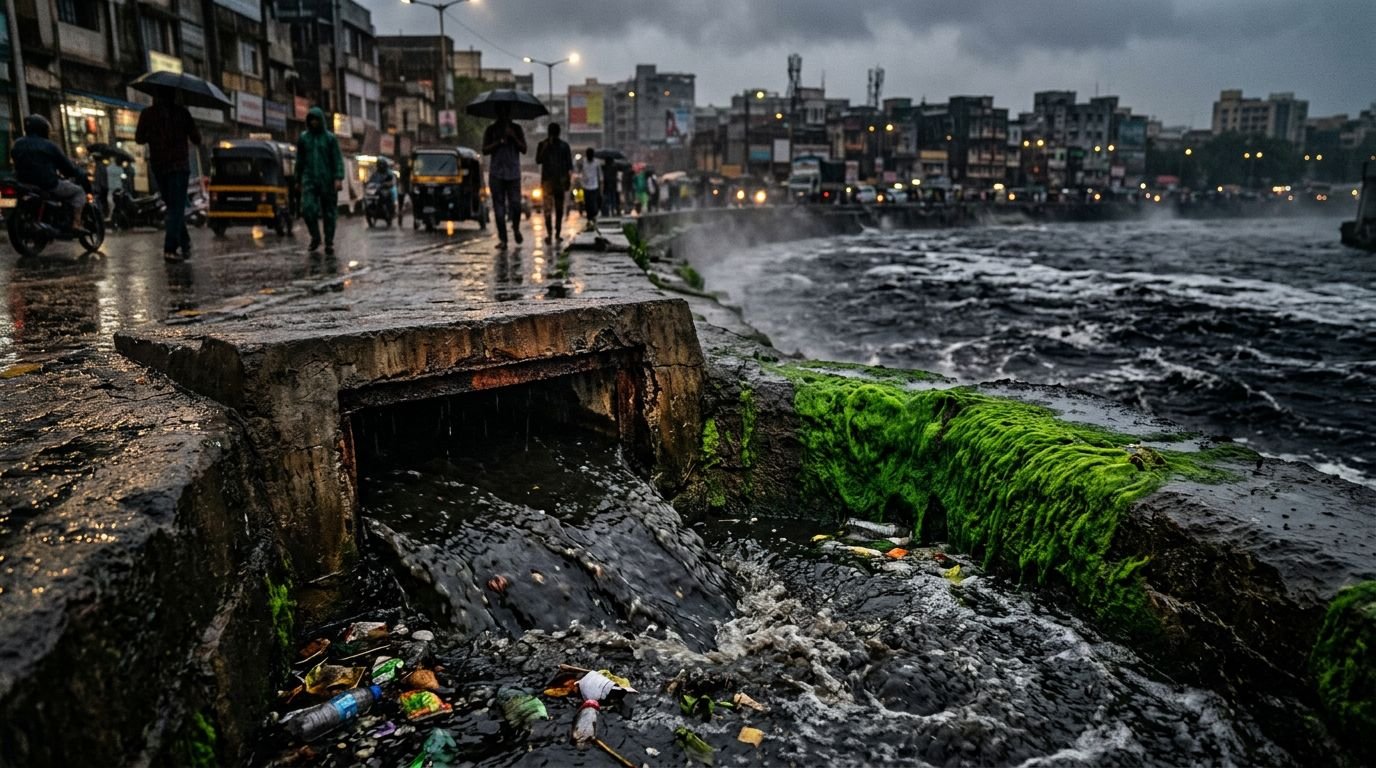
When it rains in Indian cities, the water does not arrive at rivers alone. It brings sewage, oil, plastic dust, food waste, heavy metals, and the fine dirt of daily urban life. By the time that flow reaches a river, it often behaves less like rainwater and more like a moving waste stream.
This is why stormwater drains in India consistently turn rivers toxic. Many of these channels no longer carry rainfall alone, and in many areas, they barely function as storm systems at all. To understand why rivers remain black, foamy, and depleted of oxygen, we must look critically at the state of stormwater management. When urban infrastructure is designed without accounting for the intersection of sewage and drainage, the resulting pollution becomes an inevitable consequence of city living.
Key Takeaways
- Dual-Purpose Failure: Stormwater drains in India are frequently functioning as sewers, carrying raw wastewater along with rainwater to rivers, which transforms them into toxic discharge channels.
- Infrastructure Mismatch: Rapid, unplanned urban growth and the use of archaic combined drainage systems have caused sewage and storm flows to cross-connect, preventing these systems from managing runoff effectively.
- Surface Runoff Pollution: Beyond sewage, stormwater collects significant urban pollutants, including oil, heavy metals, plastic leachate, and chemical residues from streets, which discharge directly into waterways during rain events.
- Cosmetic Fixes vs. Source Control: Current urban renewal efforts often prioritize aesthetic riverfront beautification while ignoring the structural failures at upstream drain outfalls that continue to pollute the ecosystem.
- Systemic Governance Gaps: Effective river health is hindered by a lack of transparency, poor inter-departmental coordination, and a focus on temporary visual cleanups rather than long-term infrastructure investment.
A drain meant for rain now carries the city’s waste
A surface water drain has a simple job. It should move rain off roads, roofs, and public land before waterlogging sets in. In many Indian cities, that clean idea has collapsed.
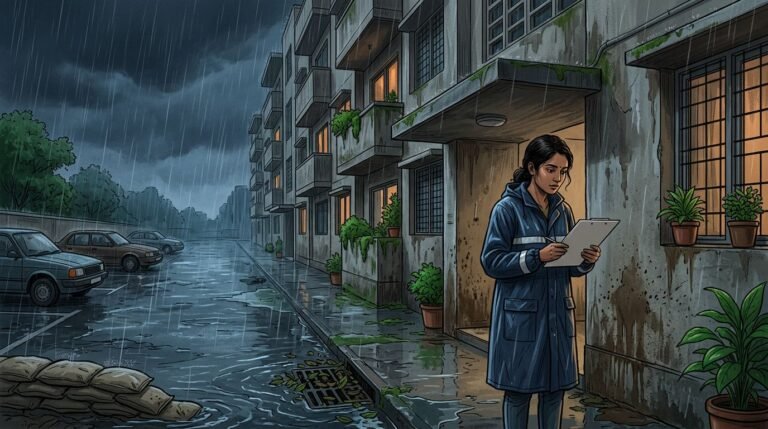
Open nullahs and covered drains now carry wastewater through most of the year. During the monsoon, the same channels receive a fresh rush of rainfall runoff from roads, markets, garages, and construction sites. Effectively acting as an accidental storm sewer, these conduits deliver a double load to the river, consisting of both sewage and rain-driven pollution.
Recent 2026 reporting from India Water Portal on urban river pollution monitoring and Sankala’s review of urban waste impacts points to the same pattern. A large share of sewage still reaches urban rivers untreated or only partly treated, and storm drains are often the route.
When a storm drain carries sewage, the river becomes the city’s unpaid treatment plant.
This changes how river pollution works. The problem is no longer limited to one bad factory outlet or one broken sewer line. Pollution gets spread across hundreds of outfalls, many of them hidden in plain sight along embankments and under roads.
The public usually sees the river last. People notice foam, stink, or dead fish. Yet the damage begins upstream in neighborhood drains, cross-connections, clogged catch basins, and informal discharge points. By then, accountability has already blurred.
That is why river cleanups often feel like mopping a floor while the tap stays open. Unless storm drains carry only rain, rivers will keep receiving a dirty mix every time it showers.
Why stormwater drains in India stopped behaving like storm systems
The failure is not one bad monsoon or one careless neighborhood. It is built into how many cities grew, paved, and improvised their services, often ignoring the necessity of proper stormwater drainage design. As cities expanded, the massive increase in impervious surfaces left rainwater with nowhere to soak into the ground, forcing it into channels that were never meant to handle such volumes.
Sewage slipped into rain lines because it was the easiest exit
In older areas, sewer and storm lines were never fully separated. In newer areas, growth often outran planning. Households, shops, and even small commercial units needed a place to send wastewater, and the nearest drain became the shortcut.
Sometimes those links are illegal. Sometimes they are tolerated because no workable alternative exists. Either way, the result is the same. A line designed for runoff becomes a routine sewage carrier.
This is also why maps can mislead. A blue line on paper may look like drainage infrastructure. On the ground, it may function as an open sewer for most of the year.
Mumbai’s Mithi River shows how this plays out in a dense city. A recent study on urbanization and river pollution in Mumbai linked poor river health to rapid urban growth, weak land-use control, and inadequate sewage treatment. That lesson travels well beyond Mumbai.
Old plants, blocked lines, and overflow points do the rest
Even where sewer networks exist, they often struggle under real city conditions. Treatment plants run below need, above capacity, or with uneven performance. Pumping stations fail. Screens choke. Power and maintenance gaps add more stress, often compromising the original hydraulic design of the city. When aging RCC pipes crack or become misaligned, the leakage further contaminates the surrounding soil and groundwater.
Then the overflow goes somewhere, and that somewhere is often the storm network.
Blocked channels make it worse. Encroachments, silt, plastic waste, and bad construction narrow the path. A 2025 Scientific Reports paper on drainage obstruction and urban flooding notes how improper drainage and blocked channels raise flood risk. The same physical mess also pushes polluted water into places it was never meant to go.
So the drain stops being a safety valve for flood prevention and becomes a conveyor belt. It carries polluted flows faster, spreads them wider, and empties them into the nearest river or lake.
This is not a technical glitch. It is a governance pattern. The drainage network is often managed by multiple entities; sewer boards, municipal corporations, stormwater departments, and pollution regulators often work in parallel, not together. Each agency can point to part of the problem, while the river absorbs the whole thing.
What runoff picks up before it reaches the river
Even if sewage vanished tomorrow, dirty runoff would still hurt rivers. Urban runoff is never only water. It is contact pollution.
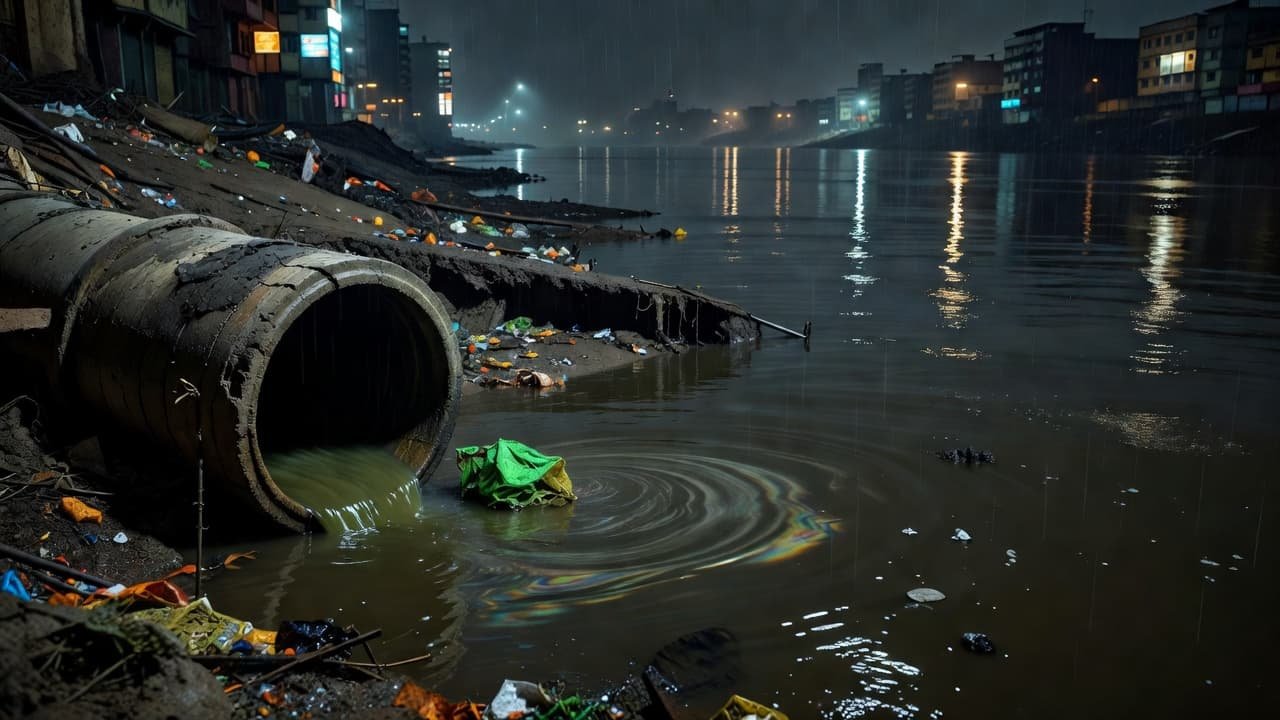
A rainfall event scrapes the city surface clean and dumps that load downstream. Oil drips from vehicles. Tyre and brake dust add fine particles and metals. Fertilizer from landscaped strips, detergent wash water from storefronts, and silt from worksites requiring better soil erosion control all enter the same network. A broader study on urban catchments and stormwater pollution risk found that land-use change and stormwater discharge can seriously degrade surface water quality. Indian cities show that pattern at larger scale and higher density.
The culverts and channels also collect what cities fail to collect elsewhere. Open dumping near nullahs is common. So are food scraps, low-value plastic wrappers, cloth, and broken household items. During the first hard rain, that waste becomes leachate, blockage, or both.
Then there is the waste people barely notice. Small battery devices, toys, disposable vapes, trimmers, earbuds, and damaged chargers often end up in mixed trash or roadside piles. When those piles break, burn, or wash out, metals and chemical residues can move toward drains. This is where river pollution meets the circular economy. Products that are hard to repair, hard to take back, or cheap enough to toss do not disappear. They travel.
A short burst of rain can also move residues from nearby dump fires, scrapyards, or informal dismantling areas. Ash settles on land first. Later, runoff carries it further. That means the ecological impact of poor waste handling does not stay inside a dump boundary.
If you care about plant-based living or everyday mindfulness, this may sound far from personal choices. It is not. The cup, cable, detergent, food pack, and gadget all enter the same urban system once they are thrown away badly or washed off the street.
Why river cleanups fail when drains stay dirty
Cities love visible fixes. They install booms to catch floating trash, desilt a stretch before the monsoon, and invest in infrastructure protection for embankments. They paint walls, pave edges, and announce riverfront renewal. Those actions can help at the margin, but they rarely change the chemical composition of the water.
Source control matters more. If polluted flow keeps entering the drain network, a cleaner embankment is mostly cosmetic. Often, a detailed project report for urban renewal prioritizes aesthetic upgrades while completely overlooking the underlying chemical chemistry of the water.
This is where many public debates go wrong. The question is not whether a cleanup drive removed waste on a given day. The real question is whether the city reduced what enters the drain every week. Genuine progress requires shifting the focus toward long-term stormwater management instead of temporary visual fixes.
Data gaps make that harder. Many municipalities count desilting tonnage or drain length cleared, but they don’t publish usable outfall maps, dry-weather discharge data, or neighborhood-level water quality readings. Without that, residents cannot see which drains carry sewage, which wards leak the most waste, or whether repair work improved anything.
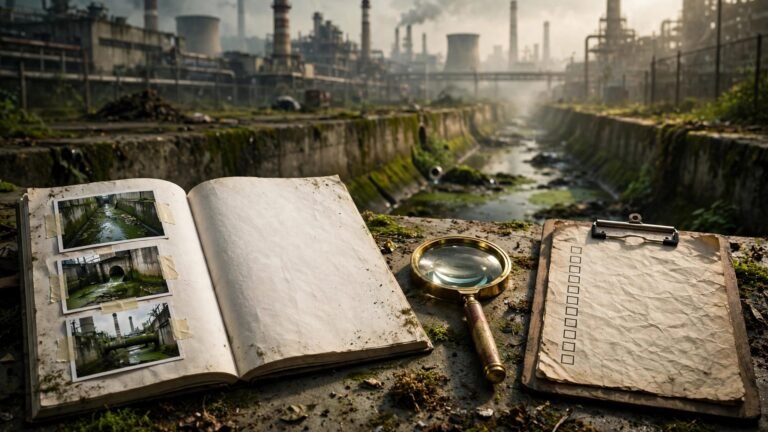
A second problem is that rivers are often treated as scenery before they are treated as living systems. That mindset turns pollution into a visual issue. Clear the surface, hide the outfall, plant along the edge, and the problem looks smaller than it is. Readers who want a sharper look at this kind of surface-level greening can see the site’s piece on urban biodiversity versus greenwashing.
The same pattern shows up in budgets. Money flows to beautification because it photographs well and opens fast. Drain interception, sewer repairs, monitoring, and maintenance are less glamorous, so they get delayed. Rivers pay for that political choice.
The damage spreads through health, habitat, and urban biodiversity
A toxic river is not only a dirty water problem. It changes the city around it.
First, polluted inflow strips oxygen from the water. Organic waste feeds microbial activity, and oxygen levels plummet, leading to a significant decline in overall water quality. Fish, insects, and other aquatic life then struggle or die. That loss ripples outward because river edges support birds, amphibians, pollinators, and plant communities. In other words, urban biodiversity falls long before a river looks biologically dead to the human eye.
Next, dirty drains turn flood events into health events. When monsoon water backs into streets or homes, people do not get soaked in rain alone. They come into contact with sewage-rich water carrying pathogens and chemical residues. Much of this crisis is exacerbated by a historic lack of robust flood inundation modeling in urban planning, which leaves vulnerable populations, such as children, sanitation workers, street vendors, and those in low-income settlements near drains, facing the worst exposure.
The harm also reaches groundwater and food systems in less visible ways. Polluted runoff can seep into soils, settle in wetland edges, and contaminate local ponds that support washing, fishing, or irrigation. Once that happens, the river is no longer the only victim.
This is why the issue needs climate literacy, not only engineering. People should know what a drain is meant to carry, what it should never receive, and why a black nullah is not normal urban infrastructure. A public that understands flow paths can spot illegal connections, risky dumping, and fake progress much faster. True progress requires a shift toward sustainable rainwater collection and a modernized approach to urban infrastructure, ensuring these systems serve their intended purpose.
The broader point is hard but plain. A river does not become toxic by accident. It becomes toxic because a city made daily pollution cheap and repair expensive.
What Systemic change looks like on the ground
Systemic change starts with an honest description of the problem. A drain carrying sewage is not “mixed flow.” It is failed separation, often caused by the reliance on archaic combined sewer systems that mix waste with rainwater. A riverfront lined with decorative planting is not restoration if black water still enters through side channels.
Cities need a short list of actions that match the scale of the damage. The table below shows where progress usually stalls, and what would help more.
| City action | What usually happens now | What would help more |
|---|---|---|
| Stormwater planning | Drains are treated as flood channels only | Use hydrological analysis to map every outfall and separate sewage lines |
| Sewage management | Plants and sewers lag behind growth | Fix dry-weather discharge first and install detention tanks to manage overflows |
| Street waste control | Litter and debris wash into nullahs | Improve collection, stop open dumping, and protect catchpits |
| Product and packaging policy | Cheap disposables enter runoff fast | Support take-back, refill, repair, and less-toxic materials |
| Public reporting | Cleanup claims stay vague | Publish ward-level drain and river data in plain language |
The takeaway is simple. Rivers improve when less pollution enters the drain, not when the city hides evidence better.
That shift also needs sustainable business models. Producers and retailers that profit from short-life goods should pay for take-back, safer materials, and recovery systems that keep waste out of streets and drains. This matters for packaging, household chemicals, and battery-heavy gadgets alike. A real circular economy is not only about recycling factories. It is also about stopping toxic leakage before monsoon runoff carries it downstream. Investing in smart drainage systems provides a path forward to monitor and treat these flows more effectively.
Community action still matters, but it works best when it links to public systems. Resident groups can report black-water outfalls. Schools can build climate literacy through local water mapping that tracks how rainfall runoff moves through the neighborhood. Ward committees can push for drain audits before the rains arrive, not after fish kills begin. If you want to support on-the-ground work that connects habitat repair, local accountability, and public learning, Explore Our Active Missions.
Personal values help too, within limits. People committed to plant-based living, lower waste, and everyday mindfulness often already think about hidden environmental costs. That habit is useful here. Yet no amount of careful buying can clean a river if sewage still enters the storm network by design. Public infrastructure, corporate responsibility, and local enforcement must move together.
Frequently Asked Questions
Why do stormwater drains in India carry sewage instead of just rainwater?
Many Indian cities rely on outdated infrastructure or suffer from unplanned growth where households and businesses connect wastewater outlets to the nearest available drain. Over time, these storm channels have become primary routes for untreated sewage, especially where dedicated sewer lines are missing or capacity is insufficient.
Is the pollution in rivers primarily from factories or drains?
While industrial outlets are significant, the majority of urban river pollution is non-point source pollution coming from thousands of stormwater drain outfalls. These drains collect a toxic mix of neighborhood sewage, street-level runoff, and improperly dumped waste, which together create a chronic flow of pollutants regardless of factory activity.
Why do river cleanup projects often fail to show lasting results?
Most cleanup initiatives focus on the riverbank, such as installing trash booms or removing surface debris, which does not address the source of the contamination. Because the drain network continues to discharge sewage and chemical runoff daily, the water quality remains poor despite temporary visual improvements along the banks.
How does stormwater pollution affect public health?
When monsoon rains cause these polluted drains to overflow into streets and residential areas, residents are exposed to water containing pathogens and hazardous chemicals. This creates a severe public health risk, particularly for those living in low-income settlements or working near open nullahs, where direct contact with the toxic flow is frequent.
Conclusion
Indian rivers keep turning toxic because too many stormwater drains in India no longer carry rainwater alone. They currently carry the failures of sewage planning, waste collection, land use, and weak enforcement, then dump that hazardous mix into water bodies that cannot recover fast enough.
A cleaner river starts far from the riverbank. It starts at the outfall map, the blocked catchpit, the illegal cross-connection, the roadside dump, and the toxic urban runoff that should never have reached our waterways. Until cities systematically fix these upstream pathways, polluted water will continue to arrive with every rain, further degrading the health of our aquatic ecosystems.