
Why Rainwater Harvesting Pits Fail in Indian Cities
 TBH Editorial
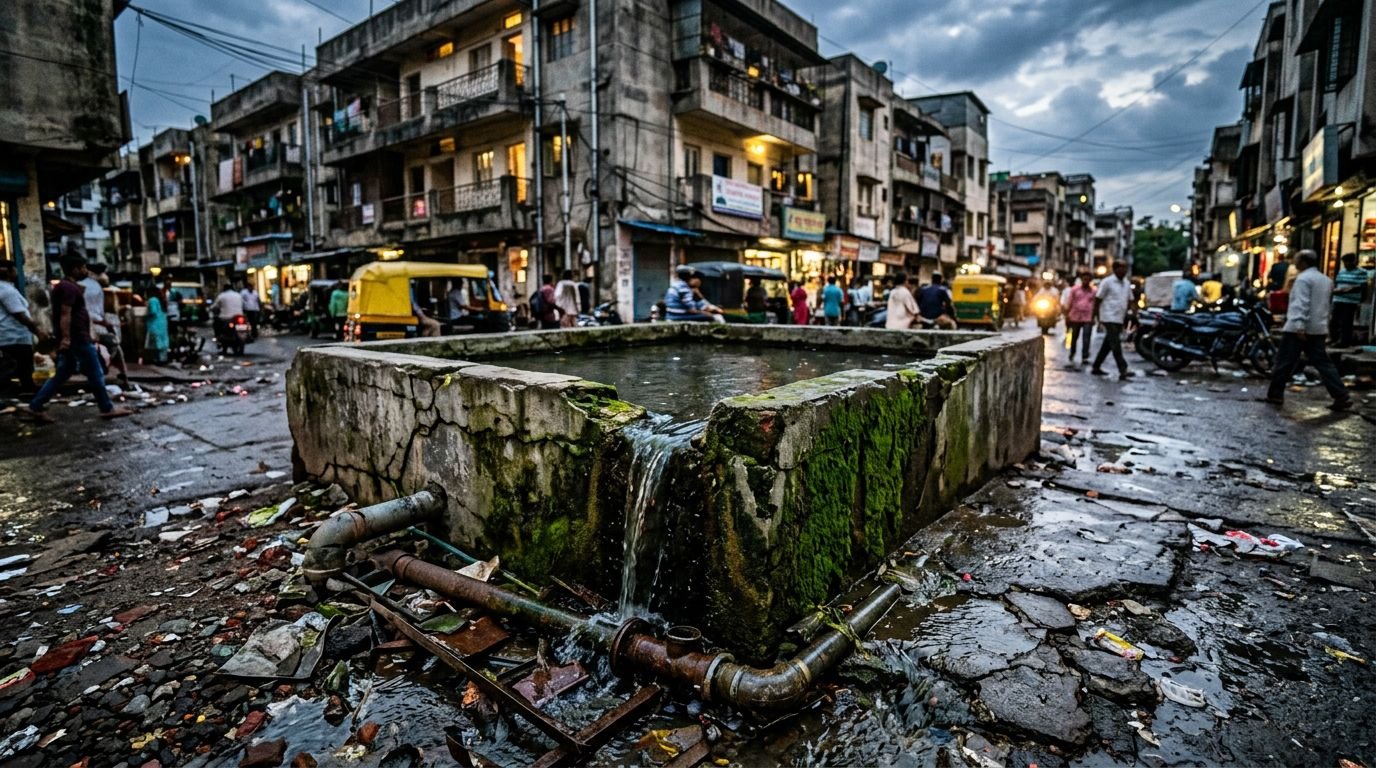
A rainwater pit can look like climate action while doing almost nothing to combat water scarcity in our growing urban areas. In many Indian cities, the structure exists and the paperwork is signed, yet the ground below never truly receives the water it needs.
That gap matters because rainwater harvesting is often sold as a simple answer to floods and falling water tables. However, the process of effective groundwater recharge is not simple when pits clog, overflow, collapse, or quietly become waste traps.
If you want to understand why these rainwater harvesting systems keep failing, you have to look past the pit itself and examine the broader infrastructure around it.
Key Takeaways
- Compliance vs. Functionality: Many rainwater harvesting pits fail because they are built as a regulatory checkbox for building approvals rather than as long-term, functional infrastructure.
- Design Flaws: Standardized, copy-paste designs often ignore critical site-specific conditions like soil infiltration rates, leading to pits that quickly become clogged or stagnant.
- Maintenance Neglect: Effective systems fail when they lack a dedicated budget and clear ownership for post-construction maintenance, such as silt removal and filter cleaning.
- Contamination Risks: Without proper first-flush diverters and pre-filtration, pits often trap dirty runoff, turning them into sources of groundwater pollution rather than replenishment assets.
- Systemic Data Gap: Cities often measure success by the quantity of pits installed rather than monitoring actual recharge performance, ignoring the need for ongoing operational audits.
The problem starts with compliance, not water
Many urban recharge pits fail before the first strong monsoon. They are built primarily to satisfy strict government policies, not to function as effective infrastructure for 10 or 20 years. Once the building completion certificate arrives, attention shifts elsewhere, leaving the actual goal of water conservation unfulfilled.
That creates a familiar pattern across Indian cities. A contractor digs a hole, lines it with rings or rubble, covers it, and leaves. Nobody checks soil infiltration after construction. Nobody tracks the silt load coming from the roof or driveway. Nobody budgets for cleaning before the next rainy season.
This quick comparison shows where the chain breaks.
| Stage | What should happen | What often happens |
|---|---|---|
| Planning | Soil, runoff, and groundwater are studied | A standard pit design is copied |
| Construction | Filters, inlets, and overflow are sized correctly | The recharge pits are undersized or loosely built |
| Handover | A maintenance plan is assigned | Responsibility is left vague |
| Operation | Silt is removed and flow is checked | The system is forgotten until flooding starts |
The takeaway is blunt. A system for rooftop rainwater harvesting is not a one-time civil work. It is a small piece of living infrastructure.
Recent 2026 reporting keeps landing on the same causes: clogging, poor design, bad siting, and neglect. That matches what residents have seen for years. In many neighborhoods, the installation is treated like a buried compliance token, not like a working water asset.
This is why the phrase rainwater harvesting pits india often points to two realities at once. On paper, cities show progress. On the ground, many systems are sealed by silt, sealed by apathy, or sealed by bad planning.
Bad siting turns a recharge pit into a dead end
A pit cannot facilitate effective groundwater recharge if the site itself resists infiltration. Yet, cities often mandate a standard design across plots with vastly different soil types, slopes, and drainage conditions.
Clay-heavy soils are a common problem. Surface runoff moves slowly through them, especially after years of compaction from paving, parking, and construction traffic. In those places, standard recharge pits may fill quickly and remain stagnant for too long. Residents often mistakenly assume the system is working because water is visible, but the opposite is true.
When soils do not support rapid absorption, site-specific infrastructure is essential. Depending on the terrain, recharge trenches or percolation tanks may serve as more effective alternatives to simple pits. Groundwater conditions are equally critical, as the water table may be shallow or already contaminated by leaking sewers, septic tanks, or industrial waste. Sending untreated runoff underground in such sensitive areas can exacerbate pollution rather than solve water scarcity.
Urban form adds another layer of complexity. Basements, retaining walls, utility lines, and paved courtyards interrupt natural seepage paths. Consequently, even a technically sound installation can underperform if the surrounding surfaces redirect flow in ways the soil cannot accommodate.
Cities rarely explain these nuances to residents. The public frequently hears a simple message: build a pit and save water. The truth, however, is closer to hydrology than a slogan. Some sites require the linear capacity of trenches, while others benefit from the storage volume of tanks. In many cases, the best strategy is simply reducing paving to allow for more open soil. When planners skip these site-specific assessments, the system becomes a dead end. It receives runoff but fails to support meaningful replenishment, does not protect against heavy rain, and does little to improve long-term local water security.
Dirty runoff clogs the system before it can work
Most pits do not fail because rain is the problem. They fail because the runoff is dirty.
Every catchment area, whether it is a rooftop or a paved road, collects dust, bird droppings, leaf litter, soot, and bits of plastic. Roads also add oil, tire particles, metal dust, and sewage leaks. When the first rain hits after a dry spell, all that material moves at once. Without a proper first flush diverter and prefiltration, the pit becomes a trap for sludge.
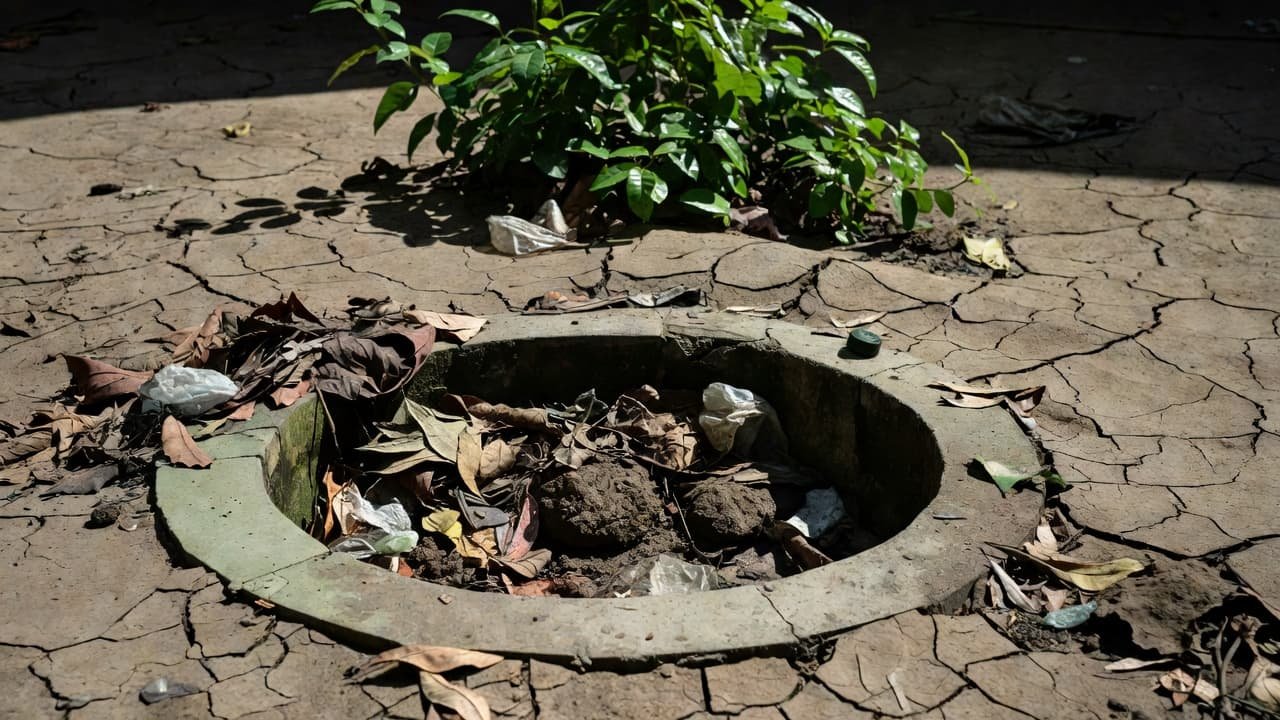
The first months may look fine. Water disappears quickly because the pit still has empty voids within the filter media. Then, fine particles settle into those gaps. Flow slows, and more sediment accumulates. Soon, the structure that was meant to facilitate rainwater harvesting is simply storing mud.
A second problem hides in plain sight. Many cities connect recharge pits to mixed surface runoff instead of relatively clean roof water. That is a design shortcut with a long-term cost. When polluted surface runoff enters the ground, the city is not recharging the aquifer; it is relocating contamination.
The same planning mistake shows up in larger urban water projects. The debate around the ecological impact of lake rejuvenation projects often comes back to polluted inflows, broken infiltration, and weak long-term monitoring.
A working system separates water by quality. Cleaner roof runoff can recharge or store more safely. Dirtier water needs treatment, slowing, or diversion. Without that distinction, pits become mini-landfills with a water label.
After installation, responsibility disappears
Most failed pits share one silent defect: nobody truly owns them after construction.
In an apartment complex, the builder may install the system but never explain how it works. After handover, the residents’ welfare association may inherit the pit without plans, drawings, or a maintenance schedule. In public spaces, one department handles roads, another handles drains, and a third handles groundwater or parks. Each office controls one piece, so no office feels fully answerable. This lack of ownership is a fatal flaw in urban water management, as these systems are intended to provide a reliable, independent water supply for the building.
Because of that split, maintenance is the first thing to vanish. Filters are not cleaned before the monsoon. Inlet grates clog with leaves. Broken lids stay broken. Silt rises but nobody measures it. A blocked overflow sends water back onto pavement, and residents blame heavy rain rather than failed upkeep.
Public frustration with weak enforcement is easy to find. In one citizen discussion on building approvals and rainwater rules, the complaint is not that people oppose harvesting. The complaint is that cities approve buildings without verifying long-term function, which only exacerbates the growing water crisis.
A pit that can’t be inspected, cleaned, and measured is not water infrastructure. It is buried neglect.
Money is part of the story. Capital budgets pay for visible construction. Operating budgets for cleaning, inspection, and repair are smaller, less glamorous, and easier to cut. Yet without them, the original investment decays fast.
This is also where trust breaks. When people see waterlogging next to a recharge system, they start doubting every climate promise attached to urban infrastructure.
Cities reward pit counts, not real recharge
Systemic change through sustainable water management is the only scale that matches this problem.
Many municipal programs in urban areas still measure success by the number of pits built, the number of properties covered, or the number of compliance notices issued. Those figures are easy to collect and easy to display. They say little about whether water is infiltrating, whether freshwater resources are protected, or whether the system provides reliable water for domestic use after five monsoons.
Performance data would look different. Cities would test infiltration rates. They would inspect first-flush devices. They would publish maintenance logs. They would compare runoff captured against local rainfall and paved area. Most important, they would stop treating every plot like a copy-paste hydrology problem.
This is not only a governance issue. It is also a finance issue. Cities and developers need sustainable business models for upkeep, because one-time construction money does not keep pits functional. Service contracts, annual audits, sensor-based checks, and transparent public reporting cost money. Still, those costs are small compared with repeated flooding, tanker dependence, and road damage.
The same logic applies to urban greening. A stronger model links water, soil, and vegetation instead of funding isolated features. That is why work on sustainable urban green infrastructure strategies matters. Trees, soils, compost, drainage, and recharge should support each other.
That is also where a circular economy approach starts to make sense. Leaf litter should become mulch, not drain blockage. Organic waste should rebuild soil, not add to runoff. Water should move through neighborhood systems that reuse, absorb, and slow it close to where it falls.
The ecological impact spreads across the neighborhood
A failed pit does more than waste rainwater. It changes the neighborhood around it.
When groundwater recharge fails, local recovery slows significantly. As the water table continues to drop, more people turn to private tankers or deeper bore wells to meet their needs. Roads flood faster because paved runoff has fewer places to soak in. Trees receive less moisture below the surface, even when the area seems green after rain. Over time, that weakens shade cover and pushes up heat stress.
Urban biodiversity feels those losses too. Moist soil, native shrubs, insects, birds, and amphibians depend on small pockets of functioning water cycles. A city does not need a jungle to support life. It needs surfaces that absorb, edges that stay alive, and runoff that does not become poison.
This is why pits cannot be discussed only as plumbing. They are tied to open ground, wetlands, lakes, and river corridors. The wider role of urban floodplains in storm water management shows the same truth. Water needs room, porous land, and connected systems. Concrete edges and isolated pits cannot carry the whole burden.
The social effect matters as much as the hydrology. When residents keep hearing about water scarcity while watching monsoon water rush into drains instead of into effective rainwater harvesting systems, public faith collapses. Climate plans start sounding abstract, especially to younger people who already live with climate anxiety. Real climate literacy should include drains, soil, recharge, and contamination, not only carbon charts.
Even people committed to plant-based living often run into this limit. Personal choices can reduce pressure on land and water, but they cannot fix a broken neighborhood recharge system. Public infrastructure still decides how cities live with rain.
What durable urban rainwater systems do differently
Working systems are less flashy and more disciplined. They start with site testing, not a stock drawing. They separate cleaner rooftop rainwater harvesting flows from dirtier surface runoff. They include self-cleaning filters, first flush diversion, inspection chambers, and safe overflow. They are sized for local rainfall patterns, often utilizing storage tanks to manage capacity, rather than relying on wishful thinking.

They also stay visible enough to maintain. Hidden systems are easy to ignore. A good setup makes inspection simple and routine. If someone cannot tell whether the system is clogged, the design is already too fragile for long-term use. Modern infrastructure often benefits from integrating traditional water harvesting wisdom, such as favoring deep recharge wells over simple pits to ensure better water security.
A few signs usually separate durable systems from decorative ones:
- The site has basic soil and runoff assessment before digging.
- The inflow includes filtration and first flush control.
- The structure has a clear overflow route during intense rain.
- Someone has a written cleaning schedule before the monsoon.
- Performance is checked after storms, not only at handover.
Community stewardship helps, but only when it has structure. Residents need diagrams, maintenance contacts, and simple indicators of failure. Sometimes, this involves the use of secondary storage tanks to hold water for non-potable needs. Implementing effective rooftop rainwater harvesting requires this level of detail. Noticing a blocked inlet, reporting a broken grate, or asking for pre-monsoon cleaning is not small. It is part of keeping a local water cycle alive.

There are also useful lessons from places where local bodies and residents cooperate. A short example from Tripura shows how community-scale rainwater systems can work when maintenance and local ownership are built in from the start.
For readers who want visible, place-based work around urban biodiversity and climate education, Explore Our Active Missions offers a grounded view of how ecological repair becomes real when tracking, accountability, and local participation stay attached to the work.
Frequently Asked Questions
Why do rainwater harvesting pits often fill up with mud instead of draining?
Most pits are not equipped with proper first-flush diverters or pre-filtration systems, causing debris, dust, and silt from rooftops and driveways to enter the pit directly. Over time, these fine particles accumulate and seal the voids in the filter media, effectively turning the recharge structure into a waste trap.
Can any soil type support a standard recharge pit?
No, soil composition is a major factor in whether a system will function. Clay-heavy or compacted urban soils often resist infiltration, meaning a standard pit design will likely remain stagnant rather than recharging the groundwater, necessitating alternative solutions like trenches or specialized drainage fields.
How can residents ensure their building’s system actually works?
Residents should demand a clear maintenance schedule, diagrams of the system, and a designated person or committee responsible for pre-monsoon cleaning. Regular visual inspections of filters and overflow routes are essential to catching blockages early before the system fails entirely.
Is it better to connect roof water and road runoff into the same pit?
It is generally better to keep them separate because road runoff carries higher levels of pollutants, such as oil, tire particles, and heavy metals. Connecting mixed surface runoff to a recharge pit risks contaminating the aquifer, whereas relatively cleaner rooftop water is much safer for groundwater replenishment.
Conclusion
A failed rainwater pit is rarely a technical mystery. Most failures trace back to copied designs, dirty inflows, weak maintenance, and institutions that prioritize counting structures over monitoring actual performance.
The harder truth is that the fix is not another round of symbolic construction. It requires systemic change in design standards, public data, maintenance budgets, and shared responsibility. By improving water management and prioritizing water conservation, cities can move beyond mere compliance to functional utility.
When cities treat rain as part of a living urban system, they protect our vital freshwater resources. When they treat these pits merely as paperwork, the monsoon keeps exposing the gap in our approach to effective rainwater harvesting.