Why River Linking in India Harms Wetlands and Fisheries
 TBH Editorial
Move a river, and you don’t move water alone. You move silt, spawning cues, floodplain moisture, bird habitat, and a fishing family’s next season.
That is why river linking in India can’t be judged only by canals built or water shifted. It is often sold as a fix for drought, flood, and uneven water supply, yet the ecological bill lands on wetlands and fisheries that rarely get equal weight in public debate.
If you care about climate, food, and community survival, this is where the story gets more serious.
The idea of a “surplus” river misses how rivers actually work
Many river-linking proposals begin with a simple claim. One basin has “extra” water, another has too little, so a canal can balance the system. On paper, that sounds neat. In real river systems, it rarely is.
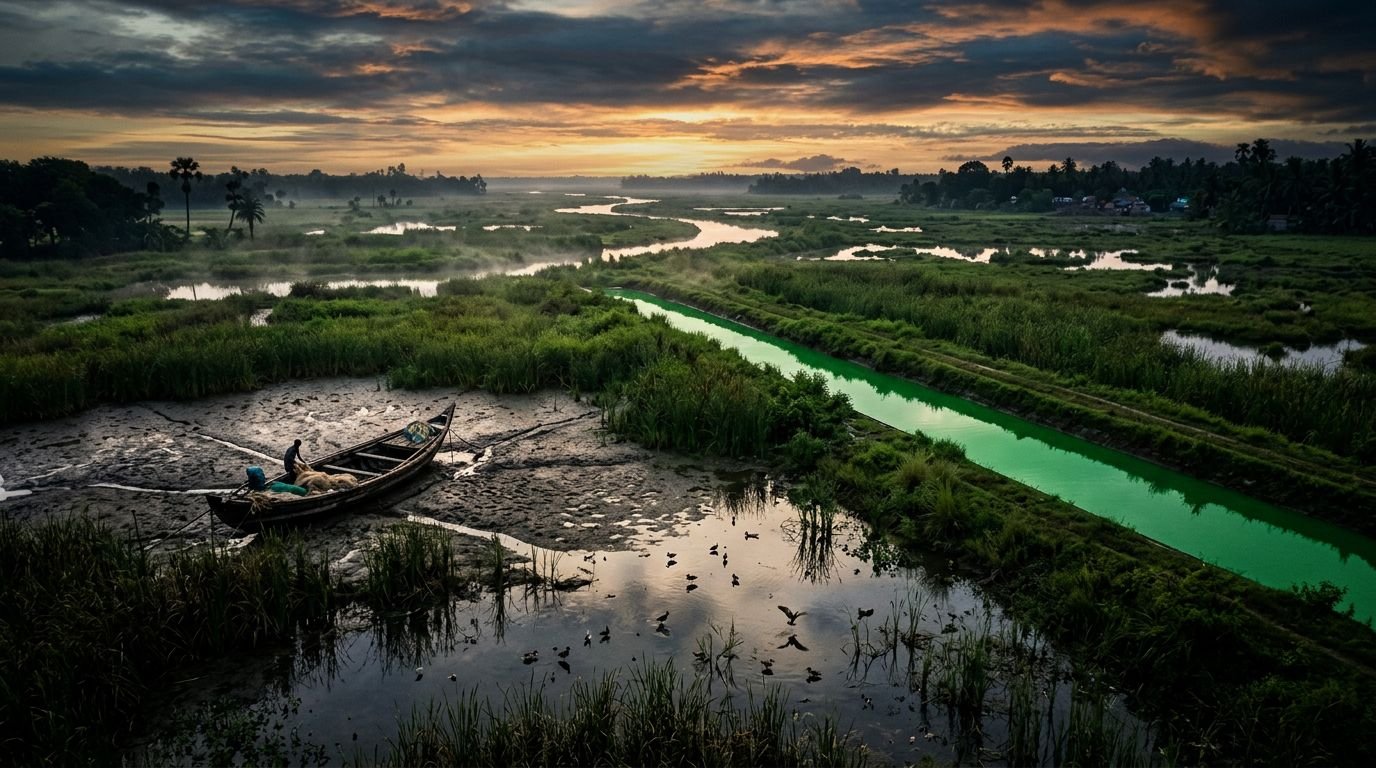
A river’s flow changes through the year. Monsoon pulses spread across floodplains, fill side channels, recharge wetlands, and carry sediment downstream. Dry-season flows keep pools alive, hold back salinity in estuaries, and support fish through lean months. When planners call water “surplus,” they often mean water that is not already captured for farms, cities, or storage. That does not mean ecology has no use for it.
The same water may keep marshes wet long enough for fish fry to survive. It may trigger breeding in native species. It may also deliver mud and nutrients to deltas that feed coastal fisheries. Once that flow is cut, dammed, or diverted, the damage shows up far away from the engineering site.
Research on downstream impacts on water discharge and sediment points to a problem that often stays out of political speeches. Storage and transfer projects do not only move water inland. They also trap sediment and alter downstream timing, which can weaken wetlands, estuaries, and coastal fish habitat.
A river’s “extra” water is often the water that keeps a wetland alive.
This matters because India does not have spare wetlands. Many are already squeezed by drainage, sand mining, sewage, roads, and real estate. River linking adds one more layer of stress, except this one reaches across entire basins.
Wetlands need seasonal chaos, not fixed water delivery
Wetlands are often treated like empty spaces that can tolerate whatever water regime engineers design. That view is wrong. A wetland depends on timing, depth, duration, and water quality. Change any of those, and the whole food web shifts.
Some wetlands need annual flooding followed by gradual drying. Others depend on slow seepage from nearby rivers. Many floodplain ponds act as nurseries for juvenile fish only during a narrow seasonal window. If a linked river changes flood timing by even a few weeks, eggs can fail, plants can rot, and nesting birds can lose food.
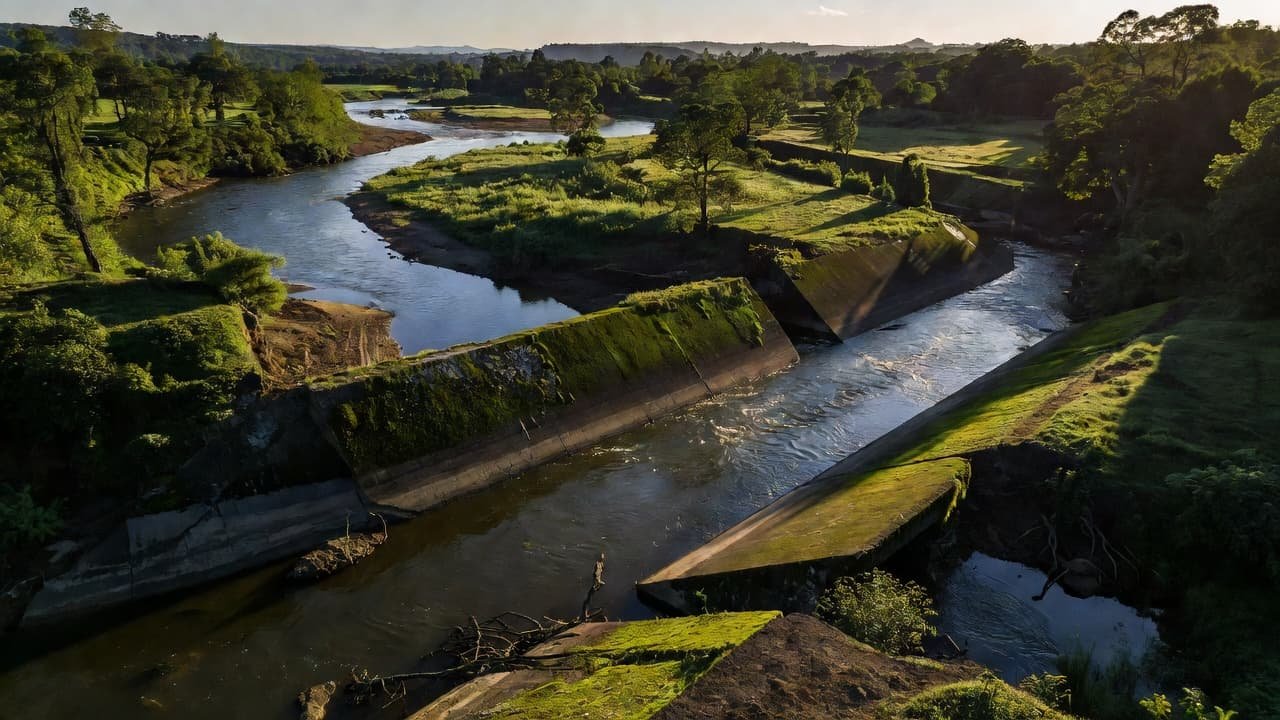
Canals and barrages also create a false sense of control. Water may reach a receiving area, but it may arrive at the wrong time, in the wrong amount, or with a different sediment load. Meanwhile, the donor basin loses flood pulses that once fed marshes and oxbow lakes. A wetland does not care that water was reallocated for a regional target. It responds only to hydrology.
This is also a growing urban biodiversity issue. Peri-urban wetlands around Indian cities buffer floods, cool heat, support migratory birds, and help recharge groundwater. When upstream river regimes change, these edge ecosystems become less stable. That weakens city ecology at the same time climate risk is rising.
The habit of treating water bodies as decorative assets shows up in other policy debates too. The same blind spot appears in discussions around lake rejuvenation in India, where appearance can trump ecological function.
Wetlands are not leftover land. They are living infrastructure, and their value is not abstract. They hold water, feed fish, support grazing, host birds, filter pollution, and reduce flood damage. Once their rhythm breaks, repair is expensive and often partial.
Fish don’t recognize basin boundaries, and that’s the problem
A canal link is not only a water corridor. It is also a biological corridor. Fish, eggs, larvae, plants, parasites, and pathogens can move through it. That is where one of the biggest risks to freshwater biodiversity begins.
India’s river basins evolved with distinct fish communities. Species in one basin may never have shared water with species in another. Once links open those boundaries, invasive fish can spread into habitats that native species are not prepared for. Some invasive fish breed fast, tolerate poor conditions, and eat aggressively across the food web. Native fish, especially localized and already threatened species, can lose ground quickly.
Research highlighted in Mongabay’s report on invasive fish risks warned that inter-basin links could expose freshwater hotspots to alien fish. That is not a side effect. It is a structural risk built into the idea of connecting separate aquatic systems.
When canals connect basins, they move competition, predation, and disease along with water.
The losses are not only biological. They are social and nutritional. Many small fish that outsiders overlook are the species local communities actually catch, dry, cook, and sell. A drop in diversity can mean lower catches, lower protein intake, and less income, especially for households with thin margins.
Fisheries are sensitive to small changes. Alter water velocity, temperature, turbidity, or dissolved oxygen, and spawning behavior shifts. Block migration routes, and populations shrink over time. Add invasive species, and already-stressed native fish may never recover.
This is where the phrase ecological impact needs a broader meaning. It is not only about species counts in a technical report. It includes food security, local markets, caste-linked fishing livelihoods, and the cultural knowledge built around seasonal waters. A canal map cannot show those losses clearly, but communities feel them early.
Downstream fisheries and delta communities pay the hidden price
The public discussion on river linking often focuses on where water will go. Far less attention goes to what downstream stretches lose after diversions and storage.
Lower freshwater flow can change estuaries in major ways. Salinity can push farther inland. Nutrient delivery can shift. Sediment loads can fall. That matters because many coastal fisheries depend on the mix of fresh and saline water that estuaries create. Juvenile fish and shellfish use those zones as nurseries. Change the chemistry and the seasonal pattern, and catch quality drops.
Deltas feel this pressure first. They need both water and sediment to remain productive. If upstream links and reservoirs trap silt, delta soils lose renewal. If less freshwater reaches the coast, saline intrusion becomes harder to hold back. Farmers, fishers, and wetland-dependent workers all face tighter margins.
These impacts are easy to miss in top-line project claims. A new command area for irrigation shows up in a spreadsheet. A fisher’s lower catch across three seasons often does not. Women’s unpaid labor around drying, sorting, and marketing fish rarely appears at all, even though it is part of household survival.
That is why local fisheries deserve to be treated as economic systems, not as sentimental add-ons. In many regions, inland and estuarine fisheries already function as place-based, low-input livelihoods. Protected well, they can support sustainable business models rooted in local ecosystems instead of large external subsidies.
The same logic applies to public health. When fish diversity drops, diet diversity can drop with it. That matters for children, for poorer households, and for regions where small indigenous fish are a key source of micronutrients. River policy is food policy, whether planners admit it or not.
Why official appraisals keep undercounting the damage
Large water projects usually move through appraisal systems that favor what is easy to measure. Canal length, storage capacity, irrigation potential, and capital cost all fit that model. Wetland function and fish diversity do not.
A better way to see the gap is to compare what gets counted with what gets pushed aside.
| What planning often counts | What often gets missed |
|---|---|
| Irrigation area and storage volume | Wetland hydroperiod, groundwater recharge, and marsh shrinkage |
| Flood control targets | Loss of seasonal flood pulses that sustain fish nurseries |
| Basin connectivity | Spread of invasive fish, parasites, and aquatic weeds |
| Construction cost and water transfer | Fisheries income, nutrition, and downstream salinity risk |
The imbalance is political as much as technical. Once a project is framed as nation-building infrastructure, criticism gets painted as delay or obstruction. Yet that framing hides a basic fact: wetlands and fisheries are also infrastructure. They store water, support jobs, moderate floods, and hold biodiversity at a scale no concrete canal can replace.
A review of river interlinking and freshwater fish diversity has long pointed to altered flows, pollution transfer, and biodiversity loss as core concerns. Those warnings are not new. What is new is the speed at which climate stress can amplify every one of them.
This is where Systemic change matters. India talks more often now about a circular economy, about water reuse, and about smarter land use. Yet megaproject logic still treats living river systems as if they were raw inputs waiting for redistribution. That is a weak fit for a century defined by climate shocks, heat, and ecological limits.
Public debate also needs better climate literacy. A river basin is not a pipeline problem. It is a connected system of rainfall, soil moisture, groundwater, floodplain exchange, fish movement, estuary balance, and community use. If appraisal ignores those links, the project math is incomplete from the start.
A better water path starts with basin logic and local accountability
India does need water security. Some regions face severe stress, and climate change will make water management harder. Still, moving more water over longer distances is not always the smartest first move.
A more grounded approach starts inside each basin. Reduce demand where waste is highest. Rebuild tanks, ponds, and local storage. Protect floodplains from construction. Restore wetlands before calling them underused land. Reuse treated wastewater in industry and landscaping. Shift crop choices in places where irrigation demand is out of step with local hydrology.
Those steps may sound less dramatic than a river-link map, but they are often cheaper, faster, and less destructive. They also fit a real circular economy, where water is cleaned, reused, and managed close to where it is used.
Several priorities stand out:
- Basin-level planning should measure fish diversity, wetland area, seasonal flood timing, and downstream salinity, not only storage and canal output.
- Fisheries communities need seats in decision-making, because they notice hydrological change long before many agencies do.
- Environmental flow rules should protect breeding seasons, marsh recharge, and estuarine balance.
- Public reporting should track ecological losses with the same seriousness as construction progress.
Personal choices still matter, but they have limits. Plant-based living, lower waste, and everyday mindfulness around water use can reduce pressure on food and water systems. Yet no household habit can replace floodplain protection or stop invasive fish from moving through a basin link. Private virtue cannot carry public policy on its back.
If you want to support grounded work tied to urban biodiversity and climate education, Explore Our Active Missions. Tangible field projects matter because they connect care with proof, and they help turn climate literacy into public accountability.
Conclusion
Move a river, and you move far more than water. You move wetland timing, fish migration, sediment, salinity, and the income of people who live closest to ecological change.
That is why river linking in India needs tougher public scrutiny. The strongest test is not whether a project looks bold on a map. The strongest test is whether its ecological impact leaves wetlands functioning and fisheries alive.
A serious water future will come from better basin planning, honest accounting, and Systemic change that treats living rivers as public wealth, not spare plumbing.