
Can Plastic Roads Add to the Microplastics Problem?
 TBH Editorial
A road can look solid and still shed pollution every day. That is why plastic roads and microplastics belong in the same conversation, even when the idea is sold as smart recycling.
The promise sounds tidy: take waste plastic, mix it into pavement, and keep trash out of dumps or incinerators. But roads are not sealed containers. They grind under traffic, crack in heat, weaken in rain, and wear down over time.
That doesn’t make every plastic-modified road a mistake. It does mean the real question is harder than the sales pitch, and more important for any city that claims to care about public health and ecology.
The clean-up story behind plastic roads
Plastic roads appeal to a simple instinct. If cities drown in plastic waste and roads need repair, why not solve both problems at once?
In practice, “plastic roads” can mean different things. Most projects do not build roads from plastic alone. They add shredded or processed plastic to asphalt mixes, sometimes as a bitumen modifier, sometimes as part of the aggregate blend. A few systems use plastic-heavy modular blocks, but that is not the common model.
That distinction matters because the environmental claim often sounds broader than the engineering reality. Waste plastic is not disappearing. It is being placed inside a high-friction surface that faces sun, heat, traffic, rain, and repeated maintenance.
Roads already release synthetic particles. Tire wear is a major source, and road paint, brake dust, and pavement wear add more. Penn State’s summary of current plastic asphalt research points out that this background pollution is already significant, which makes any new plastic input worth testing with care.
A clean street surface can hide a messy material story. Plastic in pavement may reduce visible litter, yet visible litter was never the whole problem. The deeper issue is where the material goes after years of abrasion.
That is why the ecological debate should not stop at landfill diversion. A road is a long-term exposure site. Once plastic enters that system, the burden shifts to the public realm: storm drains, roadside soil, city air, and nearby water.
How pavement wear turns plastic into particles
Every road loses material. That is not a flaw in one brand or one pilot. It is how roads behave under pressure.
Cars, buses, trucks, bikes, and heat cycles grind the surface a little at a time. When plastic is part of that surface, some of the lost material can include plastic-rich fragments. That is one route by which plastic roads can become a microplastic source.
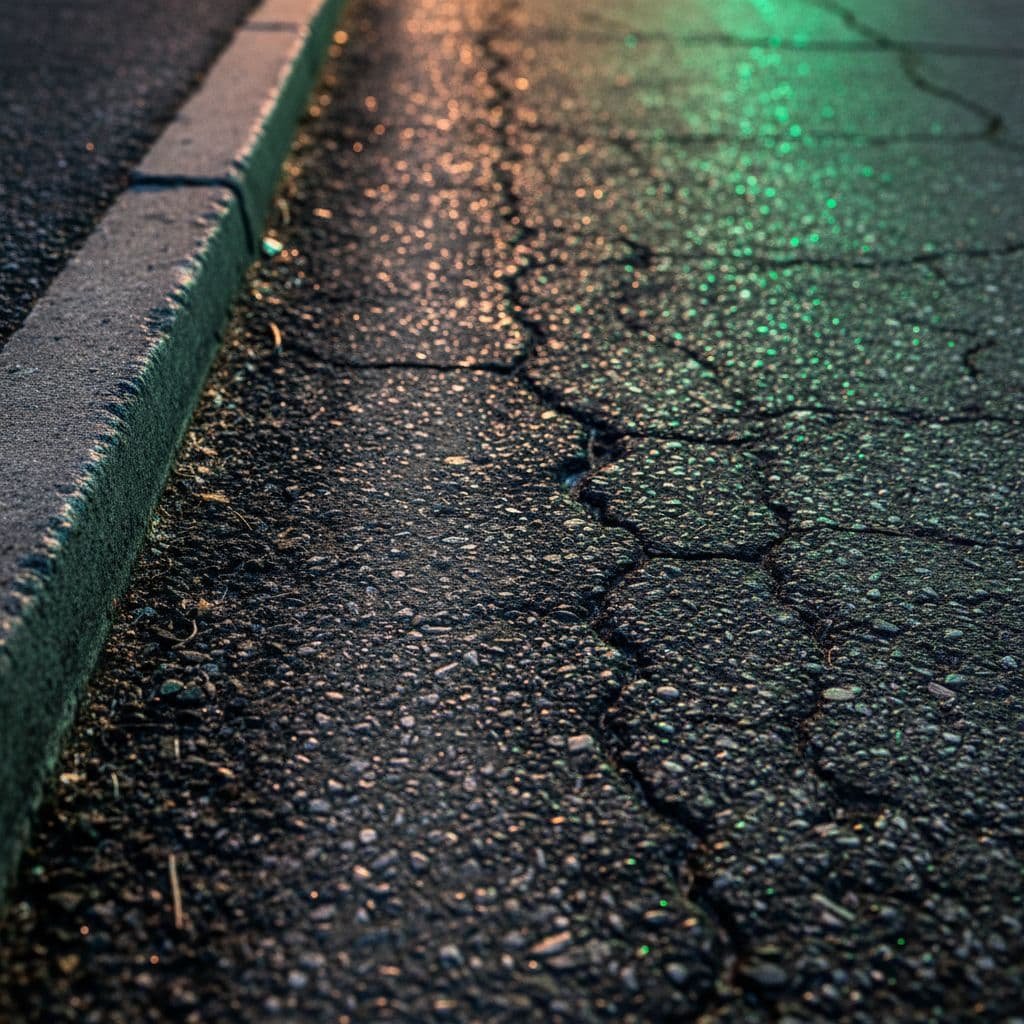
The path is not always direct or dramatic. Some particles come off through simple abrasion. Others form after sunlight, oxidation, and temperature shifts weaken the mix. Water then carries loosened particles into gutters and drains, where they travel far beyond the road itself.
The details depend on the recipe. Plastic type matters. So does particle size, mixing method, local climate, and traffic volume. A road in a hot coastal city does not age like one in a cold mountain corridor. That is why sweeping claims about safety or danger both miss the point.
Maintenance creates another release point. Old asphalt is milled, cut, broken, and moved. If a pavement contains plastic additives, those steps can generate fine dust unless crews capture it well. End-of-life handling is part of the pollution story, not a footnote.
Waste plastic in a road is not gone. It is stored in a surface built to wear.
This is the core blind spot in many public discussions. People hear “recycled into roads” and picture safe containment. A road is not containment. It is controlled breakdown over years, with the fragments dispersed by weather and traffic.
What the research says right now
The current evidence is mixed, but mixed does not mean reassuring. It means scientists have found reasons for caution, while long-term field data still lag behind the pace of public claims.
Three useful sources frame the debate: a 2022 abrasion study on plastic-modified asphalt, a 2026 Hawaii study reported by ACS, and a broader review of pavement uses and environmental risks.
Here is the short version:
| Evidence source | Main finding | What it means |
|---|---|---|
| 2022 lab abrasion study | Plastic-modified asphalt released microplastics under simulated wear, and release changed with plastic type, pH, temperature, and mixing method | Release can happen, and mix design matters a lot |
| 2026 Hawaii study | Recycled polyethylene pavement did not release more polymers than the SBS control pavement in early tests, and tire wear appeared much larger | Plastic pavement may not always be the biggest polymer source on a road |
| Broader review literature | Long-term degradation, emissions, and microplastic generation remain open environmental concerns | Early success claims do not settle the full risk |
The Hawaii result is important because it adds nuance. Some plastic-modified pavements may not shed more polymer than certain conventional mixes, at least in early testing. Yet that does not clear the category. The control pavement also used a polymer-modified system, and real roads age for years under messy conditions that lab or short-term studies cannot fully mimic.
The 2022 study matters for the same reason. It showed that recycled plastic in asphalt can release particles under road-like abrasion, and that release varies with conditions. In other words, the answer is not a clean yes or no. It depends on what plastic is used, how it is added, and how the road lives and dies.
That leaves one honest conclusion: plastic roads are not zero-risk, and the research base is still thin where it counts most, long-term outdoor monitoring.
Why even a small extra source matters in cities
Some people hear that tire wear is larger than pavement shedding and stop there. That is too narrow.
Cities cover huge areas with roads, parking lots, intersections, medians, bus corridors, and repair zones. Even a modest release per square meter can add up across an urban network. The particles do not stay neatly at the curb.
Rain moves them first. Road runoff carries fine material into drains, retention ponds, canals, rivers, and coastlines. Dry weather moves them too, because wind and passing traffic resuspend dust. That means part of the exposure happens through water, and part through air.
The ecological impact spreads beyond the road corridor. Roadside soil can trap synthetic particles. Aquatic habitats receive them during storms. In dense neighborhoods, those particles can settle where children walk, where pollinators forage, and where street trees struggle to survive. That is not abstract. It is about urban biodiversity in places already short on breathing room.
A city road also cuts through unequal landscapes. Schools, bus stops, informal markets, and lower-income housing often sit beside heavy traffic. So even if plastic-modified pavement proves a smaller source than tire dust, it still joins a pollution mix that some communities absorb more than others.
This is why “small compared with tires” should not end the discussion. It should sharpen it. If a city already knows its roads release large amounts of synthetic debris, adding more plastic into the system needs a strong public case, not a hopeful one.
When the circular economy story gets too neat
The strongest argument for plastic roads is the circular economy story. Waste gets turned into infrastructure. Materials stay in use longer. Cities reduce disposal pressure. On paper, that sounds sensible.
But a circular economy is not just about moving waste into a new product. It is about keeping materials in safe loops with known inputs, clear recovery paths, and lower harm across the full life cycle. A road surface that sheds particles into drains is not a clean loop. It may be a delayed release.
Feedstock quality makes this harder. Post-consumer plastic streams are often mixed, contaminated, or full of additives. Pigments, fillers, flame retardants, and plasticizers do not vanish because the material entered asphalt. If the recipe is opaque, public oversight becomes weak from the start.
End-of-life also matters. When plastic-modified pavement is milled and reused, cities need to know where the recovered material goes and what extra handling it needs. If no one tracks those flows, the system is not circular in a meaningful way. It is a disposal pathway with better branding.
That is why sustainable business models in road construction should include monitoring, dust control, runoff testing, and public reporting for years after installation. If the business case depends on public trust, accountability has to be part of the contract.
A critical review of plastic road claims makes this tension plain: the environmental benefits are often presented with more confidence than the evidence allows. Durability claims may still hold. Waste diversion may still matter. Yet neither claim erases the need to measure harm.
What cities owe the public before scaling up
A pilot project is not proof. If a city wants to use plastic in roads, it owes residents a testing plan that is public, independent, and tied to local conditions.
At a minimum, officials should answer a few basic questions:
- What exact polymers, additives, and feedstock sources are in the mix?
- How will the city test abrasion, runoff, and dust during use and during milling?
- What is the comparison point, plain asphalt, polymer-modified asphalt, or another material?
- Who pays for monitoring if problems appear after the ribbon-cutting photos are gone?
Those questions sound technical, but they are civic questions too. They shape school routes, drainage quality, maintenance budgets, and roadside health. They also reveal whether a project is real Systemic change or a neat press release.
Cities should compare plastic-road spending with other options that may cut harm faster. Better stormwater capture, lower-speed streets, safer public transit, and less car dependency can reduce roadway pollution without adding more plastic to the pavement mix. Sometimes the greener choice is not the flashier material. It is the street design that produces less wear in the first place.
Local trust grows when action is visible and verifiable. If you want that kind of grounded accountability, Explore Our Active Missions for examples of field-verified work linked to urban biodiversity and climate literacy, not vague green promises.
If a road material needs years of monitoring, it should not be marketed as solved on day one.
That standard is not anti-innovation. It is basic public care.
Personal habits help, but roads need systemic accountability
Many people reading this already care about waste, food, and lifestyle. You may practice plant-based living. You may try everyday mindfulness about what you buy, throw away, and support. Those choices matter, and they reflect real care.
Still, road pollution does not shrink because one person shops carefully. You can refuse disposable plastic at home and still breathe dust from a busy intersection on your commute. That is why Systemic change matters most here. The source sits under shared infrastructure, not inside one household.
This is where climate literacy becomes practical. It is not only knowing the science. It is knowing which problems demand personal action, which demand policy, and which demand both. Plastic roads fall into that last category. Citizens should stay curious and alert, while cities and contractors carry the heavier duty to prove safety.
The better public question is simple: does this project reduce total harm, or does it hide waste inside a surface that will wear out anyway? That question leads to better hearings, better procurement rules, and better monitoring.
Personal ethics still belong in the picture. They keep attention alive. But they should point outward, toward contracts, drainage systems, maintenance standards, and the real ecological footprint of urban materials.
Where this leaves plastic roads
Plastic in pavement may reduce visible waste, but it does not remove plastic from the environment by magic. Roads wear down, and current evidence shows that some plastic-modified mixes can release microplastic particles, even if tire dust often remains the bigger source.
The strongest takeaway is not panic or dismissal. It is accountability. If cities want to use plastic roads, they need open formulas, long-term monitoring, runoff testing, and honest comparison with lower-risk options.
A clean sustainability story is easy to sell. A road that protects people, water, and urban life is harder to build, and that is the standard worth keeping.