Why Glass Buildings Are Driving Bird Collisions in Indian Cities
 TBH Editorial
A bird can cross a noisy avenue, dodge wires, and still die at a spotless office lobby. The threat looks absurd because glass surfaces look harmless to us. For birds, though, it can behave like an invisible wall or a fake patch of sky.
That is why the rising frequency of bird collisions india deserves far more attention than it gets. As Indian cities add more reflective facades, brighter lights, and landscaped corporate campuses, the risk grows, while most deaths stay unseen. To understand the scale of the problem, you have to look past the glass itself and at the way building architecture and cities are being designed.
Key Takeaways
- Glass as a Hidden Threat: Birds struggle to perceive glass surfaces, often mistaking reflective facades for open sky or habitat, which leads to fatal high-speed collisions in both commercial and residential areas.
- The Myth of the High-Rise: While skyscrapers are often blamed, mid-rise buildings, glass-fronted offices, and metro stations are just as dangerous, particularly when located near trees, gardens, or wetlands.
- The Data Gap: Because many collision victims are removed by scavengers or cleaning staff, bird deaths are significantly underreported, making it difficult to quantify the full scale of the ecological impact.
- Proven Solutions Exist: Simple, cost-effective design interventions—such as fritted glass, UV patterns, external shutters, and strategic night lighting—can significantly reduce mortality rates without sacrificing building aesthetics.
- Systemic Change Needed: Bird-safe design must transition from a voluntary practice to a mandatory component of building codes, ESG reporting, and urban planning policies to effectively protect urban avian biodiversity.
Glass looks harmless to us. To birds, it can be a false sky
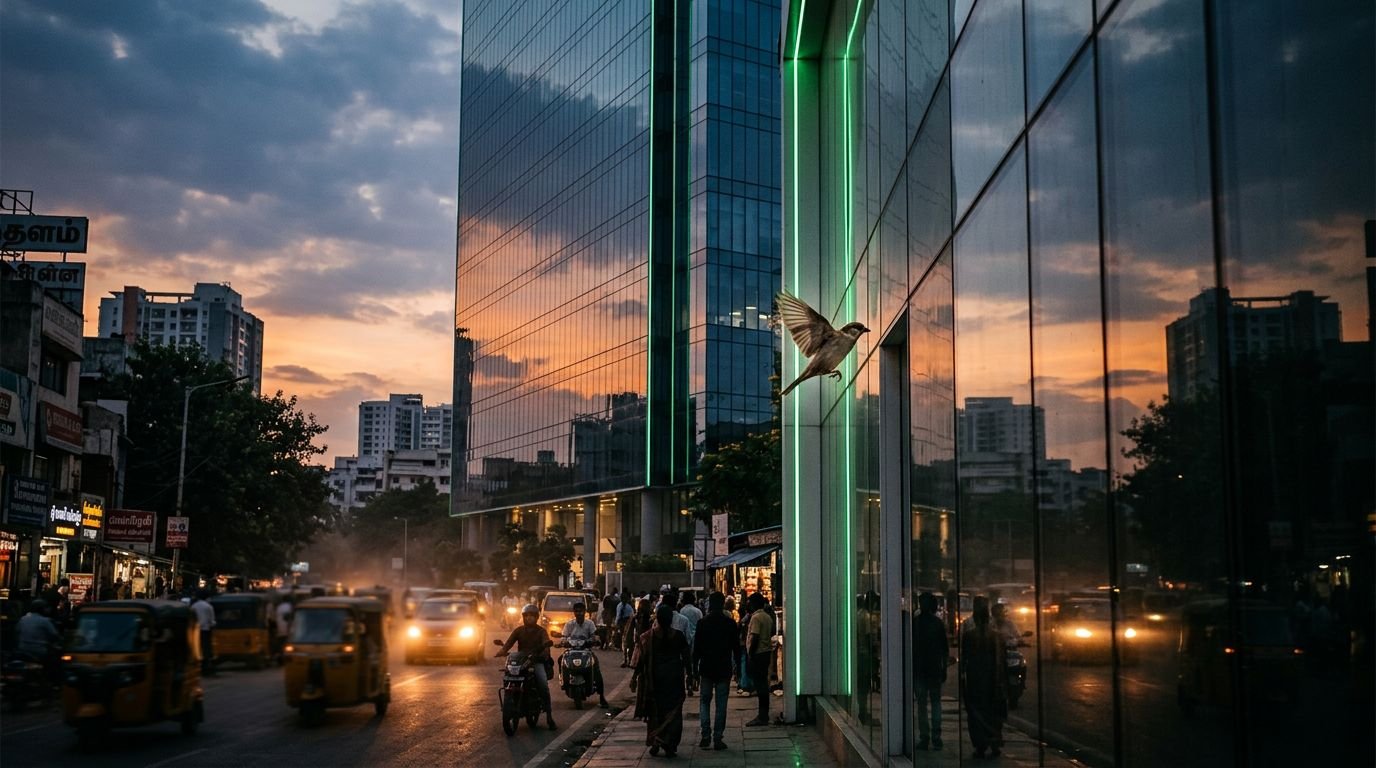
Birds do not read buildings the way humans do. A sleek facade that signals status to a developer can look like open air to a bulbul, sunbird, warbler, or dove. High glass transparency creates one trap, because birds try to fly through what appears to be an open route. Other reflective surfaces create another, because they mirror trees, clouds, and water.
That is why a glass wall beside a row of shrubs is often worse than a blank concrete wall. The bird is not being reckless. It is responding to cues that usually mean safety.
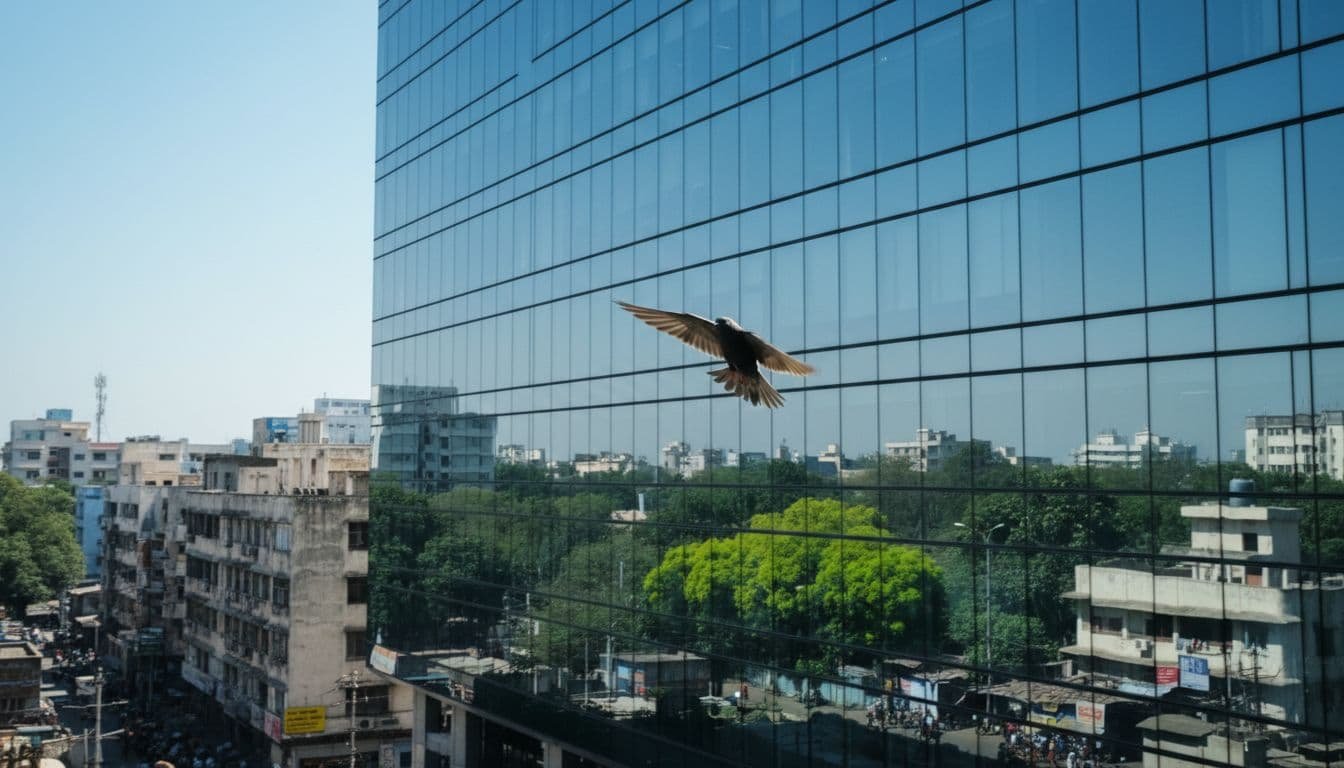
Corners and sky bridges add to the danger. So do atriums and glass corridors that create a see-through effect. A bird sees daylight at the far end and tries to pass. The result is often a high-speed impact that kills on contact or causes internal injuries that show up later.
Research also backs what field observers have long noticed. A study on building surroundings and glass cover found that both the amount of glass and nearby vegetation shaped collision risk, with monitored deaths occurring over a single year of sampling. You can see the paper on building surroundings and glass cover in bird collisions.
Many people still picture this as a high-rise problem. It is not. Mid-rise offices, malls, metro stations, hotels, hospitals, and even glass-fronted buildings and shelters can kill birds. In Indian cities, the problem hides in plain sight because the buildings look modern, clean, and desirable. Yet the same facade can act like a silent snare.
Indian cities magnify the risk
Indian cities are growing in a way that makes this issue sharper, not smaller. Glass-heavy architecture has become shorthand for progress, especially in new business districts in cities like Bengaluru, IT parks, luxury apartments, and institutional campuses. At the same time, cities still hold pockets of life, old trees, wetlands, gardens, roadside planting, and seasonal bird movement. Those two realities now collide.
A bird moving between a park and a nesting site does not know that a mirrored facade has replaced an older building. It still follows light, foliage, and open sightlines. That makes collision hotspots common near tree-lined roads, internal courtyards, and office campuses with ornamental greens placed right beside reflective walls.
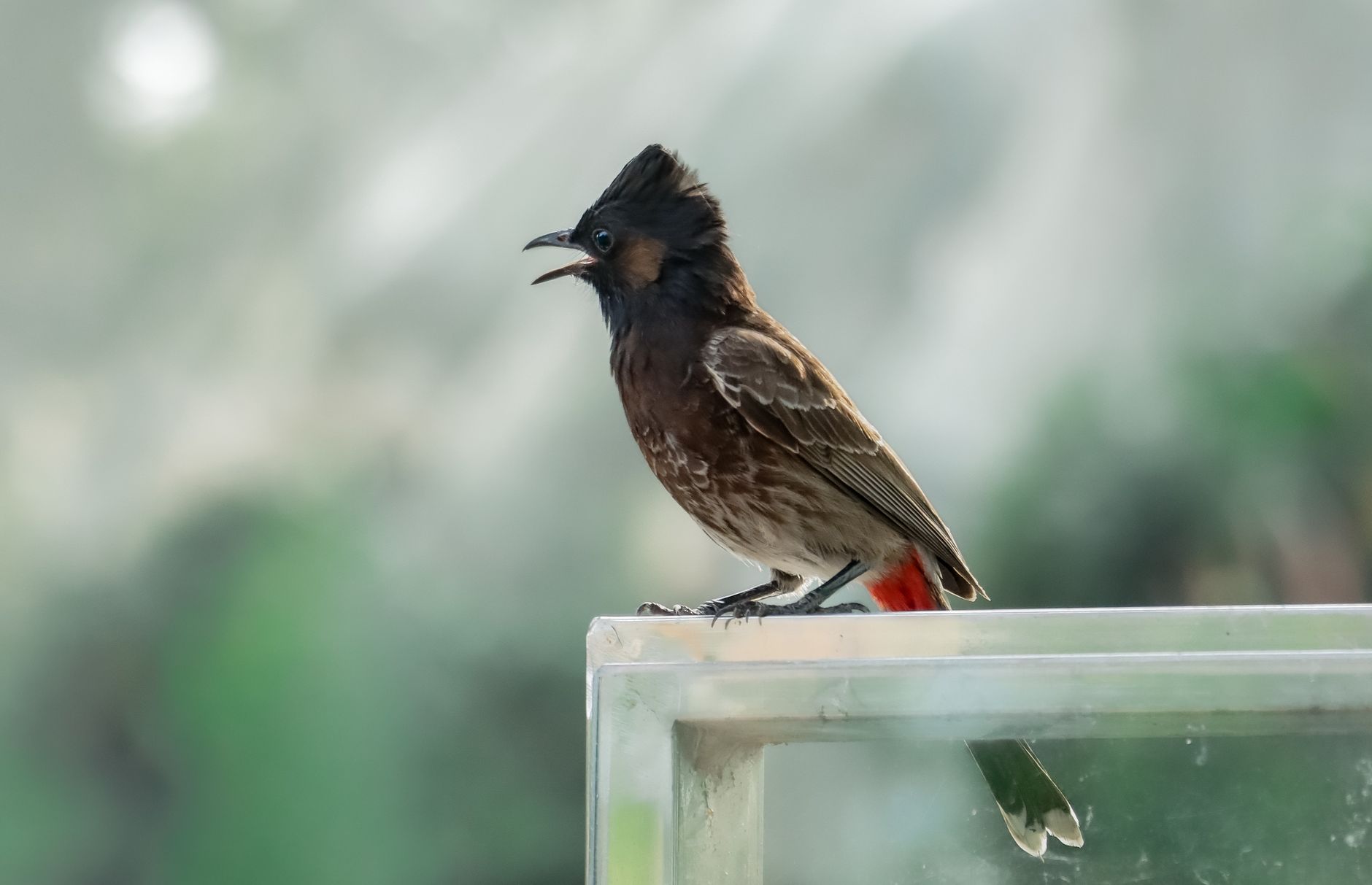
Photo by Shemon Saha
Night adds another layer. Brightly lit buildings can attract migratory birds and disorient them as they navigate across established migration routes. India sees seasonal bird movement across many urban regions, so artificial lights from towers are not only local hazards. They can become traps during migration windows, when tired birds pass through unfamiliar cityscapes.
This is where design culture matters. Indian real estate often celebrates full-height glazing, sharp corners, glossy curtain walls, and dramatic lobbies. Marketing teams show these features as proof of class and openness. Birds pay the cost.
The danger also spreads unevenly. A campus near a lake, ridge, mangrove edge, riverbank, or mature avenue trees may pose far more risk than a similar building in a dense commercial block with little greenery. In other words, the very places that support avian biodiversity can become deadlier once reflective glass creates collision hotspots in the area.
That makes the problem feel cruelly ironic. We plant more trees to cool heat-stressed cities, but then mirror those trees on glass. We build green campuses, yet place birds in the path of illusion. Without bird-safe design, urban greening and glass architecture can work against each other.
The numbers are smaller than the real toll
The hardest part of this issue is that the visible count is almost never the real count. A bird that hits glass at dawn may be removed by housekeeping before office staff arrive. An injured bird may fly off and die later. Scavengers, stray animals, and weather erase evidence fast. So collision data is often a thin slice of a larger problem.
That is why undercounting shapes the whole public debate in India. If people do not see bodies, they assume the threat is minor. If building managers do not log incidents, they claim there is no issue. If cities do not require monitoring, the absence of data collection starts to look like absence of harm.
A 2025 report by Mongabay noted that few people in India are tracking this problem consistently, even as a study in the Nilgiri Biosphere Reserve recorded 35 collision instances in one year involving 22 bird species. Citizen science platforms like iNaturalist are helping track these incidents, but the reporting remains limited because the monitoring is still so thin. You can see the full details in Mongabay’s report on bird collisions with glass in India.
In 2026, New Delhi hosted a national symposium on bird-window collisions. That matters because it signals a shift from scattered concern to public discussion. Still, a symposium is not a data collection system. Cities need routine surveys, shared reporting standards, and pressure on property owners to release data.
A building can look clean, efficient, and premium while still functioning like a wildlife hazard.
The lack of data also distorts policy. Energy use gets measured. Waste gets audited. Air quality gets monitored, at least unevenly. Bird deaths from glass rarely enter the same accountability frame, even though the avian bird mortality is real. What gets counted shapes what gets fixed, and right now, many collision deaths never make it into the count.
Why losing city birds matters more than many planners admit
When a bird dies against a facade, the harm is not only personal, though that should matter on its own. Resident birds eat insects, move seeds, pollinate some plants, and help keep urban ecosystems alive. Remove enough of them, and the city gets poorer in ways that are easy to miss at first.
This is why bird collisions are not a side issue for birdwatchers. They belong in mainstream planning. They are part of how a city treats living systems, not just traffic flow and floor-area ratios.
The losses also cut into public life. Many urban residents hear birds before they see them. A koel at dawn, an Indian pitta (one of the many endemic bird species often found in urban gardens), or a sunbird in a flowering tree, and parakeets over a neighborhood park are small forms of contact that keep city life from feeling fully sealed in concrete. When birds disappear, so does part of the city’s sensory warmth.
For climate-anxious young people, this topic should sit inside climate literacy. Urban sustainability is not only about carbon charts, solar rooftops, and electric mobility. It is also about whether a city can lower harm to the species already trying to survive inside it.
The moral issue is plain. If a known design choice kills animals at scale, and if safer options exist, then repeating that design is a choice, not an accident. That is where public language has to change. Bird-window deaths are often treated as sad side effects of progress. In truth, they are signs of a planning culture that still treats non-human life as expendable.
Implementing bird-safe design is neither expensive nor mysterious
The good news is that effective bird-safe design is already a reality. Birds do not require architects to stop using glass entirely; they simply need that glass to become visible. Incorporating bird-friendly glass can be achieved through fritted patterns, ceramic dots, UV patterned glass, external screens, louvers, mesh, shutters, and patterned decals. Even simple retrofits can cut collision risks sharply when applied to the right areas, and choosing bird-friendly glass from the outset makes the process seamless.
The most effective rule is simple: if birds can see reflections or an apparent flight path, the surface needs a visible cue. Those cues must sit close enough together to signal a solid barrier rather than a gap. Large empty panes are the primary source of the problem.
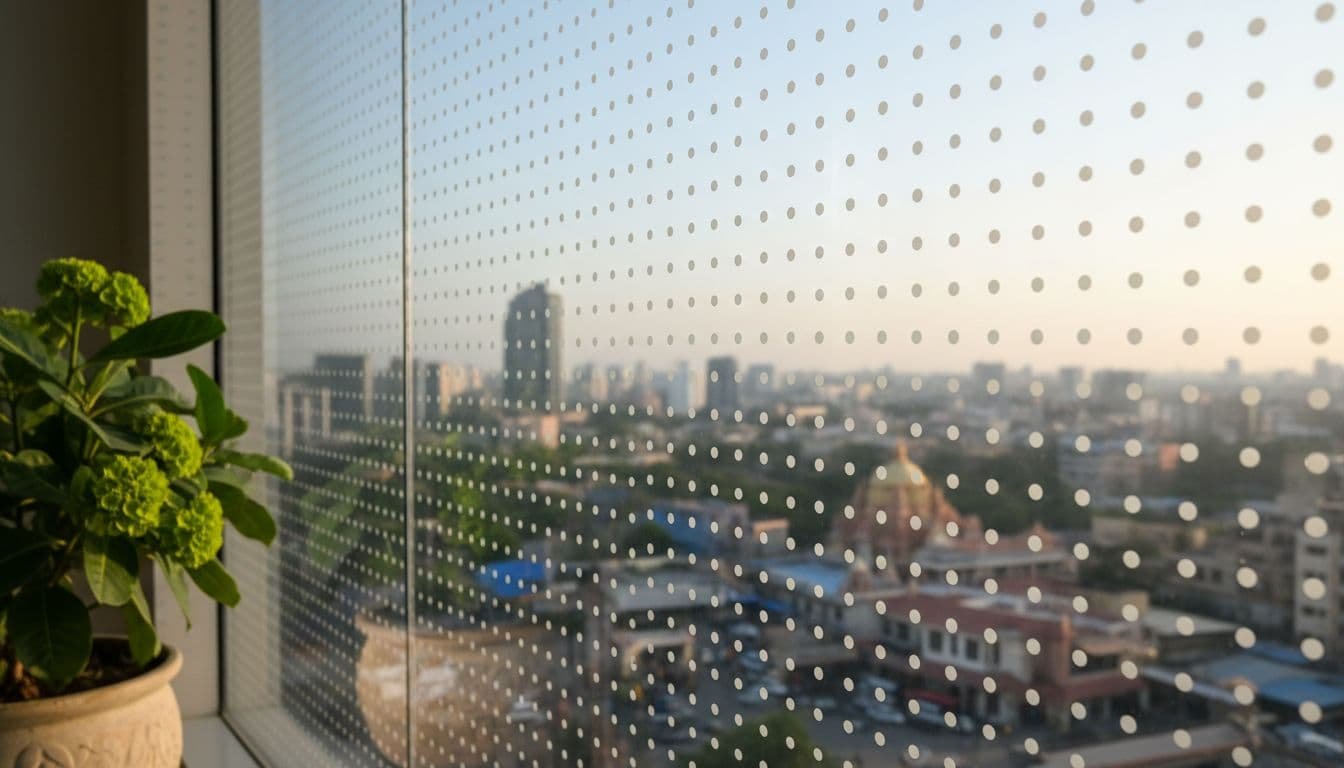
This quick comparison shows where risk rises and how design can reduce it:
| Common feature | Why it is risky | Better option |
|---|---|---|
| Clear glass corridor | Birds try to fly through visible light beyond it | Add dense markers, screens, or bird-friendly glass |
| Mirrored facade near trees | Reflections look like real habitat | Use fritted glass or exterior shading |
| Bright night lighting | Migrants get drawn toward illuminated buildings | Switch off non-essential lights at night |
| Glass corners and sky bridges | Birds misread open angles and depth | Treat corners with patterns or external mesh |
| Low glass near planted edges | Daily local movement brings birds close | Retrofit the first few meters of glass |
The takeaway is straightforward: the fix is not magic, and it is not rare.
Cost is often used as a shield, but that argument weakens on inspection. Many preventive measures can be built into new projects for a small share of total facade cost. Retrofits are less tidy, yet still feasible, especially at known collision points such as lobbies, corners, connector bridges, and lower floors near vegetation.
There is also a habit in green building circles of treating energy and water as the only serious design metrics. That is too narrow. A building should not win praise for efficiency while killing wildlife against its skin. If a facade saves cooling energy but creates avoidable deaths, the design is still failing part of its public duty.
Accountability has to move from charity to policy
Personal concern helps, but it will not solve this at city scale. Systemic change is the only response that matches the problem. That means building codes, planning approvals, facade standards, procurement rules, and occupancy policies all need to shift.
Developers should have to assess collision risk before construction, especially on sites near water, parks, institutional greens, ridge zones, and known bird movement areas. Municipal bodies can require bird-safe treatment on high-risk facades, much as they require fire systems or parking norms. Large campuses can run seasonal lights-out rules during migration periods to mitigate light pollution caused by artificial lights.
Corporate India also has to widen its idea of responsibility. Many firms publish glossy ESG reports while occupying reflective buildings that remain hostile to wildlife. If a company talks about nature-positive values, its office should not be a recurring cause of preventable bird deaths, and these reports should include partnerships with wildlife rescue organizations to demonstrate a commitment to local biodiversity.
This is where the language of the circular economy can help, but only if it moves past packaging and waste. Retrofitting existing buildings, extending facade life through smarter add-ons, and avoiding full material replacement can align with circular thinking. More important, sustainable business models should count ecological harm as a design cost, not a public relations footnote.
A better market signal would reward bird-safe materials, tested facade products, and local retrofit services. That creates demand for better manufacturing and better design practice at the same time. Once bird-safe standards enter tenders, audits, and investor questions, the problem stops looking optional.
None of this should be framed as charity toward birds. It is accountability for predictable harm. Cities regulate sewage because untreated waste causes damage. They regulate structural loads because unsafe buildings hurt people. Wildlife-safe architecture belongs in the same category of normal responsibility.
What people can do, without pretending the burden is only personal
Individuals cannot rewrite facade codes overnight, but they can still help make the issue harder to ignore. A resident welfare group can document repeated collisions in one complex. Employees can raise the matter with facility teams. Birders can log species and timing near dangerous buildings. Local media can turn a small story into public pressure.
If you want practical starting points, focus on actions with collective weight:
- Ask workplaces and housing societies to mark hazardous lower-level glass near trees and planted courtyards.
- Push for non-essential lights to be switched off at night, especially during migration periods.
- Report recurring collisions to local naturalist groups, campus managers, and city officials, or coordinate with wildlife rescue organizations to track local impact.
- Contribute to citizen science projects by logging observations, which provides the data needed to push for policy change.
- Support organizations like the Nature Conservation Foundation or the Feather Library, which help protect avian nesting sites, improve local habitats, and expand public awareness in cities.
That last point matters because awareness alone rarely changes streets or facades. On the ground work builds a different kind of pressure. If you want to support projects tied to urban biodiversity and youth climate literacy, Explore Our Active Missions.
For many readers, habits like plant based living and everyday mindfulness come from the same desire to reduce avoidable harm. Those habits matter. They train attention and empathy. Still, glass collisions show the limit of lifestyle ethics on their own. A mindful person can carry a steel bottle and eat low impact meals, yet still work inside a building that kills birds every week.
That is why this issue lands so hard. It asks for care at two levels at once, personal awareness and public rules. One without the other leaves the glass standing.
Frequently Asked Questions
Why do birds collide with glass if they have excellent vision?
Birds possess highly evolved vision for navigating through foliage and open spaces, but they cannot interpret the physics of clear or reflective glass. They often perceive reflections of trees or sky as real, traversable environments rather than solid barriers.
Are specific bird species more at risk than others?
While any bird can fall victim to a collision, species that frequent urban gardens, canopy layers, and migratory birds are particularly vulnerable. When these birds move between fragmented urban green spaces, they often encounter glass facades that sit directly in their flight paths.
How can I make my office or home windows safer for birds?
You can apply bird-safe window films, patterned decals, or UV-reflective markers to the exterior of the glass. These additions create visual cues that signal to birds that the surface is a solid object, drastically reducing the likelihood of a strike.
Why should developers prioritize bird-safe design?
Beyond the ethical imperative of preserving urban biodiversity, incorporating bird-safe design aligns with modern sustainability and ESG goals. It demonstrates corporate responsibility and helps avoid the ecological degradation that occurs when urban infrastructure becomes a hazard to local wildlife.
Conclusion
A shining facade can hide a blunt fact: cities are building hazards into the places where birds feed, rest, and travel. The problem is not mysterious, and the fixes are not out of reach. What is missing is the will to treat these deaths as part of mainstream urban planning.
The strongest takeaway is simple. Bird-safe design should be standard, not special. If Indian cities want cleaner air, better public health, and richer urban life, they cannot keep treating bird deaths on glass as acceptable collateral. If we want to stop the surge of bird collisions india, a modern city should not mistake reflection for progress.