
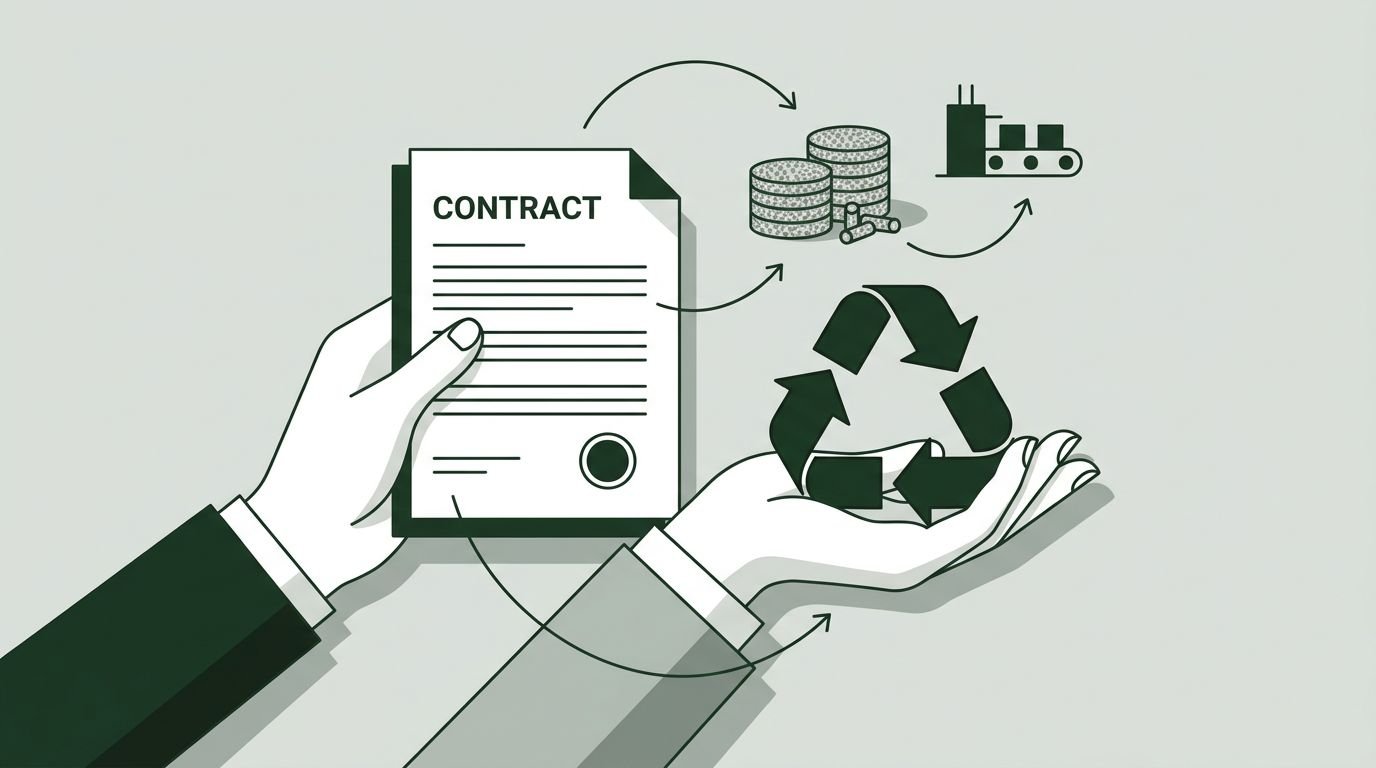
Why Recycled Content Targets Fail Without Procurement Contracts
 TBH Editorial
TL;DR: A recycled content target without a binding buying agreement is a promise with no muscle. When price jumps, quality slips, or supply dries up, procurement will usually fall back to virgin material unless contracts lock in volume, specs, proof, and shortage rules.
A recycled content target without a contract is a shopping list without a budget. It looks organised. It doesn’t buy anything.
That is where a lot of well-meant sustainability programmes start to wobble. The board approves the ambition, marketing talks about circularity, and procurement still buys the safest material for this week’s production run. If you want recycled content to survive contact with reality, it has to sit inside procurement contracts, not only inside a strategy deck.
A public target doesn’t change what buyers purchase
Most companies don’t miss recycled content goals because nobody cares. They miss them because the goal and the buying system are living in different rooms.
Sustainability teams often work in time horizons of three to ten years. Procurement teams work in lead times, quality complaints, stock-outs, supplier risk, and margin pressure. When those worlds aren’t tied together, the target becomes optional the minute something goes wrong.
Before looking at failure, it helps to separate ambition from commitment.
| What the business has | What it changes | What happens when supply tightens |
|---|---|---|
| A public recycled-content target | Creates expectation | Little, unless spend follows |
| A policy note for suppliers | Sends a signal | Often ignored in a shortage |
| A signed procurement contract | Creates enforceable demand | Buyer and supplier both plan for delivery |
That last line is the difference. Suppliers invest when demand is real. Buyers behave differently when terms are binding. Legal teams get involved. Forecasts matter. Reporting matters. Substitution becomes a governed decision, not a quiet workaround.

Without procurement contracts, recycled content is often treated like a preference. And preferences lose to hard constraints. A production director needs resin that runs on existing lines. A buyer needs predictable cost and delivery. A supplier needs confidence before reserving scarce recycled feedstock. If none of that is written down, the target gets bumped by the next urgent order.
This is why glossy commitments can coexist with flat buying patterns. The company isn’t lying to itself on purpose. It’s failing to translate strategy into spend. That’s less dramatic than greenwashing, but it causes the same result. The percentage doesn’t move.
Recycled supply is tighter, noisier and harder to trust
Recycled material is not a plug-and-play replacement in many categories. Quality can vary. Availability can swing by region. Food-contact grades are especially hard to secure. Traceability can be patchy. All of that lands on procurement’s desk.
That problem is well recognised. McKinsey’s analysis of buying green in constrained markets points to the same issue many manufacturers already feel: when scarce lower-impact inputs are not secured early, companies either pay heavy premiums later or miss their targets. Recycled plastics have shown that pattern again and again.
Then there is the supply chain shape itself. Virgin material usually comes through established, standardised channels. Recycled feedstock can involve collectors, sorters, aggregators, processors, compounders and converters, all with varying data quality. Close the Loop’s explanation of recycled feedstock sourcing spells this out well. Fragmented sourcing makes forecasting harder, and inconsistent quality makes engineers cautious.
So what happens on a bad week? The plant still has to run. Orders still have to ship. Procurement buys what is available, approved, and low-risk. That usually means virgin material.
You can’t build a serious recycled-content programme on spot buying. That’s like planning a factory around leftovers. It might work once. It won’t carry a national packaging portfolio or a manufacturing line that runs every day.
Several big brands softened packaging timelines in 2025 after running into recycling infrastructure and feedstock constraints. That wasn’t a messaging problem. It was a supply problem. And supply problems don’t get fixed by more ambition. They get fixed by procurement contracts that give recyclers and converters a reason to reserve, process and certify material for you.
What strong procurement contracts do that targets can’t
A target says, “we want this”. A contract says, “we will buy this, under these rules, from these suppliers, at this quality level, with these consequences if it fails”.
That is the whole ball game.
If recycled content is optional at purchase-order stage, it isn’t part of the strategy.
Good procurement contracts do not need grand language. They need useful language. For recycled content, that usually means writing down six things:
- The minimum volume the buyer will take, by quarter or by product line.
- The recycled content threshold, tied to a defined grade, resin, component, or SKU.
- The proof required, including certification, chain-of-custody records, and test methods.
- The price mechanism, so nobody is renegotiating in a panic when markets move.
- The rules for shortages, substitutions, and allocation.
- The remedy if quality fails or recycled-content claims cannot be verified.
This is where a lot of organisations hesitate. They want flexibility. Fair enough. But unlimited flexibility is just another word for “we’ll switch back when it gets inconvenient”.
Buyer requirements matter more than people admit. The evidence gathered in this review of circular procurement requirements makes a simple point: when contracts require third-party verification and clear material standards, circular claims get easier to trust and harder to fake.
Suppliers watch contracts, not speeches. If a recycler sees a multi-year commitment with clear specs and audit rights, it can plan capacity, invest in sorting and washing, and improve consistency. If it sees a broad sustainability pledge with no off-take commitment, it keeps its options open. So would you.
The hard truth is this: procurement contracts are not admin. They are demand signals. In constrained markets, demand signals shape who gets supply and who gets excuses.
How serious teams stop the slippage
The fix is not mysterious. It is disciplined, cross-functional work, done earlier than most companies are used to.
Start with one material stream that matters. One resin. One fibre grade. One packaging format. One component family. Make the business case there, then scale. “Use more recycled content” is too loose to buy against. “Source 30 per cent post-consumer recycled PET in these bottle SKUs from these approved suppliers” is something procurement can negotiate.
Bring legal, procurement, operations, quality and sustainability into the room before the supplier discussion ends. Not after. If quality teams don’t sign off the spec, buyers will keep a back door open. If finance doesn’t accept a pricing formula, every market swing becomes a fight. If sales forecasts are fantasy, suppliers won’t trust the volume commitment.
Then change incentives. If buyers are measured only on savings and continuity, recycled content will keep losing under pressure. Add delivery against recycled-content commitments to supplier scorecards and category KPIs. Review it monthly. Put misses on the same dashboard as cost and service.
One more thing, because this gets missed a lot: don’t hide behind portfolio averages. Averaging can make performance look tidy whilst certain plants or SKUs still rely almost entirely on virgin input. Real control happens at specification level, not in a glossy annual total.
You can’t buy circularity one purchase order at a time. You buy it through repeatable terms, verified claims, and contracts that survive a tough quarter.
Conclusion
Recycled content goals break down when they are treated as aspirations instead of buying instructions. The minute supply tightens, only procurement contracts have enough weight to hold the line.
If you want targets that survive real-world pressure, put them where decisions are made: the spec, the forecast, the supplier agreement, and the remedy clause. That’s when recycled content stops being a promise and starts becoming supply.
And if your wider sustainability work also includes preventing waste leakage before it ever becomes lost material, you can Contribute to Active Missions. Trust is built the same way everywhere, by backing the promise with something real.