
Non-Profit Transparency Secrets Revealed: What Most Charities Don’t Tell You About Your Donations
-
by
 Saket Sambhav
 - No Comments on Non-Profit Transparency Secrets Revealed: What Most Charities Don’t Tell You About Your Donations
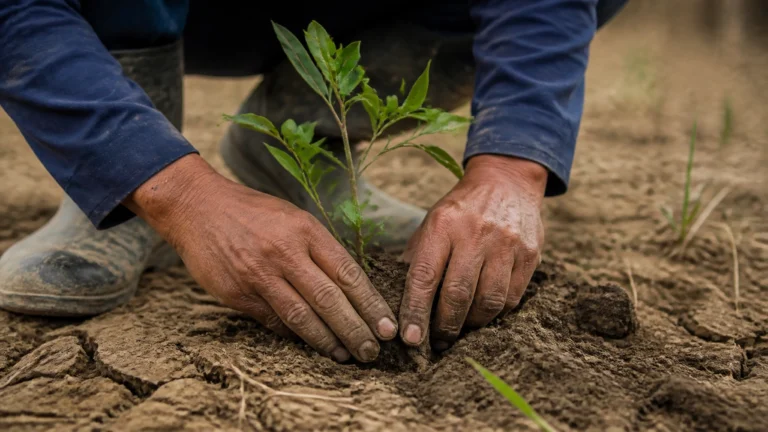
Caption: Transparent reporting should show where money goes, not hide behind polished charity theater.
Giving should feel simple.
You see a problem. You want to help. You donate because you believe your money will do something real.
That’s fair.
But here’s the uncomfortable part: a lot of charities make it hard to see what your money actually did. You get a nice story. Maybe a pretty report. Maybe a feel-good campaign. But not a clear answer.
At The Better Human™ Life Foundation, we think that needs to change. If someone asks for your money, they should also show you exactly where it went.
Key Takeaways
- Good intentions are not enough. Donors deserve proof, not just promises.
- Low overhead does not always mean high impact. The real question is what changed on the ground.
- Transparency should be specific. You should be able to see where your contribution went and what it did.
- At The Better Human™, 100% of donations go to the field. Founders cover operating costs.
Why transparency matters
Think about it like this.
If you paid someone to fix your roof, you would not be satisfied with a speech about how much they care about roofs. You would want to know if the leak was fixed.
Charity should work the same way.
Too often, people are asked to donate based on emotion alone. The photos are powerful. The message is urgent. But when you look closer, the actual results are blurry.
That is the problem.
A donation should not disappear into a vague system. It should lead to something real, visible, and trackable. Otherwise, trust starts to break.
If the money path is fuzzy, the impact probably is too.
Why low overhead is not the full story
A lot of people are taught to judge charities by one thing: overhead.
Sounds reasonable. But it can be misleading.
Low overhead does not automatically mean a charity is doing good work. It just means they are spending less on certain costs. That tells you something, but not enough.
The better question is simple: what happened because of the donation?
Did trees survive? Did a school get a washroom? Did children actually get transport? Did a project happen where they said it would happen?
Those are the questions that matter.
Sometimes, the work that creates real accountability costs money too. Verification costs money. Field documentation costs money. Good reporting costs money. These things are not waste. They are part of honest work.
Cheap-looking numbers can hide weak results.
What “green theater” looks like
Some charity work is more about looking helpful than being helpful.
That is what we mean by green theater.
It is when the image is stronger than the action. A big event. A polished campaign. A symbolic gesture. A lot of noise. Not much proof.
Real work looks different.
Real work is slower. Less glamorous. More specific.
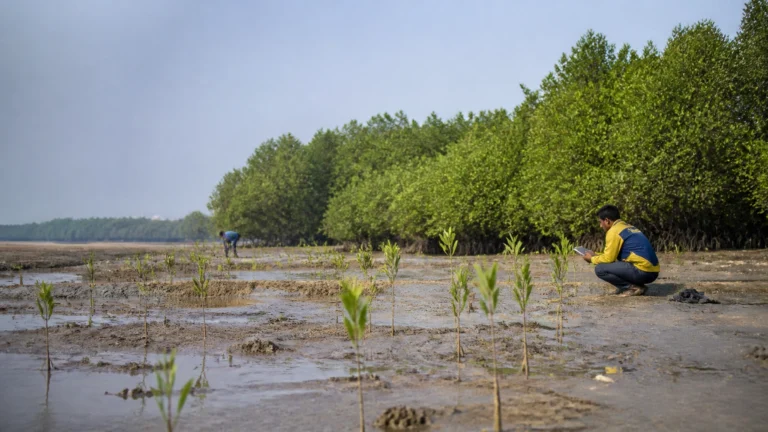
For example, mangrove reforestation is not about taking a nice photo with a sapling and going home. It is about fieldwork, follow-through, and showing people what actually happened.

Caption: Real transparency means showing the fieldwork itself, not just the fundraising story around it.
When a charity focuses only on awareness, it can leave donors with feelings instead of facts.
Feelings matter. But facts matter more when money is involved.
If the work cannot be checked, it can too easily become a performance.
Where donations often get blurry
This is where many people get frustrated.
You donate for a cause. But part of that money may go to marketing, fundraising, admin layers, travel, events, or internal costs that are hard to untangle.
Then you hear a phrase like “most of your donation goes to programs.”
Okay. But what does that actually mean?
That word can cover a lot. And sometimes it tells you less than you think.
At The Better Human™, we built the model differently. Our founders cover 100% of operational costs. That means donations go to the field.
If you give for mangroves, the money goes to mangroves.
That clarity matters.
| Feature | Traditional Non-Profit | The Better Human™ Model |
|---|---|---|
| Fund Allocation | Often partially absorbed into broad program buckets | 100% to the field |
| Verification | Usually summary reporting | Live Mission Tracker (geo-tagged) |
| Focus | Awareness and fundraising | Direct action and proof |
| Operational Costs | Commonly covered from donations | Covered by founders |
If a charity cannot explain the money flow in plain language, that is a warning sign.
What real proof looks like
Good transparency is not vague.
It should show you where the work happened, what was done, and how the result was recorded.
That is why we use tracked projects. Whether it is school transport for children or on-ground environmental work, the goal is the same: make impact visible.

Caption: Verifiable social impact is concrete, local, and visible on the ground.
We do not want people to donate blindly.
We want them to be able to check.
For example, when a project is done, the details should not stop at “we helped.” People deserve more than that. They deserve location, dates, documentation, and clear reporting.
Without proof, impact becomes a story you are asked to trust.
Why the Live Mission Tracker matters
Our Live Mission Tracker exists for one reason: to make trust easier.
You should not have to guess what happened after you gave.
You should be able to see it.
That same mindset also shapes our Climate Literacy competitions. We want people, especially young people, to look past slogans and ask better questions. What is happening? Where is the damage coming from? What action actually helps?

Caption: Accountability gets real when impact can be tracked back to place, date, and action.
That shift matters.
Because real change begins when people stop clapping for the message and start checking the math.
What to ask before you donate
If you are thinking about giving, here are a few simple questions worth asking:
- Can they clearly show where the money goes?
- Can they prove the work happened?
- Is the result visible, specific, and easy to understand?
- Are they fixing a real problem, or just promoting a good-looking campaign?
These questions are not rude.
They are responsible.
And any honest organization should be ready to answer them.
Stop donating for the feeling alone. Start giving where the proof is real.
Explore our active missions and see what 100% transparency actually looks like.
FAQs
What does non-profit transparency actually mean?
It means a non-profit clearly shows how money is used, where projects happen, and what results were achieved. Not vague promises. Real details.
Why is overhead not the best way to judge a charity?
Because low overhead does not guarantee real impact. A charity can spend very little on admin and still fail to create meaningful results. The better question is what changed on the ground.
How does The Better Human™ Life Foundation stay transparent?
We use a Live Mission Tracker, geo-tagged reporting, and a model where founders cover operational costs so donations go directly to the field.
How can I tell if a charity is trustworthy?
Ask for specifics. Look for proof of work, clear reporting, location-based evidence, and simple explanations of where the money goes.
When proof is missing, trust becomes guesswork.
Image credits: All images in this post were AI-generated for this article and are not sourced from thebetterhuman.life.