Thermal Pollution in Indian Rivers Explained
 TBH Editorial
A river can look alive and still be under heat stress. Clear flow, moving water, and even a green bank can hide a temperature rise that strips oxygen, disrupts breeding cycles, and pushes fish toward death.
That is why thermal pollution Indian rivers deserves more attention than it currently receives. If you care about water security, public health, fisheries, or climate justice, it is important to recognize that this heat is a major driver of water pollution in India. It acts as another layer of stress, causing ecosystems to fail while we overlook the invisible thermal shifts occurring within our waterways.
Key Takeaways
- Thermal stress is an invisible hazard: Unlike plastic or sewage, thermal pollution is often odorless and colorless, yet it significantly reduces dissolved oxygen levels and disrupts the reproductive cycles of aquatic life.
- Power plants and industry are primary drivers: Large-scale coal-fired power plants and manufacturing sectors are the biggest contributors, releasing heated wastewater that acts as a “force multiplier” for already degraded rivers.
- Ecological chain reactions: Rising temperatures accelerate harmful algal blooms, increase the vulnerability of species to disease, and trigger mistimed spawning, causing damage that ripples throughout the entire food web.
- Systemic reform is required: Cosmetic clean-up efforts are insufficient; effective solutions require strict source control, such as phasing out once-through cooling systems, enforcing real-time temperature monitoring, and restoring riverbank vegetation for shade.
The hidden heat problem most river conversations miss
When people talk about polluted rivers, they usually picture sewage foam, oil sheen, plastic, or chemical discharge. Heat rarely makes that mental list. Yet a river does not need a visible slick to become dangerous for aquatic life.
Thermal pollution happens when human activity raises water temperature above the range that local species can handle. In India, that often means hot cooling water returned from thermal power plants, industrial effluent, sun-exposed channels, and urban runoff that pours off asphalt and concrete after a hot day.
A few degrees can change everything. Warm water holds less dissolved oxygen, so fish and invertebrates have to work harder while the river offers less oxygen in return, putting immense pressure on aquatic life. That mismatch hits hardest in stretches already overloaded with sewage, nutrients, and suspended solids.
The wider river crisis makes that worse, not better. Energy Tracker Asia’s overview of water pollution in India shows how gaps in untreated sewage management, industrial waste, and runoff already burden Indian rivers. Added heat turns that burden into a sharper biological shock. Much like the Indian River Lagoon faces ecosystem sensitivity due to changing conditions, Indian rivers face similar, compounding threats from heat.
Temperature also changes timing. Many fish rely on seasonal warming and cooling cues for spawning, migration, and feeding. If a discharge point creates a warm pocket in the wrong season, those cues get scrambled. The river may still flow, but its internal calendar stops making sense.
That is why thermal pollution is not merely a technical water-quality issue. It is an ecological signal that the river is being used as industrial infrastructure first, and living habitat second.
Where the heat comes from in India
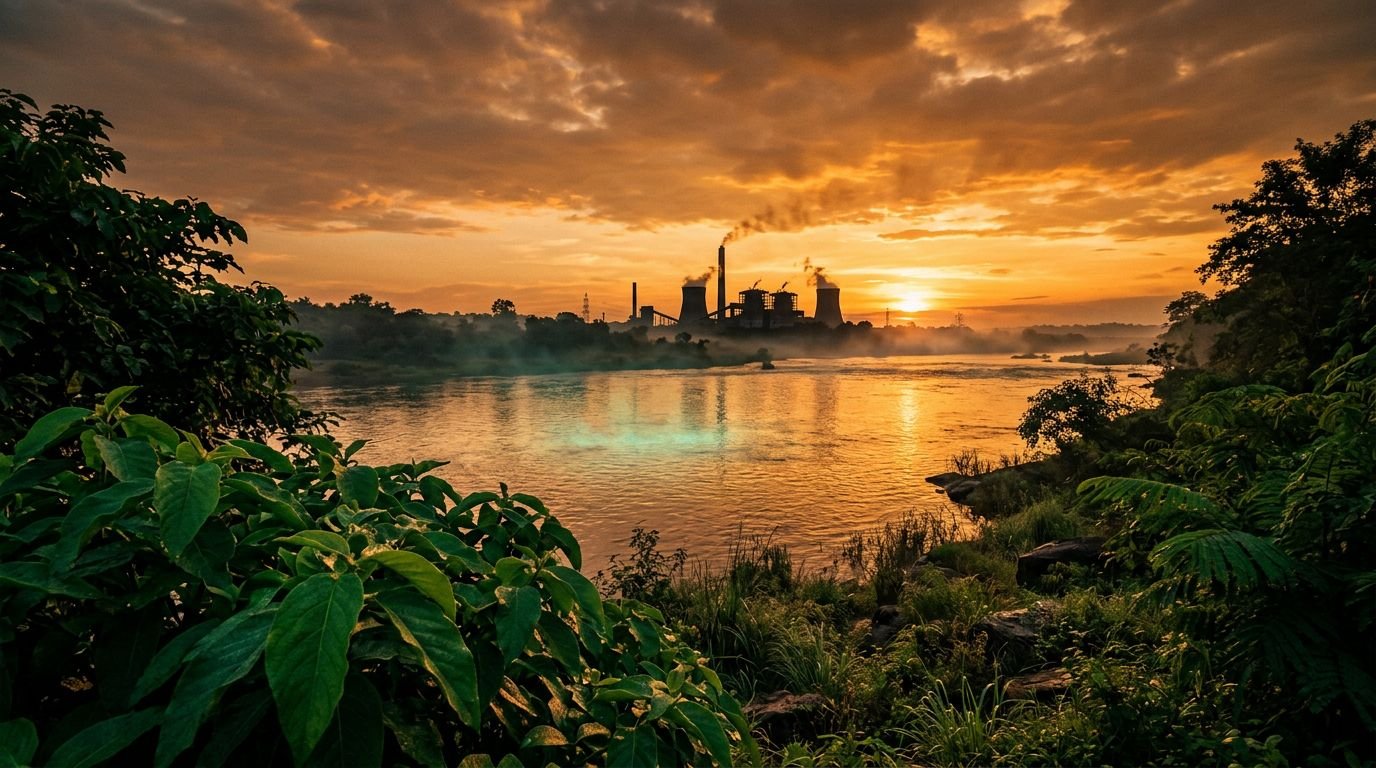
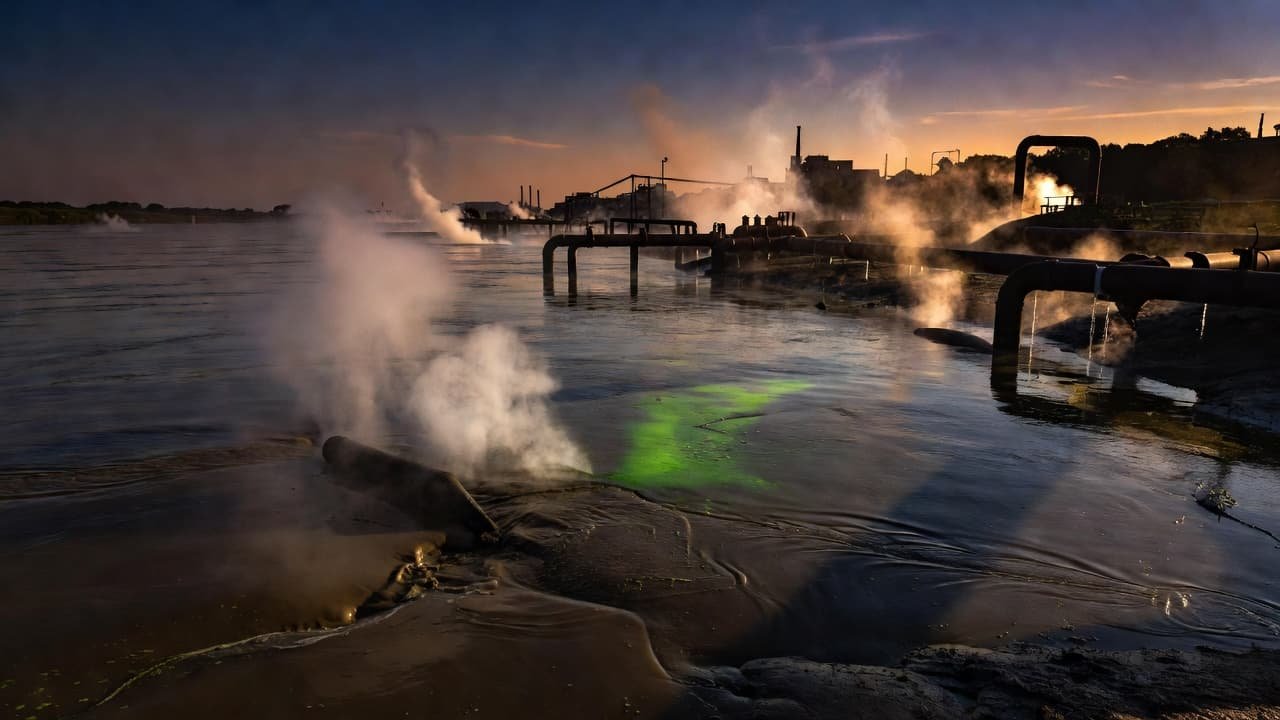
In India, the biggest source of unnatural river heating is power generation. Coal-fired plants operated by companies such as NTPC, Adani Power, and Tata Power use large volumes of water to cool equipment. When that water returns to a river at a higher temperature, it creates a thermal plume that can alter habitat well beyond the discharge point.
Industry adds more pressure. Textile units, tanneries, pharmaceutical facilities, and chemical plants can release warm effluents, especially where cooling and treatment systems are weak or poorly managed. Around cities such as Delhi and Kanpur, the textile and tannery industries, alongside other manufacturing sectors, contribute to thermal stress. Furthermore, rivers receive hot stormwater from built-up surfaces, the same stormwater drains that turn rivers toxic. Remove riverside vegetation, and sunlight does the rest.
This quick comparison shows the main pathways.
| Source | How it warms rivers | Indian context |
|---|---|---|
| Thermal power plants | Heated cooling water returns to the river | Yamuna, Godavari, and Satluj stretches near power activity |
| Industrial discharge | Warm process water enters drains and streams | Kanpur’s industrial belt and other manufacturing zones |
| Stormwater runoff | Hot rainwater flows off roads and roofs | Delhi, Kanpur, and the Yamuna River |
| Loss of riparian cover | More sunlight reaches the water surface | Riverbanks cleared for construction, sand mining, or erosion |
The problem rarely comes from one pipe alone. A hot outfall, a stripped bank, slower flow, and nutrient-rich sewage can combine into a river section that behaves more like a stressed pond than a healthy channel.
India’s coal dependence keeps the issue current. Real-time reporting also points to a massive ash burden, with about 340 million tonnes of fly ash generated in 2024 to 2025. That matters because thermal power does not only heat water directly. It also sits inside a larger chain of air, ash, and water impacts that often land in the same districts.
A river absorbs all of that history. It remembers what the surrounding economy dumps, clears, heats, and neglects, including the heavy metals that settle into the riverbed.
Why a warmer river loses life fast
The first biological hit is dissolved oxygen. Cold water can carry more oxygen than warm water. As temperatures rise, oxygen capacity drops just when the metabolic needs of aquatic life increase. That double pressure can push fish and other organisms into stress even before a fish kill becomes visible.
Then comes thermal shock. Rapid temperature changes, such as sudden releases from plant operations, can kill sensitive species outright. Even when fish do not die immediately, they often become weaker, more vulnerable to disease, and less likely to reproduce successfully.
A river can look full and still be physiologically hostile if heat rises and oxygen falls at the same time.
Spawning is another quiet casualty. Fish use temperature thresholds as seasonal cues, meaning warmed stretches can trigger mistimed breeding or prevent it altogether. Eggs and larvae are even more fragile than adults, so damage often begins long before anyone notices dead fish on the surface. These disruptions ultimately lead to public health risks, as the resulting degradation of the ecosystem compromises the quality of water sources that downstream communities rely upon.
Heat also feeds algal blooms. In water bodies struggling with high nutrient loading, warmer conditions accelerate the growth of harmful algae blooms. The influx of nitrogen and phosphorus acts as fuel for these outbreaks, and when these blooms collapse, the decomposition process strips even more oxygen from the river. Much like the well-documented environmental stress seen in the Indian River Lagoon, reports linked to the Satluj have shown how this chain reaction can end in mass die-offs.
The damage spreads through the food web. Bottom-dwelling organisms decline, insect life shifts, and predatory fish lose their prey. Birds that depend on healthy shallows lose feeding grounds. That is where urban biodiversity starts thinning out, especially in rivers that cut through growing cities.
General water contamination already affects human health through exposure, food chains, and degraded water access. The NRDC’s primer on water pollution explains these broader pathways well. Thermal stress intensifies them because warmer water can amplify microbial activity, worsen oxygen crashes, and alter toxin dynamics inside aquatic organisms.
Which rivers and communities carry the heaviest burden
The Yamuna River is one of the clearest examples of layered stress. In and around Delhi, it receives sewage, industrial discharge, stormwater, and heat. When high temperatures meet low flows and polluted inflows, aquatic resilience collapses quickly. Fish deaths and biodiversity loss linked to heated discharges have also been reported in stretches of the Godavari.
Kanpur tells a similar story in a different form. Industrial activity, especially around leather processing, already pushes the Ganges River tributary stretches hard. Add warm effluents and sun-exposed, altered banks, and the river loses more of its margin for survival. Much like the ecological struggles observed in the Indian River Lagoon, where nutrient loading and thermal stress overlap to degrade sensitive estuaries, India’s river systems suffer when heat compounds existing chemical pollution.
People do not experience this in a lab. They meet it at the ghat, the irrigation channel, the fishing net, the hand pump, and the riverside settlement. That makes thermal pollution a public issue, not only a technical one.
The numbers behind India’s river stress are stark. Real-time data in 2026 indicates that India generated 72,368 MLD of sewage in 2020 to 2021, while only 20,236 MLD was processed by sewage treatment plants. With such vast amounts of untreated sewage entering waterways, the water quality suffers immensely, often leading to spikes in fecal coliform that threaten public safety. More than half of 605 rivers are heavily polluted, and about 70 percent of surface water is unfit for consumption. In that setting, added heat is not one more minor variable. It is a force multiplier.
Health risks also move beyond the river edge. The Frontiers review on polluted water and disease burden connects poor water quality with multiple human harms. Warmed water can worsen pathogen growth, reduce ecosystem self-repair, and weaken local food systems that depend on fish and irrigation.
Children, small fishers, laundry workers, riverside vendors, and low-income settlements near outfalls often face the highest cost. Their exposure is frequent, practical, and hard to avoid. A dirty river is not equally dangerous for everyone, and a heated river is no different.
Why policy still undercounts thermal damage
Indian law does not ignore pollution on paper. The Environment (Protection) Act of 1986 prohibits harmful discharges. The problem is what happens after rules meet budget pressure, weak monitoring, and fragmented enforcement.
Thermal pollution often gets buried inside a larger pollution file. A factory may report effluent compliance at one moment, while real river temperatures swing across the day. A power station may meet formal conditions set by the Central Pollution Control Board, yet the receiving water body remains stressed because flow is low, ambient heat is high, and upstream pollution is already severe.
Average readings can hide biological reality. Fish do not live at monthly averages. They live at the outfall edge, in shallow backwaters, and in low-flow reaches during hot afternoons. If monitoring misses those hotspots, regulators can claim progress while exposure stays high.
Accountability matters more than spectacle. Riverfront beautification, one-off clean-up drives, or isolated aeration gadgets may look active, but they do little if hot discharge keeps entering the same channel. This focus on cosmetic fixes often masks the deeper environmental degradation caused by industrial neglect. Even when the National Green Tribunal pushes for stricter compliance, the reality is that visible objects attract attention, while maintenance, inspections, and source control get cut first.
Data gaps also weaken public scrutiny. Sewage plants can operate below installed capacity. Rivers can receive mixed loads from drains, industry, and runoff. Thermal stress then blends into a broader failure and disappears from headlines.
That is why systemic change matters here. Temperature must be monitored as a real ecological parameter, not as a side note in a compliance chart. Without continuous checks near discharge points and in downstream habitat zones, thermal damage stays politically easy to ignore.
What real fixes look like on the ground
The strongest solution is simple in principle and difficult in practice: stop using rivers as cheap cooling systems. That means phasing out once-through cooling where it still exists, expanding closed-cycle systems, improving cooling towers and ponds, and reducing the temperature of water before discharge.
Source control beats cosmetic repair. A river cannot be cooled at city scale by symbolic interventions once hot water is already loose in the channel. Prevention has to happen inside the plant, not on a poster outside the gate.
Industry also needs better design choices. A circular economy approach treats waste heat and industrial wastewater as recoverable resources where possible, rather than routine outputs. In some sectors, captured heat can be reused inside operations. In others, cooling water can be recirculated instead of dumped at river temperature.
That shift depends on sustainable business models. If water is priced as a free input and river damage remains someone else’s problem, firms will keep externalizing the cost. Stronger permits, transparent reporting, and real penalties change that math faster than voluntary slogans.
Riparian restoration matters too. Trees and vegetated buffers reduce direct solar heating, stabilize banks, slow erosion, and improve habitat complexity. Through effective river restoration, we can mimic the success seen in global examples like the Indian River Lagoon, which serves as a vital model for managing complex estuarine ecosystems. In Indian delta systems, community-led projects show how ecological repair can protect both people and living systems when efforts stay grounded in place.
Cities must also treat hot runoff as infrastructure, not nuisance water. Cooler surfaces, better drainage design, retention ponds, and decentralized wastewater treatment can reduce sudden heat loads entering urban streams. These measures also help mitigate groundwater contamination by filtering runoff before it infiltrates local aquifers. Such changes improve water conditions while supporting urban biodiversity close to where people live.
Community monitoring has a role as well. Fishers, students, and resident groups often notice thermal changes before official action starts. That is where climate literacy becomes practical. People who understand temperature stress can document fish behavior, algal blooms, low-flow heat pockets, and changing seasonal patterns with far more precision.
If you want to back on-the-ground work that connects ecological repair with public awareness, Explore Our Active Missions. Tangible projects build trust because they show where money goes and what changes on the ground.
Why river heat belongs in climate literacy
Many people enter sustainability through air pollution, plastic waste, or plant-based living. While all of those matter, river temperature belongs in the same conversation because it reveals how industry, infrastructure, land use, agricultural runoff, and public health overlap in one place.
This is also where everyday mindfulness helps, but only up to a point. You can pay attention to local water bodies, cut unnecessary water and energy use, and support cleaner public policy. Yet no amount of personal discipline can offset a poorly regulated hot outfall upstream.
The bigger value of awareness is political clarity. When you understand thermal stress, you stop mistaking a normal-looking river for a healthy one. You start asking sharper questions about outfall temperatures, low-flow seasons, power generation, shade loss, and cumulative damage.
That shift matters for the ecological impact of our waterways far beyond simple fish counts. In the Ganga River basin, warmer water can thin insect populations, reduce bird feeding grounds, stress amphibians, and weaken the small webs of life that make urban and peri-urban rivers function. Once those webs fray, recovery becomes significantly slower and costlier.
A serious response to thermal pollution asks for better monitoring, harder enforcement, cooler infrastructure, and public pressure that lasts longer than a news cycle. Ultimately, river health is a global environmental literacy challenge that connects us to distant regions, much like the ecological struggles observed in the Indian River Lagoon.
Frequently Asked Questions
Why is thermal pollution considered more dangerous than it looks?
Thermal pollution is deceptive because the water may appear clean or clear while actually being biologically hostile. By raising water temperatures, human activity lowers the oxygen-carrying capacity of the river, effectively suffocating fish and invertebrates even without the presence of visible waste like plastic or oil.
How does electricity production contribute to this issue?
Thermal power plants, such as those operated by NTPC or Tata Power, require massive volumes of water to cool their equipment. When this water is returned to a river at a much higher temperature, it creates “thermal plumes” that can kill sensitive aquatic species and scramble seasonal breeding signals for local wildlife.
Can simple riverbank cleanup projects solve the heat problem?
While planting trees and restoring riparian zones can help by providing shade and stabilizing banks, these measures alone are not enough. The core issue of thermal pollution is industrial discharge, which requires internal plant upgrades and strict regulatory enforcement to ensure that hot wastewater is cooled down before it ever touches a river channel.
What can citizens do to help address this invisible threat?
Public awareness is the first step toward demanding better monitoring and stricter policy enforcement from government agencies like the Central Pollution Control Board. By supporting community-based water monitoring and advocating for transparent, real-time reporting of outfall temperatures, citizens can help ensure that thermal stress is treated as a major environmental priority rather than a hidden side effect.
Conclusion
River heat is easy to miss because it often leaves no obvious stain. Yet in many Indian waterways, temperature is part of the same pressure system that already includes sewage, industrial waste, habitat loss, and weak enforcement, contributing to the broader crisis of water pollution in India.
The strongest takeaway is plain: source control matters more than symbolic cleanup. If hot water keeps entering the river, the ecosystem keeps paying.
A healthier river needs cooler discharge, restored shade, water quality monitoring, and public attention that does not stop at what the eye can see.