
How Herbicide Spraying Wipes Out India’s Urban Wildflowers
 TBH Editorial
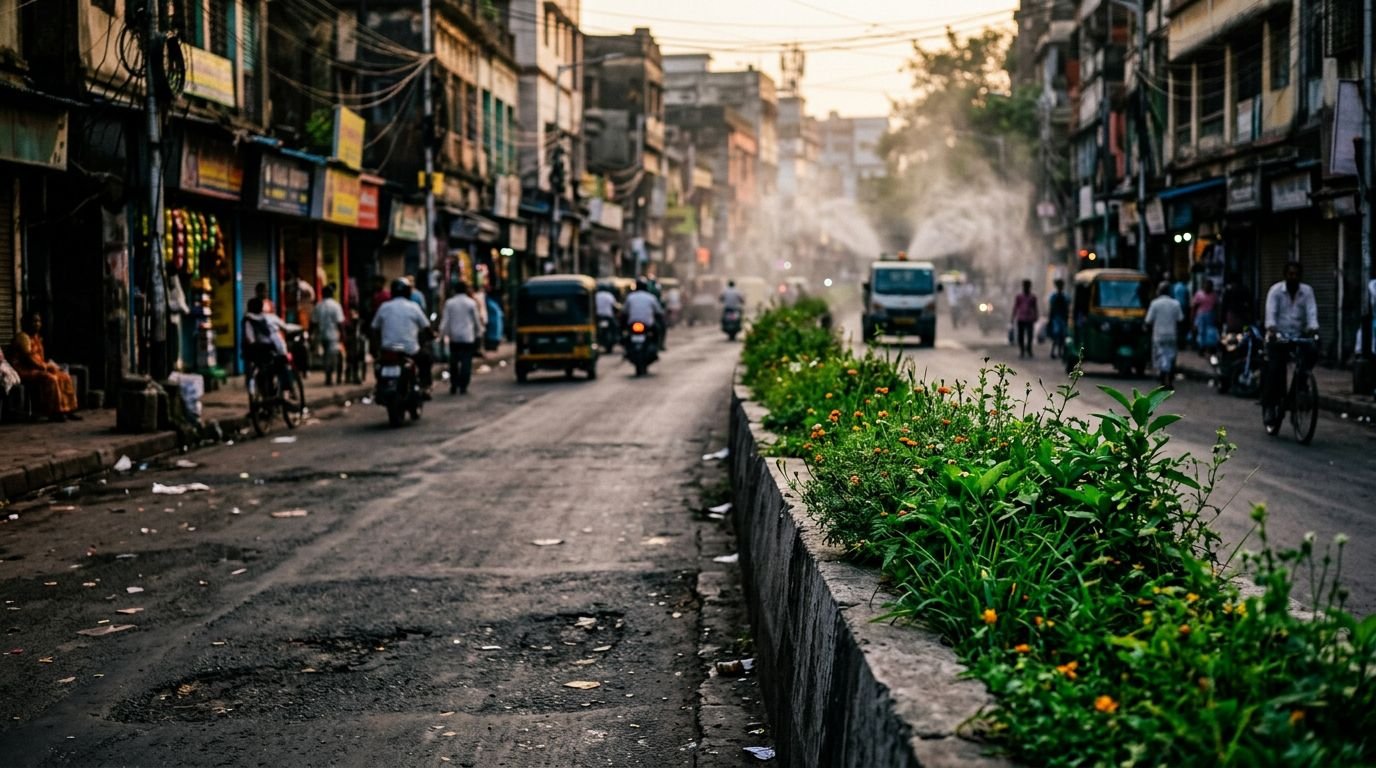
A roadside bloom can disappear overnight, not from heat or drought, but from a spray tank. Across India, the vibrant display of urban wildflowers in India is often silenced in the pursuit of clinical neatness.
That matters more than it seems. When medians, drains, vacant plots, and campus edges receive blanket herbicide treatment, cities lose vital sources of pollen, seed, and insect life, along with small moments of contact with nature. The loss looks minor at ground level, yet it spreads through the entire street ecology.
The first step toward change is recognizing these blooms as essential native species rather than visual clutter.
Key Takeaways
- Ecological Connectivity: Urban wildflowers along roadsides, medians, and drains serve as vital biodiversity corridors, acting as a “micro Kaas Plateau” that connects insect life across fragmented city landscapes.
- The Myth of Neatness: Blanket herbicide spraying is driven by outdated procurement contracts that prioritize superficial, sterile aesthetics over long-term environmental health, effectively turning street verges into food deserts for pollinators.
- Social and Health Impacts: Indiscriminate chemical use disproportionately affects outdoor workers and residents who live or work near sprayed areas, as these chemicals linger in public spaces often used by children and commuters.
- Policy Overhaul Required: Moving away from chemical-heavy maintenance requires shifting toward seasonal management, such as post-bloom trimming, establishing no-spray zones near sensitive habitats, and rewarding ecological stewardship in civic contracts.
The clean-street look hides a living loss
In many Indian cities, the first flowers after a dry spell appear where planners least value them. They come up beside compound walls, under flyovers, along railway margins, near drains, and in the narrow soil left between curb and road. These neglected patches of urban green space are essential pockets of biodiversity that often go unnoticed.
These strips are often treated as maintenance failures. One round of herbicide creates a fast, even result, so departments and contractors like it. Because these plants are often dismissed as garden weeds, they are cleared away without a second thought. Bare soil photographs well, bills easily, and looks controlled to residents who have been taught that clipped or empty edges equal care.
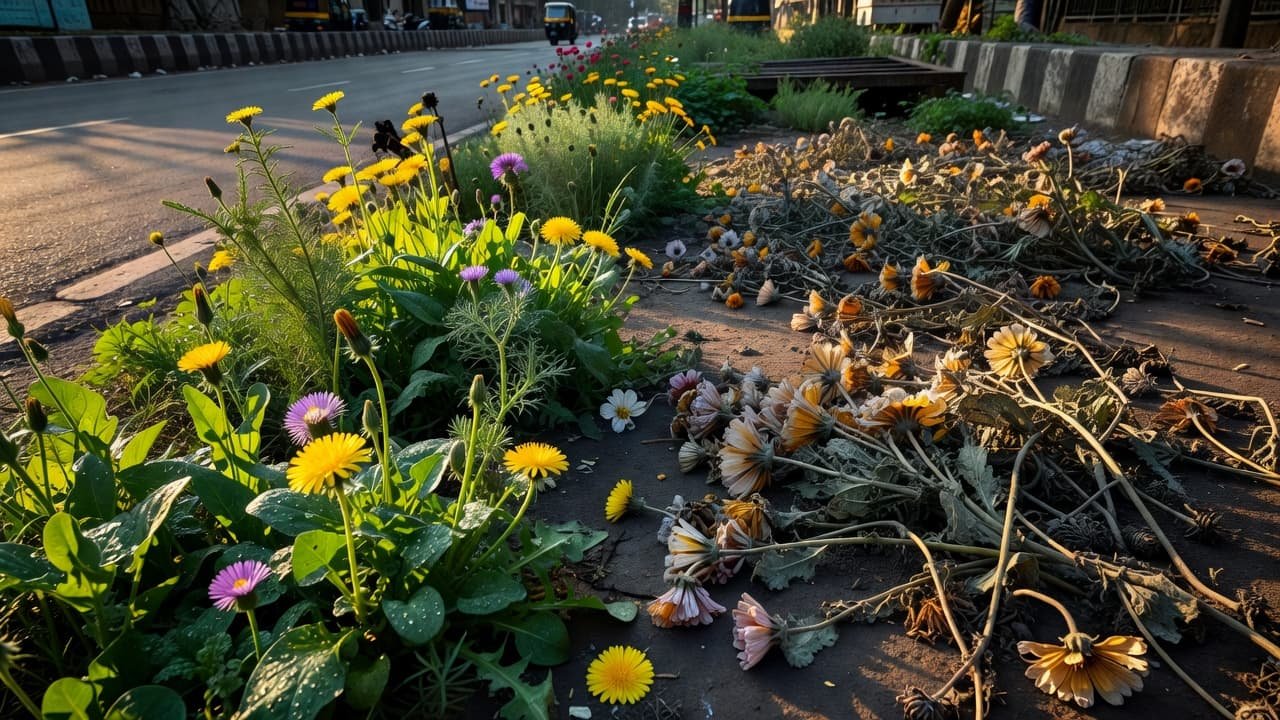
Yet many of the plants being erased are native flowering plants. They are not blocking traffic. They are not cracking roads. Often, they are simply blooming in places where city design left a little soil behind.
A sweep of chemical spraying does not separate harmful invasives from harmless flowering ground cover. It treats both the same. As a result, tiny daisies, volunteer mustard, clover-like patches, and other nectar plants vanish together.
A weed-free verge can look managed on paper while functioning as a food desert for insects.
This is why the debate is larger than aesthetics. A city that sprays first and observes later is making a policy choice about life at ankle height. That choice rarely appears in public dashboards, even though it shapes daily contact with nature for millions of people.
Why urban wildflowers in India matter more than people think
Wildflowers do small jobs that add up fast. They feed bees and butterflies, moths, and hoverflies, acting as essential food sources for local pollinators that rely on these native plants to survive. Beyond providing food, they hold loose soil in place, soften heat on exposed ground, and slow runoff during heavy monsoon rains.
In dense neighborhoods, those benefits matter because green space is often fragmented. A formal park cannot carry the whole load of urban biodiversity. The rough edge outside a school wall, the flowering strip beside a lake road, and the neglected corner of a housing colony all help connect insect life across the city. In many ways, these tiny patches function like a micro Kaas Plateau, preserving bits of floral heritage amidst the concrete.
That connection is easy to miss because the plants are modest. They do not announce themselves like old banyans or avenue trees. Still, for pollinators, a patch of low flowers on a median can be the difference between a useful corridor and a dead gap.
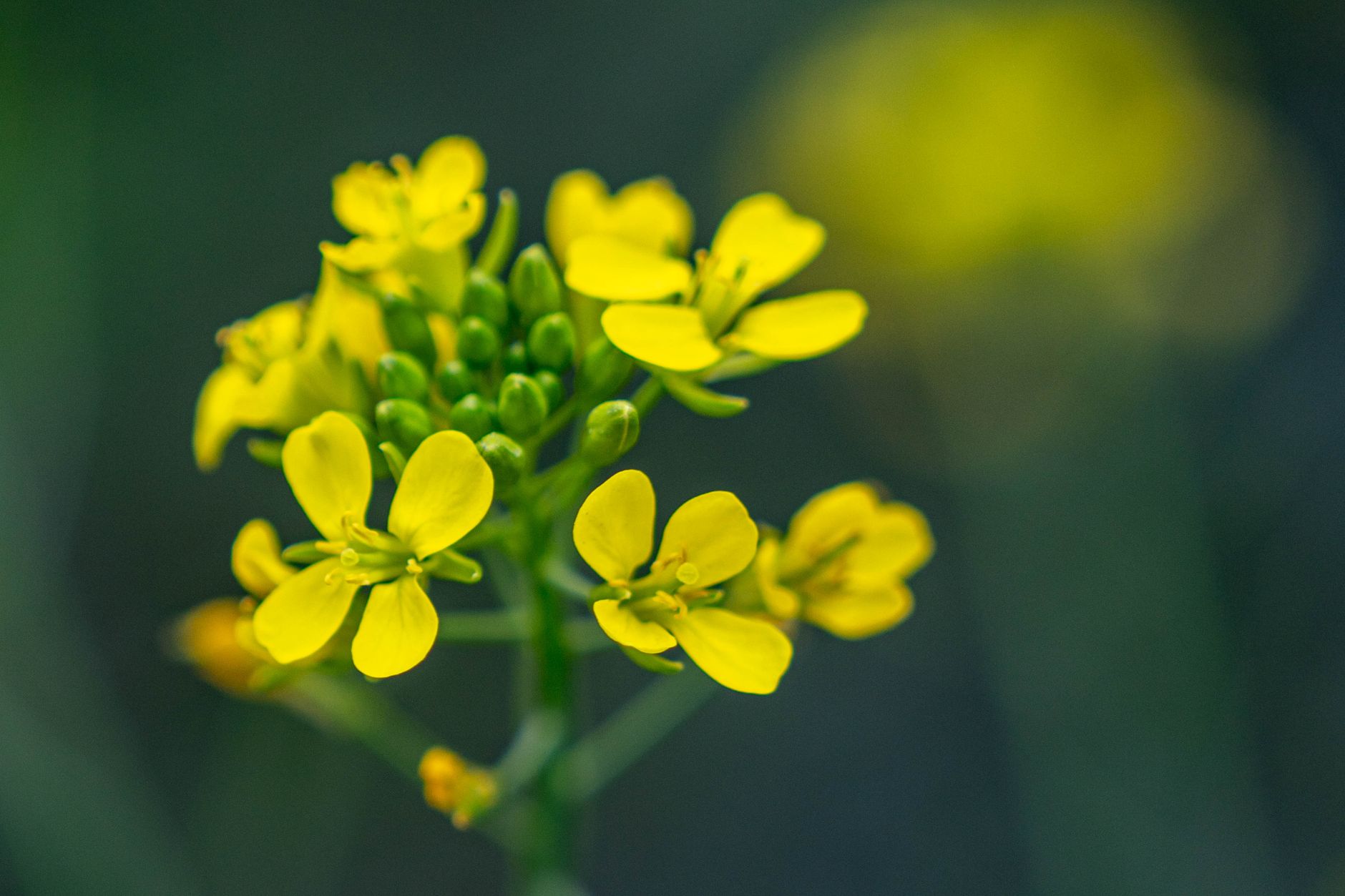
Photo by Manish Sharma
There is also a human side to this. Children notice butterflies before they learn policy terms. Older residents remember when open plots held seasonal blooms. Even a quick walk to the bus stop feels less hostile when some part of the street is alive.
People who care about plant-based living often think hard about food systems, soil, and pollinators. Urban flower patches belong in that same moral frame. City nature does not begin and end inside a gated park. It also grows from cracks, margins, and leftover ground.
When those modest patches survive, they make the city feel inhabited rather than stripped. Protecting these forgotten spaces is a simple but vital step toward improving the overall ecosystem health of our urban environments.
Herbicides do more than remove weeds
Broad-spectrum herbicides are blunt tools. They do not only stop unwanted growth. They can reduce flowering, weaken nearby non-target plants, and leave whole patches without nectar rich flowers at the exact time insects need them most.
Research collected in Effects of Herbicides on Flowering shows that herbicides can cut flower production and delay blooming. Even when a plant survives, its flowering window may shrink or shift. For a bee or butterfly following a short seasonal rhythm, that timing matters.
The wider pattern is also clear outside city limits. Research on pesticide drift and biodiversity found major losses in wild plant diversity near treated areas. Urban margins serve as a vital insect habitat, but because they are smaller and more broken up than farm edges, collateral damage can wipe out an entire patch. Often, these roadside areas contain drought tolerant species that provide essential resources, yet they are frequently misidentified as a nuisance.
A long-term transmission line herbicide study points to another problem. Repeated chemical maintenance can simplify plant communities over time. In a city, that often means only the toughest or least palatable plants rebound, while delicate flowering species disappear.
The chain reaction looks like this:
| Spraying pattern | What happens to plants | What follows |
|---|---|---|
| Blanket spraying before bloom | Buds fail or flowering is delayed | Pollinators lose early food sources |
| Spraying during bloom | Open flowers and soft stems die | Bees and butterflies lose active feeding sites |
| Repeat spraying over seasons | Plant mix narrows to a few hardy species | Streets become biologically poorer |
| Drift onto nearby edges | Nectar rich flowers weaken or die | The environmental impact degrades insect habitat |
The takeaway is simple. The ecological impact does not stop at the target plant, and the environmental impact of these practices is far more severe than city planners often acknowledge.
Some chemicals also move into soil and water, and repeated use can help select for resistant weeds. Then crews return with more spray, and the cycle hardens. What began as low-effort maintenance becomes a habit that keeps removing floral life while failing to build healthier streets.
Why city spraying keeps winning the budget fight
Blanket spraying persists because it fits the way many urban systems measure success. A contractor can show a cleared strip in one photo, and a supervisor can tick off the area covered. Because complaints about overgrowth stop for a while, the method appears efficient. However, this obsession with the manicured lawns look often comes at the expense of urban biodiversity, trading ecological health for a superficial sense of order.
Meanwhile, the things being lost are hard to count. Cities rarely track bloom cycles, seed set, pollinator visits, or the number of native plants that return after the monsoon. They count weed-free medians, not living verges. This paperwork gap hides real damage. On file, maintenance is complete. On the ground, nectar is gone, seed sources shrink, and a once-mixed patch becomes chemical-burnt soil. The public sees order, but insects see absence.
Fear also shapes the decision. Residents often link roadside growth with snakes, mosquitoes, litter, and fire risk. Those concerns are not always invented, but they are often used to justify clearing everything rather than managing well. A low flowering strip is treated the same way as dense thorny growth beside a blind turn. In reality, maintaining these wildflowers often serves as a low maintenance alternative that prevents the rapid regrowth associated with bare, disturbed soil.
Systemic change starts with procurement. If civic bodies keep paying for bare-ground maintenance, they will keep getting bare ground. Better contracts would reward plant cover, seasonal timing, low chemical use, and visible pollinator activity.
That is where sustainable business models come in. Landscaping firms, nursery suppliers, compost operators, and local plant growers can earn from stewardship rather than chemical repetition. A city can also bring circular economy logic into verge care by composting cut biomass, saving local seed, and reducing annual dependence on purchased chemicals.
The issue is not a lack of alternatives. The issue is whether the budget chooses to value long-term ecological resilience or short-term tidiness.
The price is paid by pollinators, workers, and children
The first loss lands on insects. As flowers disappear, beneficial insects that act as natural pest controllers thin out, and the wider food web weakens. Birds that rely on these insects for sustenance have less to hunt, small reptiles lose their prey, and bats face leaner feeding routes. The wider impacts of pesticides on wildlife show that plant loss rarely stays contained.
Still, the burden is not only ecological. It is social.
Spraying often happens close to school walls, bus stops, walking routes, and market edges. Street vendors, sweepers, gardeners, sanitation workers, delivery riders, and traffic police spend the longest hours in these spaces. If mist drifts or residues linger on low vegetation and dust, the people with the least shelter face the most contact with these chemicals.
That pattern echoes a broader problem within urban ecology. Environmental harm rarely spreads evenly. Those with private gardens, sealed cars, and indoor workstations can avoid much of it, but those who live and work outdoors cannot.
There is also a quieter loss. Public flower patches offer a form of ordinary relief in hard cities. They give children butterflies to follow, older residents seasonal cues, and commuters a break from concrete monotony. When spraying turns those places brown, the city becomes more sterile in ways that no civic report captures.
This is why herbicide use should be treated as an accountability issue, not a cosmetic one. The question is not whether a verge looks tidy for a week. The question is whether daily life within our urban ecology becomes poorer, harsher, and less alive after the spray round is done.
A better urban vegetation policy is possible
Cities do not need to choose between chaos and chemicals. They need better categories. A sightline near a junction may need regular trimming. A drain shoulder may need targeted manual clearing. A flowering patch on a low-risk verge may need nothing until seed has set.
Timing matters as much as method. If mowing or hand removal happens after flowering and seeding, the same strip can support local pollinators for weeks and still stay manageable. No-spray zones near schools, lakes, parks, wetlands, and community gardens would also protect the places where biodiversity value is highest.
Public notice matters too. Cities should publish where they spray, what they spray, and why. Without that, residents cannot question misuse, track harm, or compare chemical maintenance with better options.
Training is another missing piece. Ground staff need help identifying invasive species, native ground cover, and useful seasonal wildflowers. A one-size-fits-all order from above will keep killing the wrong plants.
Residents also have a role, but awareness alone will not fix procurement failure. Even if you live in a dense apartment complex, you can support biodiversity through balcony gardening or sustainable gardening practices. By introducing native wildflower seeds to your pots, you can create a small wild garden that acts as a haven for insects. On a larger scale, residents can push city leaders to shift toward managing city verges as wildflower meadows rather than sterile grass strips. Furthermore, people can document flowering patches, ask resident welfare associations about chemical usage, and report needless spraying on stable verges. Most importantly, they can advocate for contract terms that reward ecological health rather than just quick visual clearance.
This is where everyday mindfulness and climate literacy meet. Paying attention to what blooms near your feet is not trivial. It teaches you how a city lives, what it erases, and who gets heard when cleanliness becomes policy.
For readers who want grounded work that supports public nature and community knowledge, Explore Our Active Missions. Tangible action builds stronger habits than outrage alone.
A healthier city does not need every patch to look formal. It needs better judgment about which growth is harmful, which growth is useful, and which growth quietly keeps the street alive.
Frequently Asked Questions
Why are urban wildflowers considered important for Indian cities?
Wildflowers provide essential nectar for local pollinators like bees, butterflies, and moths that struggle to survive in concrete-dense environments. They also help mitigate urban heat, stabilize soil against erosion, and act as natural filters during heavy monsoon rains.
Can’t herbicides be used safely to manage roadside growth?
Broad-spectrum herbicides are blunt tools that cannot differentiate between invasive weeds and beneficial native plants. Even when used with care, they often destroy flowers at critical times, reducing food availability for insects and causing long-term damage to the plant community’s resilience.
How does the current ‘clean-street’ culture affect human residents?
Beyond the ecological loss, the constant removal of spontaneous green life creates a sterile, harsh urban environment that lacks seasonal variety. Furthermore, the reliance on chemicals poses health risks to street vendors, sanitation workers, and children who spend the most time in proximity to these treated areas.
What can residents do to protect urban wildflowers?
Residents can advocate for smarter maintenance policies by asking their local welfare associations and municipal bodies about chemical usage. On a personal level, individuals can cultivate native wildflower pots in balconies to create small sanctuaries, while collectively pushing for contracts that value biodiversity over total, chemical-based eradication.
Conclusion
Herbicide spraying in Indian cities removes more than weeds. It erases essential food sources for pollinators, weakens public green life, and shifts the heavy environmental impact of current policies onto the people who spend their days outdoors.
Protecting urban wildflowers requires a shift in how we approach contracts, timing, and maintenance rules. It also means moving away from the outdated idea that every spontaneous flower is a failure of order. By prioritizing wildflower conservation, city planners can begin to reverse the damage caused by chemical management.
When a city cannot tolerate a small roadside bloom, it usually misses the larger life system that bloom was holding together. A move toward valuing spontaneous growth is the first step toward a more resilient and biodiverse urban future.