Why Paver Blocks Worsen Urban Flooding in India
 TBH Editorial
A city can flood one footpath at a time. Across India, sidewalks, parking strips, courtyards, and medians are being sealed with paver blocks that look neat but behave like hard lids during heavy rain.
If you care about urban flooding India, this small design choice matters more than it seems. Once rain can no longer soak into the soil, it races toward drains that already struggle with silt, waste, and the sharp, unpredictable patterns of extreme rainfall. As climate change continues to shift weather cycles across the region, the story of paver blocks is really about soil, planning, and who pays when water has nowhere to go.
Key Takeaways
- The Hidden Impact of Paving: Routine installation of interlocking concrete paver blocks creates impervious surfaces that prevent rainwater from soaking into the ground, drastically increasing the speed and volume of surface runoff.
- Drainage Overload: By sealing off natural soak zones, these paving projects shift the entire burden of stormwater management onto aging, often clogged drainage networks that were never designed to handle such concentrated pressure.
- Ecological and Social Costs: Beyond flooding, blanket paving degrades urban soil health, suffocates tree root zones, raises ambient temperatures, and disproportionately impacts the most vulnerable residents living in low-lying, poorly maintained areas.
- Beyond Aesthetics: True flood resilience requires moving away from cosmetic “finishing” toward nature-based solutions, such as permeable paving systems, open tree trenches, and bioswales, supported by rigorous maintenance and performance-based planning.
The surface problem starts before the rain
Paver blocks often get sold as a gentler option than poured concrete. They come in smaller units, they can be lifted, and they leave thin joints between blocks. That creates the impression that the ground below can still breathe, yet this is often a misconception exacerbated by unplanned urbanisation.
In practice, many installations don’t work that way. Municipal crews and private contractors usually lay interlocking concrete blocks over compacted sub-base layers. Joints get packed with sand, dust, or even mortar. Over time, the surface tightens further as dirt fills the gaps. Water then runs across the top instead of moving down into the earth.
That matters because a city does not depend on drains alone. Soil is part of the drainage system. Once large stretches of land become impervious surfaces, rainwater reaches roads and storm lines faster, in larger volumes, and with more force. A review of urban pluvial flooding notes that these hard materials raise surface runoff peaks and reduce natural infiltration. In plain terms, sealed surfaces shorten the time between rainfall and street flooding.
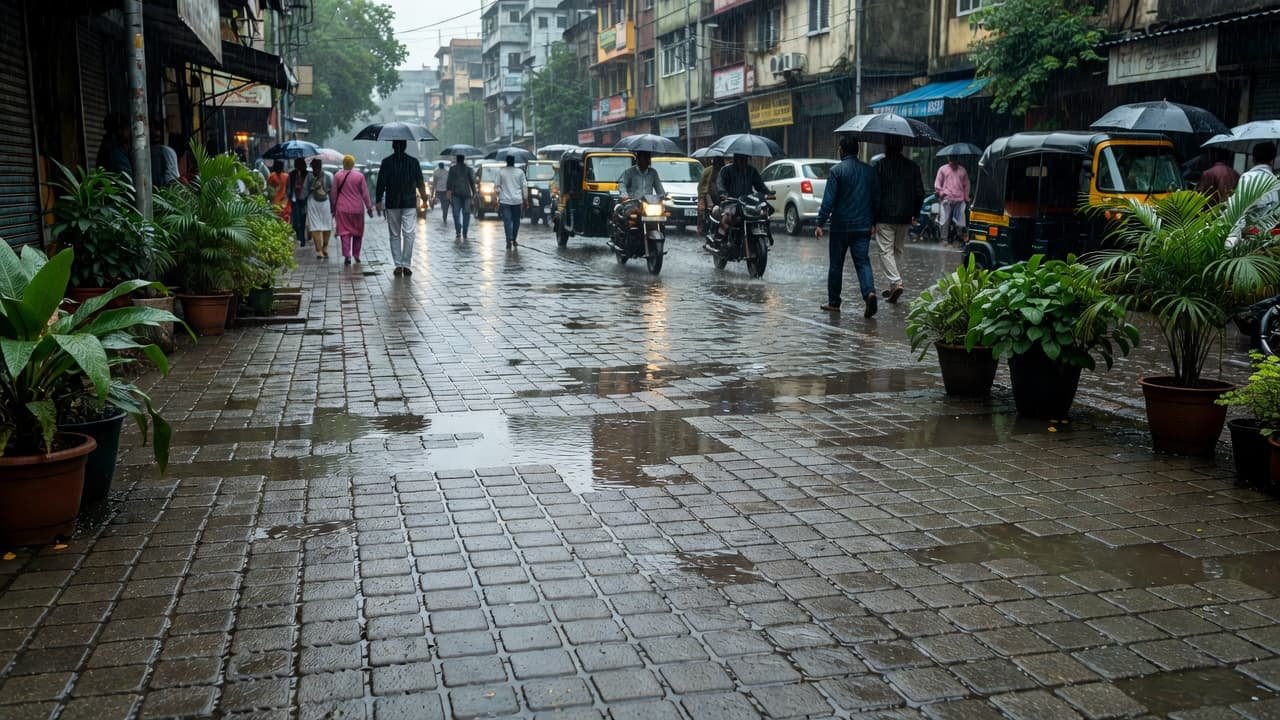
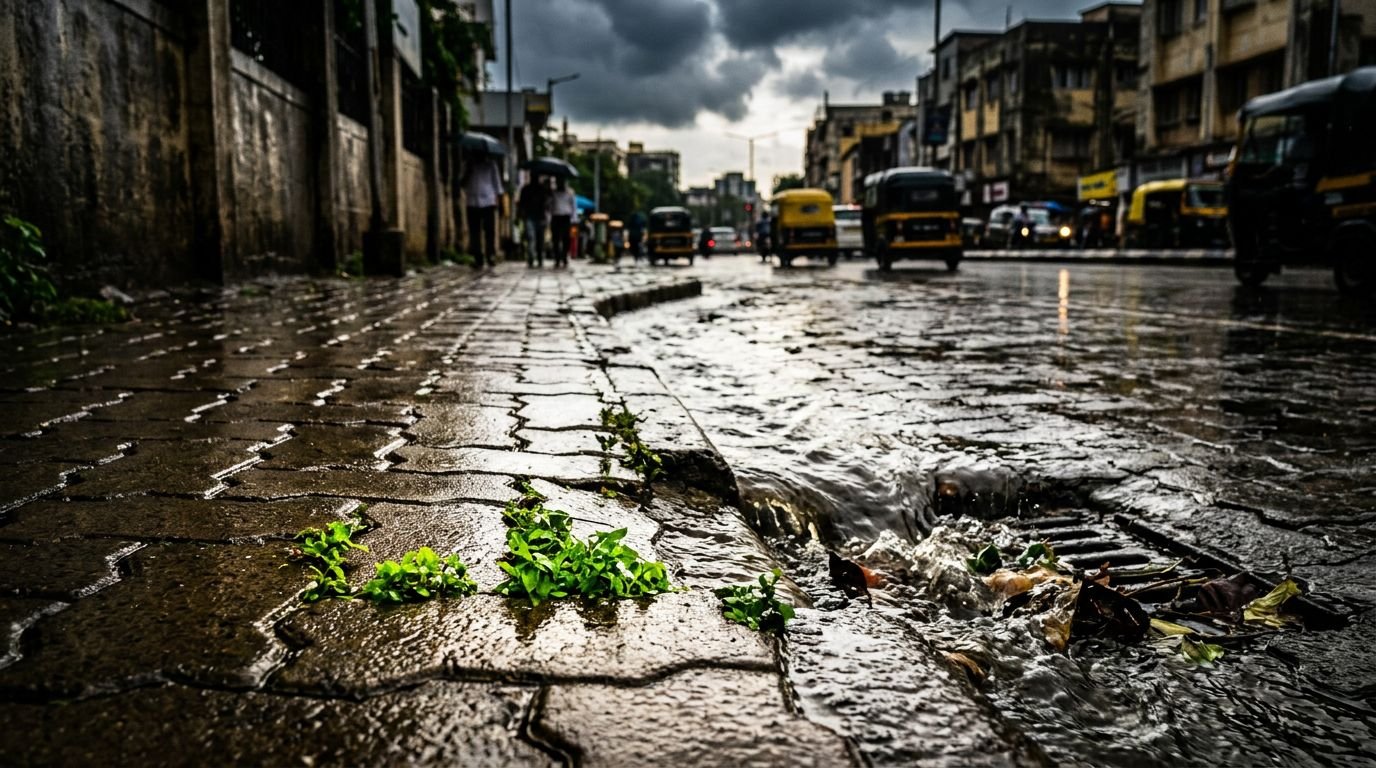
A paved edge also changes how water behaves block by block. Instead of sinking where it falls, it gets pushed sideways to curbs, low points, shopfronts, basement ramps, and intersections. One paved walkway may seem trivial. Thousands of them across a ward create a fast runoff network that planners rarely map, eventually overwhelming the capacity of nearby water bodies.
This is why the flood effect of paver blocks is easy to miss. The problem isn’t one spectacular project. It’s the steady sealing of every spare patch of ground.
Why cities keep choosing blanket paving
If the risks are so clear, why do paver blocks keep spreading? Because they fit the logic of short-term urban works.
They are easy to tender, easy to measure, and easy to photograph. A newly paved strip looks finished in a way that open soil, mulch, or grass often doesn’t. Councillors can point to visible upgrades. Contractors can quote by area. Residents who are tired of dust may welcome the change at first glance.
Maintenance politics also plays a part. Urban local bodies may prefer a paved verge to an unpaved one because it seems simpler to sweep. Housing societies often pave around buildings to reduce mud and keep parked vehicles clean. Temple grounds, school edges, market lanes, and tree bases get the same treatment, even when none of those spaces were meant to function as roads.
Yet this neatness comes with a hidden transfer of risk. The street where paving happens may look orderly, while the lower street nearby floods more often. One neighborhood’s improvement can become another neighborhood’s water problem, a situation made increasingly dangerous by the erratic rainfall patterns associated with climate change.
There is also a design habit at work. Many urban projects still treat exposed soil as leftover space, which leads to the frequent encroachment of concrete into these vital natural zones. That mindset ignores how city infrastructure must actually function to help urban centers survive heavy rain. Open ground is not unfinished; it is active infrastructure.
This is where accountability often breaks down. Tenders specify block thickness, color, and edge restraint. They rarely demand runoff limits, infiltration performance, or post-rain monitoring. So the system rewards appearance over function.
A city then spends once to pave and again to pump, de-silt, repair, and compensate. Those costs rarely sit on the same spreadsheet, which makes bad design look cheaper than it is.
When the ground can’t absorb, drains take the hit
Storm drains are supposed to carry overflow, not replace the land’s natural soak capacity. Once soil gets sealed, drainage systems inherit a burden they were never built to manage alone.
During periods of extreme rainfall, that extra pressure arrives quickly. Heavy surface runoff from paved walkways, parking areas, and internal roads converges on stormwater drains and manholes within minutes. If those openings are partially blocked, water starts ponding on the street. If the network downstream is undersized, the water has nowhere to go.
The USGS explanation of impervious surfaces lays out the same chain of cause and effect. Hard cover pushes more surface runoff directly to drainage lines and streams, which raises flash flood risk. Indian cities add their own pressures, such as clogged drains, lost wetlands, encroached lakes, and neighborhoods built over old channels.
When the last open patch disappears, every storm becomes a drainage test.
Groundwater loss makes the problem worse over time. Rain that once seeped into the earth and recharged shallow aquifers now gets flushed out of the system. That means drier soil before the next storm and less buffer below the surface. Streets flood faster, then neighborhoods face water stress months later. One bad paving choice can feed two crises.
This is also why flood planning cannot stop at pipes and pumps. Cities need to keep room for water to pause, spread, and soak. That wider view is central to integrating flood safety in Indian urban planning, especially in places where every monsoon now tests old assumptions.
In other words, a storm drain is only one line of defense. Soil, trees, open verges, depressions, ponds, and natural water bodies are part of the same system, whether policy admits it or not.
The ecological cost hidden under neat walkways
Floodwater is the most visible symptom, but the damage starts earlier. Moving away from blanket paving toward green infrastructure and nature-based solutions is essential to mitigate these issues. The ecological impact of current paving practices shows up in heat, soil health, tree survival, and everyday urban life.
When pavers cover root zones, trees lose access to water and oxygen. Compacted layers below the blocks make it harder for roots to spread. As a result, mature trees weaken slowly, then fail during intense heat waves exacerbated by climate change. Shade drops, surface temperatures rise, and pedestrians pay the price first, especially children, street vendors, sanitation workers, and older residents.
Urban soils are not empty dirt. They hold microbes, worms, seeds, moisture, and organic matter. They filter water and support birds and insects through small food webs most people never see. Once every margin is tiled over, urban biodiversity shrinks in plain sight. Fewer moist patches mean fewer pollinators. Fewer shrubs and understory plants mean fewer nesting spots. A city loses life one paved corner at a time.
Runoff also carries grime. Oil, tyre dust, litter particles, pet waste, and fine sediments wash into drainage systems and local water bodies instead of settling into soil. That burden lands on already stressed urban ecosystems.
The social effect is uneven. Wealthier streets may get fast maintenance after ponding. Informal settlements and low-lying lanes often wait longer, even though they receive the downstream consequences of many upstream paving decisions. Flooding is not only a weather event. It is a map of whose comfort got built first.
This is why urban design needs a moral lens as much as a technical one. When planners erase absorbent ground, they are also deciding whose homes, shops, commutes, and school routes will hold the water later.
Permeable pavers work, but only with honest design
Not all paver systems behave the same way. True permeable pavers can reduce runoff, but only when the full assembly is designed as part of sustainable drainage systems that let water pass through and store it below. When implemented correctly alongside nature-based solutions, these installations restore the natural infiltration capacity of the soil.
That means wider joints or open cells, clean aggregate instead of clogged sand, a sub-base that holds water temporarily, and outlets for overflow when rainfall exceeds capacity. It also means regular upkeep. If fine dust fills the joints, the surface stops performing.
This quick comparison shows the difference:
| Feature | Typical solid paver install | True permeable install | | | | | | Surface joints | Narrow, often packed tight | Open or wider, meant for infiltration | | Base layer | Compacted to shed water | Graded aggregate to store and drain water | | Maintenance | Sweeping, patch repair | Sweeping plus periodic vacuuming or cleaning | | Flood effect | Speeds runoff | Slows runoff when maintained well |
The takeaway is simple. A product label does not make a street flood-safe. Design details do. Unless these systems are installed and maintained with precision, they fail to mitigate the growing crisis of urban flooding in India.
Many Indian projects blur this line. A contractor may use permeable-looking blocks over an almost impermeable base. Tree pits get boxed in. Slopes push water to the curb anyway. Maintenance plans vanish after inauguration. Under those conditions, the public pays for a green image and gets the same runoff problem.
A rainwater runoff modeling study found that impervious surface patterns can sharply increase runoff generation. That finding matters because distribution is as important as total area. A city with scattered soak zones can behave very differently from one that seals every edge.
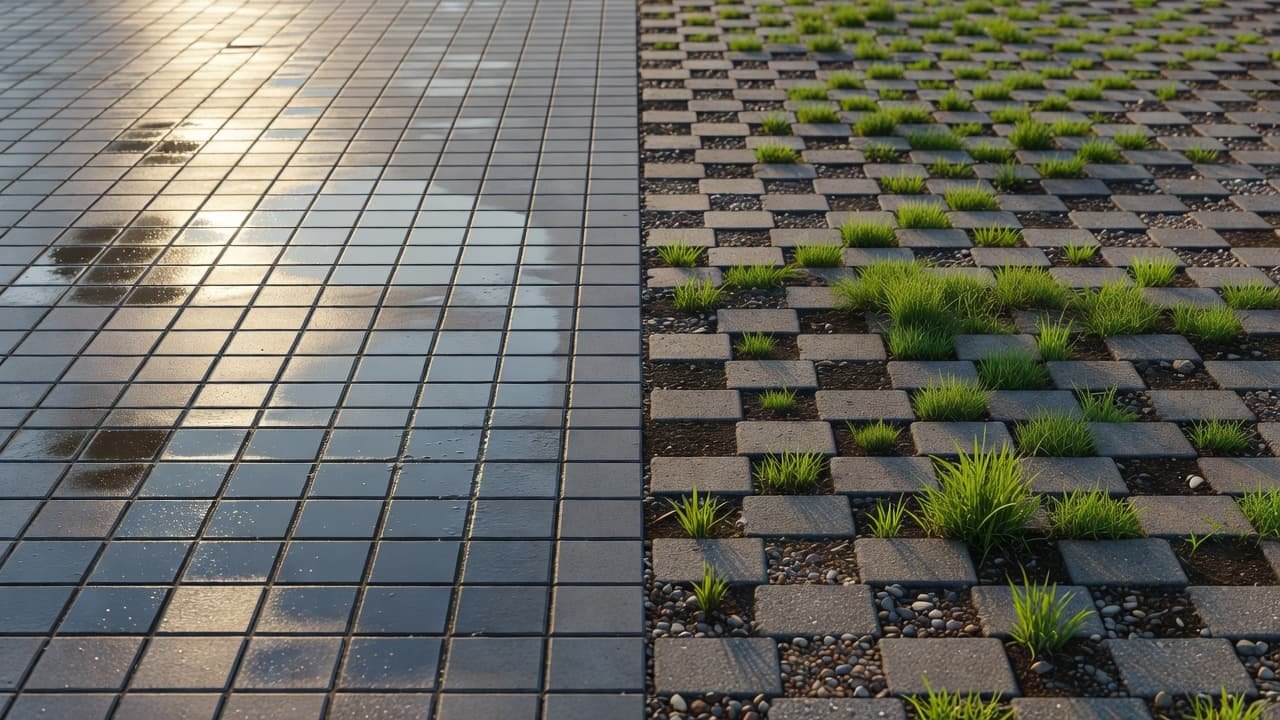
Permeable paving has a role, but it is not a magic fix. It works best in a wider network that includes rain gardens, open tree trenches, bioswales, ponds, and protected soil. When cities rely on these components as part of integrated drainage systems rather than cosmetic substitutes for real hydrology, they stand a chance at true flood resilience. When installed improperly, failure is built in from day one.
What real flood-safe street planning looks like
Flood-safe streets need more than better materials. They need systemic change that aligns with modern climate change adaptation strategies.
First, cities should stop treating paving as a default finish. Every road-edge project, campus upgrade, and footpath repair should start with one question: where will the rain go on the heaviest day of the season? If that answer is “into the drain,” the design is incomplete. City planning must integrate green infrastructure to naturally manage runoff, moving beyond the outdated habit of sealing every surface.
Public works standards can change fast when governments prioritize these goals. Tender documents, especially those aligned with the AMRUT scheme, can require minimum permeable area, protected tree root zones, and infiltration testing. Officials should use GIS technology and remote sensing to identify low spots, old water channels, and areas prone to encroachment. By restoring these as soak areas, cities can adhere to the latest National Disaster Management Authority guidelines regarding flood risk management and disaster mitigation.
Public debate also needs climate literacy, because a footpath is also a water project. Rainfall is becoming more erratic, but land use still determines how much of that rain turns into street flooding. A city that keeps sealing soil while talking only about drain width is solving only half the problem.
The same systems view appears in work on the hidden environmental costs of water infrastructure. Water moves through connected landscapes, not separate files on a planning desk. Streets, lakes, floodplains, trees, and groundwater belong in one picture.
There is an economic upside too. A circular economy for public space would value reused materials, compost-rich soil, and stormwater capture over endless hard surfacing. It could support sustainable business models for native plant nurseries and local hydrology audits. Investing in this kind of flood resilience supports local jobs while strengthening city infrastructure.
Policy should reward performance, not polish. If a newly paved street floods after a moderate shower, that project failed, no matter how tidy it looked on opening day.
What residents can push for right now
Residents cannot rewrite city codes alone, yet local pressure does matter. People notice urban flooding in India long before official files do.
Housing societies, school groups, and ward volunteers can document where water ponds after ordinary rain. Photos taken at the same locations across one monsoon can reveal whether new paving worsened the situation. These records are vital for demanding climate action plans that prioritize flood resilience. When speaking with local officials, communities should ask if soil infiltration was tested, how the maintenance of stormwater drains is prioritized, and if they have implemented effective early warning systems to keep neighbors safe.
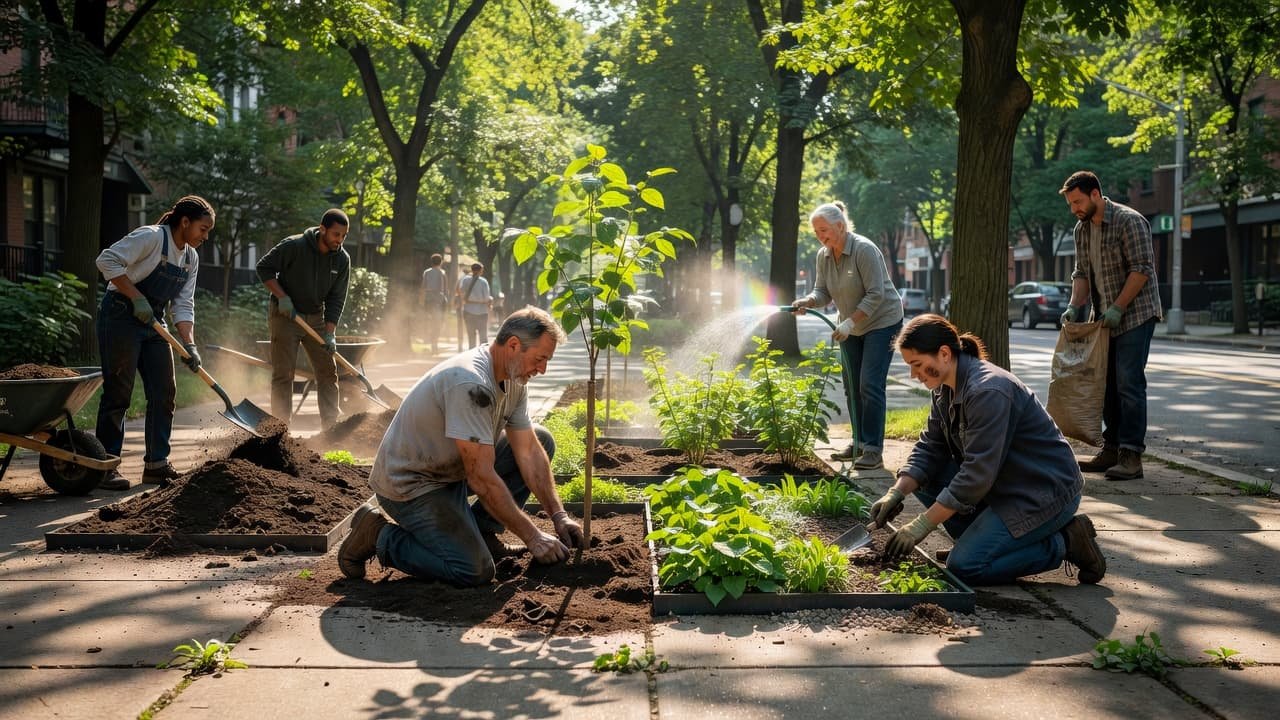
Communities can also push for repairs that prioritize green infrastructure rather than more tiles. Instead of hard surfaces, advocate for open verges, deeper tree beds, and curb cuts that lead into planting strips. Integrating rainwater harvesting systems and restoring local water bodies that have suffered from encroachment often do more for flood relief than another layer of decorative blocks.
Personal climate choices still have value. Plant-based living can lower pressure on land and water, and everyday mindfulness can sharpen how you notice wasteful design in your own neighborhood. Still, private virtue will not reopen a sealed soak pit or protect a flood channel on its own. Public systems have to change.
If you want practical ways to support on-the-ground urban biodiversity and climate literacy work, Explore Our Active Missions. Visible repair matters, especially when it is local, trackable, and tied to places where people already live with flood risk.
Frequently Asked Questions
Are all paver blocks harmful to urban drainage?
Not necessarily, but the way they are typically installed in India often causes harm. If they are placed over a compacted, impermeable sub-base, they act as a seal; however, true permeable paver systems designed with open joints and porous base layers can actually help manage runoff if they are regularly maintained.
Why do city authorities continue to prefer these blocks if they cause flooding?
Paver blocks are favored because they are inexpensive, quick to install, and provide an immediate, tidy appearance that is easy to photograph for political projects. They satisfy short-term visual goals, while the long-term, invisible costs of flooding and infrastructure repair are often ignored or managed by different departments.
Can individuals or housing societies do anything to help?
Yes, residents can document specific locations that pond after light rain and present this data to local officials to challenge poor urban design choices. Communities can also advocate for replacing hard concrete edges with open verges, deeper tree beds, and planting strips that allow water to infiltrate naturally.
Why is the “permeable” label on some paving materials often misleading?
A product may be labeled as permeable, but it will fail to prevent flooding if the underlying soil is heavily compacted or if the gaps between blocks become clogged with sand and debris over time. Without an integrated, well-maintained drainage design that includes proper sub-base storage, the “permeable” label becomes a marketing term rather than a functional solution.
Conclusion
A city does not flood only because rain is heavy. It floods because thousands of routine design choices remove the ground’s ability to absorb, slow, and store water. This pattern is a significant driver of urban flooding India faces today, as we struggle to balance rapid development with the realities of climate change and increasingly frequent extreme rainfall events.
Paver blocks are one of those choices. Used carelessly, they turn living soil into a runoff surface, overload drainage systems, weaken trees, and push the costs of bad planning onto the people with the least protection. To build resilience, city infrastructure must evolve beyond superficial aesthetics. Effective flood risk management requires us to integrate nature based solutions into our drainage systems, ensuring that our streets serve as part of a larger disaster mitigation strategy.
If cities keep treating soil as spare space, floodwater will keep proving that our current path is unsustainable.