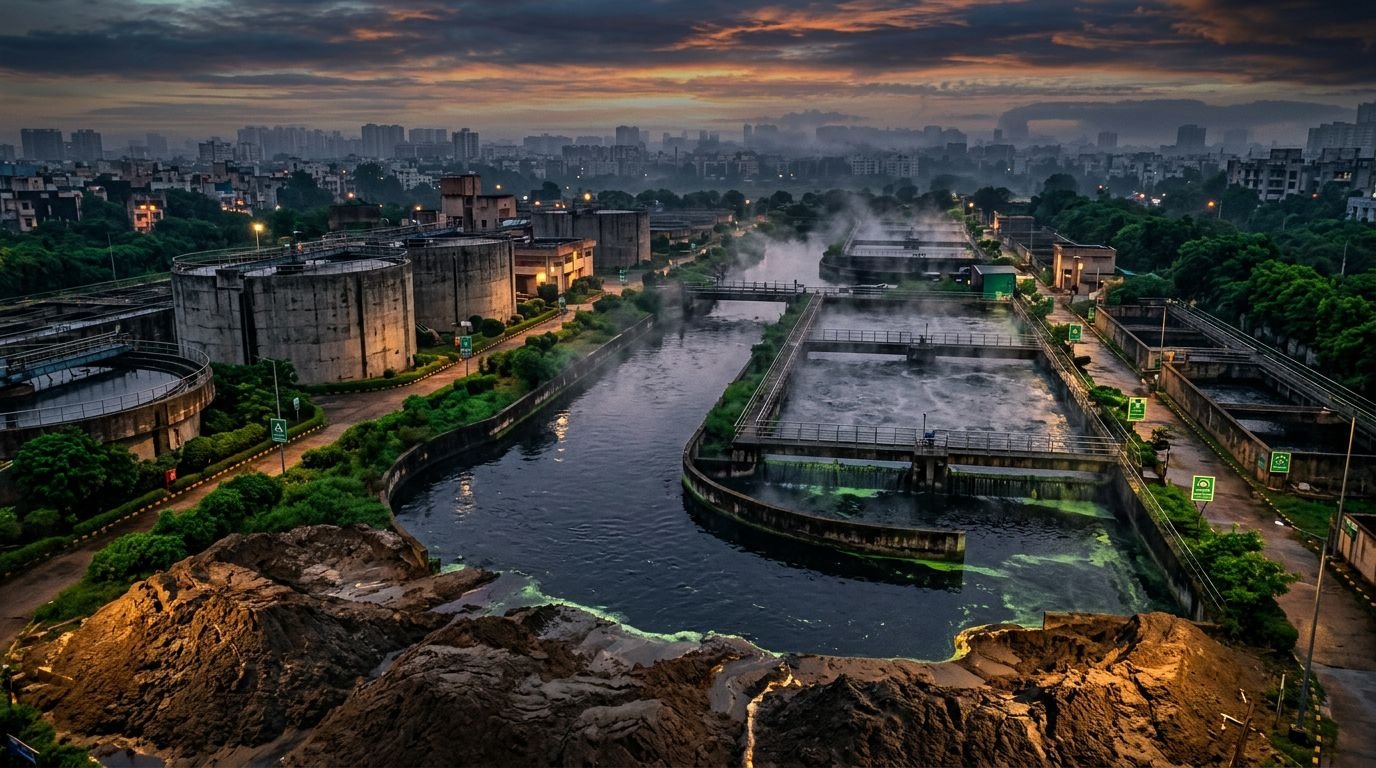
STP Sludge Disposal in India Is Becoming a Waste Crisis
 TBH Editorial
When treated water leaves a sewage plant, most people think the danger is over. In India, the bigger blind spot often begins after that point, because the leftover solids keep building up with far less scrutiny.
The real gap in STP sludge disposal in India is simple. Cities are adding treatment plants, but the thick residue those plants produce still lacks strong rules, safe end-use systems, and public attention. That hidden pile tells a much harder story.
The sludge problem starts after the water looks clean
India has spent years trying to expand sewage treatment. That push matters, because untreated wastewater harms rivers, lakes, and public health. Yet every treatment plant also creates sludge, and sludge is not a side issue. It is a separate waste stream with its own risks, costs, and technical needs.
Recent reporting on India’s sludge management challenge still points to weak treatment systems, uneven disposal practices, and limited downstream oversight. In many cities, the water side gets funded and monitored more closely than the solids side. So a plant can meet one target while creating another problem.

Photo by Tom Fisk
Many city reports focus on installed capacity, usually in million liters per day. That number sounds clean and measurable. It says little about what happens to the dense residue once screens, tanks, and settling systems do their work.
Because sludge management lacks the same visibility, it often falls into the cheapest budget line instead of the safest one. That is where a technical issue becomes a public failure. A sewage plant can produce cleaner effluent and still push risky material into drying beds, transport trucks, landfill cells, or informal reuse channels.
The scale is easy to miss because sludge is local, ugly, and hard to photograph. It does not travel through public debate the way smog or plastic waste does. Still, it shapes neighborhood air, soil quality, worker safety, and the health of peri-urban land. When people talk about sanitation progress without talking about sludge, they are only looking at half the system.
Why partial treatment is not enough
A large share of Indian plants still do little more than reduce sludge volume. A recent overview of sewage treatment in India says roughly 80 to 90 percent of plants do not treat sludge much beyond thickening or dewatering. Those steps make transport easier. They do not reliably make the material safe for wide reuse.
This distinction matters because language often hides risk. “Dried” sounds finished. “Dewatered” sounds controlled. In reality, both terms may describe material that still carries pathogens and unstable organic matter.
The gap becomes clearer when you compare the steps.
| Step | What it does | What it does not do |
|---|---|---|
| Thickening | Concentrates solids | Does not sanitize sludge |
| Dewatering | Removes water for handling | Can leave pathogens and contaminants behind |
| Stabilization | Reduces odor and decay | Safety still depends on process quality |
| Class A treatment | Aims for high pathogen reduction | Needs strong monitoring, capital, and testing |
Some cities, including Mumbai, Delhi, and Chandigarh, have started asking for Class A quality. That move matters because sewage sludge is sometimes sent to farms. If the material is only dried, farmers may handle something that still carries disease-causing organisms.
When sludge leaves a plant half-treated, pollution has not ended, it has only changed address.
The health risk is only part of the story. Poorly treated sludge can also pick up industrial contaminants where sewer networks mix domestic sewage with commercial waste. That means India cannot talk honestly about beneficial reuse until it separates, tests, grades, and tracks the material with far more care.
The case for better treatment is not anti-reuse. It is the opposite. Research on current sludge solutions and reuse makes clear that treated sludge can reduce pressure on chemical inputs and support resource recovery. But reuse starts with treatment quality, not with optimistic labels.
A waste chain with too many missing rules
India still lacks strong nationwide rules for sludge handling, transport, storage, treatment, and final disposal. That leaves local bodies to improvise. Some municipalities take the issue seriously. Others write contracts around lifting and moving volume, not around reducing risk.
A review of sludge management techniques and challenges shows how quickly this field becomes messy when regulation, plant design, and disposal capacity do not grow together. Trucks need controlled routes and records. Drying beds need standards. Reuse needs testing. Disposal sites need oversight. When one link is weak, the whole chain becomes guesswork.
Stricter discharge standards have pushed cities to improve wastewater quality. The Supreme Court’s support for tighter discharge norms in 2021 increased that pressure. Yet the solids side still lags. The National Mission for Clean Ganga has also pushed plants in its region to study higher-grade sludge treatment, which shows that the policy conversation is shifting, even if practice still trails behind.
Many plants were built to stop sewage from entering rivers. They were not always planned with equal seriousness for the solids they would create every day. As a result, sludge becomes the afterthought that swallows money later.
Weak rules also create a bad incentive. The cheapest option can look efficient on paper, even when it shifts cost to sanitation workers, farmers, local ecosystems, or families living near dumping points. That is not efficiency. It is pollution moved off the official balance sheet.
The ecological impact spreads through soil, drains, and farms
Sludge does not stay politely inside plant boundaries. When it sits too long on open beds, moves in poorly covered trucks, or gets spread without enough treatment, the ecological impact moves through water, wind, insects, and soil.
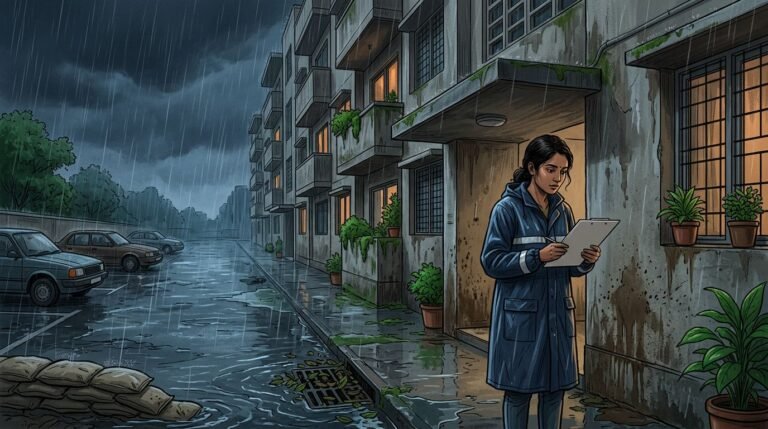
In peri-urban belts, that can mean drains that clog faster, foul odor near homes, and fields that receive material of uncertain quality. During monsoon months, poorly stored sludge can wash into canals and vacant land. The public often sees the symptom, black runoff, dead patches, or a heavy stink, but not the waste chain behind it.
Cities also pay a biodiversity cost. Contaminated edges around lakes, marshes, and floodplains reduce habitat quality for insects, birds, amphibians, and soil organisms. That weakens urban biodiversity in places already under pressure from traffic, heat, paving, and shrinking tree cover.
There is also a carbon angle. When unstable organic sludge goes to landfills or sits unmanaged in open conditions, it can add methane and other emissions to an already stressed urban system. Sludge is not only a sanitation issue. It sits inside climate, land use, water quality, and public health at the same time.
The burden rarely lands evenly. Neighborhoods near disposal points often have the least political voice. Children breathe the odor. Workers handle the material. Farmers may accept it because fertilizers are expensive and margins are thin. The same city that benefits from sewage collection often exports the risk to its outer edges. That pattern should make any talk of fair urban growth sound incomplete.
A circular economy works only after real treatment
A circular economy is possible here, but only if the first step is real treatment. Sludge can support energy recovery, compost-linked routes, or other material recovery systems after stabilization and testing. Without that foundation, reuse is only a shortcut with better branding.
A recent techno-economic assessment of sludge pathways points to real options for energy generation and resource recovery, but it also shows that pathway choice depends on local costs, plant scale, and treatment quality. There is no single answer for every city.
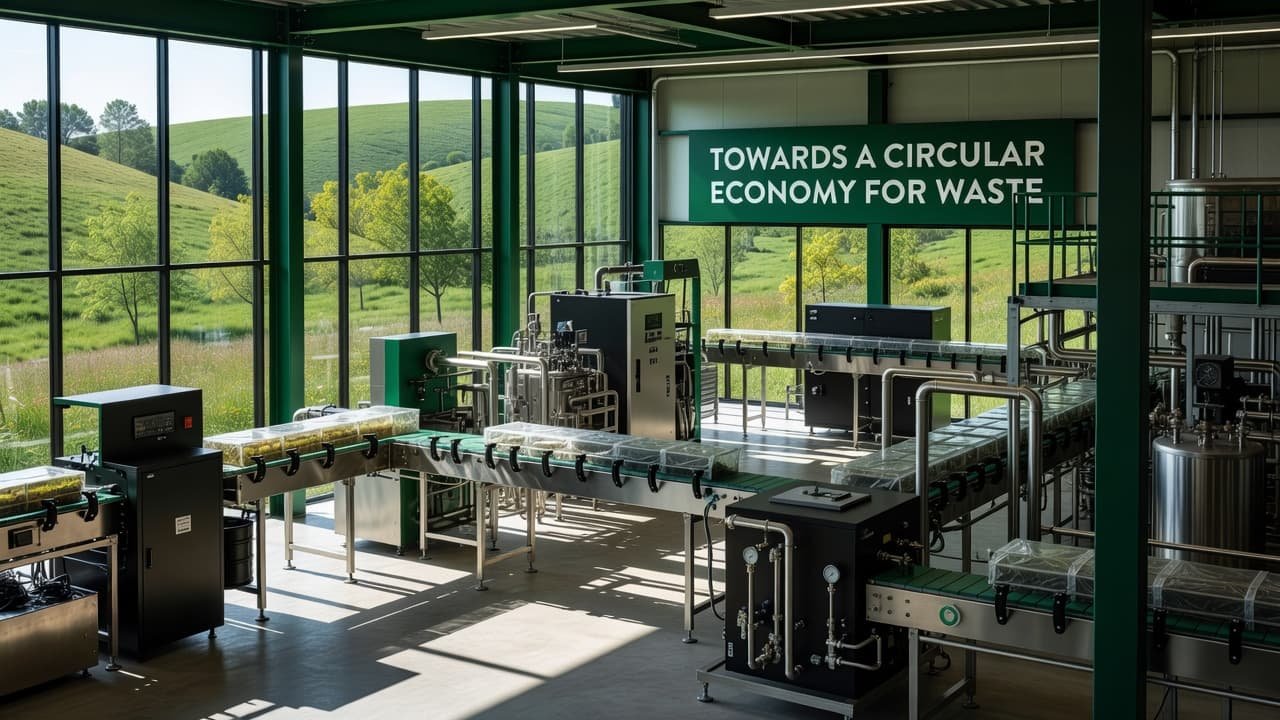
A dense metro with expensive land may need advanced drying or thermal treatment. A smaller city with cleaner source streams may do better with compost-linked systems or digestion-based recovery. What matters is that reuse routes match the actual quality of the sludge, not the wishful version of it.
Three pathways tend to make the most sense when treatment is genuine:
- Anaerobic digestion can cut sludge volume and recover energy.
- Co-composting can return organic matter to soil where quality is tested.
- Thermal routes can work where land is scarce or contamination is harder to manage.
Each route has trade-offs, but each is more honest than pretending untreated sludge is already a resource.
The larger gap is business design. Cities still buy the cheapest short-term disposal contract instead of building sustainable business models around verified recovery. That could mean quality-based procurement, long-term offtake agreements, industrial co-processing, or energy purchase structures that reward good treatment. Safe reuse is not only an engineering challenge. It is also a market design challenge.
Why this belongs in climate literacy
Sludge rarely appears in mainstream climate conversations, yet it belongs there. Climate literacy is not only about emissions charts and solar panels. It is also about the hidden systems that shape rivers, soils, methane risk, worker exposure, and trust in city planning.
For many readers, this issue feels far from daily life. It is not. If you care about plant-based living, safer food systems, or the condition of urban lakes and wetlands, sewage solids are part of that chain. Crops, compost, floodplains, and groundwater do not sit outside city waste.
Everyday mindfulness can help you notice these systems, but personal awareness stays small when public systems stay weak. Sorting waste at home matters. So does asking where your city sends what it removes from sight.
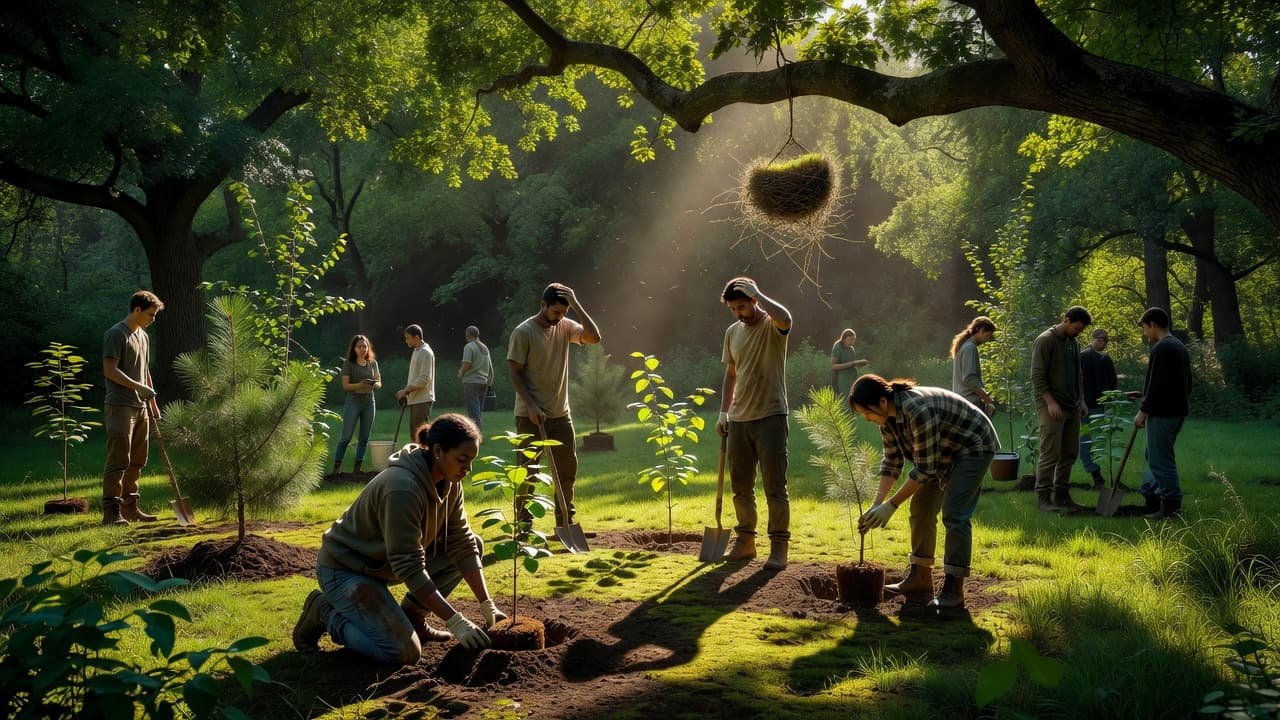
This is where visible community action becomes useful. Habitat restoration, bird nesting projects, and youth education do not solve sludge management on their own, but they show what measurable accountability looks like. If you want examples of grounded work around urban biodiversity and climate literacy, Explore Our Active Missions and look at how public tracking can build trust.
Still, Systemic change will not come from volunteer energy alone. It depends on city budgets, testing labs, contract design, source control, and public data. Personal values matter, whether you compost, reduce waste, or choose plant-based living. Yet sludge makes one hard truth impossible to ignore: private virtue cannot replace public infrastructure.
What accountability should look like now
Better accountability starts at the design stage. Every new or upgraded sewage plant should come with a sludge plan before construction clears. That plan should state expected sludge volume, treatment method, testing schedule, transport route, worker protections, and the final end use or disposal site.
States also need binding rules for storage, transport, pathogen reduction, contaminant testing, and reporting. Public dashboards should not stop at wastewater figures. They should show what happens to every ton of sludge after it leaves the plant gate. If the public pays for treatment, the public should be able to trace the outcome.
Contracting has to change as well. If payment depends only on lifting and moving material, poor practice stays profitable. If payment depends on tested quality, traceable delivery, and monitored end use, the market begins to shift.
Source control matters too. Cities cannot mix industrial discharges into municipal sewers and then pretend sludge quality is a mystery. Stronger pretreatment rules for industrial waste make safe reuse more realistic and protect both workers and farmers.
None of this is glamorous. That is part of the problem. Waste systems often fail at the least visible step because that step gets the least discipline. India’s next phase of urban sanitation is not only about building more treatment capacity. It is about treating sludge as core infrastructure, with money, data, and enforcement to match.
Conclusion
Water can leave an STP looking cleaner while the hardest waste problem remains in a drying bed, truck, landfill, or field outside the fence. That is why STP sludge disposal in India has become a waste crisis, not a small technical footnote.
If cities keep measuring success only by effluent quality, they will keep moving pollution instead of reducing it. Real progress needs better treatment, clear rules, public reporting, and the kind of Systemic change that treats sludge as part of urban health, ecological repair, and basic accountability.