Tyre Pyrolysis in India Can Shift Pollution, Not Solve It
 TBH Editorial
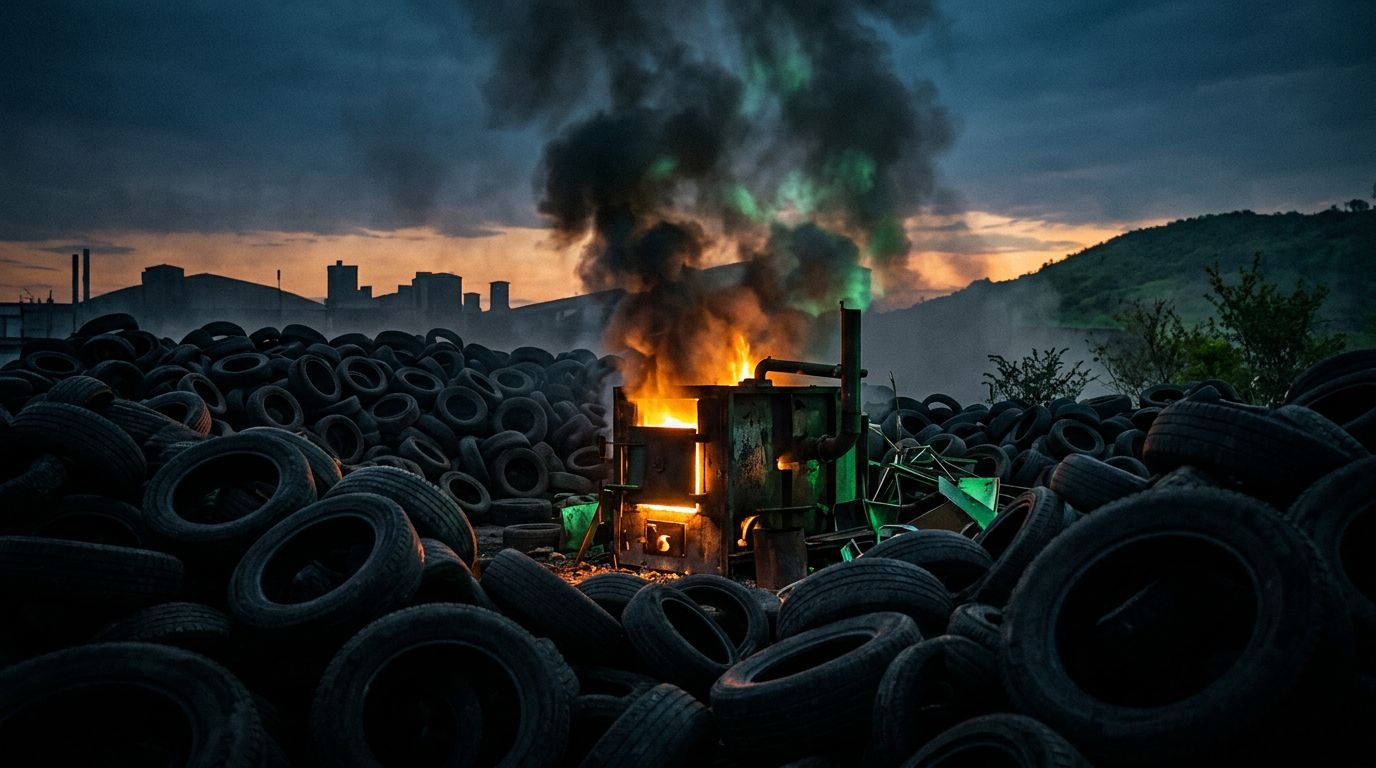
A mountain of discarded tyres looks like a waste crisis waiting for a fix. Yet when those tyres disappear into a pyrolysis unit, the problem doesn’t always disappear with them.
In India, tyre pyrolysis is often sold as recycling. Too often, it works more like a conversion process that turns visible solid waste into harder-to-track smoke, oil, char, and contaminated runoff. If you care about health, climate, and local ecology, the real question is simple: who gets relief, and who gets the pollution?
The clean pitch hides a messier reality
The basic idea sounds smart. Waste tyres are heated in a low-oxygen chamber, then broken into tyre pyrolysis oil, combustible gas, steel, and carbon-rich char. On paper, that fits the language of a circular economy. A hard-to-manage waste stream becomes something saleable.
That promise explains why the sector keeps attracting attention. India has a serious tyre waste problem, and piles of abandoned tyres bring their own risks, including fires, leachate, and microplastic spread. A broad view of those pressures appears in this tyre waste impact overview.
Still, the chemistry is not clean by default. Tyres contain sulfur, synthetic polymers, oils, fillers, and trace metals. Heating them does not erase those substances. It redistributes them. Some end up in the oil, some in the gas stream, some in the char, and some in residues or wastewater.
That matters because the gap between theory and practice is wide. A well-designed plant with sealed systems, proper condensers, emission controls, and safe residue handling can reduce some risks. A badly run unit can do the opposite. It can swap a tyre dump you can see for contamination you can’t.
When waste tyres turn into oily vapors, char dust, and runoff, the waste problem has changed shape, not vanished.
This is the central problem with tyre pyrolysis in India. The technology is often judged by its sales brochure, while nearby communities live with the plant that actually gets built.
Pollution starts long before the product leaves the gate
The biggest risks often begin inside the plant itself. Temperature swings, feedstock variation, poor seals, and weak condensation can release volatile organic compounds, smoke, and sulfur-heavy fumes. Old-style batch plants are especially vulnerable because loading and unloading create frequent leaks and fugitive emissions.
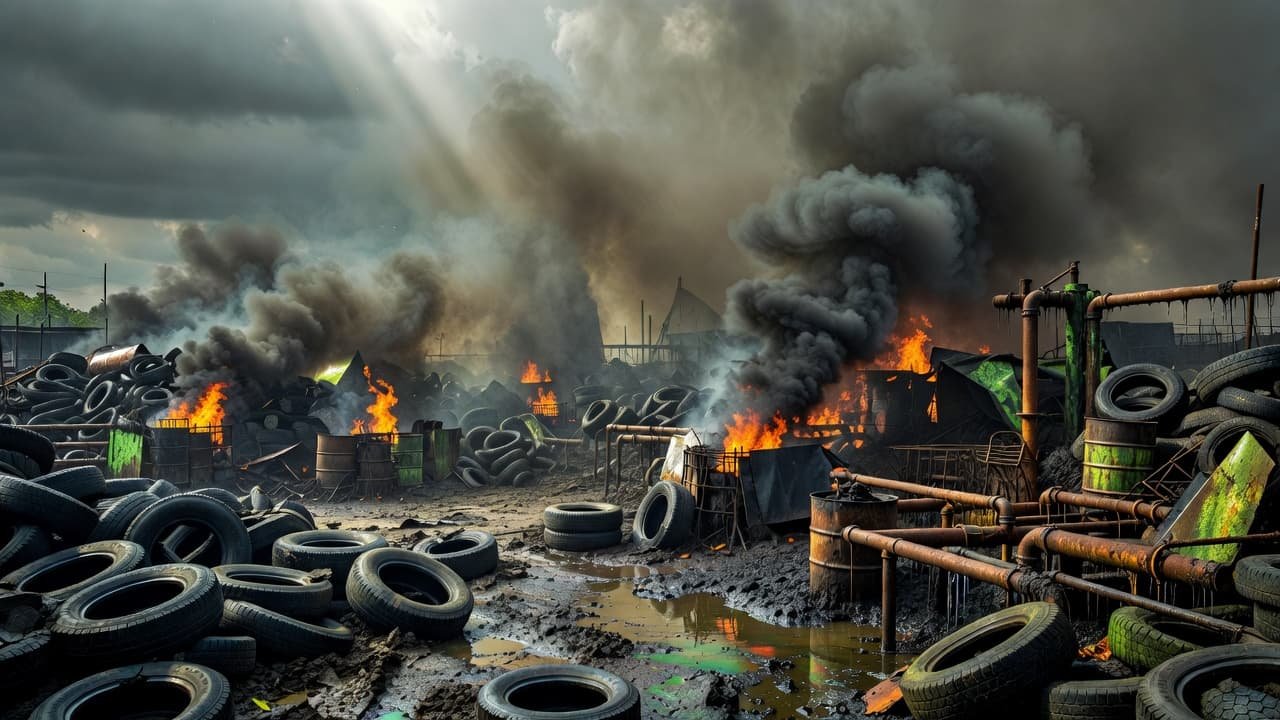
Tyre pyrolysis oil is also not a harmless output waiting for a noble use. It can contain sulfur and other contaminants, and it needs careful storage. When tanks leak, hoses drip, or transfer points are poorly maintained, the result is oily soil and blackened drains. In the dry season, vapors pose a fire risk. During monsoon months, spills move fast.
Then there is the char. Industry often frames it as a usable by-product, but raw char can be dusty and dirty. If operators store it in open yards, wind carries fine particles into nearby fields and homes. When rain hits those piles, runoff can stain soil and flow into local drainage channels.
Water handling is another weak point. Some units generate wastewater through cooling, cleaning, or gas scrubbing. If that water is not treated well, the pollution burden shifts from the air to the ground or nearby water bodies. That is still pollution, even if the tyre pile looks smaller.
The trouble gets worse when plants cut costs in hidden places. A cheaper condenser, a delayed filter replacement, or open residue storage can save money for the operator and push the ecological impact onto workers, neighbors, and local ecosystems. In other words, the dirtiest part of the business model may sit outside the balance sheet.
India’s 2026 rules are tighter, but the field reality still matters most
India’s regulatory picture has changed. The Central Pollution Control Board’s 2024 standard operating procedure is now the main national frame for tyre pyrolysis oil units. In 2026, the direction is clear: older uncontrolled batch systems are out of favor, and cleaner technologies are being pushed.
Public reporting on the rule shift shows that CPCB now accepts Advanced Batch Automated Process units and continuous process units, while older batch plants are expected to upgrade or close. A recent CPCB categorisation update also notes that these plants are treated as Orange Category industries, which still means they pollute and need real controls.
State decisions point the same way. Gujarat, after a long ban, reopened the door only for continuous plants under strict conditions, as outlined in this update on Gujarat’s approval policy. National planning has also moved toward tighter oversight, feedstock traceability, and downstream management, themes discussed in NITI Aayog’s 2026 waste tyre report.
Those changes are real. They also expose the deeper problem. A stricter rulebook does not clean the air by itself.
Many risks sit in enforcement gaps. Pollution boards are often stretched. Inspections may be periodic rather than continuous. Stack testing can miss short bursts of high emissions. Records may show compliance on paper while char piles sit in the open yard. Residues can leave the site with weak traceability, and nearby residents may have little access to monitoring data.
The result is a two-speed system. Better plants move toward safer design, while weaker operators look for loopholes, lighter scrutiny, or districts where land is cheap and public resistance is thin. That is why the debate cannot stop at “allowed” or “banned.” In India, tyre pyrolysis becomes risky when governance is thin, monitoring is patchy, and downstream waste handling is treated as someone else’s problem.
The harms do not stay inside factory walls
A pyrolysis unit may sit behind a boundary wall, but its effects do not stop there. Smoke drifts. Fine soot settles. Oil leaks find drains. Char dust rides the wind. Nearby farms, roadside shops, ponds, and homes take in the overflow.
That spillover is often ignored because it is harder to photograph than a tyre mountain. Yet for communities living close to industrial clusters, the daily burden is direct. Air quality falls first. Then soil quality and surface water can follow, especially where storage yards are unlined and drainage is poor.
Workers face another layer of exposure. They handle hot metal, hot char, condensed oil, and flammable gases. In loosely managed units, the risk of burns, inhalation, or fire can be serious. When protective gear is weak or absent, the cost of “recycling” lands on the people doing the hardest jobs.
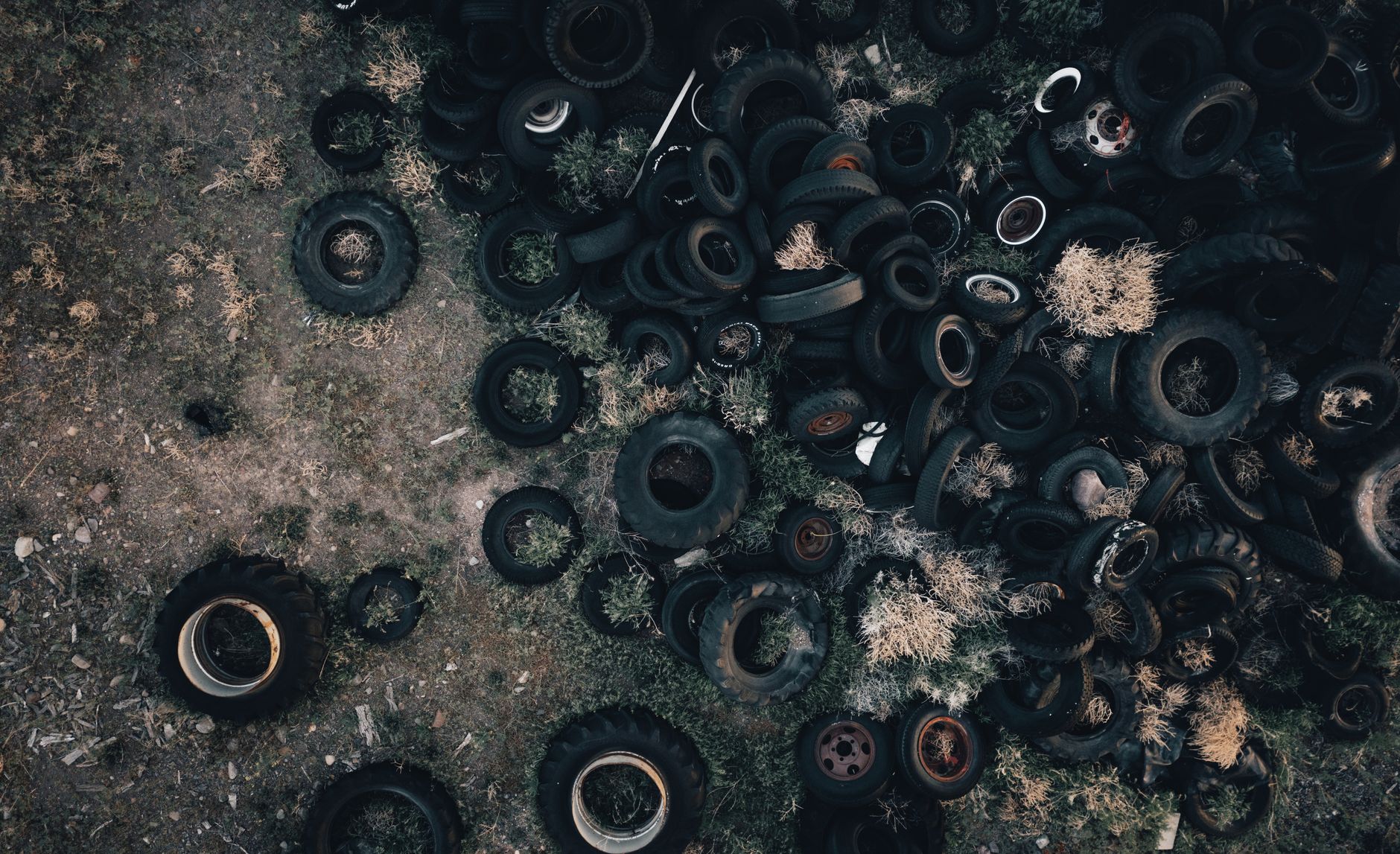
Photo by Alfo Medeiros
The ecological damage is wider than factory boundaries suggest. Runoff from tyre storage and processing areas can reach ponds, wetlands, and peri-urban lakes. Once oily residues enter those systems, insects, fish, birds, and aquatic plants bear the fallout. That matters for urban biodiversity, because degraded water and soil reduce nesting, feeding, and breeding space long before a wetland looks dead.
This pattern shows up in other environmental fixes too. A project can look green on the surface while hiding biological harm underneath. The same warning appears in this piece on the ecological impact of urban lake rejuvenation, where cosmetic clean-up can mask damage to wetland function.
That is why community impact must stay at the center of the tyre pyrolysis debate. A plant cannot count as progress if it reduces visible waste in one place while lowering air and water quality in another.
A circular economy claim can hide a dirty loop
Many operators describe pyrolysis as resource recovery, and some of that is fair. Steel can be recovered. Gas can sometimes feed the process itself. Oil and char can enter downstream markets. The problem is that recovery alone does not prove circularity.
A real circular economy keeps material value high and toxic releases low across the chain. Poorly run tyre pyrolysis often fails that test. The waste does not disappear. It moves into products or residues that still need careful handling.
This comparison shows where the gap opens:
| Claimed benefit | What happens in weak systems | Who absorbs the cost |
|---|---|---|
| Fewer tyre piles | Air emissions, runoff, and char dust rise | Nearby residents and farms |
| Fuel recovery | Dirty oil is burned in low-control furnaces | Workers and downwind communities |
| Valuable by-products | Low-grade char is stored, dumped, or sold with little traceability | Soil, drains, and local water |
| Green business case | Operators cut monitoring and waste treatment costs | The public and local ecosystems |
The table points to a hard truth. Some plants do not close a loop. They create a chain of partial transactions where each buyer inherits a new environmental burden.
That is why sustainable business models matter. A business is not sustainable because it converts waste into saleable outputs. It becomes sustainable only when it pays the full cost of pollution control, safe storage, worker protection, testing, and lawful downstream disposal. If profit depends on externalizing those costs, the model is dirty even when the marketing is green.
This is also where India’s waste debate needs more honesty. Tyre pyrolysis oil may move into furnaces or industrial use, but if the final combustion stage has weak controls, the pollution is only displaced. The same applies to char. If it is not upgraded into a better-defined material or sent to approved co-processing, the loop remains loose and risky.
Real accountability starts with design, data, and enforcement
Cleaner outcomes are possible, but they require more than a permit. Plants need sealed feeding and discharge systems, strong condensers, gas cleaning, lined storage, fire protection, and disciplined residue handling. Continuous units and Advanced Batch Automated Process systems are better starting points because they reduce some of the leak-heavy moments common in old batch operations.
Still, good equipment is only one layer. Public accountability needs verified data. Emissions should be measured at meaningful intervals, not treated as a box-ticking ritual. Residues should have documented destinations. Wastewater should be tested. Ground conditions should be protected before a site begins operating, not after contamination appears.
The supply chain matters too. Domestic waste tyres should be traceable, and plants should not become sinkholes for mixed industrial waste under the label of recycling. Before a unit runs, it should already have lawful, audited pathways for char, steel, and oil. That would cut the habit of making a by-product first and looking for a safe outlet later.
Systemic change is the real line between a tolerable plant and a harmful one. Pollution boards need staff, labs, and public-facing enforcement records. Local governments need zoning that respects homes, farms, and water bodies. Banks and investors should stop funding operators who rely on weak monitoring to stay profitable.
This is also a test of climate literacy. Many people can explain carbon footprints, yet fewer ask who breathes the emissions from waste-to-fuel systems. A lower-waste economy cannot rest on hidden sacrifice zones. If a plant’s safeguards are not transparent, the public has good reason to doubt its claims.
Personal values help, but private virtue won’t fix industrial pollution
Readers who care about plant-based living or everyday mindfulness already understand that daily choices have ripple effects. That awareness matters. It builds attention, patience, and a habit of looking past easy labels.
Yet tyre pyrolysis shows the limit of personal purity. You cannot shop your way out of a badly regulated waste system. You cannot offset a leaking pyrolysis yard by buying a metal straw or sorting your home recycling more carefully. Industrial pollution needs public rules, disclosure, and pressure that reaches beyond consumer habits.
So what can a concerned person do? First, ask sharper questions when a project is sold as recycling. Where do emissions data go? What happens to char? Is the unit continuous or old batch? Are nearby water bodies protected? Are worker safety records public? Those questions are simple, and they matter.
Next, back work that ties ecological care to verification rather than slogans. If you want on-the-ground examples linked to urban biodiversity and climate literacy, Explore Our Active Missions shows how local action can be tracked in public. That kind of accountability culture matters far beyond conservation projects. It is the same culture waste infrastructure needs.
Finally, resist the urge to confuse activity with progress. A smaller tyre pile may look like a win. It counts only when the air, water, and people around the plant are safer too.
Conclusion
A disappearing tyre heap can tell a comforting story, but comfort is not the same as cleanup. When tyre pyrolysis in India runs with weak controls, it often trades one visible waste problem for several less visible ones.
India’s stricter rules show that regulators know the risk. The next step is tougher field enforcement, real traceability, and public data that lets communities judge claims against outcomes.
The strongest takeaway is simple: Systemic change matters more than green branding. If a recycling fix leaves workers, neighbors, and local ecosystems carrying the damage, it is not a solution worth defending.