Why Check Dams Can Harm Seasonal Rivers in India
 TBH Editorial
A wall across a small stream can look like common sense. In water-stressed parts of India, check dams promise recharge, local storage, and quick relief.
But a seasonal river is not an empty channel waiting to be fixed. When check dams spread across it without river-scale planning, the damage often appears slowly, then lands hardest on downstream people and ecosystems.
That is why the real issue is not one structure in isolation. It is what happens when many check dams interrupt a river that depends on movement, timing, and seasonal change.
The appeal of check dams is real, but it is also incomplete
There is a reason check dams became popular. They are smaller than large dams, cheaper to build, and easy to frame as a local answer to water stress. In the right setting, they can slow runoff, reduce gully erosion, and help some groundwater recharge.
A broad global review of check dam functions shows why planners like them. These structures can reduce sediment movement and hold water long enough for nearby land and wells to benefit. For villages facing weak monsoons, that can feel like practical relief, not abstract policy.
That local gain matters. Rural communities do need storage, recharge, and soil protection. Dismissing every check dam would be lazy analysis.
The problem begins when success gets measured one wall at a time. A check dam may help one farm cluster while drying a reach further down. It may trap soil where engineers want it trapped, while starving floodplains that need that same material. It may recharge one pocket of land, but break the seasonal pulse that keeps the wider river alive.
This is why the phrase “check dams seasonal rivers” needs more care than it usually gets. Seasonal rivers are often treated as half-rivers, temporary channels, or wasted runoff. That framing invites overbuilding. Once that happens, a tool meant for repair can become a chain of barriers.
India’s water debate often rewards visible construction. A new wall is easy to count, photograph, and fund. A lost downstream seep, a broken fish route, or a depleted sand-bed aquifer is harder to see. Yet those hidden losses shape the real ecological impact.
Seasonal rivers are not failed rivers
A seasonal river does not stop mattering when surface water disappears. During dry months, many of these rivers still hold moisture under sand, feed shallow aquifers, support trees along the banks, and keep soil microbes, insects, and burrowing animals alive.
Monsoon flow is also not random chaos. It is a timed pulse. Water rises, spreads, drops sediment, recharges edges, and then retreats. Fish spawn during those brief wet windows. Birds feed along the shallows. Grasses return on moist banks. Farmers read these rhythms even when policy does not.
A seasonal river that looks empty in May may still be feeding wells, roots, insects, and soil life beneath the sand.
That matters across rural and peri-urban India. These channels support more than farms. They also support urban biodiversity, because city edges, village tanks, wetlands, and river corridors are linked. When an upstream seasonal stream is slowed too much, birds, amphibians, and pollinators lose habitat further along the chain.
The mistake is simple but costly. Planners often treat dry-season emptiness as proof that the channel has spare water to block. In reality, seasonal rivers need space to flood, slow, sink, and move on. Their job is not to stay visibly full all year. Their job is to keep landscapes alive through a cycle.
That makes them easy to misread. A perennial river shows distress more clearly when a dam alters it. A seasonal river can look “normal” even after damage, because dry stretches are part of its nature. By the time longer dry spells, weaker recharge, or missing fish become obvious, the river has already changed.
What too many check dams do to flow
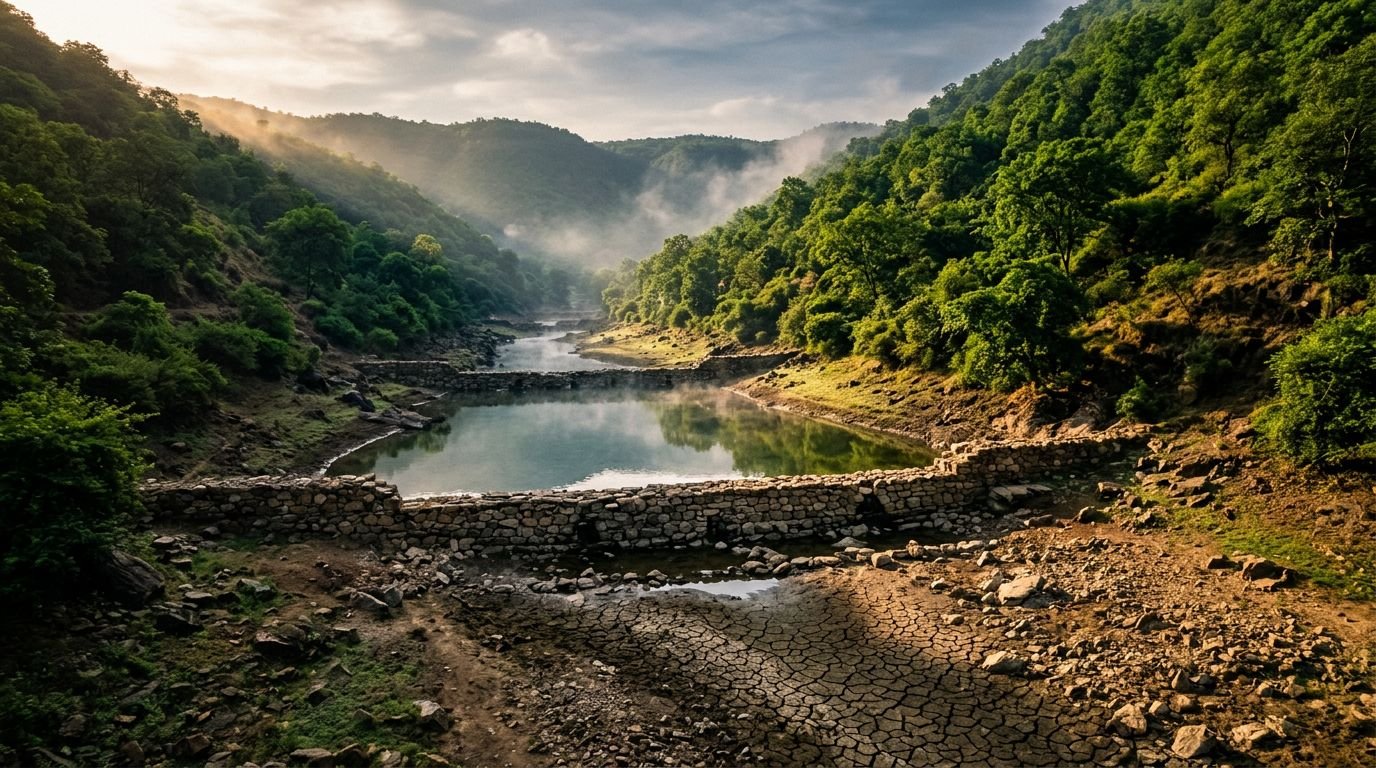
A single small barrier may not wreck a river. A staircase of them often does. When check dams are stacked across seasonal rivers, each one slows, stores, and fragments water that would otherwise travel downstream.
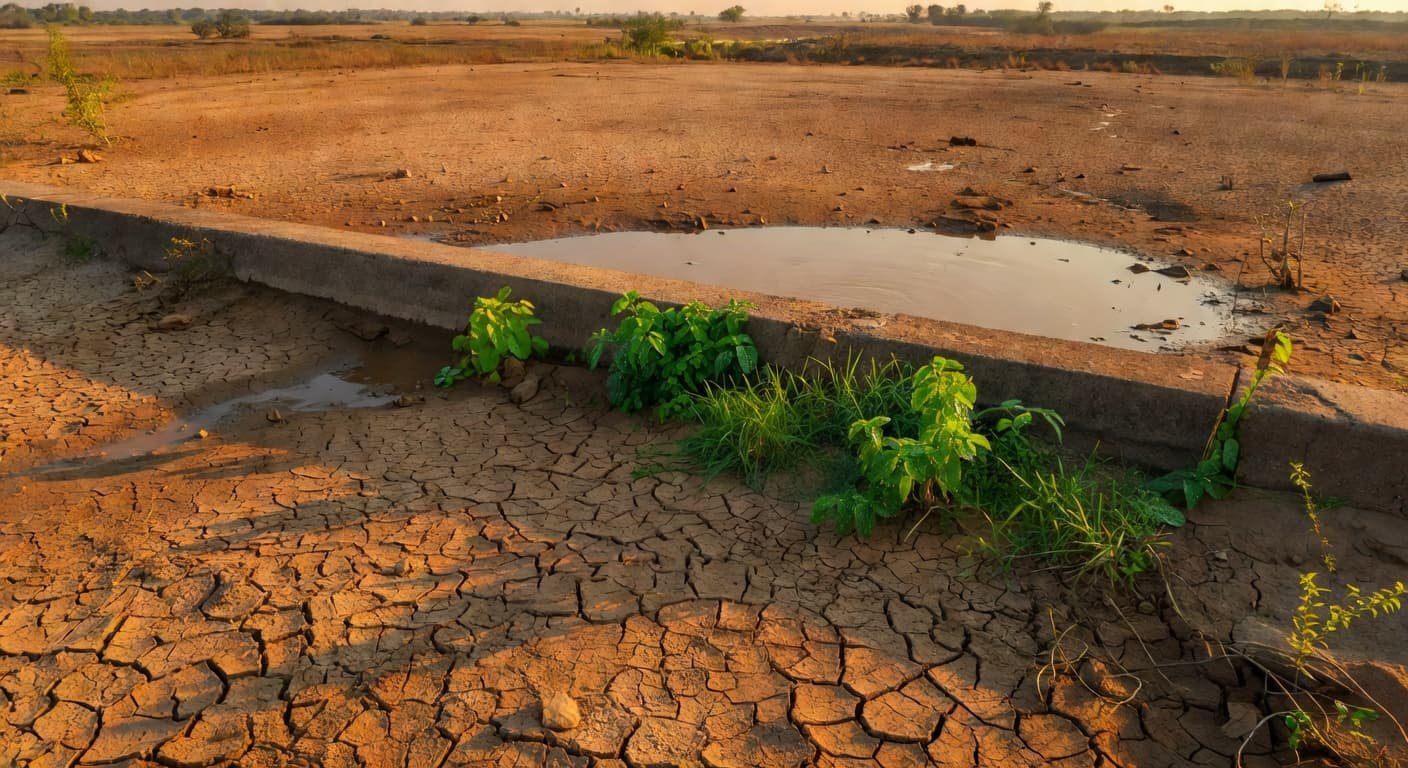
In a monsoon system, timing is everything. Water that arrives late, weakly, or in smaller pulses can miss breeding cycles, fail to wet side channels, and leave lower reaches dry for longer. Because seasonal rivers already flow for limited periods, even small reductions downstream can have outsized effects.
Fragmentation is another problem. Each check dam turns one connected channel into a series of interrupted pools and dry gaps. A report on dam fragmentation and fish losses describes how barriers disrupt fish movement, seasonal flow cues, and downstream oxygen conditions across tropical systems. Small structures do not get a free pass simply because they are small. If there are enough of them, the river still breaks apart.
The pattern is easier to see side by side.
| River condition | Natural seasonal flow | River with many check dams | Why it matters |
|---|---|---|---|
| Monsoon pulse | Water moves in bursts downstream | Flow gets delayed and split into pockets | Wetting cycles weaken |
| Sediment travel | Sand and silt spread along the channel | Sediment settles behind walls | Floodplains lose replenishment |
| Habitat link | Fish and invertebrates move with water | Pools become isolated | Breeding and feeding routes break |
| Dry-season support | Subsurface moisture persists downstream | Lower reaches dry sooner | Wells and riparian plants suffer |
The takeaway is not that all slowing is bad. Rivers need roughness, floodplains, wetlands, and recharge zones. The problem is excessive interruption inside the active channel, especially when no one studies cumulative effects across the full basin.
Sediment is not waste, it is the river’s working material
Water gets most of the attention, but sediment does half the work. Sand, silt, and fine organic matter build bars, feed floodplain soils, hold moisture, and shape the shallow aquifers that many communities tap through hand pumps and open wells.
Check dams trap that material upstream. In some cases, that helps stop severe erosion in a gully. But across seasonal rivers, repeated trapping can strip downstream reaches of the material they need to function. Research on sediment load reduction under check dams shows how effective these structures can be at slowing runoff and sediment. That is useful in some landscapes, but the same effect can become harmful when applied too widely in active river channels.
A river without enough moving sediment changes shape. Sand beds thin out. Pools disappear faster. Banks may harden in some places and erode in others. Floodplain farms get less fresh silt after rains. Over time, the land can lose fertility, while shallow recharge weakens.
This matters a lot in India’s semi-arid belts, where river sand and subsurface flow often carry more survival value than visible surface water. Many communities rely on moisture hidden below the channel. When sediment no longer moves as it should, that hidden storage changes too.
There is also a politics to sediment. Upstream accumulation is visible and can look like success. Downstream depletion is harder to trace back to a line of small structures. Yet the cost shows up in pump depth, crop stress, and disappearing riverbank vegetation. If planning treats sediment as nuisance material, it misses how seasonal rivers actually work.
The social costs show up far from the concrete wall
Check dams are often sold as community assets. Sometimes they are. Still, communities are not one unit with one interest. Upstream users, downstream farmers, cattle owners, washer groups, fishers, and landless households depend on the same seasonal river in different ways.
That is why benefits and burdens rarely fall evenly. A structure that improves water access near one village can reduce shallow well recharge in another. A ponded stretch behind a wall may help one landowner irrigate, while a lower hamlet loses the short monsoon flow it needed for open wells and grazing patches.
Women and girls often absorb these losses first, because they spend more time fetching water, managing household use, and adjusting when a nearby source fails. That labor rarely appears in project reports. Neither do lost fishing days, damaged commons, or higher spending on pumps and tanker water.
The political problem is visibility. The wall is visible. The missing seepage three kilometers away is not. A river reach that now dries two weeks earlier may never enter an official file. Yet that small shift can mean less water for kitchen gardens, more conflict over borewells, or a crop that does not make it to harvest.
This is where climate literacy has to grow up. It is not enough to know that rainfall is becoming less reliable. People also need to understand how poorly planned adaptation can move harm around. For climate-anxious young readers, that is a hard truth. A project can use green language and still push risk onto quieter communities.
Why policy often gets the diagnosis wrong
Public works often reward building over listening. The common metrics are simple: how many structures were built, how much water was “harvested,” how much money was spent. Those numbers say little about downstream flow days, fish movement, floodplain moisture, or who lost access.
Small barriers also slip past scrutiny. Large dams attract debate, lawsuits, and long reports. Chains of check dams usually do not. Yet cumulative damage can still be serious when many structures sit in one watershed. Seasonal rivers get the weakest protection because they are still treated as secondary, expendable, or empty outside the monsoon.
That is where Systemic change matters. Good policy has to ask river-scale questions, not wall-scale ones. How many barriers already exist upstream? What is the total effect on sediment? Which hamlets use downstream subsurface flow? What happens in a weak monsoon year, not only a normal one?
The same logic appears in a circular economy. A good system tracks where material enters, where it gets held, and where loss occurs. The same is true in sustainable business models that measure waste, leakage, and long-term cost, not only short-term output. Water planning should work with that level of accountability.
Personal choices still matter. Plant-based living can reduce pressure on land and water, and everyday mindfulness can change how people consume. But a blocked seasonal river will not recover because individuals bought less or worried more. Structural mistakes need structural fixes.
What better water stewardship looks like
India does not need a blanket ban on check dams. It needs sharper rules about where they belong, how many are too many, and what must remain free to flow. The better path starts with the river, not with a ready-made template.
First, planners should map the whole watershed before placing new barriers. That means counting existing structures, studying seasonal flow timing, and measuring likely downstream loss. Next, states should prefer off-channel recharge, floodplain restoration, farm ponds in suitable places, and wetland repair where those options can store water without cutting the active river into pieces.
A few practical safeguards would make a big difference:
- Cap the density of check dams within one stream reach.
- Keep some stretches barrier-free for flow, fish movement, and sediment travel.
- Study downstream wells, commons, and farming before approving new walls.
- Audit each project’s full ecological impact, not only local water storage.
Community review also needs to change. Consultations often happen after the design is already chosen. Downstream users need a real voice early, especially women, tenant farmers, and those who depend on commons rather than private borewells.
This is also where public trust matters. Readers who want field-verified work with tangible community impact can Explore Our Active Missions. That kind of on-the-ground accountability matters for urban biodiversity, local restoration, and youth climate literacy projects alike.
The deeper lesson is simple. Good water stewardship is not anti-infrastructure. It is anti-shortcuts. When a seasonal river needs help, the first move should be to understand its rhythm, not to interrupt it by default.
Conclusion
A small wall across a stream can look harmless. Yet seasonal rivers in India depend on movement, sediment, and timing more than most policy frameworks admit.
When check dams multiply without basin-wide planning, they often redistribute water upward and pain downward. The strongest response is systemic accountability, where projects are judged by river health and community outcomes, not by the number of structures built.
The river that looks dry for part of the year is still doing work. Water policy should start there.