Nitrogen Overflow and the Ocean Dead Zones We Built
 Saket Sambhav
Why too much fertiliser does not stay on the farm, and why the sea pays the price.
Fertiliser helps crops grow. That part is true. The part industry prefers to mumble is this: when farms use more nitrogen than crops can absorb, the surplus doesn’t vanish. It moves.
It slips into drains, rivers, estuaries, and then coastal seas, where it helps build “dead zones”, patches of water so low in oxygen that fish, shellfish, and many other species can’t survive there for long.
That is not some distant marine science problem. It hits food supply, fishing jobs, tourism, and coastal communities that had no say in what was spread on a field hundreds of kilometres away.
The ocean problem starts on land, and the chain is brutally simple.
How excess nitrogen leaks from fields into the sea
What nitrogen does when crops cannot absorb it all
Nitrogen is plant food. In the right dose, at the right time, it helps produce wheat, maize, rice, and soy.
In the wrong dose, it becomes pollution with a subsidy.
Crops can only take up so much. If fertiliser is applied before heavy rain, onto waterlogged soil, or in quantities that exceed crop demand, the unused nitrogen escapes the root zone.
- Some of it turns into gases.
- Some of it dissolves into water as nitrate.
- Some of it sits in soil until the next storm shifts it.
That means the problem isn’t only “too much fertiliser”. TIMING matters. Soil health matters. Application method matters.
A farm with weak soil structure and bare ground loses more than a farm with better cover, stronger organic matter, and tighter nutrient planning.
And this is not guesswork. A 2026 Nature Water study on urea pollution linked the world’s most common nitrogen fertiliser to extreme eutrophication in North American surface waters.
Put plainly, common practice is contaminating common water.
Why rivers and estuaries become the delivery route
Once nitrogen leaves the field, water becomes the courier. Field drains, ditches, canals, streams, groundwater, rivers, then estuaries, then sea.
It is a supply chain, only this one delivers DAMAGE.
Some of that nitrogen travels after a single storm. Some builds over months and years, stored in soils and groundwater before reaching larger waterways.
That is why dead zones are not freak events caused by one bad week of weather. They are the outcome of repeated oversupply in a system built to treat loss as normal.
What a dead zone is, and why marine life cannot survive there
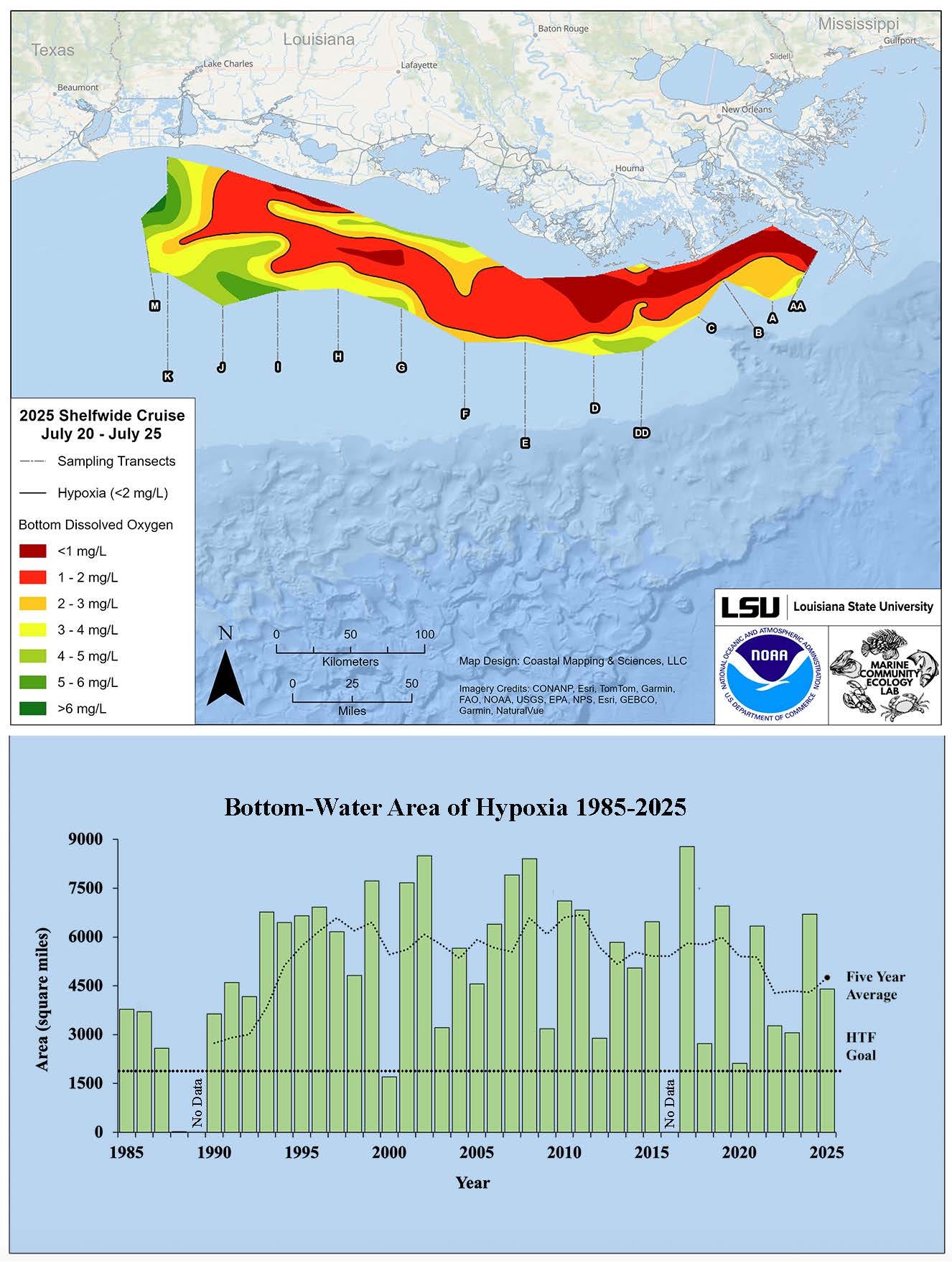
A dead zone is an area of water with oxygen levels so low that many marine species either flee or suffocate.
The scientific term is hypoxia. The real-world meaning is simpler: a place where life gets pushed out.
The algae boom that starts the collapse
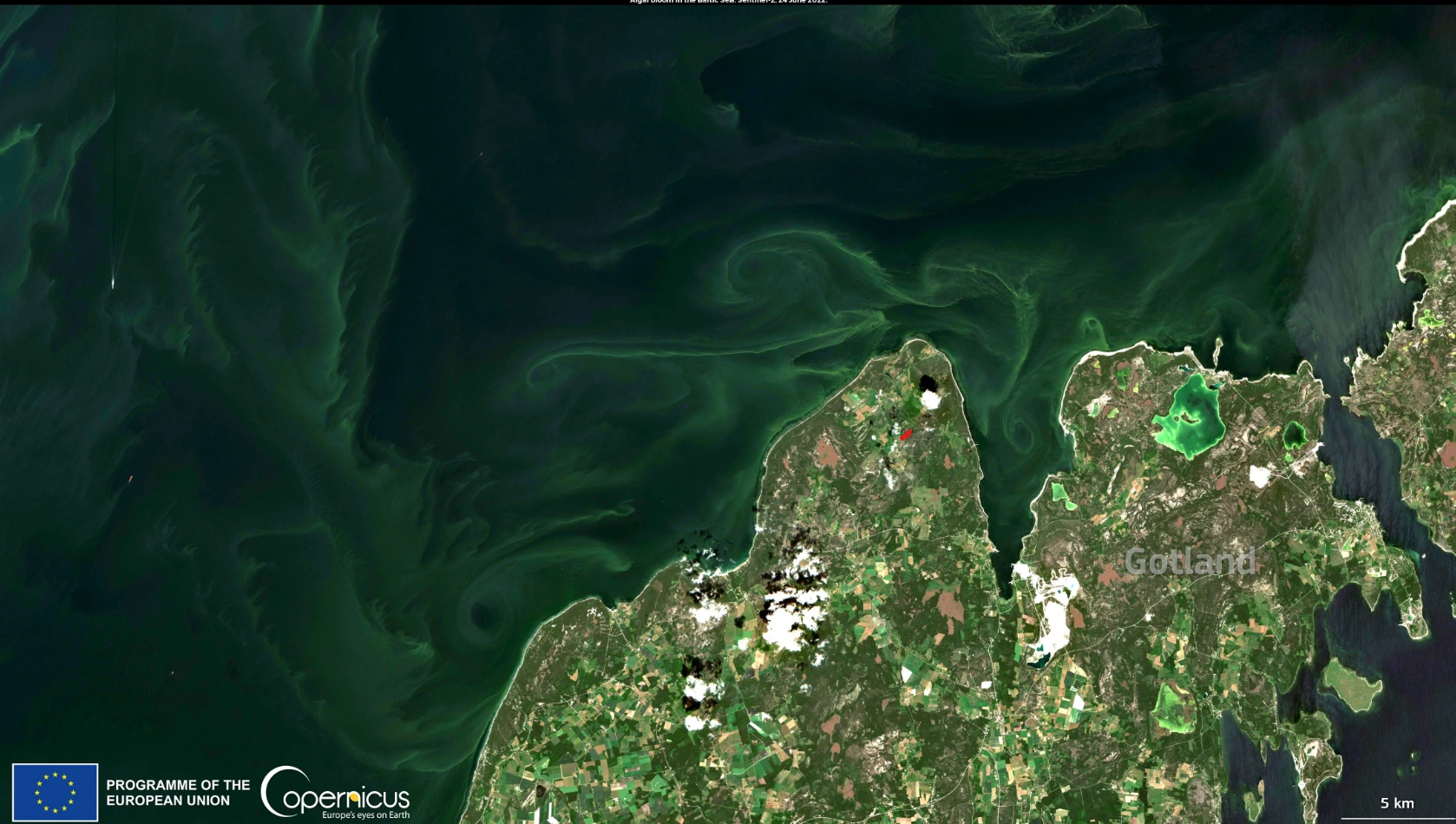
When excess nitrogen reaches coastal water, algae feast on it. Growth explodes. Blooms spread across the surface, turning water murky and cutting off sunlight from seagrass and other underwater plants.
The US EPA’s explanation of dead zones and algal blooms lays out the sequence plainly. Nutrient overload fuels algae, algae block light, and the whole food web starts to wobble.
What looks green and productive from above is often the start of ecological failure below.
How decaying algae steals oxygen from the water
Algae blooms do not last. They die, sink, and rot. Then bacteria move in to break that material down, and in doing so they consume dissolved oxygen in the water.
If oxygen falls fast enough, fish cannot stay. Crabs struggle. Bottom-dwelling species get trapped. Shellfish don’t have the option to swim for it.
Warm water makes the situation worse because it holds less oxygen to begin with.
Dead zones are not empty by accident. They are engineered by nutrient overload.
This is why the phrase “too much fertiliser” matters. It isn’t about a bit of extra growth in one field. It is about triggering a chain reaction that ends with marine habitats turning into ghost water.
Why dead zones hit people, not just wildlife
The losses are human as well as ecological.
- Fisheries shrink or shift.
- Boats travel farther.
- Catches become less reliable.
- Waterfront towns lose income.
- Restaurants, processors, and seasonal workers all feel it.
There is a public health angle too. Nutrient pollution can worsen harmful algal blooms, which raise water treatment costs and create risks for nearby communities.
So the same nitrogen that boosts short-term yield can raise long-term costs somewhere else.
The hidden cost of cheap fertiliser and high-output agriculture
This is where the business logic gets ugly. Nitrogen overuse is a classic externality.
The farm or agribusiness captures the upside of extra yield insurance. The public absorbs the downside of polluted rivers, damaged fisheries, and water clean-up.
Why farmers are pushed to overapply nitrogen
Many farmers are not acting out of ignorance. They are responding to incentives. If a crop comes up short on nitrogen, yields can drop and margins can disappear.
In a volatile market, overapplication looks like risk management.
The system nudges that choice. Input sellers profit from volume. Buyers reward output, not nutrient efficiency.
Regulation is often weak, delayed, or written to be politely ignored. More nitrogen gets framed as prudence, even when the response curve is flattening and most of the extra input is waste.
Animal agriculture sharpens the problem. Feed crops for livestock consume huge fertiliser loads, and manure adds another stream of nitrogen to land and water.
Cheap meat and dairy are not cheap. The bill is split, hidden, and pushed downstream.
Why the real bill gets paid by the public
Water treatment, habitat restoration, fishery losses, and biodiversity decline all carry a price. Taxpayers pay part of it. Coastal workers pay part of it. Future food systems pay part of it.
A PNAS analysis of food-system nitrogen deposition found that reducing fertiliser overuse, without lowering yields, could cut oceanic nitrogen deposition from food production by 19%.
That matters because it kills the lazy excuse that pollution is the unavoidable price of feeding people. It isn’t. Waste is a management failure.
For leaders, founders, and professionals, the lesson is blunt: if your model only works by exporting harm to ecosystems and communities, it is not efficient. It is dishonest.
Conclusion
Dead zones are not a mystery of nature. They are a traceable result of decisions about fertiliser, livestock, land management, and regulation.
We know the chain. We know where it starts. We know enough to cut nitrogen waste without gutting food production.
That means better soil management, tighter nutrient planning, fewer chemical inputs where they are not needed, and a food system that stops treating rivers and seas as free waste infrastructure.
Accountability has to reach governments, agribusiness, investors, and consumers alike.
If you want your ethics, performance, and climate choices to line up, Join the Better Human Project.