
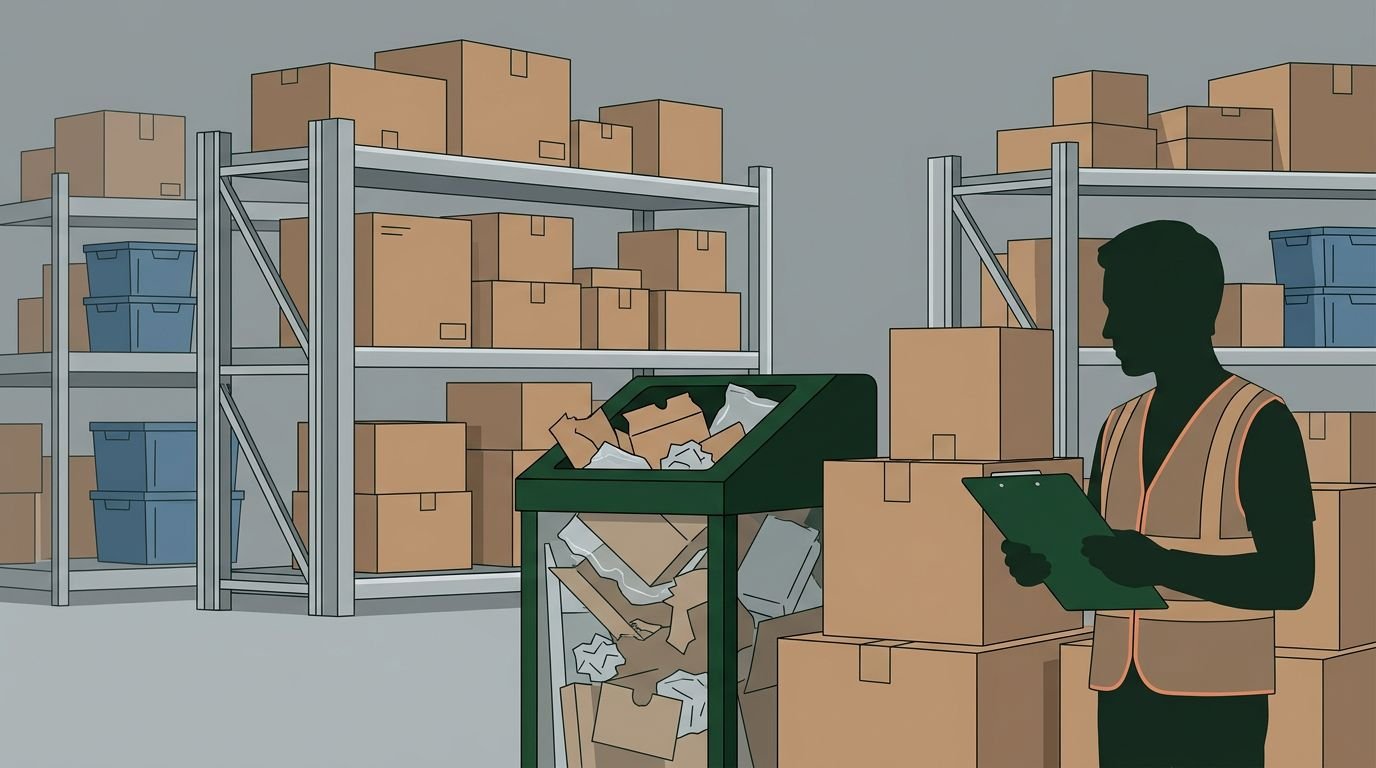
Run a Packaging Waste Audit in One Workday
 TBH Editorial
A packaging waste audit sounds bigger than it is. People hear “audit” and picture clipboards, consultants, and a month of meetings. In practice, you can get useful answers in one ordinary workday.
If you’re running operations, warehousing, procurement, or sustainability, you don’t need perfect data to spot waste. You need a clear method, a normal day, and the discipline to look at what your site throws away, not what everyone assumes it throws away.
TL;DR: Pick one normal workday, one site, and one clear boundary. Sort packaging waste by type where it shows up, weigh or count it, note why it became waste, then finish the day with three actions you can own. Don’t chase precision theatre. Chase patterns you can fix.
Start with a one-day audit plan that isn’t bloated
The fastest way to ruin a packaging waste audit is to make it too ambitious. Don’t try to cover every building, every supplier, and every shift in one go. Audit one site, one day, and one slice of the operation that matters most.
For most businesses, that slice is one of three places: inbound goods receipt, order packing, or returns. Pick the area with the highest material flow or the loudest complaints. If the packing benches are drowning in void fill and tape, start there. If inbound pallets arrive wrapped like they’re crossing an ocean, start there instead.
A simple timetable keeps the day moving:
| Time | What to do | What to capture |
|---|---|---|
| 08:30 to 09:00 | Brief the team and set the audit area | Scope, staff involved, waste categories |
| 09:00 to 12:00 | Observe waste as work happens | Material type, source, rough volume |
| 12:00 to 13:00 | Sort and weigh the first batch | Weight or counts by material |
| 13:00 to 15:30 | Repeat during the second half of the day | Causes, repeat issues, photos |
| 15:30 to 16:30 | Tot up results and review with the team | Biggest waste streams, quick wins |
| 16:30 to 17:00 | Agree next steps | Owner, timescale, next review date |
The point isn’t scientific perfection. The point is a clean snapshot of reality.
Before the day starts, define your categories. Keep them plain: corrugated cardboard, paper fill, plastic film, bubble wrap, mailer bags, tape, labels, pallets, and damaged packaging. If you create 19 categories, people will stop using them by mid-morning.
Audit a normal day, not your tidiest day. If stocktake, a supplier issue, or a quiet bank holiday week will skew the flow, pick another date.
Set up your audit station before the bins fill up
Good audits are won before the waste shows up. If people don’t know where to put material, you’ll spend the day digging through mixed bins and guessing. That’s not data, that’s archaeology.
Create one audit station near the work area, not in a distant corner no one uses. You need space for separated piles or containers, a scale if you have one, gloves, a marker, and one recording sheet. A basic floor scale is ideal. If you don’t have one, use a bench scale for smaller items and count bulky materials by unit or bag. Counted data is better than no data.

Ask one person to own the sheet for each area. Not because they need to do all the work, but because split ownership turns into no ownership. Keep the form short enough that a busy supervisor will still use it.
Record four things for each waste stream:
- What the material is
- Where it came from
- How much there is, by weight or count
- Why it became waste
That last point matters most. Cardboard in a bin tells you very little. “Cardboard outer box removed because the inner unit is shelf-ready” tells you something useful. “Plastic pillows added by supplier, then removed before repacking” tells you where to push next.
Talk to the people doing the handling. They know the ugly truth. They’ll tell you which cartons arrive over-packed, which tape fails, which box sizes force extra void fill, and which returns arrive unsellable because the original packaging was flimsy. If you skip those conversations, you’ll get numbers without reasons, and reasons are where savings live.
Track waste where it appears, not hours later
A common mistake is to wait until the end of the day and sort whatever made it into the main recycling area. That loses context. You need to see waste at the moment it happens.
Follow the packaging through the process. At goods-in, watch what comes off each pallet. At the packing bench, note which box sizes people reach for and how much fill they add. In returns, look for repeat damage patterns. Is the issue weak boxes, poor sealing, or products moving inside transit packs like loose change in a pocket?
Work in short observation bursts. Fifteen to twenty minutes per zone is often enough to spot patterns. Then step away, record what you’ve seen, and come back later during a busier spell. Waste changes with volume. A calm hour can lie to you.
Use simple conversions if you need them. If film wrap is hard to weigh in real time, count full sacks and weigh one sample sack later. If cardboard is flattened into cages, weigh the whole batch at lunch and again before close. Don’t get stuck because the method isn’t perfect.
You’ll usually find one of four root causes:
- Packaging arrives heavier than the product needs.
- Staff use the wrong pack format because the right one is awkward or missing.
- Repacking happens twice, once inbound and once outbound.
- Damage or picking errors create waste that looks like packaging waste but starts elsewhere.
That last one catches people out. If returns are rising because products are badly protected, the waste is not “too much cardboard”. The waste is damage, rework, replacement packaging, and extra transport. The box is only the visible bit.
If you can, tie your findings to order volume. A figure like “0.18 kg of packaging waste per order packed” is far more useful than “we filled three cages”. It lets you compare days, shifts, or sites without hand-waving.
Turn one day’s findings into actions that stick
By late afternoon, you’ll have a messy floor, a few filled sheets, and probably one awkward truth. Good. That means the audit worked.
Now sort your findings into three buckets: remove, reduce, and replace. Remove packaging that adds no value. Reduce packaging that is oversized or duplicated. Replace materials that do the job badly or create avoidable disposal headaches.
Start with the easy wins. If one supplier wraps every pallet with three layers of film when one would hold, that’s a conversation for procurement. If staff use oversized cartons because the right sizes are stored too far away, that’s a layout fix. If labels and tape contaminate otherwise clean cardboard, that’s a segregation and training issue.
Then look for the bigger prize. Ask blunt questions:
- Which waste stream showed up most often?
- Which one took the most space?
- Which one costs the most to buy, handle, or dispose of?
- Which cause can we fix without changing the whole operation?
This is where many audits drift into theatre. People produce a pretty slide deck, then nothing changes. Don’t do that. End the day with three actions, one owner for each, and one review date within 30 days.
A useful action looks like this: “Trial two smaller carton sizes on bench three for 10 working days, owned by warehouse supervisor, reviewed on 12 Jun 2026.” A useless action looks like this: “Improve packaging efficiency.”
If you want buy-in, show one photo, one number, and one operational headache. For example, “We discarded 42 kg of plastic film in one day, mostly from inbound pallets from two suppliers, and it blocked the waste bay twice.” That lands better than a sermon about sustainability.
One final point. Repeat the audit after you make changes. A one-day packaging waste audit is a snapshot, not a trophy. Run the same method again and see if the waste curve moved. If it didn’t, your fix was cosmetic.
Conclusion
A one-day audit works because it forces honesty. You stop talking about packaging waste in the abstract and start seeing what your site throws away, why it happens, and what can change first.
The strongest result isn’t a neat spreadsheet. It’s clarity. Once you know the biggest waste stream and its cause, you can cut material, reduce handling, free up space, and make better supplier decisions without launching a six-month project.
If that work grows into a broader push on waste and environmental impact, Contribute to Active Missions backs practical field action, including zero-leakage interventions where 100% of funds go to the field. Start with one workday. That’s often all it takes to see the problem properly.