Bus Stop Shade Standards India Needs Now
 TBH Editorial
A bus stop without proper bus stop shelters is not public transport infrastructure. It is a place where people are asked to absorb heat, exhaust, dust, and delay before their journey even begins.
In Indian summers, the person waiting for a bus is often standing on exposed concrete beside moving traffic. They may be a student, a delivery worker, an older commuter, or someone carrying a child. Bus stop shade standards India should adopt must treat passenger comfort and safety as a core design requirement, rather than a decorative extra.
The question is no longer whether cities can afford to provide adequate protection from the elements. It is whether they can continue to treat dangerous heat exposure as a normal part of the daily commute.
Key Takeaways
- A roof alone does not make a bus stop safe. It must provide effective weatherproofing and block direct sun while allowing hot air to escape.
- Shade standards should measure thermal comfort, not only shelter size or number of installed structures.
- Trees, reflective materials, seating, drinking water, lighting, and accessible boarding all belong in the same public-health plan.
- Heat protection must reach low-income and high-footfall areas, not only showcase corridors.
- Better bus stop shelters can support urban biodiversity, safer walking, and public trust in mass transit.
Waiting for a bus should not feel like punishment
Heat changes who can use public transport. If you have a car, you can wait inside it. If you can afford a cab, you avoid the pavement. Everyone else stands outside, often with no escape from the afternoon sun.
That is not an inconvenience. It is an inequality built into standard city design.
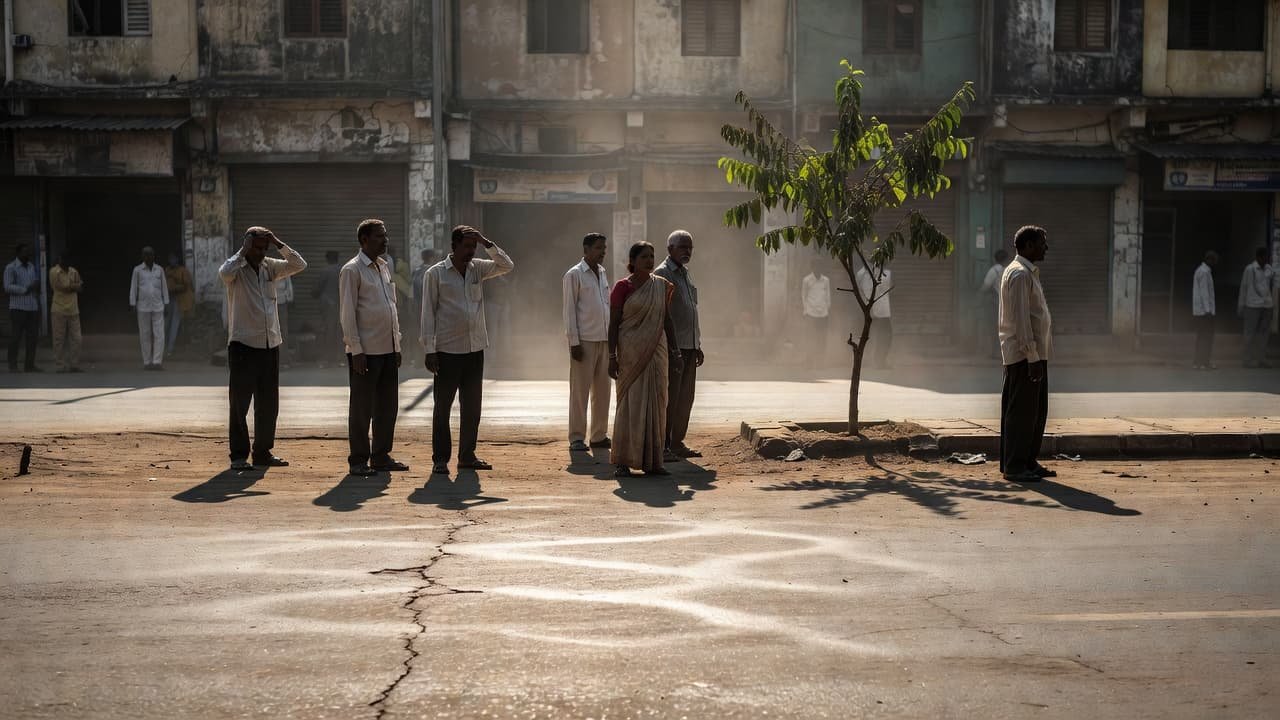
Recent reporting on Delhi’s bus stops found ground temperatures reaching 65 degrees Celsius at exposed locations. The same city has thousands of stops, yet shelter coverage is uneven. In parts of Northeast Delhi, the gap is impossible to ignore. A bus network cannot call itself inclusive if its riders must first survive the wait, and the lack of proper bus stop shelters creates a clear accessibility barrier.
A person waiting 20 minutes in direct heat may arrive at work already exhausted. Someone with asthma may be standing beside diesel fumes. An older person may avoid the trip entirely. A parent with a child cannot always choose a different route.
Public transport is only as accessible as the place where people wait for it.
Heat also does not act alone. Unshaded stops often sit beside broken pavements, loose road dust, traffic noise, and poor drainage. During the monsoon, that same hard surface turns into a puddle or a muddy edge. During dry months, passing buses lift settled particulate matter back to breathing height.
Research on bus shelters and extreme weather shows that a well-designed bus stand shelter can help protect people from heat, rain, air pollution, and accessibility barriers. But the structure must be designed for real conditions. A thin metal roof placed too high above an open pavement may cast little useful shade at noon. A closed shelter can trap hot air like a parked car.
The bus stop is a small piece of city infrastructure. Yet it reveals whether a city designs for people or merely installs objects.
What bus stop shade standards in India should measure
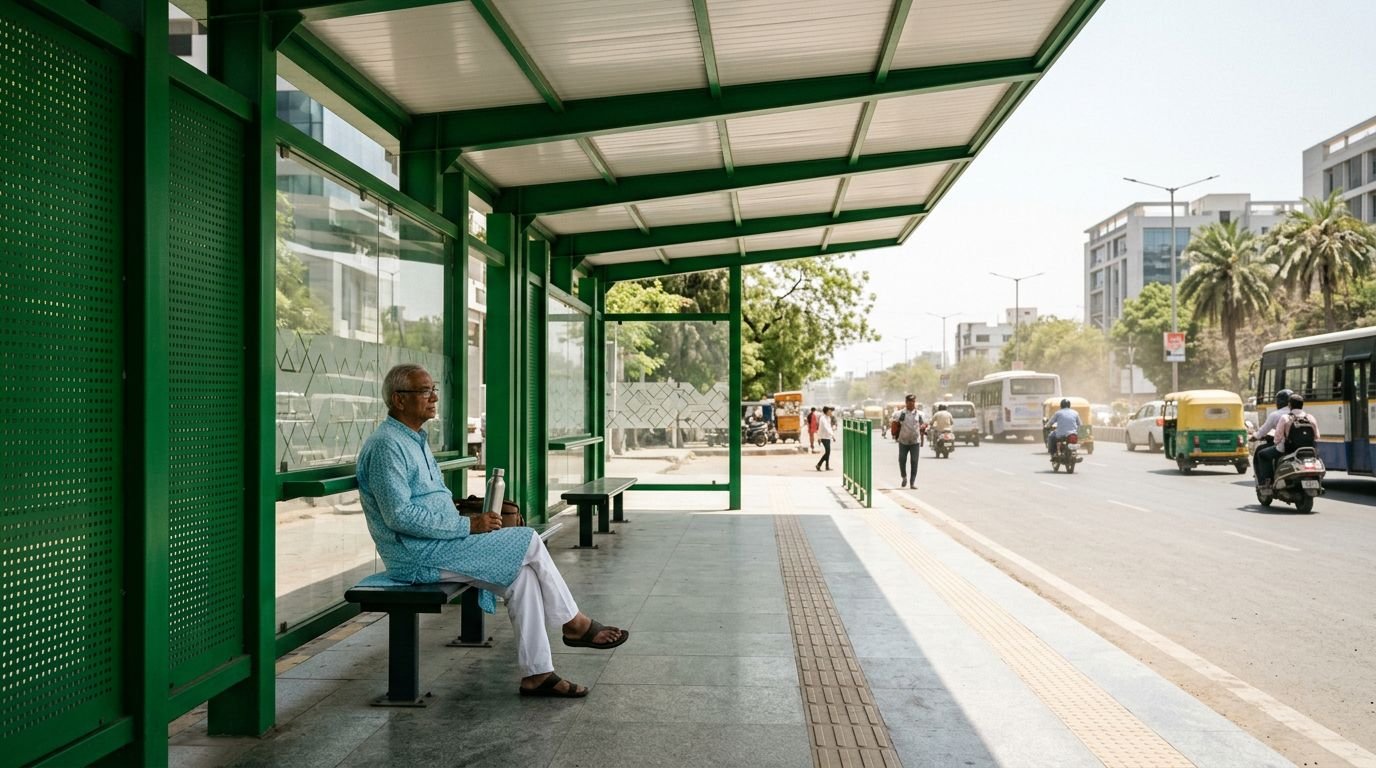
India already has specifications for bus shelters that guide infrastructure development. The IRC 80:1981, amended in 2022, sets size categories for roadside bus stops, and official MoRTH design guidelines provide further technical context for these public assets. A larger Type A stop, for example, calls for an 8 by 4 metre covered shelter. Those dimensions matter, but they do not answer the central question: Does the shelter keep people thermally safe at 2 pm in May?
A shade standard should set performance targets, not only construction dimensions.
| Design question | Weak requirement | A people-first standard |
|---|---|---|
| Roof design | Any covered roof | Shade across the waiting area during peak sun |
| Roofing material | Dark metal or clear sheets | Low-heat, reflective roofing material |
| Structure material | Minimalist/Heat-absorbing | High-durability, low-heat structure material |
| Air flow | Fully enclosed sides | Open sides and cross-ventilation |
| Seating capacity | Optional bench | Adequate seating capacity with priority space for older people and disabled riders |
| Surface | Bare asphalt or concrete | Cooler, non-slip paving with drainage |
| Green cover | Decorative planter | Protected tree canopy where space allows |
The first test should be simple. At the hottest time of day, can someone wait there without standing in direct sun? If the answer is no, the structure has failed its basic job.
Thermal comfort also needs local measurement. Cities should use air temperature, surface temperature, humidity, solar exposure, and Wet-Bulb Globe Temperature, or WBGT, when they assess stops. WBGT matters because it accounts for heat stress beyond the number shown on a weather app.
Research shared by UTHealth Houston found that tree shade reduced heat stress by nearly six degrees Fahrenheit in bus-stop conditions. That is a meaningful difference for someone waiting every day. The findings on tree shade and bus shelters make an obvious point that city tenders often miss: shade has to work, not merely appear in a project photo.
Shade standards should also account for bus frequency. A sheltered stop built for a five-minute wait is inadequate where buses arrive every 25 minutes. Crowded corridors need larger shaded areas, more seats, clear route information, and space for people to queue without spilling into traffic.
Trees and roofs must work together
Planting a sapling beside a bus stop is not the same as providing shade. A young tree needs years, water, root space, and protection from road works before it can cool a pavement.
Still, mature tree canopy is one of the most useful forms of public cooling a city can protect. It shades people, lowers surface temperatures, filters some dust, and gives birds and insects a place to live. Remove those trees for road widening, then replace them with a hot metal shelter, and the ecological impact is obvious even if the project report calls it progress.
A practical standard should require cities to first protect existing canopy near stops. Where new planting is possible, planners need species suited to local soil, rainfall, root space, and maintenance capacity. Trees cannot be squeezed into a tiny concrete box and expected to fix a heatwave.
Roof design matters too. While many shelters are built using stainless steel, galvanized steel, or mild steel for their durability, the choice of structure material is critical to thermal performance. Common additions like a polycarbonate sheet roof can often trap heat rather than block it. Instead, planners should prioritize high-reflectance materials to reduce heat absorption. Deep overhangs can block low-angle morning and evening sun, while open sides allow air to move through the shelter. Solar panels may power lighting or fans, but they should not become an excuse for a roof design that traps heat below it.
Ahmedabad’s Cool Bus Stop at Lal Darwaza offers a useful example. The project, involving Mahila Housing Trust and Ahmedabad Municipal Corporation, combined a cool roof with misting. Misting is not a universal answer. It needs water, maintenance, and careful operation in humid conditions. Yet the project at least takes thermal relief seriously instead of pretending that a standard steel shed is enough.
A study of nature-based cooling at bus shelters found that climate-responsive shelters are feasible in hot, dry places. Indian cities do not need to copy one design everywhere. They need to stop copying designs that clearly fail.
Good shade is a public-health and mobility issue
When stops are hostile, people shift away from buses if they can. That means more two-wheelers, more cars, more fuel burned, and more road space handed to private vehicles. The city then adds flyovers, removes trees, and wonders why pavements feel unbearable.
This is where systemic change matters. A bus stop contract cannot sit apart from heat action plans, road design, tree protection, fleet frequency, and disability access. Each department may have a separate budget, but the commuter experiences one street.
Cities should make a few non-negotiable changes:
- Audit every stop during peak summer hours, requiring each bus shelter manufacturer to submit performance data that is published ward by ward.
- Prioritise uncovered stops near hospitals, schools, markets, industrial areas, and low-income neighbourhoods.
- Include shade performance, repair response times, and tree survival in contractor payments.
- Install drinking water where high footfall and local maintenance make it viable.
- Keep pavements continuous so wheelchair users, parents with prams, and older people can reach the shaded area safely.
This is also a circular economy issue. Shelters should use durable components that can be repaired instead of discarded after a few monsoons. Whether a city opts for a modular bus shelter or a prefabricated bus shelter, the design must prioritise longevity. Standardised bolts, replaceable panels, locally serviceable lights, and repairable seating create less waste than one-off structures that rot in place. By focusing on products that are made in India, cities can ensure that spare parts are easily accessible, fostering local supply chains rather than relying on imported, non-repairable designs.
Cities often celebrate sustainable business models while overlooking the basics. A company can sponsor an electric bus and still advertise beside a stop where riders stand on burning pavement. Real sustainable business models pay for maintenance, not only installation. Every responsible bus shelter manufacturer should be incentivised to fund shade audits, water points, tree care, and accessible waiting areas.
The values behind plant-based living, climate literacy, and everyday mindfulness are not private lifestyle badges. They should sharpen our view of public systems. If we understand heat, pollution, and ecological debt, we should notice who has no shaded place to wait.
Community action can push this further. Residents can photograph exposed stops during peak heat, track damaged roofs, report removed trees, and ask ward officials where shade targets are published. People who want to connect public accountability with on-the-ground restoration can Explore Our Active Missions.
Frequently Asked Questions
Why are current bus shelters in India often ineffective during extreme heat?
Many existing shelters are built with heat-absorbing materials like dark metal or low-quality polycarbonate, which trap heat rather than providing relief. Additionally, designs often lack adequate cross-ventilation or deep overhangs, failing to block direct sunlight or allow hot air to escape from the waiting area.
How can tree canopy be better integrated into bus stop design?
Cities should prioritize protecting existing mature trees near transit points rather than removing them for road expansion. Where space permits, new plantings should use species suited for local soil and provide shade, ensuring that these natural assets are treated as essential infrastructure rather than just decorative elements.
What should cities prioritize when auditing their bus stop infrastructure?
Urban planners should conduct thermal comfort audits during peak summer hours, focusing on surface temperatures and WBGT levels to identify the most dangerous spots. Priority for upgrades should be given to areas with high footfall, such as hospitals, schools, and low-income neighborhoods, to ensure the most vulnerable commuters receive adequate protection.
Shade is basic dignity at street level
A bus stop does not need to be glamorous. It needs to let people wait without being scorched, soaked, pushed into traffic, or left breathing dust beside an open road.
India’s cities cannot solve extreme heat with temporary tents each summer. They need shade standards that protect people every day, especially those with the fewest choices. Beyond just providing cover, the ideal stop relies on a sleek design that blends into the urban landscape without compromising utility. To ensure these spaces last, urban planners must prioritize sturdy construction capable of withstanding heavy daily use and unpredictable weather. Given the humidity and environmental stressors in many regions, incorporating materials with high rust resistance is essential for long-term maintenance.
A shaded stop says something simple: your time, body, and journey matter before you board the bus. Ultimately, prioritizing well-planned bus stop shelters is a fundamental step toward creating more inclusive, accessible cities for everyone.