Why India’s Desalination Brine Disposal Is Becoming a Crisis
 TBH Editorial
If you live in a water-stressed Indian city, desalination can sound like relief. Seawater goes in, drinking water comes out, and the taps keep running.
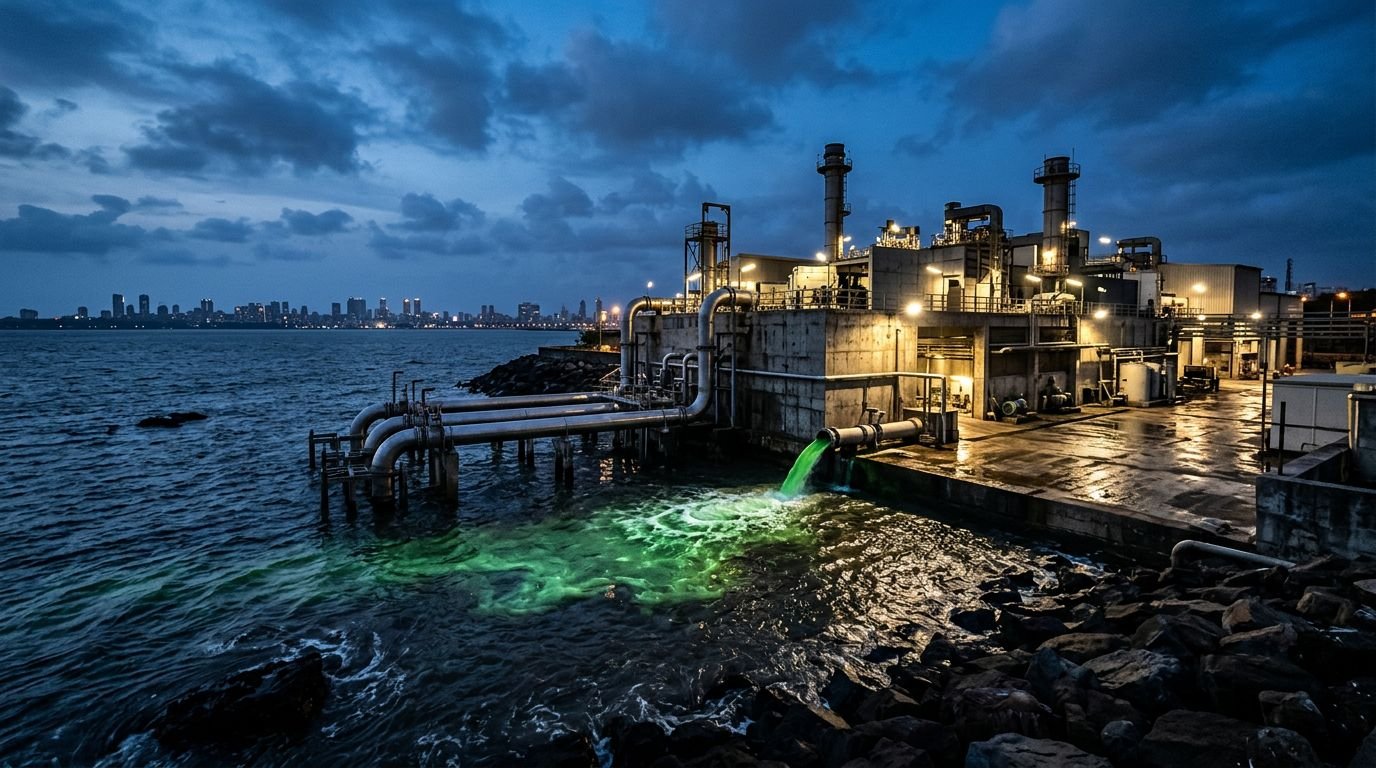
The trouble sits at the other end of the process. Desalination brine disposal turns every litre of fresh water into a second problem, a dense waste stream of salt, chemicals, and sometimes heat that usually goes back to the sea.
That discharge doesn’t disappear when it leaves the plant. It settles near coasts, estuaries, and fishing grounds, which is where the crisis starts.
Desalination solves one shortage by creating another
India’s water stress is real. Rainfall is uneven, groundwater is overdrawn in many regions, and coastal cities keep growing. Because of that, desalination has moved from a niche option to a serious part of urban water planning, especially in places that can’t rely on stable reservoirs year-round.
That logic is easy to understand. When drought hits and tanker prices rise, a seawater plant looks dependable. Research on India’s future water scarcity and desalination reflects that pressure. Desalination can add supply when rivers, lakes, and aquifers fail.
But desalination doesn’t erase scarcity, it reshapes it. A plant pulls in seawater, removes freshwater, and leaves behind concentrated brine. That leftover stream contains far more salt than the intake water. In many cases it also carries traces of treatment chemicals used to stop fouling, scaling, and biological growth inside the system.
Most Indian coastal plants still send that brine back into the ocean because ocean discharge is the cheapest disposal route. Current real-world reporting still points to the same fact: the issue is not solved, and sea discharge remains common. The risk is local, not global. No one is claiming the whole Indian Ocean turns salty. The problem is what happens in the zone where waste meets marine life.
That is why this is not only a water supply story. It is also a marine pollution story, a fisheries story, and a public accountability story. Fresh water gets counted. Waste often disappears into project fine print.
Brine is more than extra-salty water
The word “brine” sounds oddly harmless. It can bring to mind kitchen salt or preserved food. In a desalination plant, the picture is far less simple.
Brine is usually denser than surrounding seawater, so it tends to sink instead of mixing quickly at the surface. That matters because many sensitive organisms live on or near the seabed. Eggs, larvae, shellfish, worms, seagrass, and microbial communities don’t have the option to swim away from a salty plume that settles over them.
According to an overview of desalination’s environmental costs, the waste stream can also include chlorine residues, anti-scalants, cleaning agents, and metals from corrosion. Some systems release warmer water too. Salt alone is a stressor. Salt plus chemicals and heat creates a more complex burden.
The core problem is not that desalination makes fresh water. The core problem is that its waste stream is often treated as someone else’s problem.
This is where the ecological impact gets missed in public debate. People picture a clean exchange, sea water in and fresh water out. In reality, the process creates a concentrated residual that can alter salinity near the outfall, reduce habitat quality, and stress marine food webs.
Damage can stay hidden because it happens underwater and close to the discharge point. Yet local harm is still harm. A small patch of stressed seabed can matter if it overlaps with a nursery area, a shellfish bed, or a fishing zone used every day by coastal families.
So the argument isn’t “never desalinate.” The argument is simpler. If a plant needs the sea as its waste sink, the waste must count as part of the plant’s real cost.
Why India’s coastline is carrying the risk
India’s coastal waters are already under pressure. Many stretches near major cities deal with sewage, industrial discharge, dredging, port activity, sand mining, heavy fishing pressure, and underwater noise pollution. Brine enters that crowded picture, not an untouched one.
That matters because ecosystems do not absorb stress in neat, separate boxes. A fish nursery near an estuary may already be coping with murky water, less oxygen, and habitat loss. Add concentrated brine near the same zone, and the margin for recovery shrinks. The cumulative effect can be worse than any one discharge measured in isolation.
Cities such as Chennai have treated desalination as a safety valve during repeated water shortages. That response is understandable. Yet coastal planning often treats the plant as urban infrastructure and the sea as an open receiver. The community on land gets the water. The community at sea, fishers, shell collectors, coastal workers, and nearshore wildlife, absorbs the side effects.
This is also where urban biodiversity enters the discussion. It doesn’t stop at city parks or roadside trees. In coastal India, it includes estuaries, mudflats, mangroves, salt marsh edges, and nearshore habitats that support birds, fish, crabs, and pollinators linked to coastal vegetation. When those systems weaken, the damage doesn’t stay “offshore.”
Climate pressure makes the risk sharper. Warmer waters, irregular river flows, and extreme weather leave less room for careless discharge practices. Better climate literacy helps people see that water infrastructure and marine ecology are connected. Without that link, desalination keeps getting framed as a neat technical fix when it is really a trade-off.
The result is a quiet transfer of burden. Coastal cities gain water security on paper, while nearshore ecosystems take on a growing share of the cost.
The hidden cost of freshwater production
Much of the brine crisis stays invisible because outfalls are out of sight. Pipes extend offshore, discharge models sit inside reports, and the public rarely sees continuous data on what happens after release.
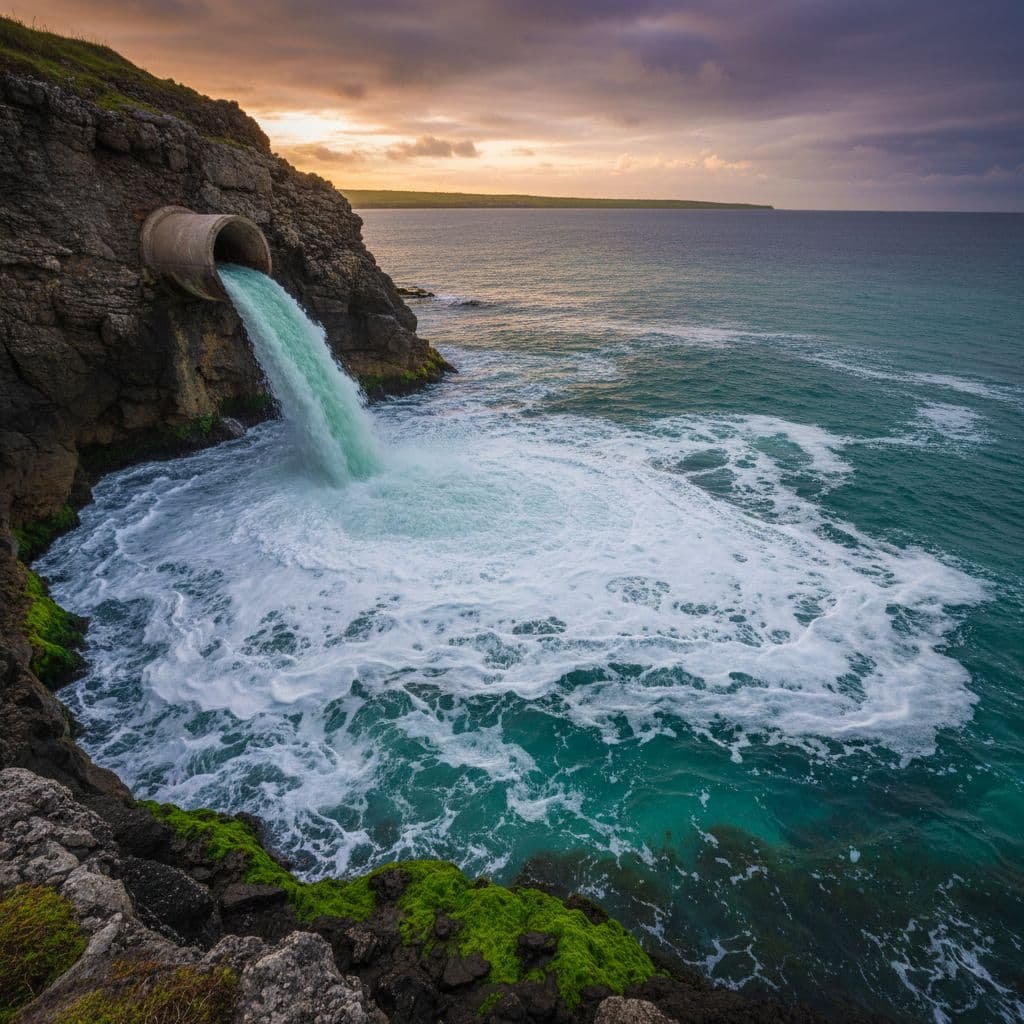
Project approvals often focus on whether the outfall design should dilute the waste enough under expected conditions. That sounds reasonable until real coastlines behave differently than ideal averages. Tides shift, currents slow, storms change seabeds, and low-mixing periods can leave dense saline water pooled near the bottom.
Averages also hide the wrong things. If a monitoring report shows acceptable results over a broad area, it may still miss the small, biologically rich zones that matter most. A patch of seagrass or benthic habitat can decline long before a wide regional metric looks alarming.
For fishing communities, this invisibility creates a proof problem. People may notice shifts in catch patterns or species behavior, but they often lack site-level public data to connect those changes to a discharge point. Meanwhile, plants can still claim compliance if the reporting system is narrow, infrequent, or hard to access.
That is why the hidden cost is not only ecological. It is also administrative. When monitoring is thin, harm becomes easy to dismiss. When data stays private or hard to interpret, communities carry risk without a clear way to challenge it.
A water project that depends on a blind spot is not well governed. It is merely under-questioned.
Why regulation falls short at the outfall
India does have environmental review processes, but desalination brine often falls through the gaps of narrow approval logic. A plant gets assessed. An outfall gets modelled. A standard gets applied. Then the larger coastal picture disappears.
The first gap is cumulative impact. Regulators may look at one discharge in one location, while the ecosystem is coping with many pressures at once. Sewage, ports, thermal pollution, dredging, and saline waste do not arrive separately in real life. Marine organisms experience the combined load.
The second gap is cost bias. Ocean disposal stays common because it is cheaper than advanced treatment, mineral recovery, or zero-liquid-discharge systems. An analysis of desalination finance and climate stress makes a wider point that fits India well: when financing prioritizes low upfront cost, environmental burden gets pushed outside the project budget.
When ocean discharge is the cheapest option, the sea becomes an unpaid waste service.
The third gap is transparency. Independent, real-time public dashboards for salinity, temperature, and chemical indicators near outfalls are still rare. Without that, compliance becomes something communities are told about, not something they can verify.
This is why Systemic change matters more than token mitigation. A few diffuser upgrades won’t fix a system that treats marine dilution as permission to pollute. Stronger rules need to ask harder questions: What habitats sit nearby? What other discharges already exist? Who monitors the plume after approval? What happens when currents are weak or seabed conditions change?
Until those questions shape permits, desalination brine disposal will stay framed as a technical afterthought. In practice, it is one of the main environmental tests of the whole industry.
Rethinking resource recovery
Better options exist, but none are free, and none work everywhere. Some reduce harm. Some shift it. A serious plan has to compare trade-offs instead of pretending there is a frictionless fix.
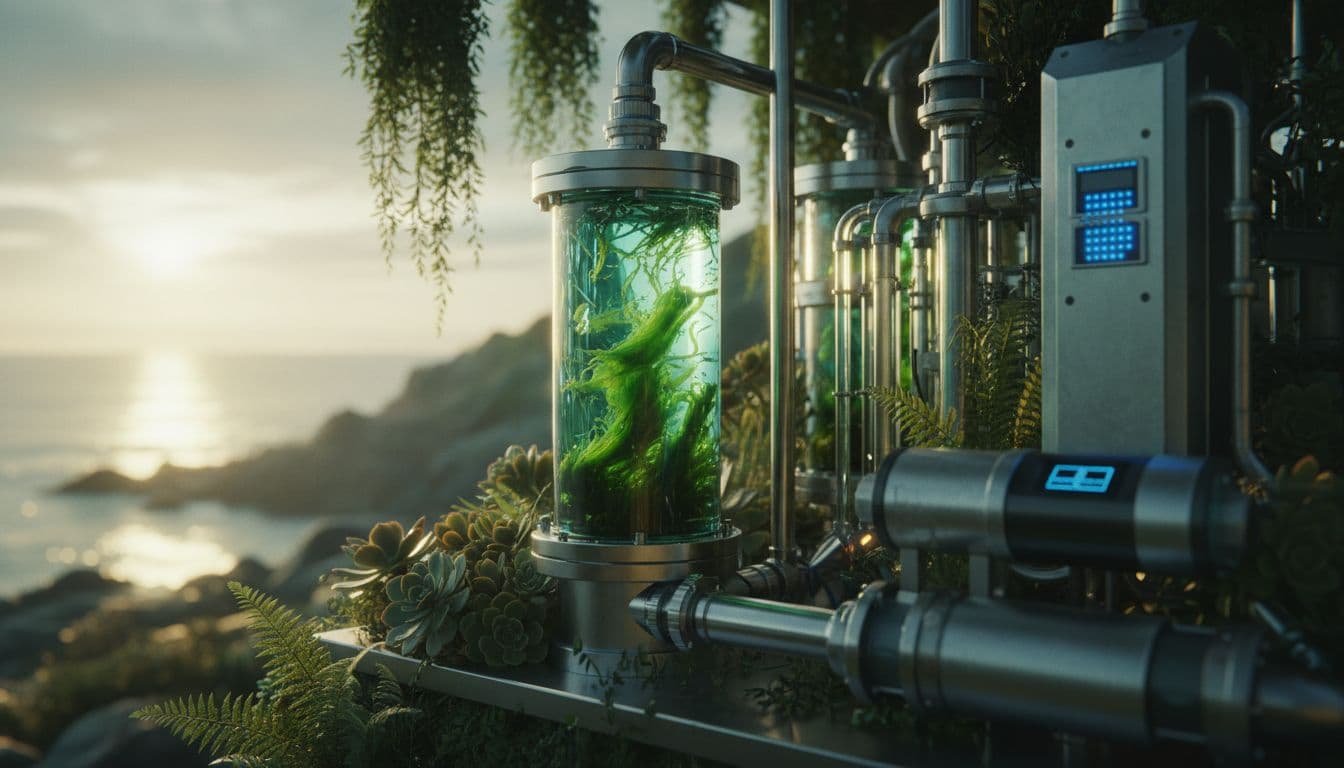
Engineers can improve outfalls and diffuser design so brine mixes faster. Plants can pair disposal with tighter monitoring and habitat mapping. In some contexts, deep-well injection or evaporation systems may reduce marine discharge, though land, geology, and cost limit those choices. More advanced systems try to shrink the waste stream through concentration, salt recovery, or zero-liquid-discharge methods.
The options look clearer side by side:
| Approach | Main benefit | Main limit |
|---|---|---|
| Ocean discharge with better diffusers | Lower local salinity spikes if designed well | Still depends on the sea absorbing waste |
| Evaporation ponds | Avoids direct marine discharge | Needs large land area and careful containment |
| Deep-well injection | Keeps brine out of coastal waters | Geology, cost, and long-term risk matter |
| Zero-liquid-discharge or resource recovery | Cuts waste volume and may recover value | High energy use and high capital cost |
A preprint on sustainable desalination strategies points toward cleaner energy use and better brine management. That matters, but resource recovery needs honest limits. A circular economy approach can help if plants recover industrial salts or other useful compounds at scale. It turns a waste stream into a partial input. Still, not every brine stream is suitable, and not every recovery process makes environmental sense once energy and chemicals are counted.
This is where sustainable business models could change the picture. If plant operators had clear incentives to reduce waste, recover materials, and publish discharge data, the cheapest option might stop being the dirtiest one. But green branding is not enough. A circular system that still harms local marine habitats is not circular in any meaningful sense.
What real accountability looks like
Personal lifestyle choices matter, but they have limits here. Plant-based living can lower pressure on land, water, and emissions. Everyday mindfulness about consumption can reduce wasteful demand, from the water wasted by home RO purifiers to larger industrial choices. Those are good shifts. They do not replace stricter controls on industrial discharge.
Real accountability starts with public questions that are plain and specific:
- Where exactly is the brine outfall, and what habitats sit nearby?
- Is salinity and temperature data available in real time, in public?
- Did the approval assess cumulative coastal pollution, not only one pipe?
- What backup plan exists when sea conditions reduce dilution?
These are not activist extras. They are basic governance questions for any plant that converts one water problem into another.
Community impact also needs a wider lens. When people support visible local work, they begin to connect policy with place. Coastal discharge may feel distant if you live in a city, yet the same logic affects your own environment. Waste gets externalized, biodiversity loses, and the bill arrives later. If you want examples of on-the-ground work that ties ecology to public accountability, Explore Our Active Missions. Projects around urban biodiversity and youth climate literacy make environmental harm harder to ignore because they turn abstraction into something measurable.
The deeper lesson is simple. You cannot shop your way out of a brine crisis. You need better laws, better monitoring, better planning, and public pressure that lasts longer than one news cycle. That is what systemic accountability looks like when water policy meets the sea.
The choice India has to make
Desalination may remain part of India’s water future. In some coastal cities, it already is. But fresh water cannot be called a clean solution if the waste stream is dumped into stressed marine ecosystems with weak public scrutiny.
The real test is whether brine gets treated as a central design issue, not a side note. Systemic change means transparent data, cumulative impact checks, tougher discharge rules, and investment in disposal methods that reduce harm instead of exporting it.
A country cannot solve water scarcity by hiding waste below the tide line. Any serious water plan has to protect the coast that pays for it.