Reusable Transport Packaging in India: A Business Case That Holds Up
-
by
 TBH Editorial
 - No Comments on Reusable Transport Packaging in India: A Business Case That Holds Up
Throwaway packaging looks cheap until you count it properly. The purchase price is visible. The repeat buying, damage, disposal, and handling waste usually aren’t.
That is why more supply chain teams are taking reusable transport packaging in India seriously. Not as a nice sustainability side project, but as a cost, service, and control decision.
TL;DR: Reusable transport packaging often wins in India when volumes are steady, routes are predictable, and product damage matters. The upfront spend is higher, but the cost per trip usually falls over time. The catch is simple, you need reverse logistics, tracking, and discipline.
The cost problem hiding in plain sight
Single-use packs often slip through budget reviews because each purchase looks minor. A corrugated box, a one-way crate, a disposable liner, none of them shouts “strategic issue”. Added together, they can quietly drain cash.
The real bill shows up across the full movement. You buy the pack, move it once, deal with breakage, throw it away, and buy it again. Then you repeat that cycle hundreds or thousands of times a month.
For Indian operations, the pain is often sharper. Loads are handled more times, roads can be rough, warehouse conditions vary, and manual touchpoints are common. A flimsy pack is a false economy in that setting.
Damage is the obvious cost. Less obvious costs are space loss, slower loading, unstable stacking, and extra waste handling. If a standard reusable crate stacks better, protects better, and moves faster, the benefit isn’t theoretical. It shows up in labour time, vehicle fill, and fewer exceptions.
This is why much of the discussion around returnable packaging in India centres on standard sizes, stackability, and visibility, not only waste reduction. Good transport packaging is supposed to protect the product and the flow around it.
For food and agriculture, the stakes are even more practical. Better crates reduce bruising, crushing, and handling loss. Some Indian market studies put the reduction in post-harvest loss at around 5 to 15% when crates replace loose or less protective handling formats. That is margin saved, not only waste avoided.
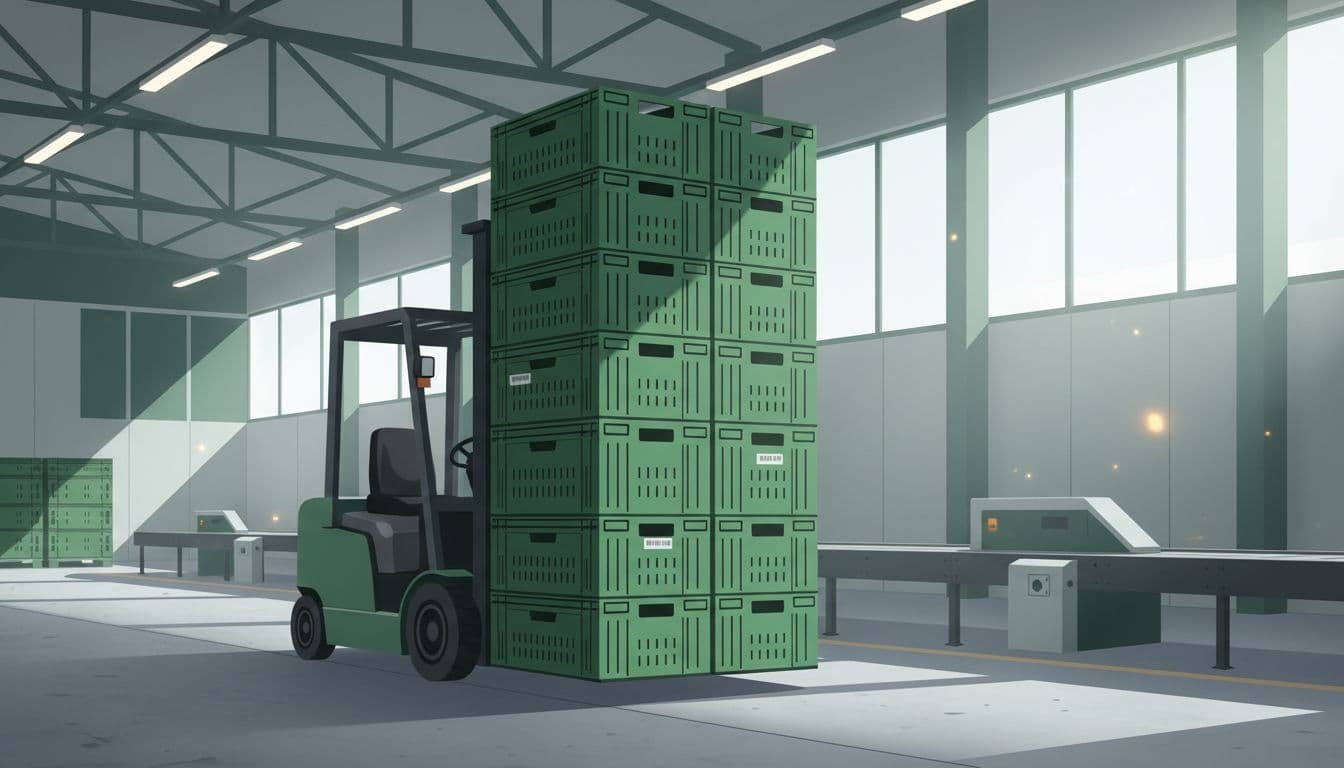
Of course, reuse is not right for every lane. Highly fragmented networks, one-way export flows, or low-value, irregular shipments can break the maths. But on closed or semi-closed loops, plant to DC, vendor to plant, store backhaul, milk runs, the numbers often start leaning the other way.
So the first question is not, “Is the unit cost higher?” It usually is. The real question is, “What does one safe, repeatable trip cost?”
Where the numbers start to favour reuse
The business case rests on total cost of ownership. That sounds dry. It isn’t. It is simply a better way to stop lying to yourself with the cheapest line item.
A reusable crate, pallet, tote, or dunnage system spreads cost across many trips. Single-use packaging charges you the full amount every time. Once you frame it that way, the comparison gets cleaner.
This quick view helps:
| Cost lens | Single-use packaging | Reusable packaging |
|---|---|---|
| Upfront purchase | Low | Higher |
| Cost over many trips | Repeats every shipment | Falls per trip over time |
| Product protection | Often inconsistent | Better when engineered well |
| Space use | Less standard | More standard and stackable |
| Waste handling | Ongoing | Much lower |
| Reverse logistics | Minimal | Essential |
The takeaway is plain. You are swapping a lower entry cost for a lower cost per successful trip.
Say a reusable tote costs ₹450 and lasts 100 rotations. That is ₹4.50 per trip before washing, recovery, and admin. Add ₹3 to ₹5 for handling and return, and you may still land below a single-use format that costs ₹15 to ₹20 every shipment. The numbers vary by lane, but the logic doesn’t.
Then there is damage. If a stronger pack cuts breakage or shrink, the payback arrives faster. The same goes for warehouse speed. Standard, nestable, or collapsible packs move more predictably. Forklift operators like predictability. So does finance.
Operators looking to cut logistics costs with returnables usually point to the same things: better cube utilisation, quicker loading, safer handling, and fewer damaged units. None of that is glamorous. All of it matters.
Reusable packaging is not cheaper because the unit is cheaper. It’s cheaper because you stop paying for the same job every trip.
There is also a balance-sheet angle. If the capex feels heavy, pooled assets or rental models can soften the hit. That changes the discussion from “Do we buy thousands of crates?” to “What is the cost per controlled rotation?” For many businesses, that is the moment the conversation becomes practical.
Why India is a strong fit for returnable systems
India is not too complex for reusable transport packaging. In many cases, India’s operating reality makes the case stronger.
Market tracking in 2026 shows the Indian reusable packaging segment still growing at roughly 5 to 7% a year, depending on how the market is defined. Food and beverages remain major users. E-commerce, FMCG, automotive, and electronics are adding momentum. Plastic formats still dominate because they are light, durable, washable, and easy to standardise.
The timing also matters. Waste pressure is rising. Extended producer responsibility rules have changed how companies think about one-way materials. Requirements around recycled plastic content have added another nudge. Throwaway formats no longer get a free pass.
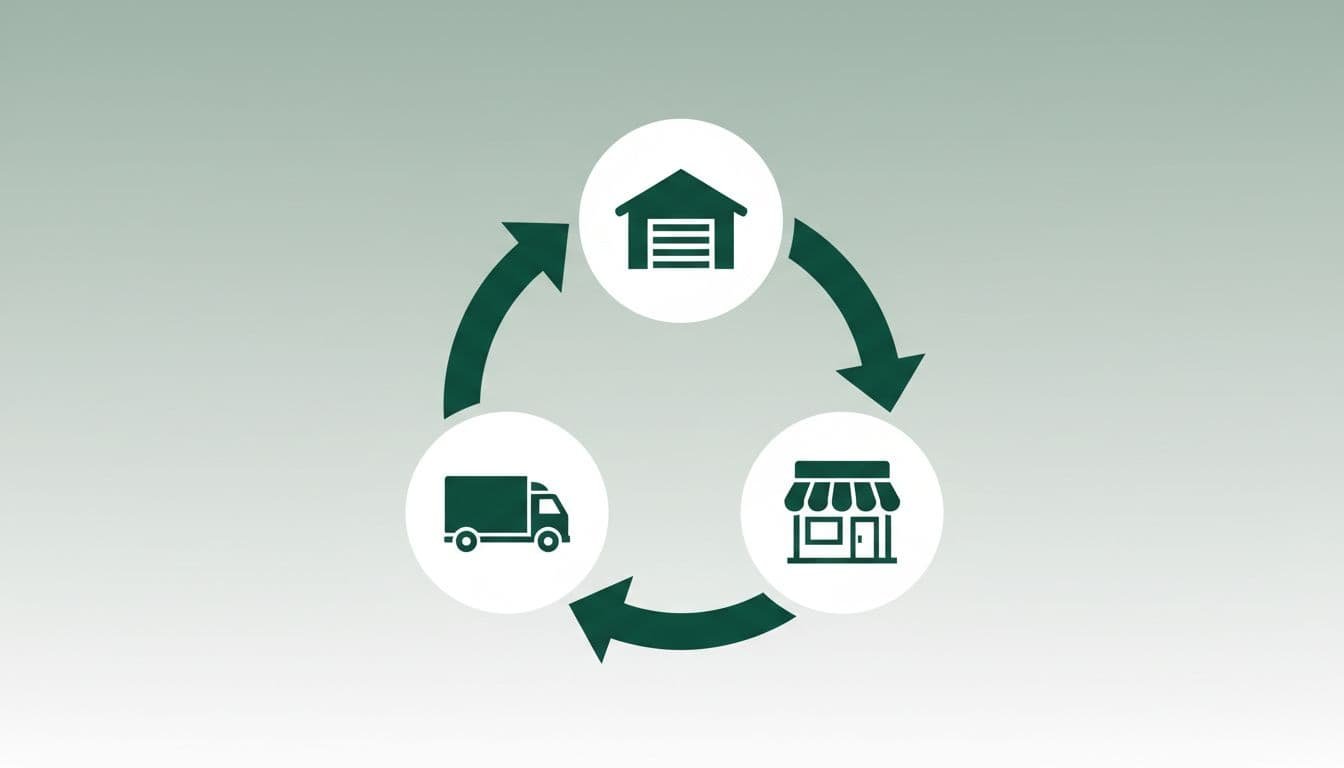
Then there is transport economics. India has huge freight movement and a familiar problem, empty return legs. If your network already sends trucks back half-empty, reusable packaging can hitch a ride home. That is where reverse logistics stops looking like a burden and starts looking like wasted capacity put to use.
The densest use cases are easy to spot. Dairy, beverages, fresh produce, auto components, industrial parts, pharmaceuticals, and modern retail all have repeat flows. Repeat flows love standard containers.
The smarter operators are not treating this as a packaging purchase. They are treating it as an asset system. That is why stories around data-driven container reuse matter. Better tracking, tighter circulation, and cleaner data reduce loss and idle time. When that happens, reuse stops being a green aspiration and becomes a control mechanism.
None of this means India is friction-free. Asset loss is real. Fragmented supplier networks are real. Cleaning standards matter. So does accountability at each handoff. But these are operating problems, not proof that reuse does not work.
What leaders should test before scaling across India
The smartest first move is boring. Pick one lane. Pick one product family. Measure it well.
A national rollout sounds bold. It also hides mistakes. A pilot shows whether your recovery rate, damage rate, and turn time are good enough to support scale.
Before you commit, ask a few blunt questions:
- Is the lane predictable enough to recover assets on time?
- Will better protection cut damage, claims, or rejects?
- Can suppliers and customers accept standard pack sizes?
- Do you have a wash, inspect, and repair process?
- Who owns loss control, operations, procurement, or both?
If those answers are fuzzy, the packaging is not your main problem. The process is.
Most failures in reusable systems come from weak operating discipline. No scanning. No ownership. No return SOP. No penalty for loss. Then the finance team concludes the assets “went missing”, and the idea gets blamed.
Build the business case around a few hard metrics. Track cost per trip, asset turns, damage rate, loss rate, loading time, cube utilisation, and empty return fill. Add waste disposal savings if they are material. Keep the scorecard simple enough that operations will use it.
It also helps to separate lanes into three buckets. Some are obvious wins. Some are obvious no-gos. The middle bucket needs a pilot. That prevents endless debate.
One more thing, don’t let procurement own the whole discussion. Reusable transport packaging in India sits across sourcing, warehousing, transport, quality, and sustainability. If one team chases only the lowest purchase price, the business case gets distorted before the test even starts.
The companies getting this right are not chasing a fashionable idea. They are fixing repeatable friction with a more durable asset.
Conclusion
Throwaway packs look cheap because the invoice is easy to see. The repeat cost is not. That blind spot is why reuse can outperform one-way packaging so quickly on the right lanes.
For Indian supply chains with stable volumes and recoverable routes, reusable packaging is often a financial decision first, and a sustainability win second. The smart move is not to replace everything at once. It is to find the flows where reuse already wants to work, then let the numbers settle the argument.
If your packaging goals sit inside a wider environmental brief, you can also Contribute to Active Missions to support zero-leakage work on the ground, with 100% of funds going to the field.