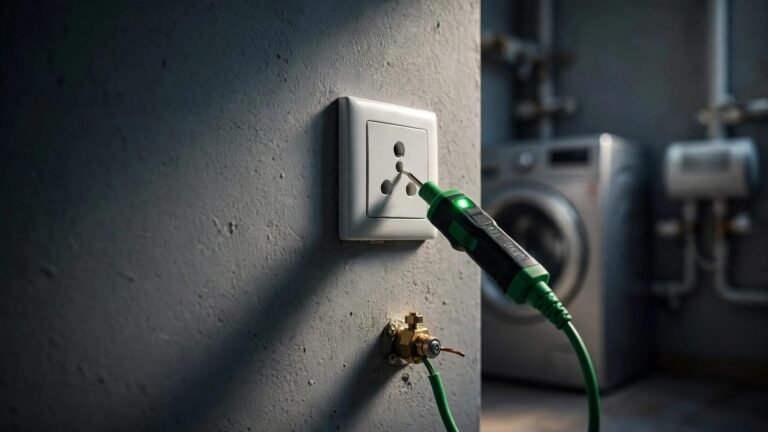
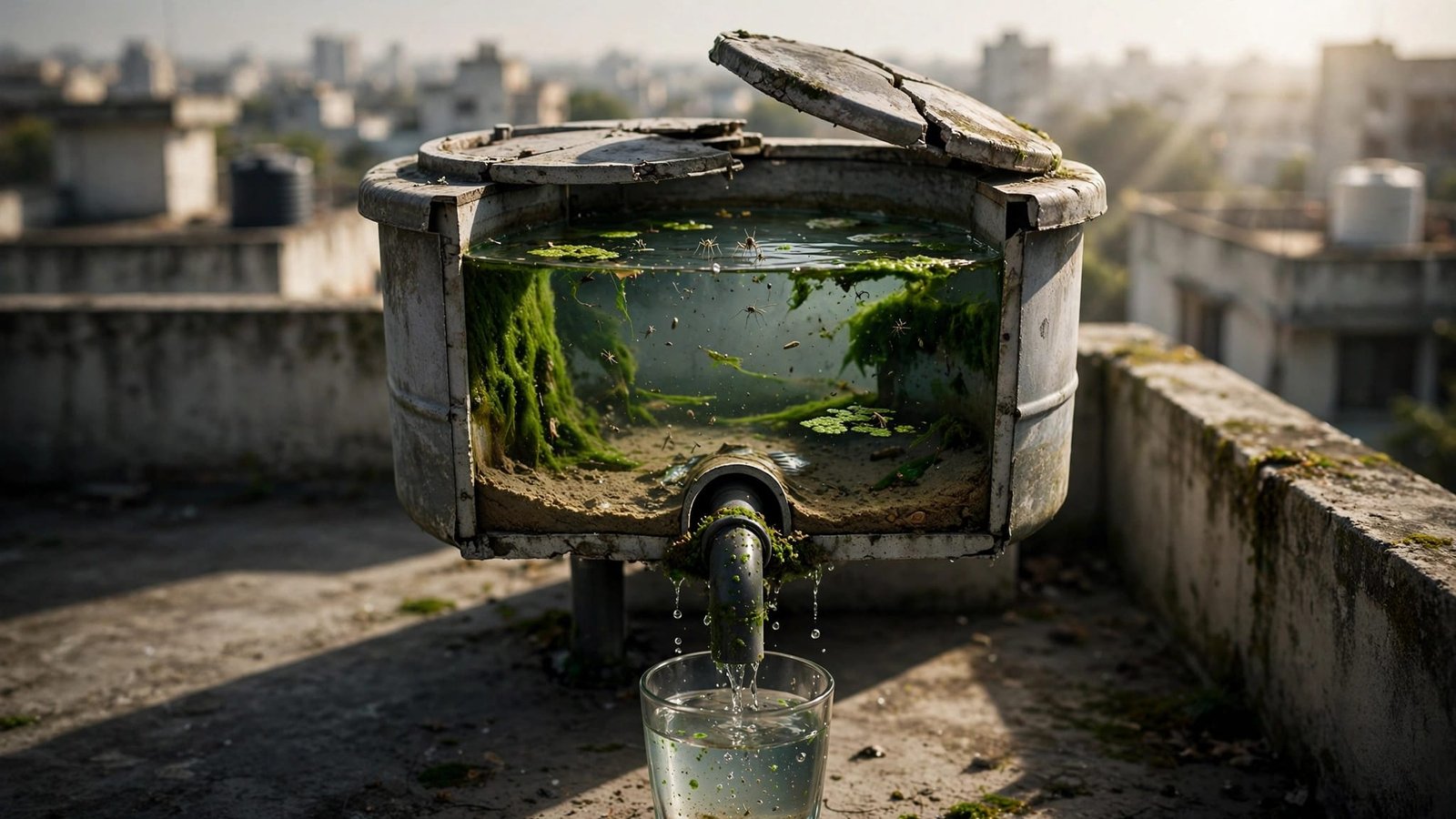
Why Overhead Water Tanks Recontaminate Clean Water in Indian Homes
 TBH Editorial
The water reaching your building may be treated. The water reaching your glass is only as safe as the journey between them.
That uncomfortable gap is where overhead water tank contamination begins. Treated municipal or supplied water can be recontaminated during storage or distribution, picking up sediment, algae, insects, or microbes without changing colour or smell.
A rooftop tank doesn’t automatically make water unsafe. But safety must be maintained from treatment through storage to the household tap.
We tend to blame the source first. Sometimes the real failure is sitting above our heads.
Key Takeaways
- Treated water can become contaminated inside an overhead tank through loose lids, damaged fittings, sediment, algae, insects, flooding, or sewage backflow.
- Clear water, normal taste, and no odour do not prove microbiological safety; E. coli and other microbes may be present without visible warning signs.
- Inspect tanks regularly and schedule water tank cleaning about every six months, or more often when using borewell or tanker water or when sediment builds up quickly.
- Proper maintenance includes removing sediment and biofilm, scrubbing surfaces, disinfecting appropriately, protecting openings, and repairing contamination routes before refilling.
- UV units and ozonators can add protection, but they cannot replace a clean, covered tank, routine inspection, or testing after contamination events and repeated illness.
Clean at the inlet, contaminated at the tap
Water safety isn’t a one-time event. It has to survive pipes, valves, water storage tanks, and taps between treatment and use.
Rooftop and underground water tanks face different exposure routes, but both need protected access, inspection, and cleaning.
India’s IS 10500 drinking-water specification, the BIS standard IS 10500, says E. coli should not be detectable in a 100 mL sample. For chlorinated supplies, it calls for a minimum free residual chlorine level of 0.2 mg/L at the consumer end.
That phrase, “consumer end”, matters. It means water isn’t proven safe just because it met those benchmarks when it left a municipal treatment plant. Household tap safety still requires testing.
Storage changes the chemistry
Chlorine disinfection doesn’t provide permanent protection. During storage, sediment, organic matter, heat, and time consume the residual.
A tank with dust, silt, rust particles, or decaying debris gives chlorine more work to do. Its protective residual falls. Residual chlorine isn’t a substitute for a clean tank. Bacteria can then find a foothold on the tank wall or inside pipework.
WHO’s guidance on drinking-water chlorination explains the risk. WHO guidelines note that accumulated sediment in intermediate tanks can consume chlorine.
That is why a tank can look like passive infrastructure yet support microbial growth on wet, dirty surfaces.
The ordinary routes contamination takes
Overhead tanks don’t need a dramatic sewage spill to become dirty. Most contamination enters through small, neglected openings.
Loose lids and uncovered openings are common water contamination causes in stored-water systems. They let in dust and insects. Cracked overflow pipes can invite rainwater, nesting birds, or lizards. Damaged inlet fittings can pull in contaminated water when pressure changes.
A lid is not a detail
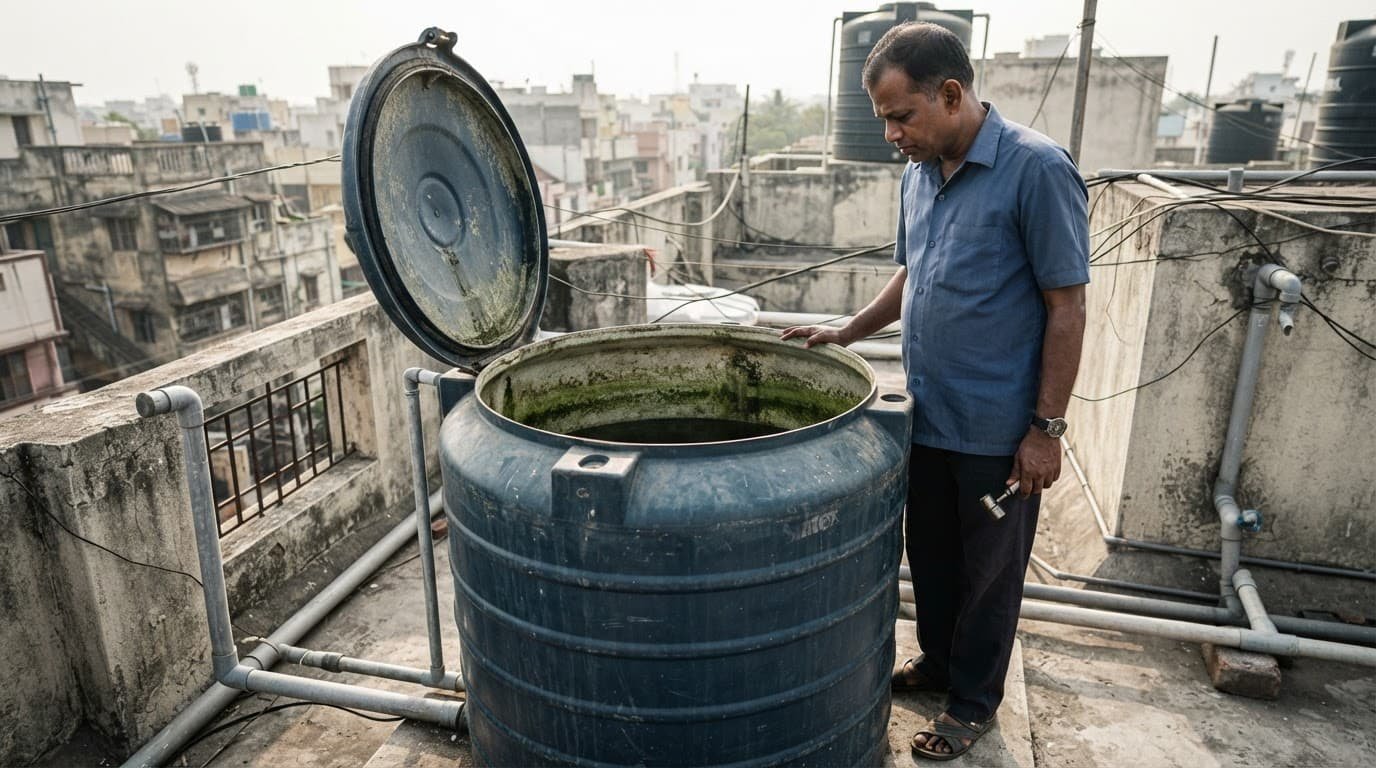
On many rooftops, the tank lid sits crooked for months. Someone opens it during a repair, then replaces it badly. The gap feels harmless because the tank is high up and out of sight.
It isn’t harmless.
Wind carries fine dust, bird droppings, leaves, plastic fragments, and spores. A dead insect or small animal adds organic matter that feeds microbial growth. Direct sunlight and UV rays can encourage algae growth when the water also contains suitable nutrients.
Sediment gives biofilm somewhere to hide
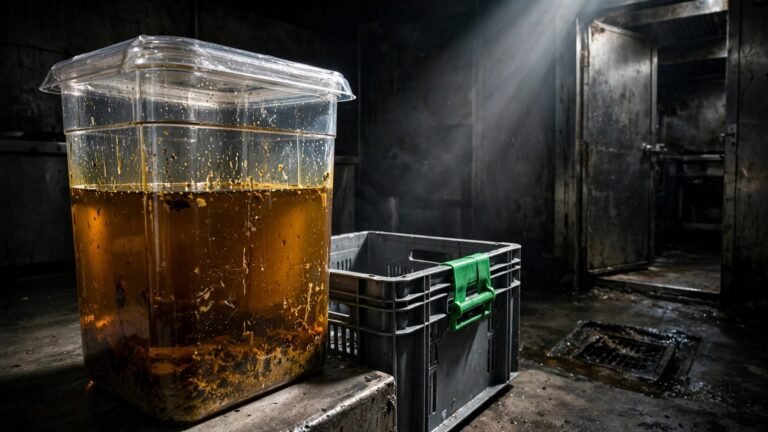
Biofilm formation creates a slippery layer on wet surfaces. Sediment and organic matter support microbial attachment and growth on the tank wall, joints, float valve, and outlet pipe.
A clean-looking tank doesn’t rule out microbial contamination. An inlet filter may remove some particles, but water tank cleaning is still needed to remove settled material and biofilm from the tank’s surfaces.
Clear water can still carry microbial contamination. Your eyes are testing appearance, not safety.
This is why overhead water tank contamination can be missed when the water looks clear. If several people in the same home develop stomach symptoms, stop relying on appearance, arrange appropriate testing, and seek medical advice.
Warning signs you should not brush aside
A rotten-egg odour, cloudiness, black particles, slime near taps, or an odd metallic taste all deserve attention. So does a sudden change in how often your filters clog.
Visible changes can suggest a problem, but bacterial contamination may leave no obvious sign. The absence of warning signs proves very little. E. coli does not announce itself with a smell. Neither do many other microbes, and odour, taste, and clarity cannot establish microbiological safety.
Watch for a pattern, not one bad glass
Pay attention when several things happen together:
- Water looks clear but leaves a film or sediment after standing in a bucket.
- Taps spit brown, black, or sandy particles after a supply interruption.
- The household has repeated diarrhoea, vomiting, or unexplained stomach illness.
- The rooftop tank has not been cleaned for six months or longer.
- A flood, sewage overflow, plumbing repair, or dead animal has affected the tank area.
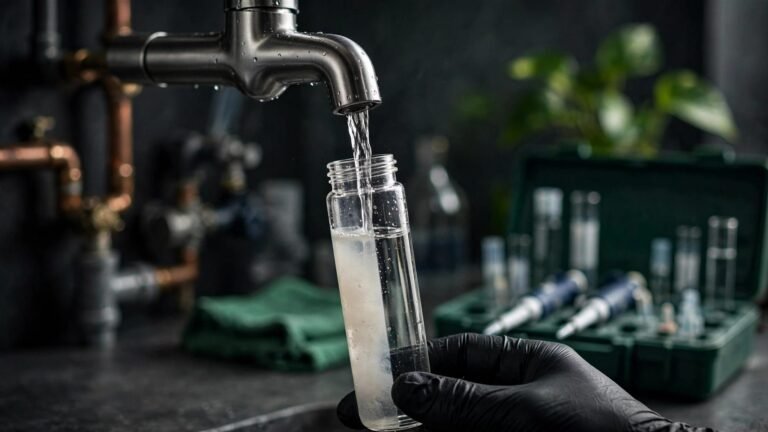
If you suspect faecal contamination, don’t settle for guesswork. Symptoms alone can’t identify the organism or prove that the tank caused the illness. For possible microbial contamination, ask an accredited laboratory or local public-health office about testing. A safe at-home water testing guide for E. coli can help you understand what a sample can and cannot tell you. One household sample, especially a negative result, cannot guarantee that the water is safe.
Contact a clinician for persistent diarrhoea, vomiting, dehydration, or fever. Seek advice sooner when symptoms affect a young child, older adult, pregnant person, or someone with a weakened immune system.
The health risk is real, not theatrical
Contaminated stored water can contribute to gastrointestinal illness and other waterborne diseases, including typhoid and cholera. The health risks are higher for young children, older adults, pregnant people, and immunocompromised individuals.
But panic doesn’t protect a family. A clean tank, tested water, and a repaired entry point do.
Water tank cleaning is a job, not a splash of bleach
Residential overhead tanks should generally be inspected often, with water tank cleaning about every six months as a practical starting point. Homes using borewell water, tanker water, or visibly sediment-heavy supply may need attention every three to four months.
Actual tank maintenance depends on the water source, exposure, tank condition, and household use. Follow local utility guidance and the tank manufacturer’s advice, then adjust the schedule when inspection shows a need.
The same principles apply to water storage tanks and underground water tanks, but access, ventilation, flood exposure, and safety hazards can differ. Food-grade plastic is one consideration, but it doesn’t guarantee hygienic storage or potable-water certification.
The frequency is useful. The quality of the job matters more.
What a proper cleaning cycle includes
A complete water tank cleaning process starts by isolating the tank and emptying it. Remove settled material and sediment buildup rather than stirring sediment and debris into the outlet pipe. Scrub internal surfaces, corners, the lid, and fittings with suitable tools.
Then use physical cleaning followed by chlorine disinfection. Choose a measured, product-appropriate method from an authoritative public-health source or qualified professional. Flush the system as directed before drinking or cooking with the water again. Consider professional tank cleaning when the tank is large, access is unsafe, or contamination is substantial.
WHO guidelines, including its household water-storage guidance, advise removing sediment and using thorough physical or chemical cleaning to limit microbial colonisation in stored water. The guidance is a useful reminder that containers need care after water enters them.
Never climb inside a tank alone. It is a confined space. Tank maintenance inside it requires proper confined-space precautions. Low oxygen, toxic gases, slippery surfaces, and difficult exit access can turn a cleaning task into an emergency.
After flooding or sewage backflow, start over
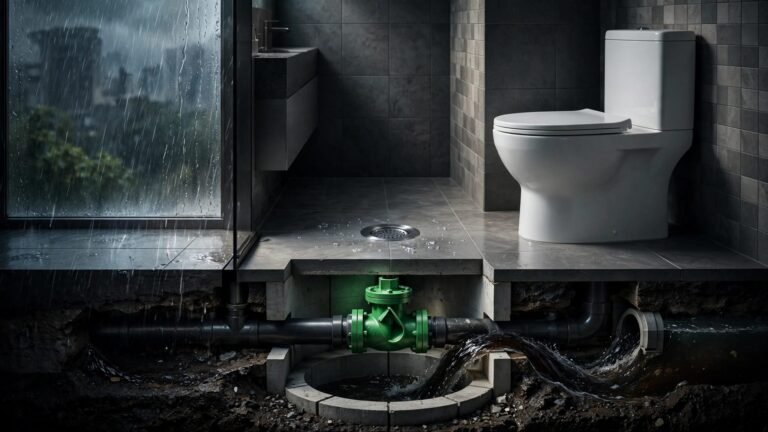
Floodwater isn’t dirty rain. If it enters a tank, it may carry sewage, animal waste, oil, chemicals, and street debris. Flooding, sewage backflow, and damaged plumbing are serious water contamination causes. A mains-fed rooftop tank differs from a rainwater harvesting tank. Roof debris, animal droppings, first-flush failures, or flooding can cause rainwater tank contamination.
If floodwater reaches the tank, or sewage backflow affects the inlet, overflow, or nearby plumbing, stop using the stored water for drinking and cooking. Treat it as contaminated. Boiling a small quantity won’t correct a contaminated storage system or plumbing route.
Repair the route before refilling
Isolate the contamination route, then drain the tank fully and remove solids. Water tank cleaning should cover the inside, lid, vents, overflow, and connected fittings. Inspect underground water tanks too after flooding or sewage intrusion, then repair the crack, broken screen, backflow route, or drainage failure that allowed contamination in. Disinfect appropriately, flush the system, and test when indicated before using it for safe drinking water.
For short-term emergency storage, the CDC’s water-container sanitation guidance reinforces a simple rule: cleaning the container is part of making water safe. Use clean, covered containers while the tank is out of service, and follow local Indian public-health or water-utility advice. Cleaning and disinfection may not remove chemical contamination, so seek professional advice after sewage intrusion or chemical exposure.
This is where climate literacy becomes practical. Heavy rain, failing drains, sewage systems, and household drinking water are connected. Pretending they’re separate problems leaves families exposed.
UV and ozonators have limits
An ozonator for water tank treatment may reduce odour and disinfect water at the contact point. That result depends on ozone concentration, contact time, mixing, and system design. It doesn’t prove that the whole stored tank is disinfected.
A properly maintained UV treatment unit can disinfect water passing through it when the water is clear, the dose is adequate, and flow stays within its rated limit. A UV treatment unit is not the same as exposing stored water to sunlight.
Neither device cleans sludge from the bottom of a tank. Neither seals a broken lid. Neither creates a lasting protective residual like chlorine in water stored for days.
Technology cannot compensate for neglect
UV performance drops when water is turbid, the lamp sleeve is dirty, or flow exceeds the unit’s design. Ozone requires appropriate contact and system controls, and it doesn’t remain in water like a chlorine residual. If a tank wall already carries biofilm, a gadget alone isn’t a complete answer.
Before buying an ozonator for water tank treatment, check whether its performance is validated for your flow, water quality, and intended use. No device should be presented as guaranteed anti-microbial protection when the tank remains dirty or open.
Use treatment devices as an added layer after tank maintenance, not a replacement for routine inspection and cleaning:
- Fit a tight, durable lid and screened vents.
- Keep overflow and inlet openings protected.
- Shield the tank from harsh direct sunlight and UV rays where possible.
- Schedule water tank cleaning to remove sediment and biofilm before they become a microbial shelter.
- Maintain UV lamps, sleeves, ozone contact systems, and other treatment equipment as directed.
- Test water after contamination events or repeated illness.
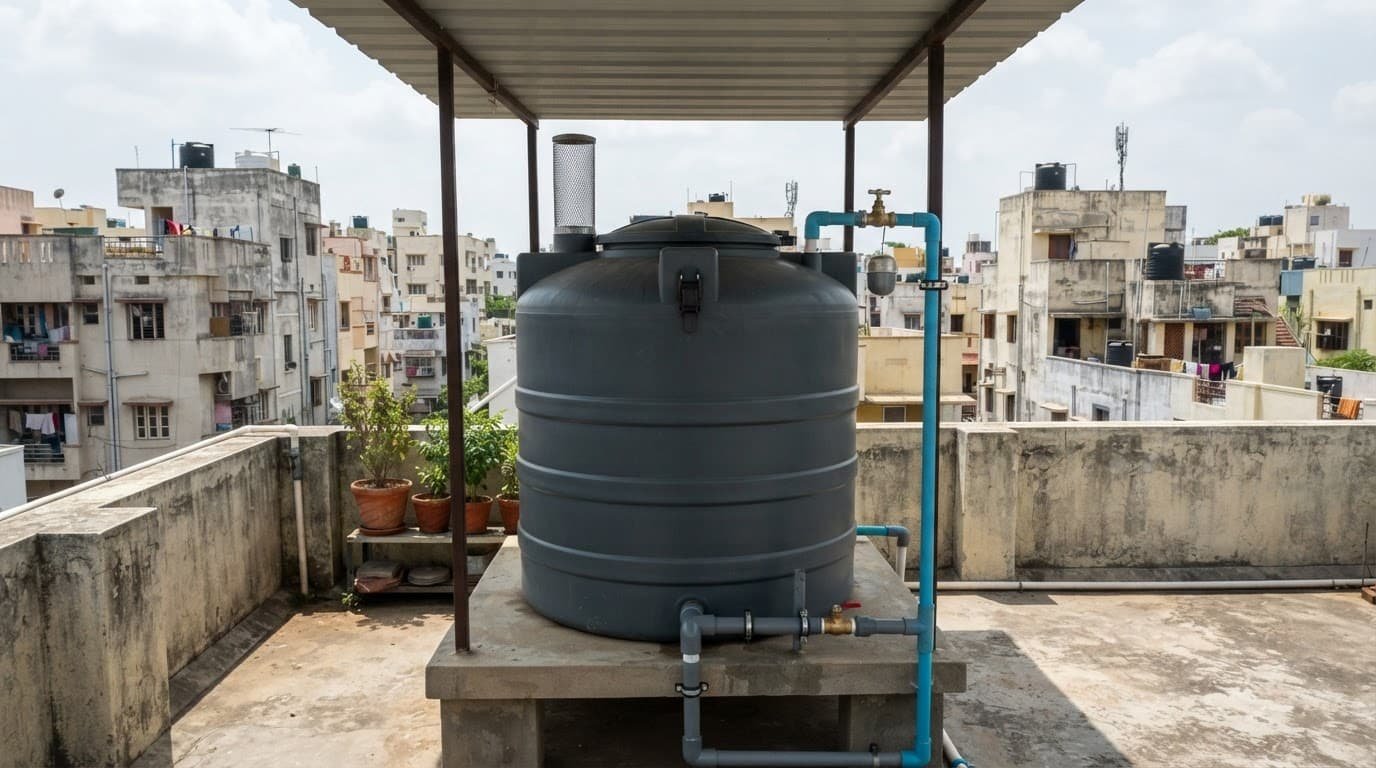
A food-grade plastic tank may be suitable for storage, but the material alone doesn’t prove suitability for potable-water storage or compensate for poor hygiene. Maintenance is the real barrier.
Tank hygiene is a community issue too
One dirty tank affects one household first. It doesn’t automatically affect local ecosystems. But improper discharge, drainage failures, sewage leaks, or repeated overflow can carry contamination into drains, soil, groundwater, or local ponds.
The ecological impact can appear in some urban areas, where nutrient-rich wastewater feeds algal growth in small water bodies. Read more about the wider chain through septic tank risks in India.
Accountability beats cosmetic fixes
A water tank cleaning drive once a year is like washing a dusty road while trucks keep spilling soil onto it. It may look responsible for a day. It doesn’t solve the route of contamination.
Systemic change looks less glamorous. It means apartment associations budget for cleaning water storage tanks and record inspection dates. They should repair lids quickly and treat water quality as a shared health and environmental responsibility.
It also means asking better questions of sustainable business models. Building-management contracts should define tank maintenance clearly. They should require inspection records, cleaning schedules, safe access, prompt repairs, and responsible sludge disposal, rather than simply reward the cheapest vendor.
Everyday mindfulness helps too. Notice the tank lid. Ask when cleaning last happened. Check whether rooftop drainage pools beside the tank after rain. Small questions can expose failures before they become illness.
For people who want local action connected to community health, urban biodiversity, and climate literacy, Explore Our Active Missions and support work that makes environmental accountability visible.
Frequently Asked Questions
How often should an overhead water tank be cleaned?
A practical starting point is to inspect the tank regularly and clean it about every six months. Homes using borewell water, tanker water, or sediment-heavy supplies may need cleaning every three to four months.
Can clear water from a rooftop tank still be contaminated?
Yes. Microbial contamination, including E. coli, may not change the water’s colour, smell, or taste. Testing is needed to assess microbiological safety.
What should I do if floodwater or sewage enters the tank?
Stop using the stored water for drinking and cooking, and treat it as contaminated. Drain and clean the tank, repair the entry route, disinfect and flush the system, and seek testing or professional advice before using it again.
Do UV units or ozonators replace tank cleaning?
No. These devices may provide additional treatment when correctly designed and maintained, but they do not remove sludge, biofilm, or contamination from tank surfaces. They also cannot fix a broken lid or damaged plumbing.
What are common warning signs of tank contamination?
Cloudiness, black particles, slime near taps, unusual odour or taste, and sudden filter clogging can indicate a problem. Repeated stomach illness or a tank that has not been cleaned for six months or longer also warrants inspection and appropriate water testing.
Protect the water after it arrives
The cleanest water source can still fail inside an unclean tank. That is the hard truth behind overhead water tank contamination.
A sealed lid, sediment removal, regular disinfection, and post-flood action are basic protections. They support safe drinking water, but don’t prove that it’s safe on their own. Testing after warning signs still matters for people drinking that water every day.
Use BIS standard IS 10500 when interpreting laboratory results, because household cleaning alone doesn’t prove compliance. Look at your rooftop tank this week: What enters it, what settles in it, and who is responsible for cleaning it?