
Cool Roofs vs AC: Start at the Roof in Indian Heatwaves
 TBH Editorial
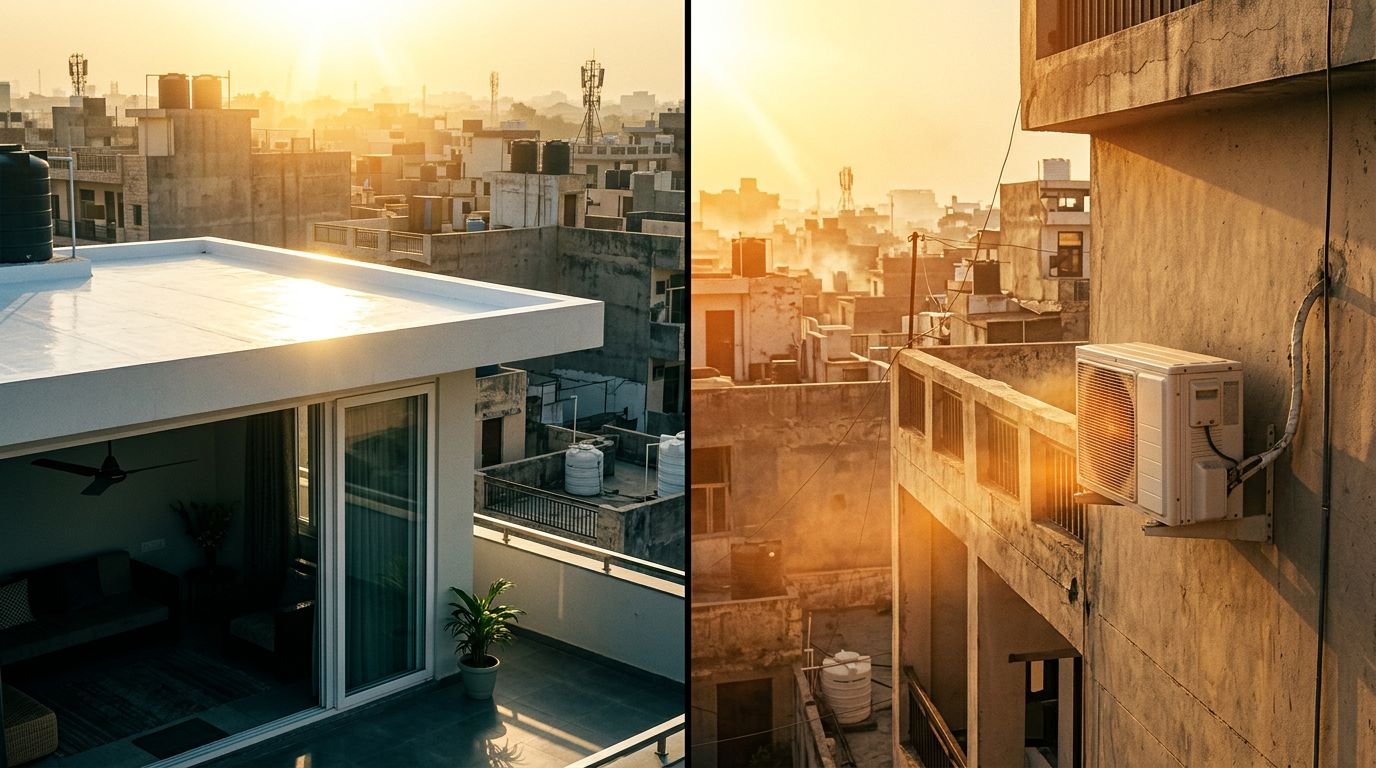
An air conditioner can win one room and still lose the building. On a top floor in Delhi, Ahmedabad, or Nagpur, a roof can absorb afternoon sun for hours, then radiate that heat indoors when people are trying to sleep.
When people compare a reflective roof with AC, they often choose between a lower upfront bill and immediate comfort. During an Indian heatwave, that framing is too narrow. The roof determines how much heat your home must fight before the AC even starts.
Key Takeaways
- Cool roofs reduce heat before it enters the building, while AC removes heat after it is already indoors.
- Reflective roofs can lower indoor temperatures by around 2 to 5°C in suitable homes, but results depend on materials, ventilation, sun exposure, climate, and maintenance.
- The full cost comparison should include installation, repairs, maintenance, service life, electricity use, and any available financial incentives—not just the price of an AC or coating.
- The best results usually come from a combined approach: repair and maintain the roof, add shade and ventilation, use a suitable reflective system, and size the AC after the building’s heat load is understood.
- Cool roofs can improve comfort and reduce cooling demand, but they cannot fix structural damage, serious leaks, poor ventilation, or unsafe indoor conditions on their own.
Cool Roofs vs AC: Fix the Heat Before It Enters
The comparison becomes clearer when we stop treating them as two versions of the same machine. Cool roofs reduce heat gain at the building skin. Air conditioning removes heat after it has crossed the roof slab, walls, windows, appliances, and human bodies inside.
These roofs work through two physical properties. Solar reflectance describes how much sunlight the surface sends back. Thermal emittance describes how effectively it releases absorbed heat. A dark conventional roof absorbs sunlight and holds it. When comparing products, higher thermal emittance helps a reflective surface release absorbed heat. This keeps its surface temperature lower before heat reaches the slab and room, making it an energy efficiency intervention.
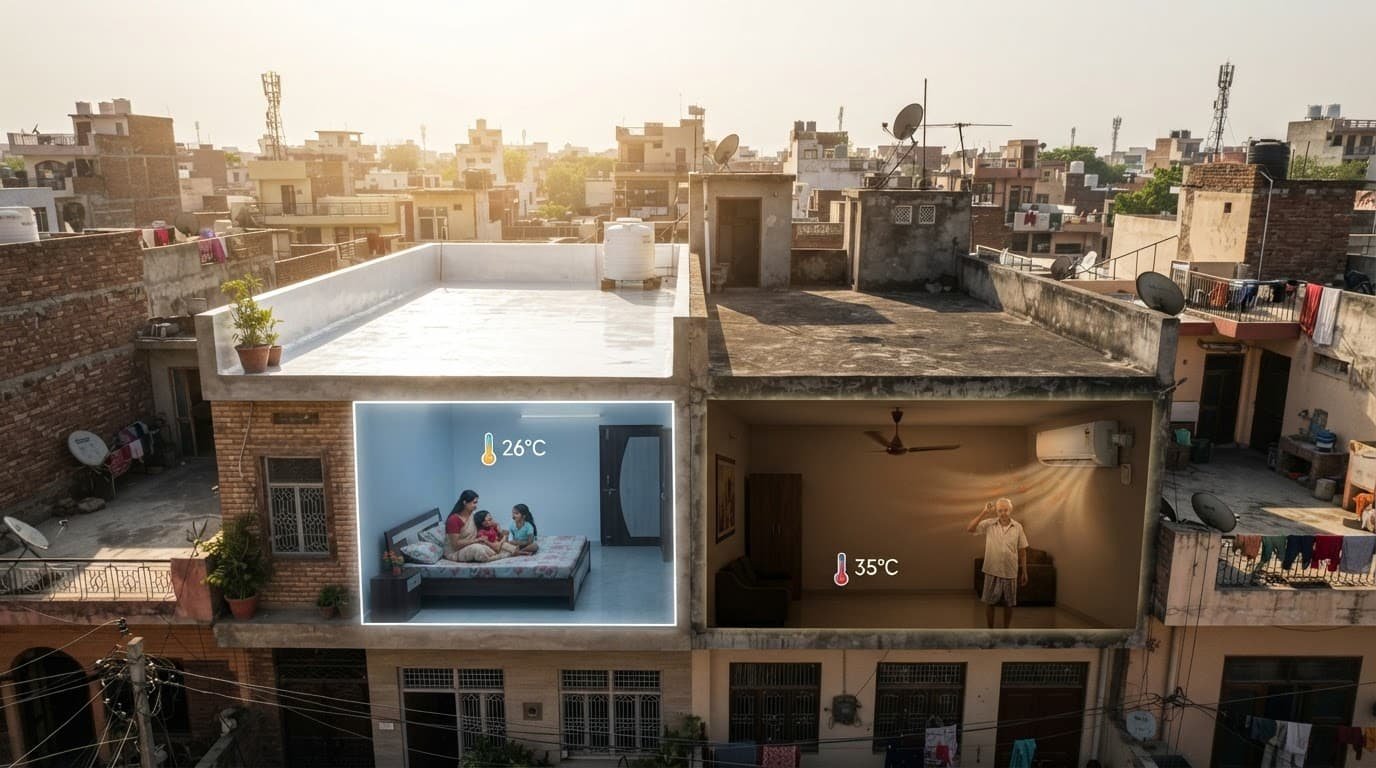
An AC is not the enemy here. During dangerous indoor heat, it can protect vulnerable residents and preserve indoor comfort. That includes babies, older people, sick residents, and anyone unable to endure a stifling room safely. An AC also needs electricity, regular servicing, and a reliable grid. Its outdoor unit dumps heat outside while the compressor works harder against a heat-soaked building.
Reports on Indian city roof programmes have found indoor temperatures can fall by 2 to 5°C in suitable homes compared with darker roofs. Those results depend on the roof material, room ventilation, local climate, and whether the home receives direct sun all day.
A roof treatment changes the temperature before the compressor starts. A bigger AC is asked to fight heat that is already indoors.
What a Cool Roof Can Save, and What It Cannot
We should be honest about the numbers. A reflective roof will not turn a poorly ventilated top-floor flat into a hill station. A lower surface temperature does not guarantee a cooler room, especially with a broken fan, west-facing glass, or a power cut at 2 pm. In climates where winter sun is useful, a heating penalty is possible, so results depend on season and location.
Still, the evidence on cool roofs is strong enough to take seriously. A 2024 study of cool-roof systems in India’s composite climate found heat gain fell by 33% to 71% compared with a traditional roof. The same study reported energy savings of 21% to 26% under its test conditions.
In Ahmedabad, researchers have treated reflective roofs as a low-cost passive cooling measure while examining how extreme heat could raise peak cooling demand by 2030. The Ahmedabad cooling-demand research matters because it links household roof performance to the urban heat island and citywide electricity stress.
A home with central air conditioning may use less electricity. A home without it may have better indoor comfort. Neither outcome is guaranteed by a bucket of white paint.
A cool roof usually produces the best result when:
- The room sits directly below an exposed roof.
- The roof receives long hours of hard summer sun.
- The existing slab is dark, cracked, or heat-soaked.
- The household already runs fans or air conditioning for many hours.
- The coating is paired with ventilation, shade, and basic roof maintenance.
The difference between a successful retrofit and a disappointing one often comes down to cool roof coatings and ordinary maintenance. Was the roof cleaned? Were cracks and leaks repaired first? Did the contractor apply the coating at the required thickness? Has dust or weathering turned the reflective surface grey after one summer?
Compare the Full Cost, Not the Price of One Machine
I won’t give you a fake payback period. There is no single Indian answer because tariffs, roof condition, labour costs, household routines, and AC use differ too much. Check municipal, utility, or programme financial incentives before calculating your own payback.
The better comparison for cool roofs looks beyond the purchase price. Include installation, maintenance costs, repairs, and the likely service life.
| Choice | Makes sense when | What it will not solve |
|---|---|---|
| Reflective roof coating | The RCC roof is sound but absorbs harsh sun | Structural damage, serious leaks, or poor ventilation |
| Full roof replacement with a cool finish | The roof covering is already near the end of its life | Immediate indoor cooling during a power cut |
| Larger or newer inverter AC | Indoor heat is dangerous and cooling capacity is inadequate | Solar heat entering through the roof all day |
| Cool roof plus a right-sized AC | A top-floor home needs comfort and lower running costs | Poor maintenance or a weak electrical system |
If rooftop solar is planned as part of the same upgrade, compare its capital cost and payback separately from the roof retrofit.
A coating retrofit can be far cheaper than replacing an entire roof. But cheap cool roof coatings that peel after one monsoon aren’t a bargain once maintenance costs are included.
Ask for the product’s solar reflectance and thermal emittance. Together, they inform the Solar Reflectance Index (SRI), which some product documents call the solar reflective index. Ask what happens after weathering and dust exposure, not only on installation day.
Where available, compare those figures with the Cool Roof Rating Council database or equivalent independent product documentation. That doesn’t mean every Indian product is certified there.
Also ask whether waterproofing is part of the quote. Painting over trapped moisture can hide a problem for a few months, then leave residents with leaks, mould, and another bill.
Older research from Lawrence Berkeley National Laboratory found that India could deliver some of the highest energy savings per unit of cool-roof area because of its hot climate. That global analysis of cool roofs and energy use supports a simple point. Reducing roof heat can ease pressure on household budgets and the grid. It can also lower greenhouse gas emissions.
Choose the Right Roof System, Then Size the AC
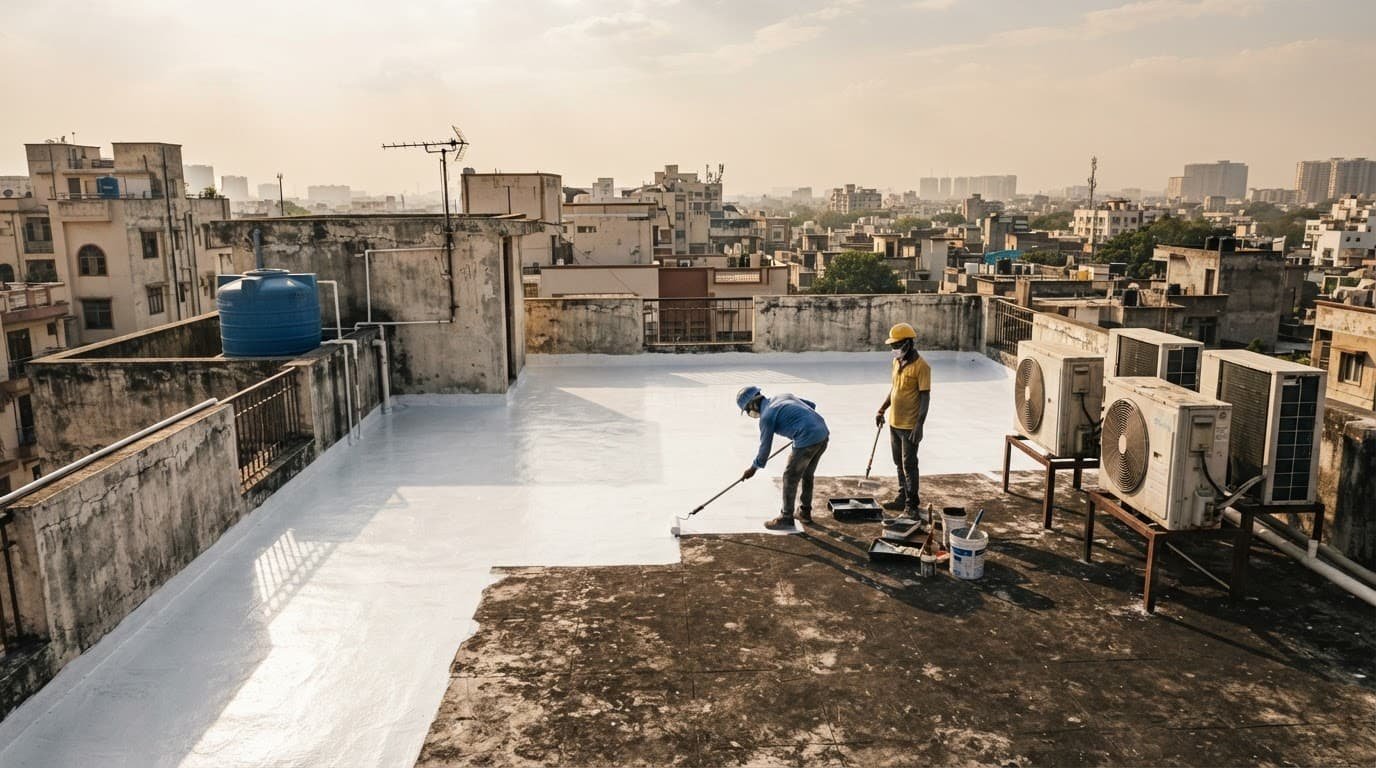
Low-slope roofs are common across Indian cities. They can often be retrofitted with cool roof coatings, waterproof membranes, single-ply membranes, or an elastomeric coating. The right system depends on the slab, drainage, foot traffic, existing leaks, waterproofing needs, and monsoon exposure. Local climate suitability also matters, so cool roofs are not a one-size-fits-all solution.
Steep-sloped roofs need a different approach. Cool-colored roofs, reflective tiles, and lighter coverings can reduce heat gain without forcing every home into bright white. On steep-sloped roofs, select a compatible covering, including cool-colored roofs or asphalt shingles where appropriate. Check the product’s solar reflective index (SRI) and tested performance, since colour matters less than verified results.
Rooftop solar needs a more careful conversation. A rooftop solar array shades part of the roof and generates electricity, while a reflective roof reduces heat absorption across exposed areas. A 2024 study in Kharagpur found that mounted panels reduced surface temperature and conductive heat gain through an uninsulated roof. The benefit was smaller once a cool roof was already in place.
That does not make solar and reflective roofs rivals. They solve different parts of the problem. Keep enough space for panel maintenance and clearances around the outdoor unit serving the air conditioning system. Do not buy a smaller AC simply because a paint brochure promises a miracle. For better energy efficiency, a qualified technician should calculate the cooling load after the roof work is planned. Assess reflective performance across local seasons, not only the heatwave, and account for any heating penalty.
A Roof Is Private, but Heat Is a Public Failure
A wealthy household can often respond to rising heat by buying another air conditioning system. A tenant in a sealed top-floor room may face a different choice: higher electricity bills, poor sleep, missed work, or heat stress.
That is not a lifestyle issue. It is housing inequality.
Systemic change looks boring on paper: building by-laws, rental standards, building standards, property inspections, transparent retrofit finance, and public procurement. That procurement should specify cool roofs, including cool-colored roofs and durable cool roof coatings, for schools, clinics, shelters, and worker facilities, with clear maintenance plans. But boring paperwork can protect more people than another shiny gadget installed for a photo opportunity.
Cities also need the wider package. Trees, wetlands, shaded bus stops, roof retrofits, drinking water, safe work breaks, and public transport all matter. India’s urban heat island problem cannot be solved by trees alone, and the urban heat island effect cannot be solved by rooftop paint alone either.
The ecological impact reaches beyond electricity bills: less heat absorbed by dense concrete can ease local heat stress, reduce cooling demand, and lower greenhouse gas emissions where electricity is carbon-intensive. More tree canopy supports urban biodiversity. A circular economy would keep sound roofs in service, repair fans and AC units, and stop treating replacement as the default answer.
Sustainable business models should reward durable retrofits and honest maintenance, not one-time sales. Plant-based living and everyday mindfulness can reduce part of a household’s wider footprint, but they will not cool a trapped rental room tonight. That is where climate literacy matters: knowing the difference between personal care and public duty.
For grounded work that links community heat protection, urban biodiversity, and climate literacy, Explore Our Active Missions.
Frequently Asked Questions
Is a cool roof better than air conditioning?
A cool roof and an AC solve different parts of the heat problem. A reflective roof reduces heat entering the building, while AC provides immediate indoor cooling, so using both can improve comfort and reduce the cooling burden.
How much cooler can a cool roof make a home?
Suitable homes may see indoor temperatures fall by around 2 to 5°C compared with homes with darker roofs. The result depends on roof material, ventilation, direct sun exposure, local climate, and the condition of the reflective surface.
Do cool roof coatings also fix leaks?
Not necessarily. Cracks, drainage problems, and leaks should be repaired before applying a coating, and waterproofing should be clearly included in the quote if it is needed.
How should I choose a cool roof product?
Ask for verified solar reflectance, thermal emittance, and Solar Reflectance Index (SRI) data, including performance after dust and weathering. Also check whether the system suits the roof type, monsoon exposure, foot traffic, drainage, and existing waterproofing.
Can I install rooftop solar and a cool roof together?
Yes. Solar panels shade part of the roof and generate electricity, while a cool roof reduces heat absorption across exposed areas, so they can complement each other. Keep suitable maintenance clearances and do not reduce AC capacity without a qualified cooling-load assessment.
Keep the Heat Out Before You Pay to Remove It
The choice between cool roofs vs ac is not winner-takes-all. AC provides immediate relief, while a roof retrofit reduces the heat burden that makes cooling costly.
Start with the hottest exposed room. Inspect the roof, repair leaks, and verify performance before choosing cool roof coatings or cool-colored roofs for suitable sloped coverings. Consider any heating penalty, then size the AC after the envelope work is understood.
A cooler home should not be a luxury product. Protecting indoor comfort should be basic city infrastructure, especially when summers become harder to survive.