Plastic Lunch Boxes India: Cut Heat-Related Exposure
 TBH Editorial
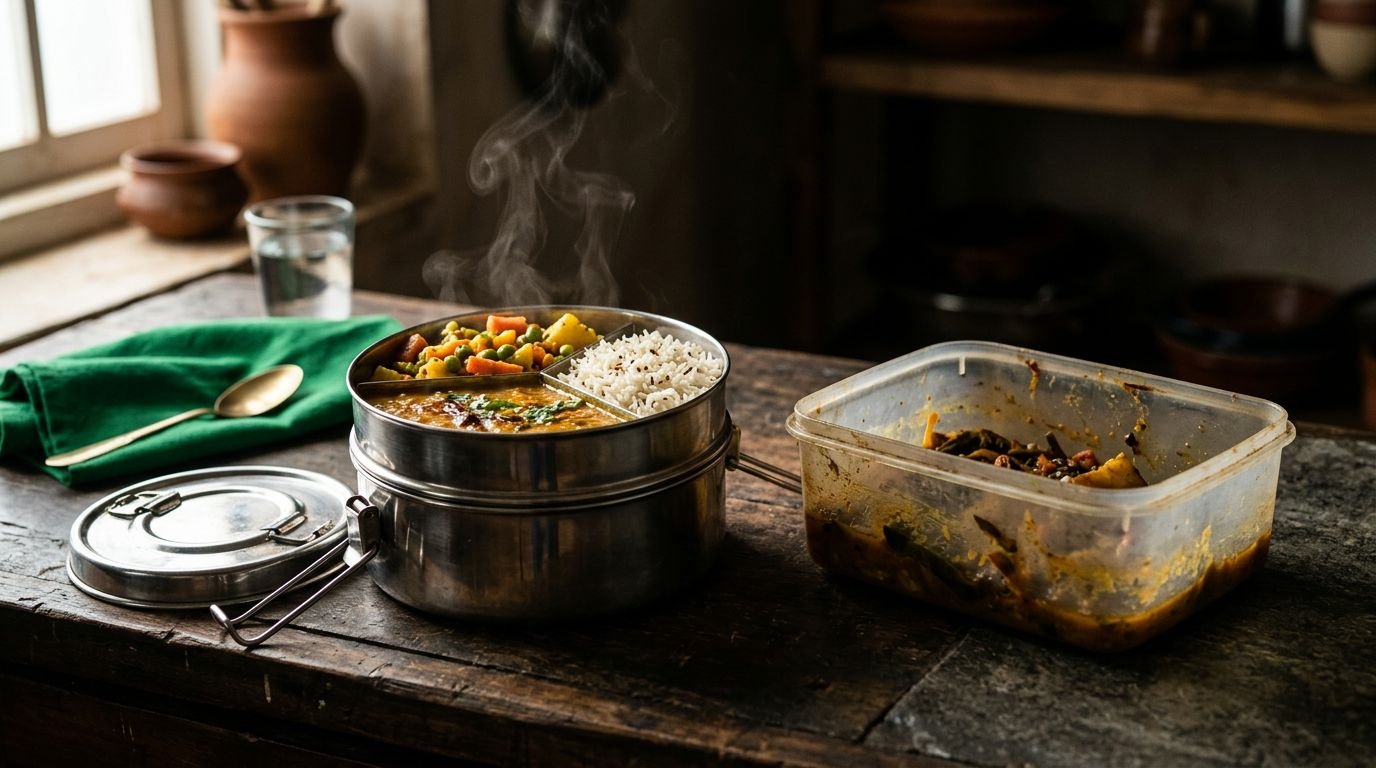
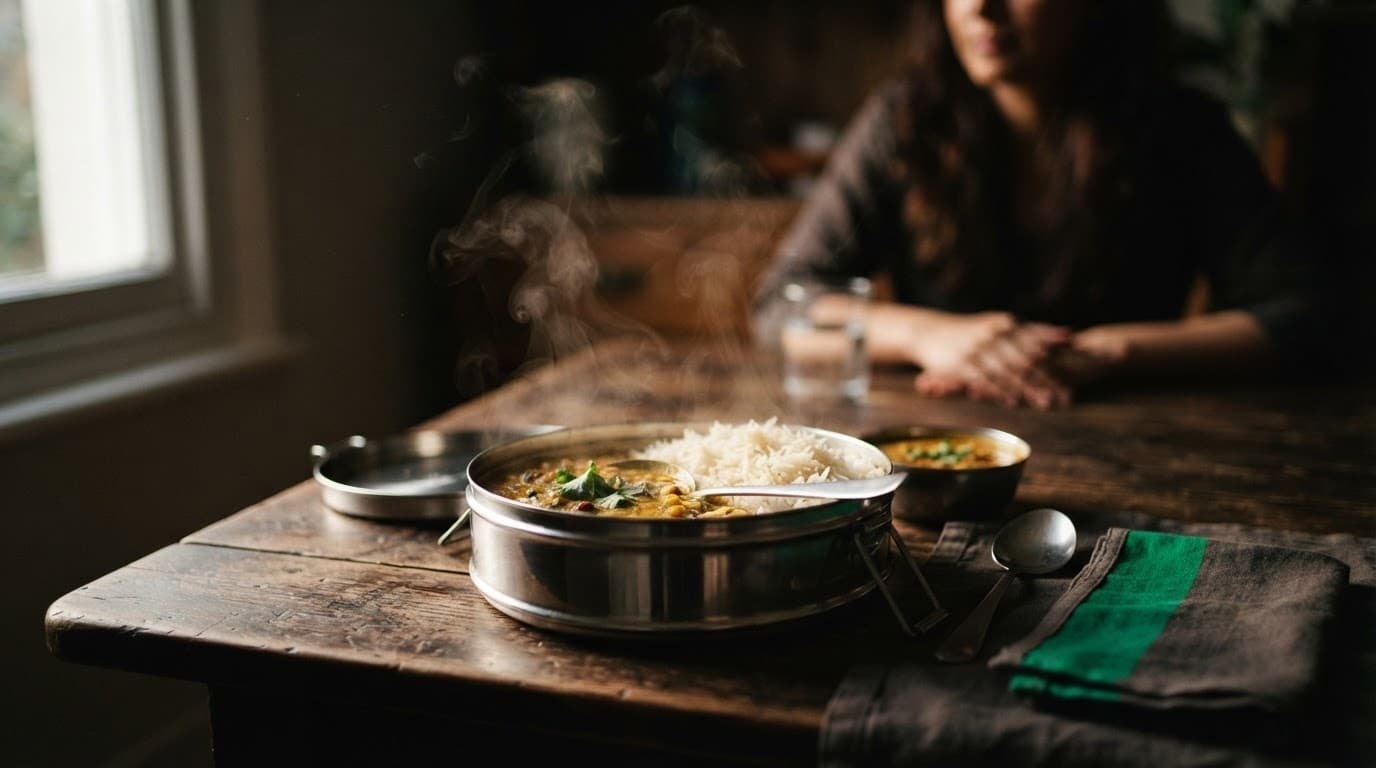
That steaming dal you pack at 8 a.m. can turn a convenient tiffin into a small heat experiment.
Across plastic lunch boxes India, the bigger concern is not brief food contact. It is repeated contact with hot, oily, acidic food in a scratched container that has endured years of washing, commuting, and microwave reheating.
We don’t need panic. We need better habits, better materials, and a little less faith in labels.
Key Takeaways
- Heat, oil, acidity, contact time, and surface wear can increase concerns about chemical migration from plastic lunch boxes.
- Stainless steel is the strongest everyday choice for hot Indian meals, while glass is better for reheating and PP #5 plastic is best limited to clearly labelled, appropriate uses.
- “BPA-free” and “food grade” do not mean chemical-free or suitable for repeated heating; always check material markings and care instructions.
- Replace plastic containers that are deeply scratched, warped, cracked, cloudy, sticky, or permanently odorous, and inspect silicone seals regularly.
- A leak-proof lunch box should be tested with water at home, while cold foods such as curd and fruit should travel in an insulated bag with an ice pack when needed.
Heat changes the equation for plastic lunch boxes
Plastic is not one material, and it doesn’t behave the same way in every kitchen. Heat, contact time, food acidity, oil, harsh detergents, and surface wear can all affect what moves from a container into food.
A fresh container holding a dry sandwich is a different situation from leftover rajma, hot rice, and ghee sitting in an old plastic tiffin for hours. The second scenario brings more heat, fat, and time. Those are the conditions worth reducing.
A 2023 review of microwavable plastic containers found that these materials can release substances of toxicological concern. That doesn’t mean every plastic lunch box creates the same risk. It does mean casually heating food in any available box deserves a hard look.
A microwave safe lunch box is designed for stated microwave conditions. It is not proof that frequent heating causes zero chemical migration.
The materials most often discussed are bisphenol A, or BPA, and phthalates. Both have raised concerns because some can interfere with hormone systems. BPA-free products are a step away from BPA, but they shouldn’t be treated as chemical-free by default. Some plastics use substitutes such as BPS or BPF instead.
The simplest exposure reduction is also the least glamorous: don’t heat food in plastic when glass, ceramic, or steel can do the job better.
Material claims are helpful, but they aren’t a safety plan
A claim such as “BPA free material” is easy to spot on a product listing. It means BPA was excluded, not that the product is chemical-free.
It doesn’t make the container suitable for every use.
Food grade plastic is intended for food contact under stated conditions. It doesn’t mean a faded, cracked, curry-stained box is built for repeated reheating. Nor does it tell you whether the lid, valve, gasket, and container body use the same material.
The strongest practical choice is to read the bottom of the box, not only the marketing copy:
- Look for a clear recycling mark and material identification. Polypropylene, marked #5 or PP, is generally a more heat-stable plastic choice than unknown or unmarked plastic.
- Check the product instructions for intended uses. A dishwasher safe label does not automatically establish microwave suitability.
- Treat claims about virgin plastic as limited information. New resin does not automatically make a container suitable for repeated heating.
- Avoid heating PVC (#3), polystyrene (#6), thin takeaway tubs, and containers without microwave-use instructions.
- Retire containers that are cloudy, deeply scratched, warped, cracked, sticky, or permanently odorous.
- Keep hot oil-heavy curries and sour foods out of old plastic whenever possible.
The case against microwaving plastic is not about chasing perfection. It is about stopping a preventable routine when safer alternatives are available.
For shoppers looking up plastic lunch boxes India, the better question isn’t, “Is this claim enough?” Ask, “Will I pack hot food in it, reheat it, and use it daily for three years?” That question changes the purchase.
Choose the lunch box around the meal
When choosing a lunch box for office meals, start with what you actually carry. Indian lunches often include rice, dal, sabzi, curd, pickle, and gravy. Your container needs to handle them without forcing the meal into a weak box.

Here is a useful material guide.
| Material | Best use | Heat rule |
|---|---|---|
| Stainless steel | A steel tiffin box for daily hot meals and commuting | Never put it in a microwave oven |
| Glass | Home storage and reheating | Check that the glass is microwave-safe; remove plastic lids before reheating |
| PP #5 plastic | Cold food, snacks, short-term transport | Use only when clearly labelled for microwave use, and limit repeated heating |
| Unknown or damaged plastic | None | Replace it rather than reheating food in it |
A stainless steel lunch box is the strongest everyday choice for hot food. It lasts, doesn’t absorb turmeric odours easily, and travels well in an insulated lunch bag. Its limitation is simple: steel does not belong inside a microwave.
A glass lunch box is excellent for reheating leftovers at home or in an office pantry. It can also serve as a food storage container. A borosil lunch box is one glass example, not a blanket safety endorsement. Glass is heavier, breakable, and less forgiving in a crowded backpack. Avoid sudden temperature changes, such as moving a chilled glass box straight into high heat.
For a complete rice-and-dal lunch, many adults do well with 750 ml to 1,000 ml total capacity, split across two or three containers in a lunch box set. A compartment lunch box or bento lunch box can separate rice, dal, and dry sides, but compartments help only when wet foods are properly sealed. Add a 150 ml to 250 ml cup for curd, chutney, or pickle. A kids lunch box usually needs less capacity. A huge 1,500 ml box sounds practical until it leaks onto a laptop and becomes dead weight on the metro.
Leak-proof matters more than a shiny brand name
Milton lunch box, Tupperware lunch box, and Borosil lunch box are familiar names in Indian kitchens. Their models vary, but seal design, material, and care instructions matter more than the logo. A higher lunch box price is not a substitute for testing the closure.
A good lunch box for office commutes has a stable base, a lid that closes evenly, and a silicone seal that sits flat in its channel. Boxes with compartments can make packing easier, but only when wet foods are contained properly.
An airtight tiffin box and a leak proof lunch box are related, but they are not identical. Airtight describes a lid that limits airflow and may help food stay fresher. Leak-proof means the closure can hold liquids when the box tilts or moves. An airtight tiffin box can still feel secure and fail when warm sambar reaches the lid.
Before trusting a new leak proof lunch box with dal, test it at home with water. Fill it, close it, turn it upside down over the sink, and leave it for a minute. That small test is kinder than discovering a failed seal in a work bag.
For children, choose a smaller school tiffin box or kids lunch box they can open without a struggle. A bento lunch box with a few simple compartments can help children manage portions. Avoid too many closure points. A child who cannot close the lid properly will carry a spill risk all day.
Silicone gaskets need care, including a removable rubber seal ring when the box uses one. If the box is marked dishwasher safe, follow the manufacturer’s instructions. Remove the seal regularly, wash it with mild soap and warm water, rinse it well, and let it dry fully before replacing it. Food trapped beneath a gasket causes smells, mould, and poor sealing. Don’t dig it out with a knife or stretch it until it loses shape.
Turmeric stains are stubborn, but they are not always a reason to throw a box away. Wash quickly after use, use a bicarbonate-of-soda paste for lingering odours, and let the container dry in sunlight. Permanent odour, rough surfaces, and warping are different. Those are retirement signs.
The ecological cost doesn’t end at your lunch break
A discarded plastic tiffin box does not disappear when it leaves your kitchen. It enters a low-value waste stream and often becomes a long-term burden for collection workers, drains, landfills, and waterways.
That is where personal choices meet systemic change. A circular economy is not a slogan about buying a reusable item once. It means manufacturers clearly mark materials, sell replacement seals, design durable products, and take responsibility for what happens after the sale.
Sustainable business models should reward repair and reuse, not disposable containers dressed up in green language. A warped lid should not make an otherwise useful box worthless.
Plant-based living can reduce pressure on the climate, but it doesn’t cancel the risks of reheating hot food in worn plastic. Climate literacy means seeing both truths at once. Our food choices matter, and so do the materials that hold our food.
This is also an issue of urban biodiversity. Plastic waste that enters drains and water bodies harms the small living systems that make cities breathable and liveable. Everyday mindfulness can mean washing and reusing a container properly, but it must not become private guilt.
The ecological impact is larger than one tiffin. It is about whether businesses, institutions, and households treat waste as somebody else’s problem. For practical work connecting climate literacy with community action, Explore Our Active Missions.
A heat-aware routine that works on busy days
You don’t need a perfect kitchen to lower exposure. Start with a routine you can repeat:
- Pack piping-hot meals in a stainless steel lunch box whenever possible, especially curries, dal, and oily sabzis.
- Transfer leftovers into glass or ceramic before reheating. Don’t repeatedly reheat food in the plastic sections of a bento lunch box just because it has separate compartments. If plastic is your only option, use a clearly labelled PP container and avoid high heat or long reheating cycles.
- Keep cold food cold. Use an insulated lunch box and an ice pack for curd, cut fruit, or sandwiches on long commutes. When choosing a lunch box with bag, check that the accompanying bag provides thermal insulation.
- Inspect your containers monthly, including any kids lunch box. A leaking seal, scratched surface, or warped base is not a minor inconvenience. It is a signal to repair, replace, or move that box to non-food storage.
Frequently Asked Questions
Is it safe to heat food in a plastic lunch box?
It is better to reheat food in glass or ceramic whenever possible. If plastic is the only option, use a clearly labelled microwave-safe PP #5 container and avoid high heat, long cycles, and repeated reheating.
Is BPA-free plastic completely safe?
BPA-free means that BPA was not used; it does not mean the container is chemical-free. Some products use substitutes such as BPS or BPF, so reducing heat and choosing glass or stainless steel can still be sensible.
Which lunch box material is best for hot Indian food?
Stainless steel is a durable everyday choice for hot meals such as dal, rice, and sabzi. It cannot be used in a microwave, so glass is more suitable when you need to reheat food.
When should a plastic lunch box be replaced?
Replace it when it becomes deeply scratched, cloudy, warped, cracked, sticky, or permanently odorous. A damaged seal or lid that no longer closes properly is also a reason to repair or replace the box.
How can I check whether a lunch box is leak-proof?
Fill the closed container with water, turn it upside down over a sink, and leave it for a minute. Check that the lid closes evenly and that the silicone gasket sits flat without stretching, food buildup, or gaps.
A better tiffin is a small daily boundary
The point isn’t to shame anyone carrying a plastic tiffin. Plastic is cheap, light, and often the most accessible choice.
But hot food and ageing plastic make a poor long-term partnership. Choose a stainless steel lunch box for hot meals, glass for reheating, and well-marked PP only when plastic is genuinely needed.
The same heat-and-ageing principle applies to a bento lunch box or a traditional tiffin. Your lunch break should restore you, not add another avoidable chemical question to the day.