Why Sewage Irrigation India Loads Soil With Metals
 TBH Editorial
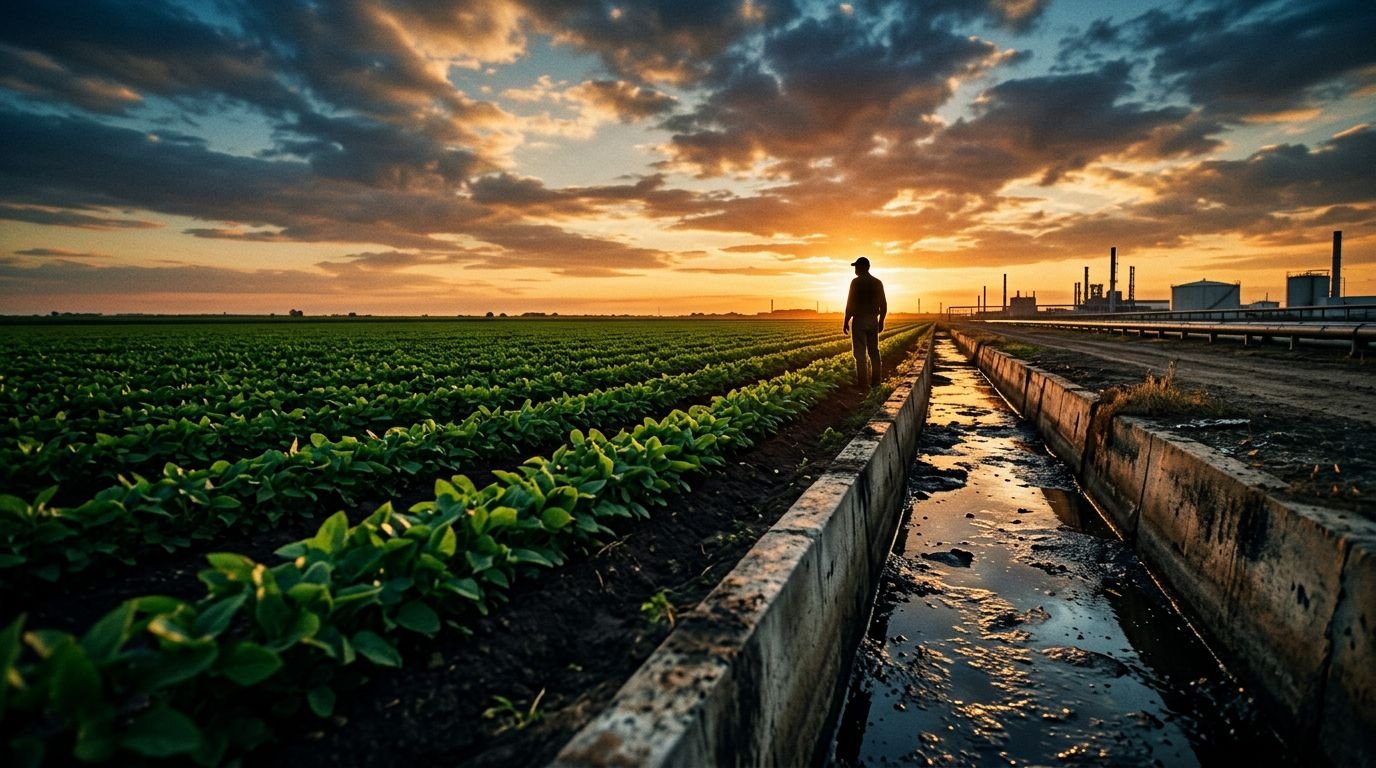
A green field beside a dirty drain can look productive, even healthy. Yet in many parts of India, that same water can carry heavy metals that stay in soil long after the irrigation stops.
Farmers do not choose wastewater because it sounds safe. They use it because of water scarcity, which makes fresh water costly, unreliable, or simply unavailable near the crop belt. The result is a food and soil problem that sits at the meeting point of agriculture, public health, and urban waste.
To understand why sewage irrigation India leads to soil contamination, you have to follow the waste upstream.
Key Takeaways
- Persistence of Contaminants: Unlike organic waste, heavy metals like lead, cadmium, and chromium do not break down in soil, leading to long-term accumulation that affects multiple growing seasons.
- Systemic Failure: Inadequate industrial pre-treatment and the mixing of industrial effluent with domestic sewage create a “black box” of contaminants, making it impossible for downstream farmers to monitor or control water quality.
- Health Risks: Leafy vegetables grown with untreated wastewater are particularly prone to high metal uptake, posing chronic health risks to consumers such as kidney stress, nerve damage, and increased cancer potential.
- Limited Treatment Efficacy: Most standard wastewater treatment plants in India are designed to address biological oxygen demand rather than dissolved heavy metals, meaning they often fail to remove the toxic substances that cause the most harm to soil and crops.
Why farmers keep turning to sewage water
Across many Indian cities, farming has not disappeared at the urban edge. Instead, peri-urban agriculture has adapted to the shifting landscape. Growers often rely on drains, canals, and wastewater-fed channels because they provide a year-round flow when wells run low and canal water supplies run late.
That water can look useful for a simple reason. Sewage often contains Nitrogen and Phosphorus, along with potassium and organic matter. In the short run, crops may grow faster and look greener. For a farmer working on thin margins, that early boost matters.
Still, the same flow of untreated wastewater can also carry salts, detergents, pathogens, oils, and metal residues. When clean irrigation water is scarce, the choice is less about preference and more about survival. That point matters because blaming farmers hides the real problem. The system delivers dirty water and then leaves the farm to absorb the damage.
Recent estimates suggest that most sewage in India still does not pass through full treatment before it reaches rivers, lakes, drains, or open land. That means wastewater reuse often happens by default, not by design. A field near a city drain can become part of the sanitation system without consent, planning, or safety checks.
The first few seasons may not reveal the full cost. Yields can hold up, and leafy vegetables can look lush. Soil can seem richer because more fine particles and organic matter settle into it. But that visible productivity can hide a slow transfer of contamination from city waste to farm soil.
If you care about plant-based living, this issue sits right on your plate. Vegetables are only as clean as the water and soil behind them.
Where the heavy metals in sewage come from
Heavy metals do not appear in irrigation water by accident. They enter the urban waste stream from many places within our urban centers, and because drains are often mixed, tracking these pollutants remains difficult.
Industrial effluent is a major source. Tanneries can add chromium, while electroplating units release nickel and cadmium. Battery work, metal polishing, dyeing, paint residue, and informal repair clusters can all add lead and other metals. Even domestic wastewater is not clean. Household cleaners, old plumbing, cosmetics, and road runoff all contribute small amounts that add up over time.
This quick map shows how contamination builds before the water ever reaches a field:
| Waste source | Metals often found | Why it matters on farms |
|---|---|---|
| Tanneries and dye units | Chromium, lead | Can raise toxicity in irrigation channels |
| Metal finishing and plating | Nickel, cadmium | Builds up in topsoil over repeated use |
| Battery and e-waste handling | Lead, cadmium, zinc | Can move into vegetables and fodder |
| Household sewage and plumbing | Lead, copper, zinc | Adds background contamination to mixed drains |
| Road runoff and landfill leachate | Lead, chromium, nickel | Spreads pollution during rain and overflow |
The trouble grows when all of these sources feed the same sewer or drain. Once industrial waste mixes with domestic sewage, the water may still look ordinary to the eye, but the chemistry tells a different story.
In northwestern India, one study found chromium in wastewater rising sharply after industrial effluent entered the flow. That pattern matters because a farmer drawing water downstream rarely knows what changed upstream that week. The field receives the whole city mix, making it nearly impossible for farmers to monitor the water quality of their irrigation supply.
Why soils hold on to metals for years
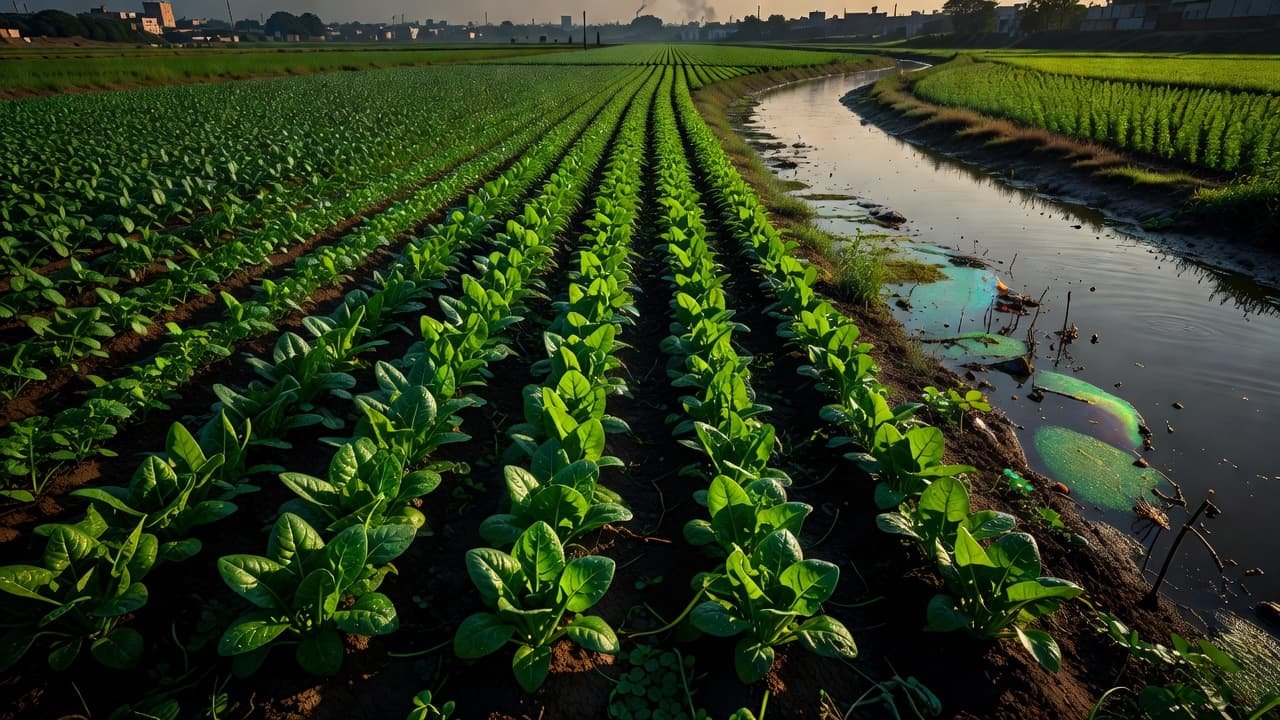
Once contaminated water reaches a field, the risk of soil contamination does not end with irrigation. It settles into the soil, creating a lasting environmental challenge.
Heavy metals are stubborn because they do not break down like food scraps or plant matter. Cadmium, lead, chromium, and nickel can attach to clay particles, bind with organic matter, or remain in forms that plants can still absorb later. Repeated irrigation turns small deposits into a long-term load, especially since standard wastewater treatment often fails to remove these persistent inorganic pollutants before they hit the fields.
A soil irrigated with polluted water becomes a record of past contamination, not just a surface that can be rinsed clean.
At first, some soils seem to buffer the problem. Clay-rich soils can trap metals near the surface. Organic matter can hold them in place. Yet that is only part of the story. Changes in pH, salinity, moisture, or redox conditions can make those same metals more mobile later. In other words, a field can store pollution in one season and release more of it to roots in another.
Wastewater also changes the soil itself. High salts can damage structure and reduce the plant’s ability to take up water normally. Fine sediments from sewage can make soils heavier. Over time, that affects aeration, drainage, and root health.
Research on field accumulation risks in soil and vegetable systems shows that wastewater irrigation can raise metal levels in both soil and vital groundwater resources. Some studies have also found contamination moving beyond the top layer, especially where irrigation is frequent or soils are lighter.
That matters because soil contamination is sticky in both the chemical and political sense. Once metals build up, cleanup is slow, expensive, and rare. Most farms are left to cope with the residue rather than get real remediation.
How metals move from soil into food and the associated health risks
A contaminated field does not poison every crop in the same way. The degree of uptake depends on the specific crop variety, the soil composition, the type of metal, and the local water chemistry.
Leafy vegetables often face the highest concern because they grow rapidly, have a high surface area, and can accumulate metals directly in their edible leaves. Spinach, coriander, fenugreek, and other greens grown close to city markets are often the food crops most exposed to heavy metals. While fruiting vegetables may accumulate fewer toxins in their edible portions, a lower concentration does not mean the produce is entirely free of contaminants. Roots, stems, and animal fodder can also carry significant levels of these elements.
A recent paper on wastewater-irrigated soils and vegetables found altered soil chemistry and stronger metal accumulation in leafy vegetables than in many fruiting crops. An older study of sewage-irrigated vegetables also reported cadmium and lead in edible plant parts under both treated and untreated wastewater use.
Rice systems are not exempt from this issue. A health-risk study in wastewater-irrigated rice fields found cadmium to be a major concern because it can move into the grain and raise dietary risk over time.
For human consumers, the danger is usually chronic rather than immediate. Small doses consumed over long periods can lead to bioaccumulation in the body. The WHO guidelines for safe dietary intake provide the necessary benchmarks for assessing the health risks associated with metals like cadmium and lead, which are linked to kidney stress, bone damage, nerve problems, developmental harm, and a higher cancer risk. Beyond ingestion, farm workers and nearby residents may also face hazards through direct skin contact and inhalation of contaminated dust.
This is why the food safety issue cannot be reduced to whether a vegetable simply looks fresh. A glossy, vibrant bunch of greens may hide a long history of contaminated irrigation that poses serious long-term consequences for human health.
Why treatment gaps and weak oversight keep this going
Many people hear that a city uses wastewater treatment and assume the problem is solved. Often, it is not.
Standard plants are primarily designed to reduce Biological Oxygen Demand (BOD) and Total Suspended Solids (TSS) rather than heavy metals. These facilities do not always remove dissolved metals effectively, especially when industrial effluent enters the sewer network unexpectedly. Some metals simply shift into sludge rather than disappearing. If that sludge is poorly managed, the pollution changes form and location, but it does not vanish.
The larger failure occurs upstream. Cities often allow domestic sewage, workshop discharge, road runoff, and industrial waste to mix before meaningful testing takes place. Once these streams combine, the drain effectively becomes a black box. While the Central Pollution Control Board (CPCB) provides guidelines for monitoring, sampling remains sporadic and data is frequently buried in internal files. Consequently, farmers rarely receive timely alerts about the contaminants flowing toward their fields.
This is where systemic change matters more than ribbon-cutting infrastructure. The right question is not whether a city has a treatment plant, but whether the treated effluent reaching farms is truly safe, day after day, across every season.
Source control remains more effective than downstream patchwork. Industries with metal-heavy waste must implement strict pre-treatment and face real enforcement before their discharge joins municipal sewers. Without such oversight, treatment plants are expected to fix contamination they were never designed to handle.
The same accountability issue affects municipal budgets. A plant that appears functional on paper but remains underpowered, poorly maintained, or chronically overloaded offers no real protection; it is merely paperwork. Cities need transparent monitoring systems that citizens can see, understand, and challenge to ensure long-term environmental safety.
The ecological impact goes beyond one harvest
The damage does not stop at the farm boundary. The ecological impact spreads through soil life, water pathways, and nearby communities.
Healthy soil depends on microbes, fungi, insects, and earthworms that keep nutrients moving and structure stable. Heavy metal loads and the influx of fecal coliforms can disrupt these living systems, creating a heavy biological load that degrades soil function. This results in weaker soil health even before a crop shows visible stress. Furthermore, when runoff carries contaminated sediments back into drains and ponds, nearby aquatic life takes another hit.
Groundwater can also become part of the story. In lighter soils or long-used wastewater belts, metals and salts may move downward with repeated irrigation. This creates a delayed risk because wells and hand pumps may later draw from the same contaminated landscape.
There is also a plain justice issue here. Peri-urban farming zones often sit near low-income settlements, transport depots, workshops, and waste corridors. The same neighborhoods that get the dirtiest water often receive the least testing, least disclosure, and least health support. Children, field workers, and local vendors live with the exposure first.
Contaminated canals and field margins also pressure urban biodiversity. Wetland birds, pollinators, roadside vegetation, and soil organisms all depend on cleaner water than these mixed drains provide. Local repair work matters because pollution control and habitat protection are connected. If you want to support visible, on-the-ground work that links ecosystems, public awareness, and community repair, Explore Our Active Missions.
A real circular economy does not treat this dangerous practice as legitimate nutrient recycling. We must demand better standards for wastewater reuse, as simply moving toxic metals from drain to soil to crop is not a sustainable solution.
What real solutions look like on the ground
Cleaner farming near cities will not come from one fix. It needs several boring, measurable steps that stay in place after the press photo.
First, separate industrial discharge from domestic sewage wherever possible. Mixed drains hide liability. Pre-treatment rules for metal-heavy industries need routine checks, clear penalties, and public reporting. Second, test irrigation water, soils, and edible crops in known wastewater belts on a fixed schedule. Data should reach farmers in plain language, not sit in departmental spreadsheets.
Crop guidance matters too. Where water quality is doubtful, authorities should discourage leafy vegetables and other high-uptake crops in favor of safer alternatives that maintain stable crop productivity. While safer crop choices are not a full answer, they can cut exposure while cleaner water systems catch up. Integrating specific irrigation techniques, such as drip irrigation, can further minimize direct contact between contaminated water and edible plant parts.
Cities also need sustainable business models for wastewater reuse as part of a broader strategy for sustainable water management. Treatment plants require reliable power, staff, sludge handling, and upkeep. A system that runs for six months and then stalls does not protect soil. Polluters should bear more of that cost, because farmers and consumers already carry too much of it.
Public health teams, agriculture departments, and urban local bodies must coordinate under the guidelines of the National Water Policy to ensure long-term climate resilience. Better climate literacy helps people see why water scarcity cannot justify shifting pollution from rivers into food. At the same time, everyday mindfulness can help consumers ask better questions about water sources and local produce. Still, personal awareness is not enough. People cannot shop their way out of weak regulation.
The strongest response is practical and upstream. Clean the flow before it reaches the field. Publish the numbers. Support farmers during transition. Build reuse systems that protect land instead of sacrificing it.
Frequently Asked Questions
Why do farmers choose to use sewage water for irrigation?
Farmers often rely on untreated wastewater due to severe water scarcity and the high cost of fresh water. While not an ideal choice, it provides a consistent, year-round flow that keeps crops green and productive when traditional irrigation sources like canals or wells are unavailable.
Can washing vegetables remove heavy metals absorbed from the soil?
No, washing cannot remove heavy metals because they are not just on the surface of the produce. Through the plant’s root system, these metals are absorbed into the plant’s tissues, making them a part of the crop itself rather than a removable external contaminant.
Does the presence of a sewage treatment plant mean the water is safe?
Not necessarily. Many municipal treatment plants are built primarily to reduce waste and odors, not to strip out dissolved heavy metals from industrial runoff. If the facility is poorly maintained or industrial waste is allowed to enter the system unchecked, the effluent may remain hazardous to soil health.
How long do heavy metals stay in the soil?
Heavy metals are remarkably stable and can remain in the soil for years or even decades. Once they accumulate, they bind to clay particles and organic matter, making remediation an extremely slow, expensive, and difficult process that is rarely accessible to the average farmer.
Conclusion
A green crop beside a dark drain can hide a hard truth. In many parts of India, sewage irrigation in India continues to load soils with heavy metals because polluted urban waste reaches farms faster than regulation, treatment, and disclosure can keep pace.
The key point is simple: soil remembers. Once cadmium, lead, chromium, and other toxic metals settle in, the damage can outlast a season, a market cycle, and even a change in water source.
Ensuring cleaner food and safer farms will require better source control, honest monitoring, and public accountability. Moving forward, any strategy for wastewater reuse must be built on a foundation of transparency and soil safety to avoid permanent ecological damage. Anything less only moves the pollution around.