
Why Mosquito Fogging Hurts Pollinators in Indian Cities
 Saket Sambhav
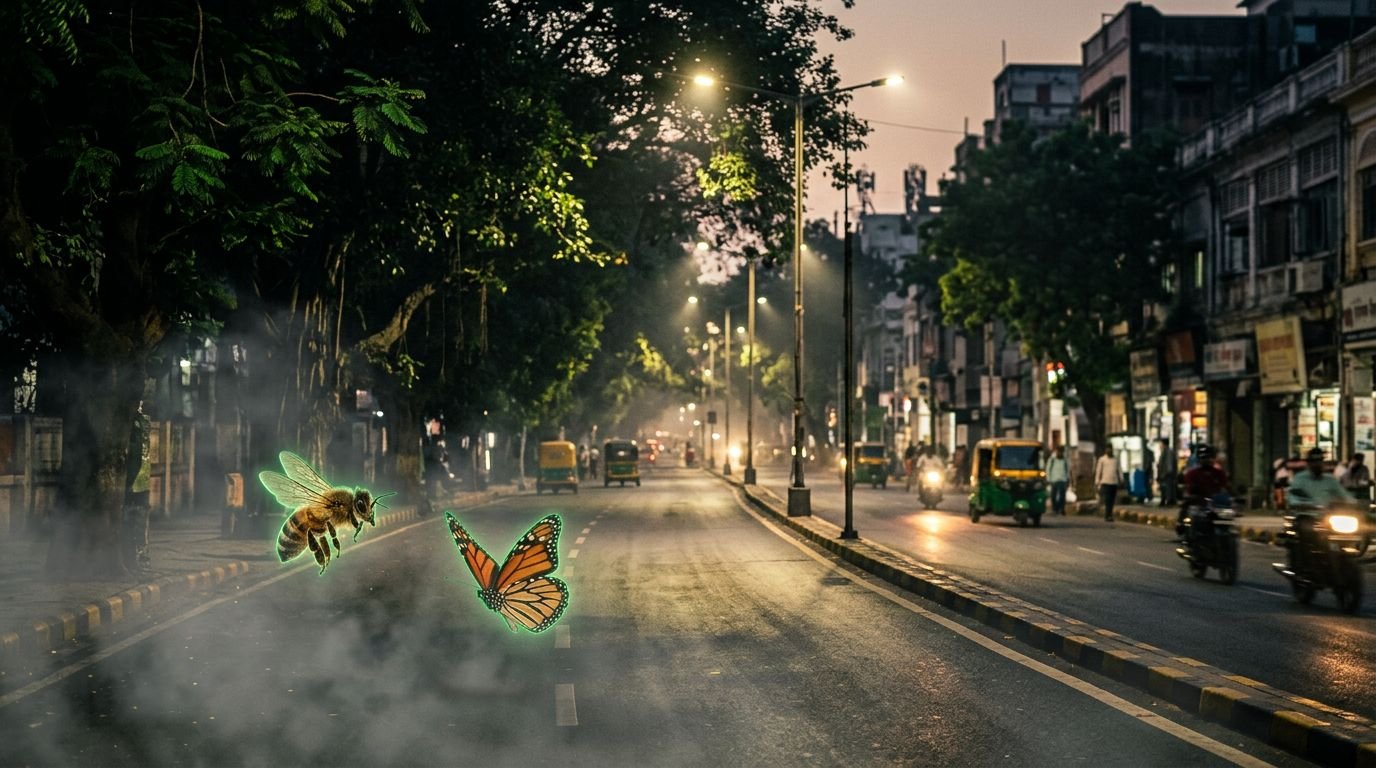
When a lane disappears into a dense cloud of chemicals, many residents feel a sense of relief. However, the intersection of mosquito fogging and pollinators is a growing environmental concern, as the same mist intended to protect human health often harms the bees, butterflies, moths, and other essential insects sharing our streets, parks, and balcony gardens. These visible clouds, often composed of ultra-low volume sprays, blanket wide areas and inadvertently target beneficial species rather than just the intended pests.
In Indian cities, this conflict is easy to overlook because the fear of dengue is high and the act of fogging is highly visible. Still, visible action is not the same as precise action, and the insects that help cities flower, fruit, and recover from heat often pay the price first.
To see why mosquito fogging and pollinators collide so often, it helps to start with what fogging can, and cannot, actually do.
Key Takeaways
- Fogging is not a cure-all: Routine mosquito fogging is a highly visible, reactive measure that often fails to address the root cause of mosquito breeding, such as stagnant water in containers or drains.
- Collateral damage to biodiversity: Chemical mists containing pyrethroids are indiscriminate, harming beneficial pollinators like bees and butterflies through direct contact or by contaminating the pollen and nectar they rely on.
- The impact of residues: Pesticide drift affects urban ecosystems long after the fog clears, with residues on leaves and petals weakening pollinator health and disrupting reproductive cycles even at sublethal doses.
- Systemic monitoring is missing: Most cities track the volume of chemicals sprayed rather than the environmental outcomes, leading to a significant data gap regarding the long-term impact on urban insect populations.
- Integrated pest management is essential: Moving toward source reduction—such as clearing breeding sites and using targeted biological agents—allows cities to protect public health without sacrificing the pollinators vital to our gardens and urban green webs.
Fogging is visible, but its target is narrow
Across Indian cities, fogging usually appears during monsoon months, after complaints rise, or when dengue cases put pressure on local officials. It gives residents a clear sign that someone is responding. That matters in a public health scare. People want to see action.
In many neighborhoods, mosquito control districts and various private mosquito spray companies coordinate these efforts to address public concern. Still, these operations mainly target adult mosquitoes moving or resting in exposed spaces. They do not remove the standing water found in construction sites, buckets, coolers, terrace trays, clogged drains, or uncovered tanks. In other words, they do not address the source of the problem, which is the mosquito larvae developing in those neglected areas.
That gap matters because many disease-carrying mosquitoes breed close to homes, in small containers, rather than in large swarms over open roads. A chemical cloud on the street often misses the small water sources that keep the cycle going. Yet, the same cloud of pyrethroid insecticides can easily drift onto hedges, flowering shrubs, roadside weeds, and apartment gardens.
This is where the clash between chemical spraying and pollinators begins. These treatments do not distinguish between the target species and other winged insects. If the chemical lands where insects feed, rest, or reproduce, non-target insects get pulled into the same destructive event.
The politics of this are uncomfortable. Fogging is easy to film, easy to announce, and easy to count. Drain repair, container checks, waste removal, and community source reduction are slower. They also demand coordination across health, sanitation, housing, and water departments. That is harder work, and it is less theatrical.
A city can publish green branding, celebrate the circular economy, and praise sustainable business models. Yet those claims ring hollow when blooming verges and public gardens become collateral during routine spray rounds. Urban biodiversity cannot survive on posters alone.
How mosquito sprays hit bees, butterflies, and moths
The harm is not abstract. Pollinators can die on contact when fog hits them in the air or on plants. Even when they avoid direct exposure, pesticide drift allows droplets to settle on petals, pollen, nectar, and leaves. Later, honey bees and butterflies return to feed and pick up residues.
A recent risk assessment of mosquito control and pollinators found that adult mosquito sprays containing permethrin can harm pollinators present during application. When scientists calculate LD50 values and the Risk Quotient for these chemicals, they often find that broad insecticide use in urban environments leads to significant non-target impacts on beneficial insects.
A short comparison makes the pattern clear:
| What fogging does | What pollinators face |
|---|---|
| Hits adult mosquitoes in open air | Can also kill honey bees and monarch butterflies on contact |
| Drifts past the spray line | Reaches flowering hedges, medians, and balcony plants |
| Leaves residue on plants | Gets picked up later through nectar, pollen, or leaf feeding |
| Uses small droplets and low doses | Can still weaken foraging, navigation, survival, and reproduction |
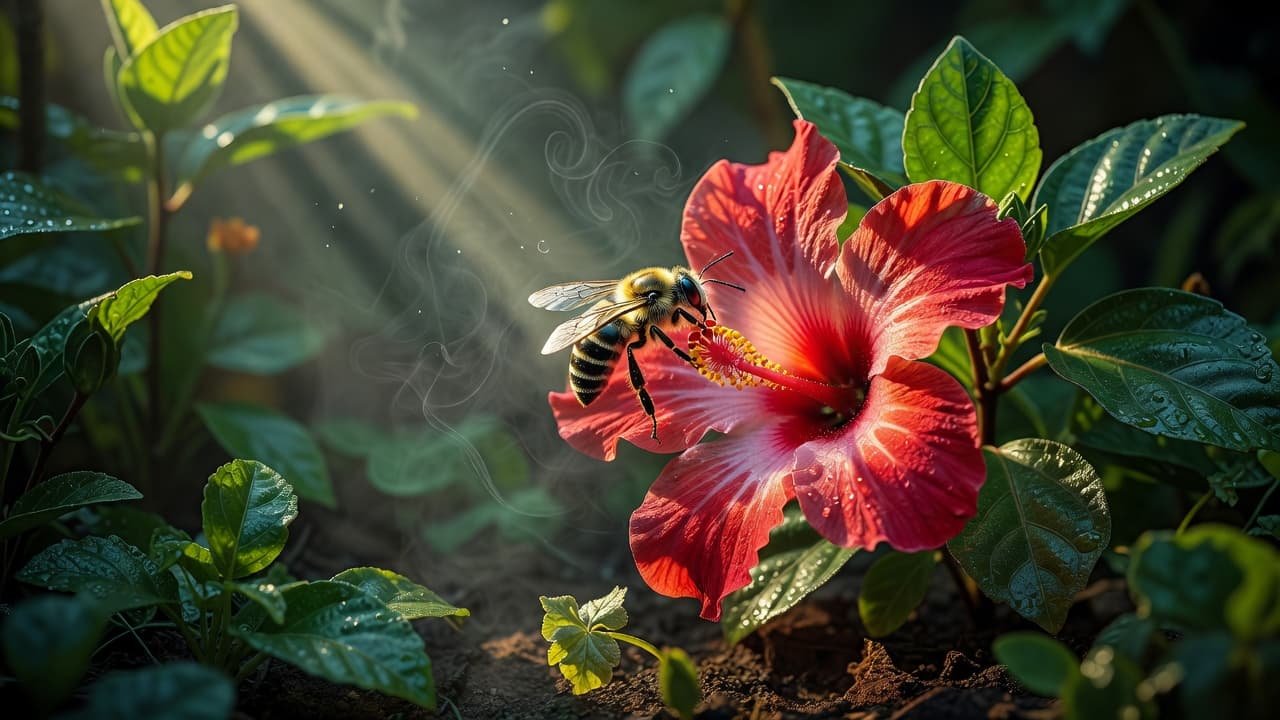
If spray lands on blooming plants, the program is no longer acting only on mosquitoes. It is acting on the city’s wider insect life.
Timing does matter, but not as much as many people assume. Some mosquito programs schedule night applications because many bees are less active then. That may reduce direct hits on daytime pollinators, but it does not remove the risk from residue. It also ignores night-active pollinators such as moths, which move when many fogging rounds happen.
Sublethal effects represent a major blind spot. An insect does not need to drop dead on the spot for damage to occur. A weakened bee may forage less, fail to return to its nest, or bring contaminated pollen back to larvae. A caterpillar feeding on treated leaves can die long after the fog has cleared from the street.
City habitats make this worse. In dense neighborhoods, flowering plants sit close to roads, drains, compound walls, schools, and small parks. The distance between mosquito space and pollinator space is often no distance at all.
Why pollinators matter more than many city plans admit
Pollinators are easy to romanticize and easy to ignore. In reality, they do practical work. They help trees set seed, support flowering plants, and improve yields in kitchen gardens and peri-urban farms. For many city residents, that includes terrace-grown gourds, cucumbers, chilies, okra, herbs, and fruiting plants in their residential yards.
Their value goes beyond food. Pollinator-friendly plants hold more beneficial insects, and these populations support birds, reptiles, and small urban food webs. From the vital work of honey bees to the subtle presence of native pollinators, these creatures sustain the ecosystem. Once those links weaken, city nature becomes decorative rather than living. A park may still look green, but it functions like a set piece.
This is why repeated mosquito spraying has a larger ecological impact than most public notices admit. The damage is cumulative. One round may seem minor. A season of repeated exposure across medians, gardens, wetlands, and vacant plots can thin out the very insects that make urban planting schemes work.
Indian cities already ask a lot from small habitat patches. A school garden, a temple grove, a roadside strip, or a cluster of native shrubs in a housing colony may hold more insect life than people realize. Because those spaces are scattered and fragmented, each one matters more. A spray program that treats them as expendable chips away at the city’s biological memory.
That is one reason the debate over Miyawaki forests and urban biodiversity matters. Planting more greenery helps only if the habitat can support insects, birds, and soil life over time. A city cannot claim biodiversity gains in one department and erase insect life through another.
Pollinators also support resilience in ways city budgets rarely count. Flowering trees that reproduce well, home gardens that fruit, and insect-rich green patches that feed birds all make urban heat, stress, and pollution a little more bearable. Lose the pollinators, and the whole system becomes thinner.
The data gap that hides the damage
One reason this issue stays blurry is that cities often measure action rather than outcomes. They count fogging drives, staff deployed, liters used, or neighborhoods covered. These metrics are easy to document in a report, whereas the reality of insecticide contamination is harder to see and often disappears from the official story.
This is fundamentally a monitoring failure. If a city sprays near parks, wetlands, flowering medians, school gardens, or dense residential planting, it should also track the resulting non-target impacts. That means documenting public spray schedules, specific ingredients used, local weather conditions, no-spray buffers near flowering zones, and consistent insect monitoring before and after campaigns.
Without that data, residents are left with two thin narratives. One side says fogging is necessary, so criticism is naive. The other says all spraying is poison, so nothing should happen. Neither position is sufficient for a city trying to balance public health, disease risk management, and habitat conservation.
Better evidence would improve the quality of the debate. A public dashboard could map where adulticides were used, identify areas prone to pesticide drift near planted spaces, and track whether pollinator counts fluctuated over the season. Cities already track air quality and weather data; information regarding chemical exposure should not remain hidden behind routine practice.
This is where climate literacy matters. It is not only about carbon, heat, or sea levels. It is also about understanding the interconnected living systems on every city block. Mosquitoes, drains, flowering plants, birds, waste, rainwater, and chemical residues are all linked. If public policy treats them as separate files, the ecological damage becomes easy to excuse.
The same is true at the community level. Resident groups often demand more fogging because the action is visible and immediate. Few ask for evidence regarding the broader impact on the local ecosystem. Fewer still ask whether the spray actually changed mosquito breeding conditions in any meaningful way.
Public health and pollinators belong in the same plan
Dengue, chikungunya, and malaria are not minor concerns. Families lose wages, children miss school, hospitals fill up, and public fear rises fast. Any honest argument about fogging has to start there. The choice is not between caring about people and caring about insects; it is about adopting integrated pest management to ensure we protect human lives without sacrificing urban biodiversity.
The real question is whether broad spraying becomes a routine substitute for better mosquito management. When cities rely on ultra-low volume sprays, they get the comfort of a visible response without the full benefit of long-term control. Pollinators, meanwhile, absorb the spillover from these pyrethroid insecticides.
A smarter approach starts with source reduction rather than relying on indiscriminate barrier sprays. Standing water needs removal before it becomes a breeding site. Tanks need covers, and waste that traps rainwater needs regular collection. Where larval control is necessary, officials should prioritize biological agents like Bacillus thuringiensis israelensis or use mosquito dunks in stagnant water. These methods are far more precise than general fogging and carry significantly less risk to non-target species.
Timing and location remain critical. Avoiding spray near flowering plants, wetlands, and school gardens reduces harm, especially since runoff can negatively impact aquatic organisms in urban drains and ponds. Advance public notice helps residents protect their gardens, but the chemicals themselves require scrutiny. Common agents like permethrin are highly toxic to bees, and reliance on such pyrethroid insecticides often ignores the long-term ecological cost.
Public health teams also need support, not blame. Workers on the ground rarely design these systems; they operate under pressure with too few staff. Systemic change requires shifting procurement, monitoring, and cross-department planning to prioritize effective, low-impact solutions.
There is also a feedback problem many cities miss. Broad insecticide use can hit beneficial insects that keep other pests in check, weakening the urban ecology. A control measure that harms the wider insect community may solve one short-term complaint while creating new, lasting imbalances.
For people trying to live lightly, this can feel maddening. You might practice plant-based living, cut waste, and keep an insect-friendly balcony. You might build habits of everyday mindfulness around water use and consumption. Yet, personal choices cannot cancel a municipal spray program drifting onto flowers below your window. Protecting our shared environment while managing disease is a vital component of modern public health, and it belongs in policy discussions, not just as a private lifestyle concern.
What residents, RWAs, and city leaders can do next
Residents do have a role, but it is most useful when it pushes for better systems. A few simple demands can shift the quality of local action.
- Ask for advance spray notices, including time, location, and the product being used, from your local mosquito control districts.
- Push housing societies and resident welfare associations to focus on breeding sites first, especially stored water, trays, drains, and construction waste.
- Request no-spray buffers around flowering plants, community gardens, school grounds, and visible pollinator patches to ensure pollinator protection.
- Ensure that residential yards and shared green spaces are not oversprayed, specifically to avoid harming honey bees and monarch butterflies that frequent these areas.
- Ask wards to publish seasonal mosquito control plans with both health goals and biodiversity safeguards.
These are modest steps, yet they change the frame. The conversation moves from asking if fogging happened to questioning if it worked and what else it damaged. That is a much better civic question.
Schools and youth groups can help too. Counting butterflies in a campus garden, mapping flowering strips, or logging spray dates builds local knowledge. It also turns abstract climate talk into place-based awareness. Young people do not need another slogan. They need the tools to connect insect decline, public health, and city planning in one picture.
There is room here for community repair as well. Native plant patches, balcony gardens, cleaner drains, and ward-level habitat mapping all support urban biodiversity when they are paired with smarter mosquito control. If you want proof-linked, on-the-ground work that connects habitat recovery with climate literacy, Explore Our Active Missions.
The larger point is simple. Residents should not have to choose between avoiding dengue and protecting bees. City governments can do both, but only if they stop treating ecological side effects as invisible.
Frequently Asked Questions
Why does mosquito fogging harm bees if it is meant for mosquitoes?
Mosquito fogging relies on broad-spectrum insecticides that do not distinguish between disease-carrying mosquitoes and beneficial insects. When these chemicals are sprayed as a fine mist, they settle on flowering plants and open spaces, causing direct mortality or long-term contamination for any pollinator that visits those areas.
Can’t we just spray at night to protect the bees?
While spraying at night might avoid direct contact with diurnal bees, it does not solve the problem of chemical residue left on plants. Furthermore, night-time spraying poses a direct threat to nocturnal pollinators like moths, which are essential for the pollination of many native urban plants.
Is it possible to control mosquitoes without using chemicals?
Yes, by focusing on Integrated Pest Management (IPM), cities can prioritize source reduction, such as emptying containers, fixing drainage, and covering water tanks. When larval control is required, officials can use biological agents like Bacillus thuringiensis israelensis, which is specifically targeted and significantly less harmful to the broader environment than pyrethroid fogging.
How can residents protect the pollinators in their own neighborhoods?
Residents can advocate for their Resident Welfare Associations (RWAs) to prioritize container management over indiscriminate spraying. You can also request that local authorities establish ‘no-spray buffers’ around school gardens, community flowering patches, and parks to ensure these critical habitats are protected from chemical drift.
Conclusion
A pesticide cloud may last minutes, but the impact of pyrethroid insecticides can reach far beyond that street corner. When fogging drifts onto flowers, Indian cities risk weakening the honey bees and other native pollinators that keep small urban ecosystems alive.
The hardest truth is also the most useful one. This is not a story about individual guilt. It is about systemic change, including more precise mosquito control, better data, and public health plans that stop writing off non-target life as acceptable loss. To make this shift, mosquito control districts must work alongside environmental experts to ensure that our pursuit of public safety does not come at the cost of the biodiversity that makes urban living possible.
If cities want safer neighborhoods and vibrant, living green spaces, they need a mosquito policy that prioritizes the protection of both people and our essential pollinators.