
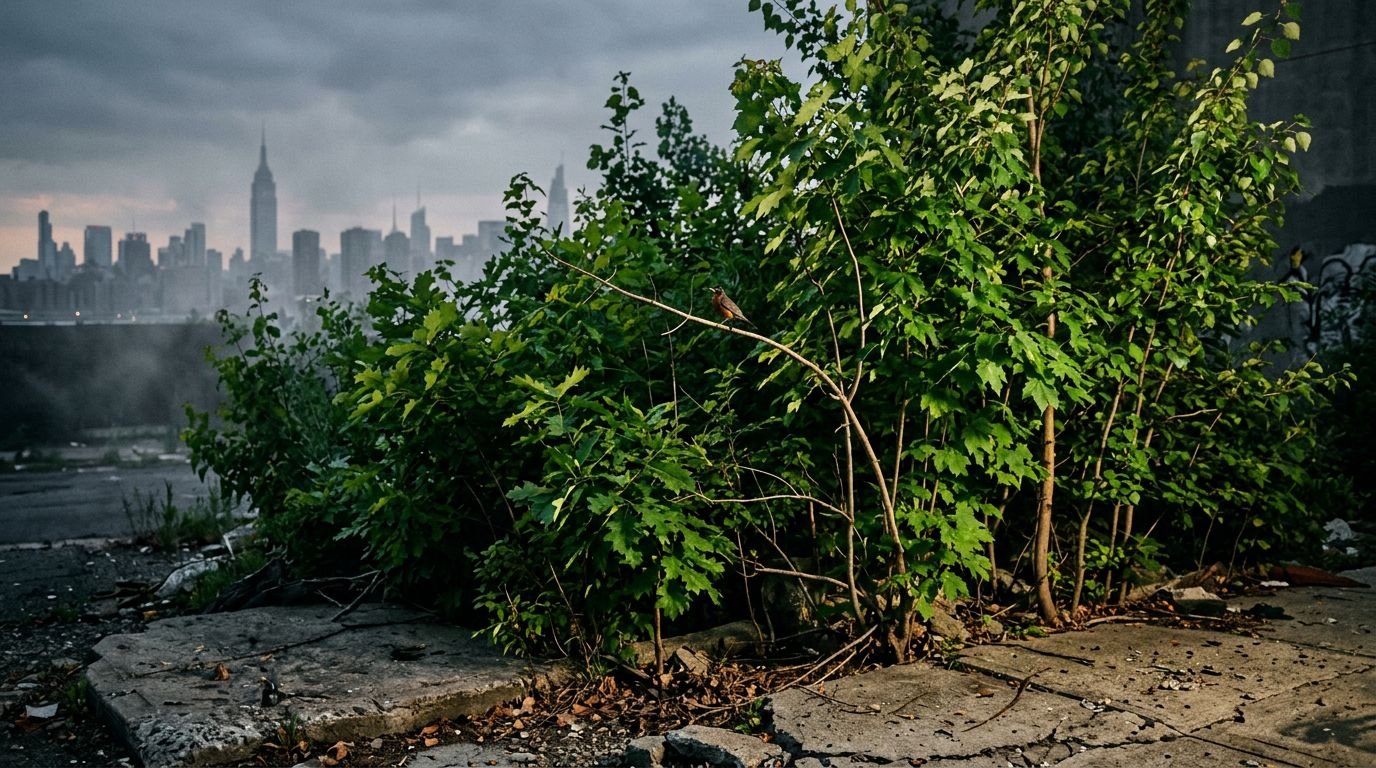
Why Miyawaki Forests in India Often Fall Short on Native Biodiversity
-
by
 TBH Editorial
 - No Comments on Why Miyawaki Forests in India Often Fall Short on Native Biodiversity
A thicket of saplings can look like hope in a heat-stressed city. That visual power explains why Miyawaki forests in India have spread fast across school grounds, corporate campuses, housing societies, and public parks.
But green cover and living habitat are not the same thing. If you care about urban biodiversity, the hard question is simple: do these tiny forests rebuild ecological relationships, or do they mostly create a dense wall of young trees?
Why Indian cities embraced the Miyawaki model so quickly
The appeal is easy to see. A small plot can turn green in a short time, and that matters in cities where open soil often becomes parking, paving, or debris.
Municipal bodies like the method because it fits leftover spaces. Corporates like it because it photographs well and can sit neatly inside annual CSR reports. Resident groups like it because it offers a visible answer to heat, dust, and concrete fatigue.
There is also an emotional reason. Many people feel climate anxiety, and they want something tangible nearby. A mini-forest offers relief because it looks like action, not discussion.
That speed can hide a basic problem. Fast visual change is not the same as long-term ecological recovery. A plantation can appear lush while still missing the web of soil life, insects, understory plants, fungi, and animal movement that make a habitat function.
This matters because Indian cities already squeeze wildlife into fragments. A pocket park, a roadside verge, an old compound wall, a wet patch behind a school, each one can hold life if designed well. If those spaces all get treated with the same dense-tree template, cities may gain green patches while losing habitat variety.
The popularity of Miyawaki projects also reflects a wider sustainability culture. People who care about plant-based living, climate literacy, and everyday mindfulness often want local acts that match their values. That instinct is good. Still, planting must face ecological accountability, not only emotional satisfaction.
Dense planting creates green cover, but not full forest function
The Miyawaki method relies on unusually tight planting. The idea is that intense competition pushes saplings to grow fast and form a canopy early.
That speed is also where trouble begins. When many young trees compete for the same light, water, and nutrients, stronger species can dominate while slower or more light-sensitive species fall behind. A site may begin with a long species list and end with a much thinner mix.
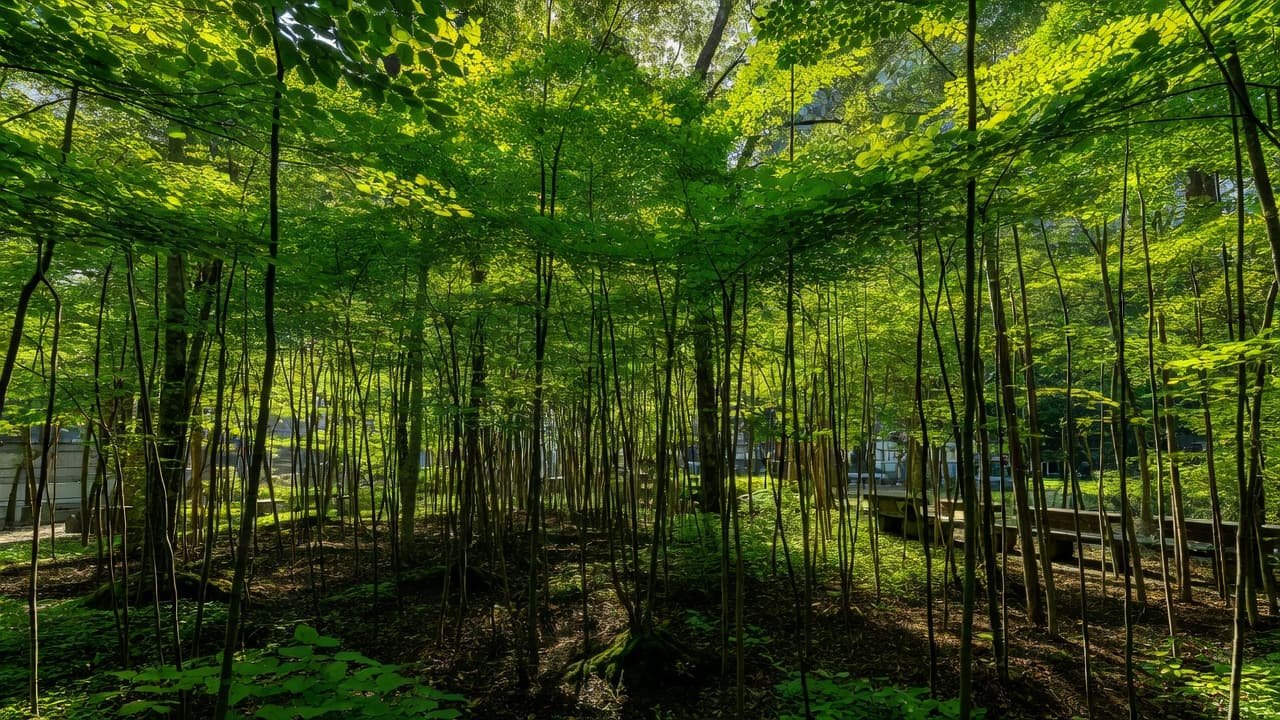
In practice, some Indian Miyawaki plots become crowded blocks of thin trunks. The upper layer closes quickly, but the lower layer often struggles. Light drops, herbs disappear, and ground flora weakens. Yet the ground layer is where many insects breed, where soil stays alive, and where young plants test whether the site can renew itself.
Fast canopy growth is easy to photograph. Native biodiversity takes time, uneven structure, and room for many forms of life.
Crowding can also raise seedling loss. If survival falls after the first few monsoons, the plantation may lose the very diversity it claimed at launch. Dense plots often need more watering, mulching, weeding, and monitoring than public campaigns suggest. That does not make them useless. It does make the “self-sustaining in three years” story harder to trust.
This criticism has surfaced in public debate for years. Mongabay’s report on the debate around Miyawaki forests captured concerns from restoration practitioners who argued that dense planting can miss real ecological function. The concern is not anti-tree. It is anti-shortcut.
“Native” on the planting board can still mean very little
Many projects defend themselves with one phrase: “We used native species.” That sounds solid until you ask a second question, native to where?
India is not one ecological unit. A species native to the Western Ghats is not automatically appropriate for Delhi. A tree found in central India may still be poorly matched to an urban site on the coast. When planners treat “native” as “found somewhere in India,” the label loses ecological meaning.
Nursery supply makes this worse. Projects often pick from what is easy to source, cheap to transport, and quick to establish. That can push out slow-growing, large-canopy, or hard-to-propagate trees that matter to wildlife over decades. Critics have pointed out that species such as banyan, sal, and mahua may not fit the tight, rapid-growth formula, even though they play major ecological roles in the right regions.
There is also a scale problem. A forest is not only trees. Shrubs, climbers, grasses, sedges, herbs, fungi, soil microbes, and fallen wood all shape who can live there. If a project installs dozens of tree species but ignores the rest of the web, it builds a thin version of “native.”
A second issue is provenance. Two saplings of the same species are not always equal. Local seed sources often carry traits shaped by local rain, heat, soil, and pests. If plant stock comes from distant nurseries, the plantation may be native by name and mismatched in practice.
This is why Rewilding Academy’s review of the pros and cons of tiny forests keeps coming up in restoration circles. The method can create quick green cover, but biodiversity claims depend on site design, species choice, and long-term care.
Wildlife needs layers, edges, and time, not only young trees
A city bird does not eat a plantation brochure. A butterfly does not care about a ribbon-cutting photo. Wildlife responds to food, shelter, nesting sites, moisture, shade, sun, and seasonal change.
That means a biologically rich patch is often messy. Some species need open ground. Others need thorny scrub. Many insects need host plants that never appear in high-visibility tree drives. Ground beetles and spiders need litter and moisture. Pollinators need flowering cycles across seasons, not a burst of green for one year.
Miyawaki plots can miss this because they often compress everything into dense young woodland. A site may hold birds after planting, but birds alone do not prove that a balanced food web has returned. Generalist species adapt fast. Sensitive species usually need stable habitat over time.
The same blind spot shows up in other urban restoration efforts. A city that plants mini-forests while simplifying wetlands or hardening lake edges still loses habitat. That wider pattern is clear in work on lake rejuvenation and biodiversity recovery, where visual clean-up can hide ecological damage.
Some places should not become forest at all. Dry grasslands, scrub, river edges, marshes, and seasonal open areas are real ecosystems. When every empty urban plot gets sold as “wasteland” waiting for tree cover, those habitats vanish under good intentions.
So the question is not whether more trees are good. The question is whether a site-specific habitat plan would do better than a standard dense plantation. In many Indian cities, the honest answer is yes.
The real gap is data, and quick wins thrive inside that gap
Most Miyawaki projects in India are judged by what is easy to count. How many saplings went in? How much area turned green? What was the survival rate after one year? How many volunteers attended?
Those numbers have value, but they don’t tell you whether native biodiversity improved. A forest is not a tally sheet. It is a changing system.
This is where public claims often outrun evidence. Recent reporting and reviews have pointed to limited long-term proof that Miyawaki plantations consistently outperform other restoration methods for biodiversity. That does not mean every site fails. It means broad promises need stronger monitoring.
A simple comparison shows the problem:
| What gets celebrated | What often gets missed |
|---|---|
| Number of saplings planted | Which species still survive after 5 to 10 years |
| Fast canopy cover | Ground flora, shrubs, fungi, and regeneration |
| First-year survival rate | Long-term age structure and self-renewal |
| Carbon estimates | Insect life, bird breeding, soil health, water use |
| Before-and-after photos | Whether the site supports a wider food web |
The takeaway is blunt. Cities often reward visibility, while ecology rewards patience.
This is also a politics issue. A dense plantation offers a neat story for a mayor, school, builder, or CSR team. A slower, site-based restoration plan is harder to sell because the result may look sparse at first. Yet sparse can be right if the land is meant to hold scrub, meadow, or wetland edges.
Systemic change starts when funding, reporting, and public praise move beyond sapling counts. If a project claims ecological impact, it should show ecological data. Otherwise, the city gets a green image with weak proof behind it.
What better urban restoration in India looks like
A stronger model begins with one uncomfortable truth: not every damaged site needs a forest. Some sites need soil repair first. Others need water flow restored. Some need protection from grazing or dumping. A few need nothing more dramatic than leaving old trees alone.
Biodiversity-first restoration asks different questions. What lived here before? What still survives nearby? How does water move across the site in summer and monsoon? Which insects, birds, reptiles, and small mammals use the area now? What can connect this patch to other habitats?
That approach often leads to mixed design. A city plot may need native trees in one zone, shrubs in another, and open flowering ground elsewhere. Dead wood may need to stay. Leaf litter may need to remain in place. Fencing may help early on, then come off later so people can share the space without crushing it.
This is where sustainable business models matter. If companies want to fund urban greening, they should pay for multi-year monitoring, local seed collection, nursery diversity, soil repair, and community stewardship. They should also back composting, rainwater capture, and waste-to-soil loops that fit a circular economy, instead of limiting support to one-day planting events.
A better city project also treats people as part of the habitat story. School programs, ward meetings, and public dashboards can build climate literacy by showing which birds returned, which pollinators increased, and where the site still struggles. If you want to see grounded, trackable work that connects community action with on-the-ground restoration, Explore Our Active Missions.
Real restoration is less tidy than a photo-op plantation. It asks for maintenance budgets, local ecological knowledge, and honesty about trade-offs. Yet that slower path gives cities a better chance of real ecological impact.
How to judge a planting project without becoming cynical
You don’t need a botany degree to spot the difference between a meaningful habitat project and a green publicity exercise. You only need a few better questions.
- Ask for the full species list, and ask whether those species are native to that exact region.
- Ask what existed on the site before planting, because replacing scrub or grass with dense trees can reduce habitat value.
- Ask how the project handles water, mulch, and soil after the launch event.
- Ask what gets monitored besides tree survival, such as insects, birds, understory plants, and soil condition.
- Ask who will care for the site after three years, and what happens if the first design fails.
These questions move the discussion from sentiment to accountability. They also protect good projects, because serious practitioners usually welcome scrutiny.
Personal choices still matter. Plant-based living can reduce pressure on land and emissions. Everyday mindfulness can change how people consume, travel, and notice the living world around them. Still, private virtue will not fix public habitat loss on its own. Cities need budgets, land-use rules, and ecological planning that match the scale of the problem.
That is why criticism of Miyawaki forests in India should not push you toward despair. It should push you toward sharper standards.
Conclusion
A dense patch of saplings can comfort a city, but comfort is not the same as habitat. The main lesson from the spread of Miyawaki forests across India is that speed and biodiversity often pull in different directions.
If a project wants praise for restoring nature, it should prove more than survival rates and photo-ready greenery. It should show local species fit, long-term monitoring, and a habitat plan that respects what the land can actually become.
Cities do not need more green illusions. They need living systems that can outlast the planting day and support life in all its messy forms.