Why Green Hydrogen May Deepen Water Stress in Dry Indian States
 TBH Editorial
Green hydrogen serves as a promising clean energy transition away from our current, carbon-heavy systems. Yet in parts of India, it may shift environmental pressure from smokestacks to precious aquifers.
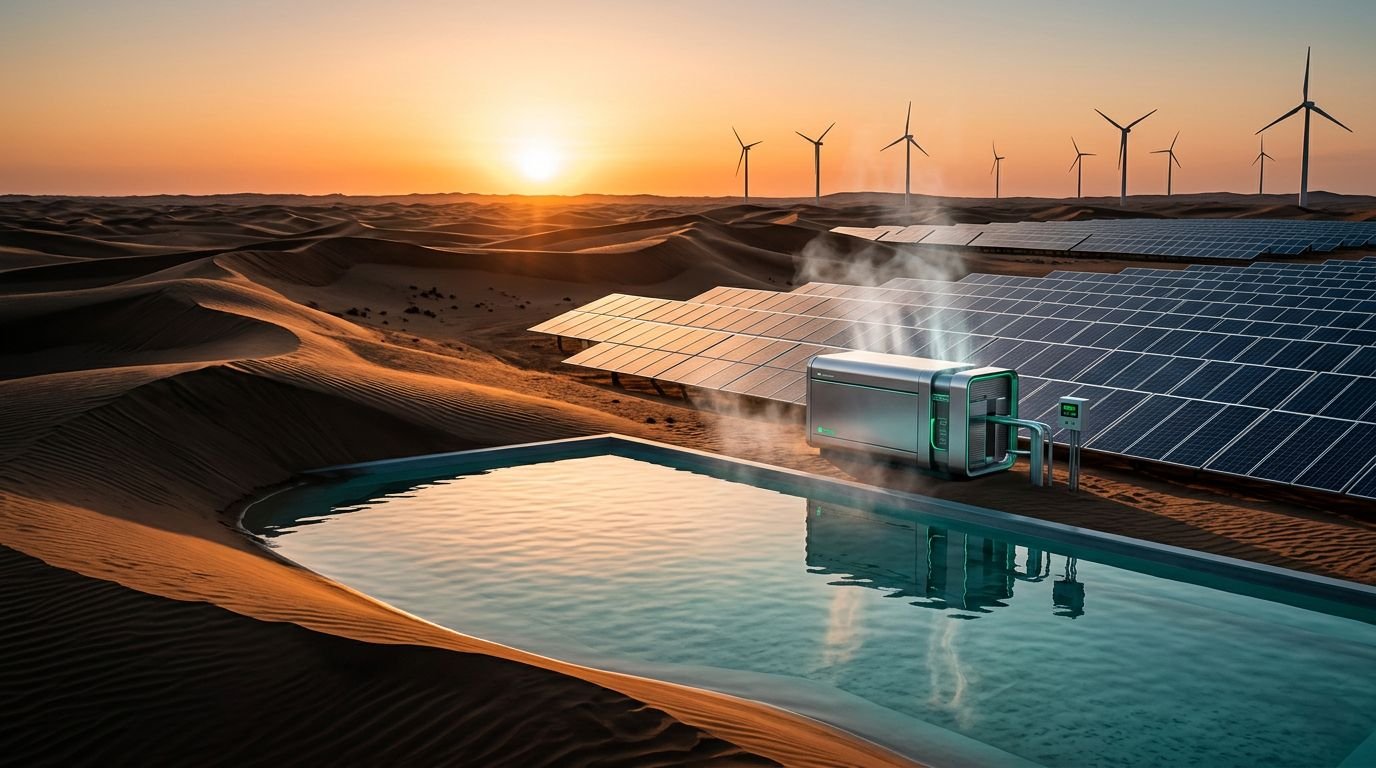
That matters if you care about Rajasthan and Gujarat, where solar and wind potential are strong, but the regions face significant water scarcity. The green hydrogen water stress issue is not a side note. It sits at the center of whether this transition is fair for everyone involved.
If India wants to produce hydrogen without deepening local thirst, the hard question is simple: where will every liter come from?
Key Takeaways
- The Water-Hydrogen Paradox: Green hydrogen production requires significant amounts of high-quality water for electrolysis, which can worsen existing water scarcity in arid regions like Rajasthan and Gujarat.
- Planning Misalignment: Current infrastructure planning often prioritizes renewable energy potential (sunlight and wind) while treating water security as an afterthought, leading to projects that are technically “green” but ecologically damaging.
- Scalability Issues: While water usage for small amounts of hydrogen may seem manageable, large-scale industrial production creates significant daily demand that can drain local aquifers and compete with agriculture and household needs.
- The Limits of Alternatives: Strategies like desalination and wastewater recycling present their own trade-offs, including high costs, energy intensity, and potential displacement of water from other essential community or industrial uses.
- Call for Integrated Governance: A truly sustainable transition requires moving beyond carbon accounting to implement strict, location-specific water management policies that involve local communities before projects are approved.
The clean fuel label hides a water problem
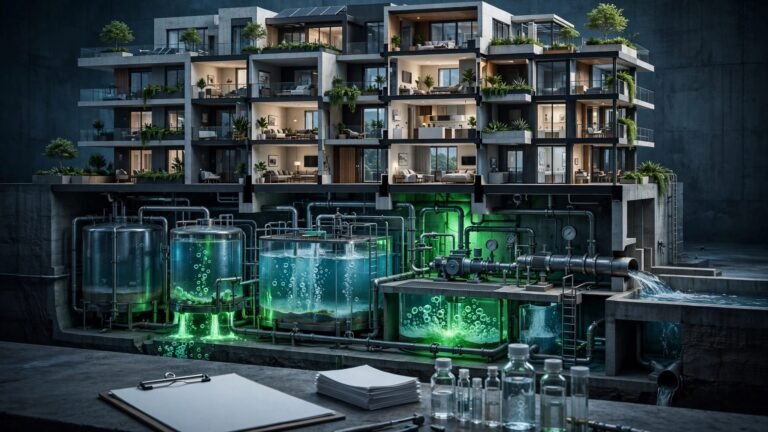
Green hydrogen is produced through electrolysis, a process that uses renewable electricity to split water into hydrogen and oxygen. On paper, it sounds like the perfect sustainable solution. In practice, however, this method requires a steady supply of high-quality water, as the process cannot rely on untreated water from muddy canals or saline wells.
The chemistry alone demands roughly 9 liters of water for every kilogram of hydrogen. When accounting for the entire process of hydrogen production, including system losses within the electrolyzer and the necessary water purification required to create the ultrapure water demanded by modern stacks, real-world water consumption often climbs to 10 to 30 liters per kilogram. IRENA’s report on water for hydrogen production highlights that while these volumes may seem manageable on a global scale, they represent a significant burden in regions facing local water scarcity.

This reality is often overlooked in public discussions. While a liter of water is just a unit in a spreadsheet, its origin carries significant political and social weight. The water sourced for these plants may come from groundwater tables that drop every summer, potentially competing with irrigation needs, urban drinking supplies, or vital wetlands.
It is important to contrast this with other pathways. While green hydrogen is hailed for its low carbon footprint, alternatives like blue hydrogen, which is derived from fossil fuels using steam methane reforming, have their own distinct environmental profiles. Each pathway has specific trade-offs regarding emissions and resource intensity. Ultimately, a project can successfully lower carbon emissions while simultaneously worsening local water stress. The label green describes the electricity source, but it does not account for the total social or ecological impact of the facility. For India, the water question is most urgent in arid regions where renewable energy potential is high, but freshwater security is low.
Rajasthan and Gujarat look ideal on energy maps, not water maps
Developers are not choosing dry states by accident. Rajasthan and Gujarat offer what hydrogen investors want: high solar output, reliable wind potential, large tracts of land, industrial corridors, and ports. When these states provide an abundance of renewable energy, they naturally become the primary candidates for developing regional hydrogen hubs. If you only study these energy inputs, the landscape looks perfect for investment.
Water tells a different story. Both states face recurring stress, uneven rainfall, and heavy pressure on groundwater. In many districts, farmers, households, and local ecosystems already struggle to access stable aquifers throughout long summers and weak monsoons. Adding a significant industrial demand to that mix is not a simple adjustment.
This mismatch stems from how India often plans infrastructure. Energy policy, industrial policy, and water policy still move in parallel lanes. A map showing low-cost renewable energy is often treated as sufficient proof of project suitability. It is not. A district can be rich in sunlight and poor in water at the same time.
Systemic change means those maps have to merge. If project approval rewards speed, land access, and headline investment, then water becomes an afterthought managed through permits, borewells, tanker contracts, or politically negotiated allocation. That is not planning. It is deferral.
The problem grows because state competition can reward visible capacity faster than careful siting. As states race to meet ambitious net-zero targets, a hydrogen cluster becomes a powerful symbol of progress, offering jobs and export stories. However, water depletion usually shows up later, and often in regions with less political voice. By then, reversing course is difficult.
The real siting question is not where clean electricity is most abundant. It is where power generation and water security can coexist without shifting environmental risks onto already stressed communities.
Small numbers turn large fast at industrial scale
Nine liters for every kilogram of hydrogen does not sound dramatic. Even 30 liters can seem modest in an industrial conversation. But industrial projects do not operate in kilograms. They operate in tons, every day, for years.
This simple table shows how the water requirement changes with scale.
| Hydrogen output | Water at 10 L/kg | Water at 30 L/kg | What it means locally |
|---|---|---|---|
| 1 tonne per day | 10,000 liters/day | 30,000 liters/day | Noticeable in a dry block during summer |
| 10 tonnes per day | 100,000 liters/day | 300,000 liters/day | Significant added industrial demand |
| 100 tonnes per day | 1,000,000 liters/day | 3,000,000 liters/day | Serious pressure if local water is already tight |
These are only illustrative scenarios. Actual water consumption depends on plant design, water treatment, cooling water needs, and recycling rates. Even so, the pattern is clear. Scale turns a technical input into a public resource issue.
That is why national hydrogen targets can feel abstract while local impacts feel immediate. Policy talks in export potential and decarbonized steel. Villages talk in tanker timing, borewell depth, and which crops can survive a weak monsoon. Both conversations are about water, but they are rarely held in the same room.
Research on the water footprint of hydrogen production adds another layer. The direct water used inside the electrolyzer is only part of the story. The broader footprint of hydrogen production can include upstream energy and treatment systems. So even when direct withdrawals look manageable, the total burden may be larger than project brochures suggest.
A fuel does not become fully green if its water comes from a falling aquifer.
That sentence is blunt because the situation is. Carbon accounting without water accounting gives only half the truth.
Desalination and wastewater can help, but neither is a free pass
Supporters of green hydrogen often point to two common fixes: use treated wastewater or desalination to reduce pressure on freshwater. While both strategies are helpful, neither erases the underlying scarcity problem.
Desalination is most relevant for coastal regions such as Gujarat, where it can provide a viable supply near ports and industrial zones. Yet, desalination adds significant costs, energy use, brine disposal requirements, and pipeline needs. If the hydrogen plant is located far inland, that water must still travel long distances. This leads to more infrastructure, increased power demand, and greater ecological pressure along the transport route. This PTX Hub analysis of water demand and desalination concerns lays out those trade-offs well.
Rajasthan faces a harder version of this issue. It has world-class solar resources but lacks a coastline, making the transport of water from a desalination plant a complex hurdle for a clean energy transition.
Using treated wastewater sounds even more promising because it aligns with the goals of a circular economy. The logic is to reuse what cities already discharge, reduce freshwater demand, and close the loop. However, this approach can hide a distribution problem. Many cities already rely on treated wastewater for parks, industry, peri-urban farming, or groundwater recharge. Reassigning that limited wastewater to hydrogen plants may solve one scarcity only to create another elsewhere.
Quality also remains a significant challenge. An electrolyzer requires ultrapure water to function efficiently. Achieving this high standard of water purification takes extra money, energy, and reliable operation. If urban systems already struggle to collect and treat water consistently, counting on large volumes of industrial-grade recycled water can be overly optimistic.
This is where public debate often goes wrong. It treats alternative water sources as if they exist in a vacuum. In reality, they sit inside complex watersheds, tight budgets, and competing uses. A serious circular economy does not only track reuse; it tracks who loses access when water is reallocated to industrial projects.
The hardest costs fall on communities with the least power
When water becomes scarce, industry and ordinary residents do not face the same bargaining table. Large projects can secure permits, private supply contracts, tanker access, or intensive groundwater extraction more easily than a farmer, a pastoral household, or a low-income urban neighborhood.
That gap matters because water stress is never only technical. It becomes a social crisis quickly, exacerbated by the ongoing effects of climate change. Women and girls may spend more time collecting water, farmers may be forced to shift to lower-value crops, and seasonal workers may lose their primary source of income. Local lakes, scrublands, and wetlands often shrink, which harms birds, pollinators, and urban biodiversity in connected settlements downstream.
The ecological impact is often missed because environmental reviews tend to isolate the specific project site. A plant may appear efficient within its fence line while drawing from a shared aquifer that supports local wells. Cumulative pressure on our groundwater is harder to see and easier to ignore.
Climate policy loses public trust when the benefits and burdens are split this way. Residents are told that this zero-carbon fuel will clean up heavy industry or earn export revenue, but they worry about drinking water, irrigation, and heat. Those are not separate concerns; they are the lived terms of the energy transition.
That is why climate literacy has to include water literacy. People should not need a technical degree to ask a project basic questions: How much water will it use in May? From which source? What happens in a drought year? Who gets cut first if supply fails?
Tangible local work can help make these questions visible. If you want to see on-the-ground efforts that connect public accountability with urban biodiversity and climate learning, Explore Our Active Missions. Community trust grows when environmental claims are linked to visible outcomes, not only policy slogans.
Better hydrogen policy starts with water, not after the fact
India does not need to abandon green hydrogen. It does need stricter rules about where and how hydrogen plants are built. Right now, too much of the debate treats water as a manageable detail. In dry states, it is a deciding factor.
A more responsible policy would do a few basic things before approval:
- Require basin-level and aquifer-level water budgets, not only project-level estimates.
- Put treated wastewater first in the source hierarchy, and use freshwater only with clear public justification.
- Publish seasonal water use, recycling rates, and drought contingency plans in plain language.
- Assess cumulative withdrawals from all nearby industries, not each plant in isolation.
- Give local communities a formal role in reviewing water plans before land and incentives are finalized.
These are not radical demands. They are the minimum for sustainable business models in water-scarce regions. If a project’s economics only work because local water risk is pushed onto the public, then the model is weak, no matter how clean the output looks on a carbon chart. We can look to the United States for guidance, where the Department of Energy has begun to emphasize resource-intensity frameworks to ensure that clean energy transitions do not inadvertently trade one environmental crisis for another. Similar to how carbon capture projects face scrutiny for their resource trade-offs in the quest for a net-zero future, green hydrogen must be held to high standards to remain truly sustainable.
Procurement rules can help too. Steelmakers, fertilizer firms, export buyers, and public lenders should ask for water disclosure alongside emissions data. This aligns with the rigor seen in the Inflation Reduction Act, which ties financial incentives to specific performance and environmental criteria. That would move water from the margins of ESG language into actual contract terms.
Most of all, governments should stop assuming that any clean-energy project is good in any dry district. The right project in the wrong place can still do harm. Water planning has to come first, because once a large plant is built, local communities are left negotiating with sunk costs and political promises.
A fair energy transition needs more than one flagship technology
Hydrogen matters, especially for sectors that are hard to electrify using fuel cell technology. Yet a healthy climate strategy cannot lean on one shiny fuel while leaving deeper water problems untouched. Moving away from fossil fuels is essential, but public money and political attention should also back measures that cut demand and protect local ecosystems.
That wider lens matters for readers who care about daily choices as well as policy. Plant-based living, for example, can reduce pressure on land and water systems faster than many industrial projects can. Everyday mindfulness about consumption can also sharpen public awareness of hidden water use. Still, personal habits are not a substitute for regulation. They only matter when they support stronger public standards.
The same is true for urban planning. Cities that protect wetlands, lakes, trees, and recharge zones do more than look greener. They support urban biodiversity, buffer heat, and help store water. Those benefits may sound far from energy policy, but they are not. A district with damaged water systems has less room for any new industrial demand.
This is why systemic change must stay at the center of the conversation. Addressing climate change requires a credible transition that links clean power with water governance, industrial reuse, land policy, and democratic oversight. It also requires that we address water scarcity by asking whether some net-zero pathways can come from efficiency, public transit, better crop choices, repair systems, and a stronger circular economy, instead of assuming supply-side mega projects should always lead.
Green hydrogen can still play a role in India’s future. But it should earn that role under strict water rules, not receive it by default because the word “green” sounds safe.
Frequently Asked Questions
Why does green hydrogen require so much water?
Green hydrogen is produced through electrolysis, which involves splitting water molecules into hydrogen and oxygen using electricity. This process requires a consistent supply of ultrapure water, meaning that every kilogram of hydrogen produced necessitates at least 9 to 30 liters of water depending on the facility’s efficiency and purification needs.
Can desalination solve the water issue for hydrogen plants?
Desalination can provide a water source for plants near the coast, such as those in Gujarat, but it is not a perfect fix. It introduces higher energy costs, requires complex infrastructure, and generates brine waste, which can create its own set of environmental challenges at the production site.
Why is the “green” label considered misleading in this context?
While the label “green” refers to the use of renewable electricity, it does not account for the total ecological footprint of the facility. A project can be carbon-neutral but still cause severe local damage by depleting groundwater in regions already suffering from drought and water stress.
How can communities be better protected during this transition?
Protecting communities requires that governments move away from project-level environmental reviews and instead conduct basin-level water budgeting. This ensures that the cumulative impact of all industrial water consumption is analyzed, and it grants local stakeholders a formal seat at the table to approve or contest plans before they are finalized.
Conclusion
A clean fuel can carry a dirty trade-off if it draws from a dry aquifer. In Rajasthan, Gujarat, and other regions facing severe water stress, the question is not whether green hydrogen has value. The question is whether local people and ecosystems should absorb its hidden cost.
The strongest test is simple: put water usage beside carbon capture and net-zero goals in every major policy decision. If a project cannot show a fair, durable water plan, it is not ready, no matter how attractive the energy map looks.
India’s energy shift will gain trust only when climate ambition and water justice move together. Otherwise, green hydrogen may look clean on paper while leaving real places drier and more vulnerable.