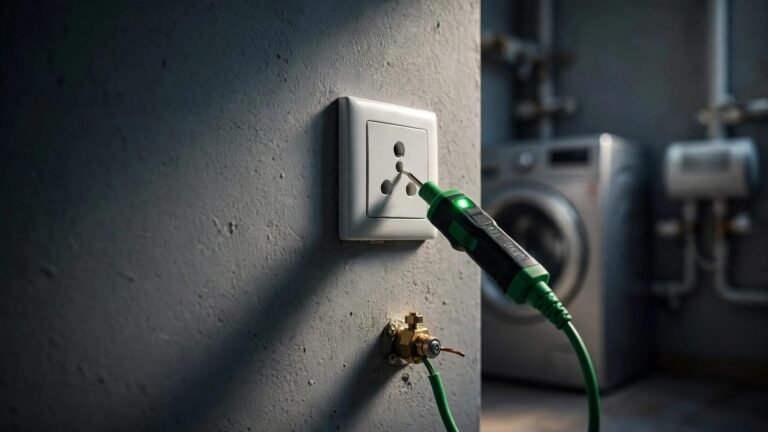
How to Check UV Purifier Performance at Home
 TBH Editorial
A glowing UV lamp can make your purifier look safe while doing less than you think. Checking UV purifier performance at home starts with confirming whether the unit is actually disinfecting water. It depends on the incoming water, flow through the chamber, and maintenance of the parts that do the disinfecting.
In Indian homes, we often judge a purifier by its brand, lights, or service sticker. A lit lamp alone can’t confirm that the complete water purification system is working. Municipal supply, borewell water, and tanker water can bring different risks, while service visits don’t replace basic checks.
A UV unit can inactivate microorganisms, but it can’t remove dissolved salts, fluoride, nitrate, heavy metals, or chemical contamination. WHO guidance on water quality explains the difference between microbial treatment and chemical safety. Give your system ten focused minutes before trusting its drinking water.
Key Takeaways
- A glowing UV lamp confirms that the unit is on, not that it is delivering a sufficient UV dose or producing safe drinking water.
- Check the source water, turbidity, TDS, rated flow, sediment prefilter, quartz sleeve, and bypass lines before judging purifier performance.
- UV treatment can inactivate microorganisms, but it does not remove dissolved salts, fluoride, nitrate, heavy metals, or other chemical contaminants.
- Replace the lamp, quartz sleeve, and filters according to the manufacturer’s schedule, and record service dates and part numbers.
- Arrange laboratory testing when the source changes or the water develops a new smell, colour, or taste; use the purifier as one safeguard, not as proof that the wider supply is safe.
What UV purification performance actually means
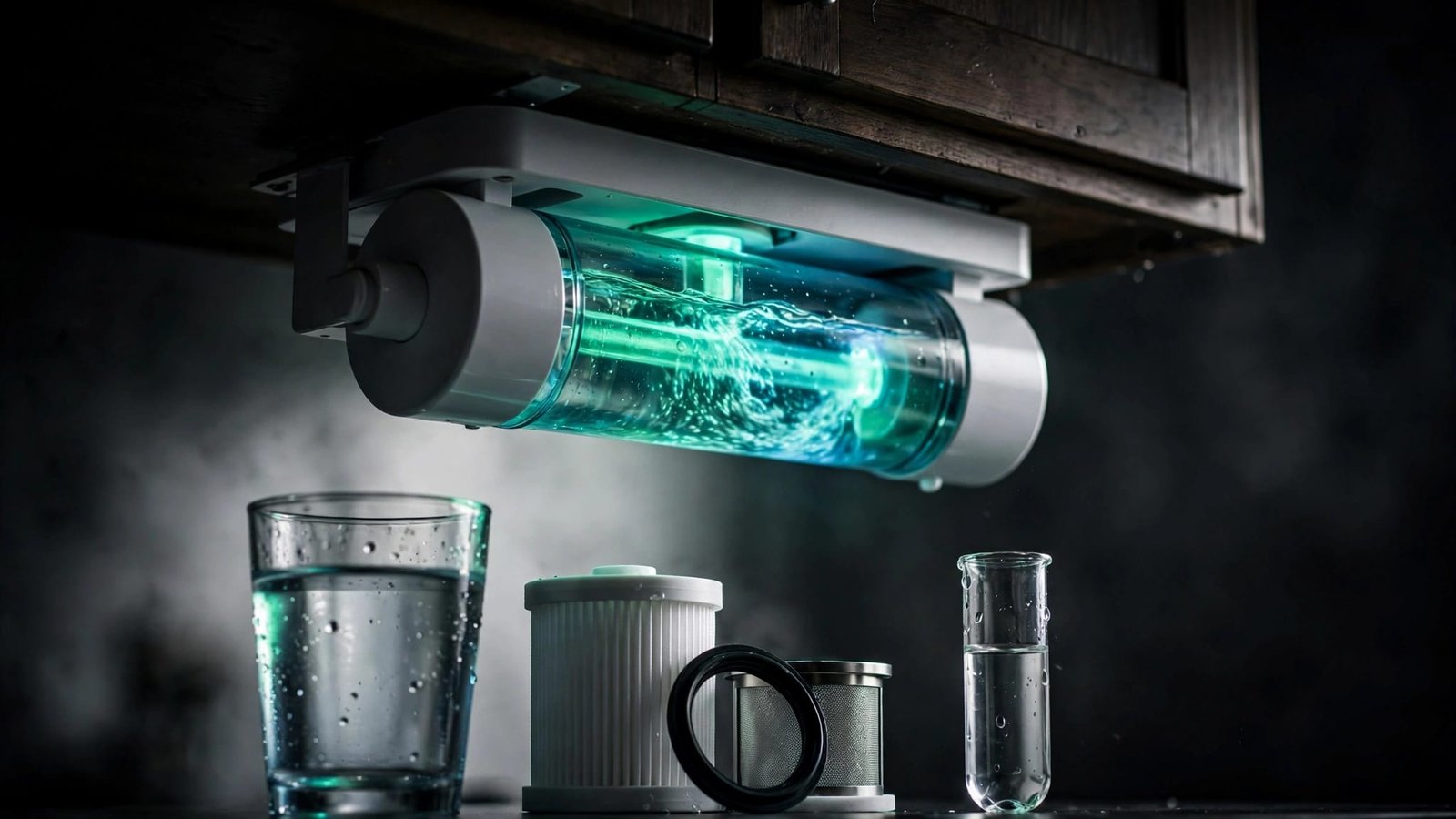
UV purification uses germicidal ultraviolet light to damage or inactivate microorganisms as water passes through a chamber. This process is uv disinfection. It works only when the delivered uv dose combines sufficient light intensity and contact time, with suitable clarity and flow.
Many low-pressure mercury UV lamps emit near 254 nm, but the model manual should confirm the specification. For background, see this guide to how UV water purification works.
But a lamp’s blue glow is not a performance report.
A lit lamp is not proof of safe water
A glowing lamp only indicates operation, not the delivered uv dose. Lamp age, sleeve condition, and water transmittance can reduce the delivered uv dose.
Clean deposits from the quartz sleeve as the manual directs; they can block light before reaching the water. Keep the flow rate within its rated limit, because excessive flow shortens exposure time. Cloudy water can let particles shield microorganisms from the light.
For Indian homes, review current product-compliance documentation and whether the unit references BIS IS 14724:1999, the specification for UV water purifiers. That reference alone doesn’t prove current household water safety. Then read the manual for rated flow, lamp life, service requirements, and alarm behaviour.
UV treats microbial risk in drinking water. It does not remove dissolved chemicals, salts, or all physical impurities.
Check the source water before blaming the purifier
Start by identifying whether the water entering your home comes from a municipal supply, borewell, tanker, rainwater system, or private well. Match the water purification system to that source and its likely risks.
Test TDS, but don’t stop there
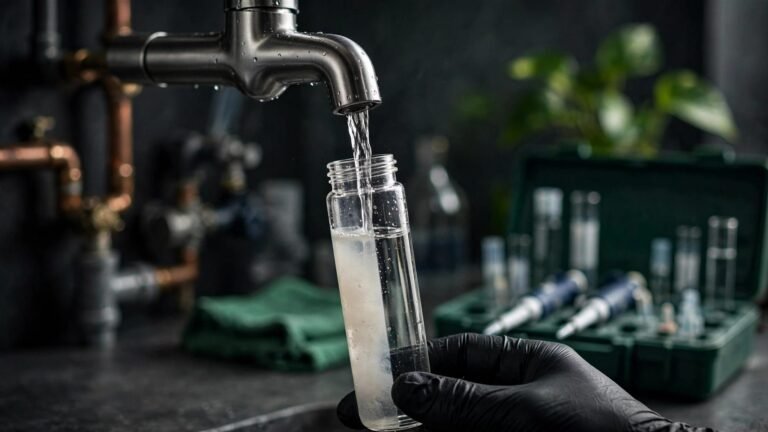
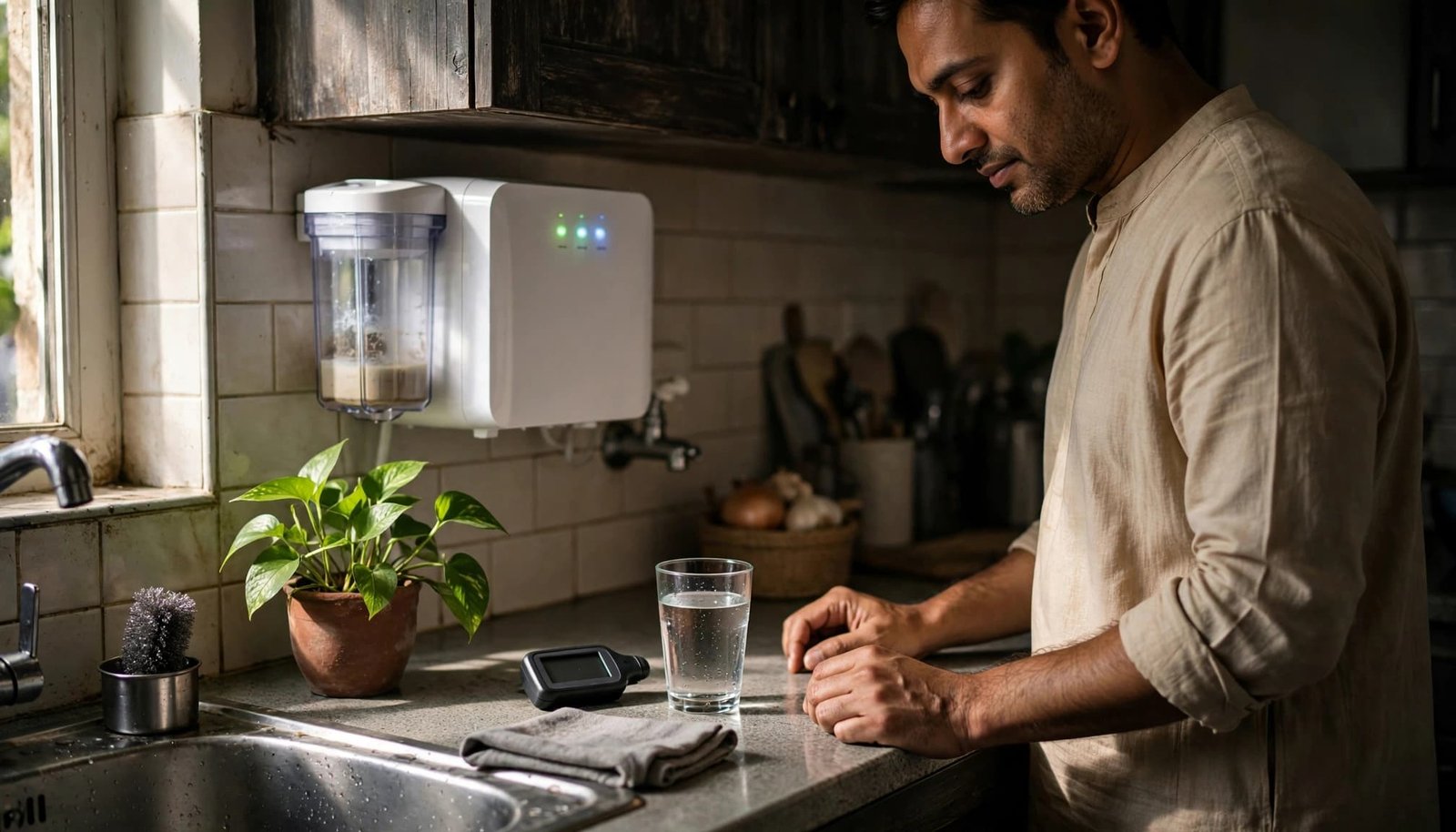
Use a TDS meter on both incoming and treated water. TDS stands for total dissolved solids and provides a conductivity-related estimate, while a UV-only unit usually leaves dissolved solids unchanged. An unchanged reading is normal, while a large drop suggests another filtration stage is present.
TDS is not a safety test for drinking water. A meter won’t detect bacteria, viruses, nitrate, fluoride, pesticides, sewage contamination, or every heavy metal. Arrange laboratory testing if the source, taste, or water quality changes, especially after the monsoon. Testing is also wise when microbial contamination or possible waterborne diseases are concerns. If you’re unsure about drinking water, send a sample to an accredited laboratory or state water-testing service. Compare the report with BIS IS 10500 and WHO drinking-water guidance.
Match the machine to the risk
Reverse osmosis uses a semipermeable membrane to reduce many dissolved contaminants, but it doesn’t remove every contaminant. Check the model’s reduction claims and test the source before relying on it. An appropriately matched filtration system may combine pre-filtration and UV, or use reverse osmosis before UV for a high-TDS source.
UV-only units may suit clear municipal water, but clear water isn’t automatically microbiologically safe. Ultrafiltration can be an optional comparison where particulate and microbial reduction matter. A correctly matched prefilter-plus-UV arrangement can provide dual protection against particles and microbes.
A useful rule is simple:
- Clear, low-TDS water may still need UV and pre-filtration. Low TDS isn’t proof of safe water.
- Cloudy water needs a sediment filter before the UV chamber.
- High-TDS or chemically contaminated water needs more than UV. Consider additional treatment only after testing.
- A sudden change in smell, colour, or taste needs testing, not guesswork.
UV systems need very low turbidity because particles can shield microbes and reduce the delivered UV dose. The UK’s Drinking Water Inspectorate recommends water below 1 NTU turbidity for UV disinfection, but that figure isn’t a universal guarantee for every household unit. The acceptable threshold depends on the validated UV system and the manufacturer’s specifications.
Inspect flow, filters, and warning signs
Checking UV purifier performance means checking the conditions that control treatment. Excessive flow gives water less time in the chamber and can lower the UV dose delivered.
Don’t exceed the rated flow
Find the purifier’s rated flow rate in the model’s installation manual or service documentation. Check its alarm behaviour there too. Extra taps, bypass valves, or high-pressure pumps can exceed that flow rate.
A faster stream isn’t proof of failure by itself. Compare the actual flow with the manufacturer’s stated limit. A commercial water purifier may have different validated capacity and monitoring requirements, so don’t judge a household unit by commercial flow claims.
Use this at-home checklist:
- Actual flow is much faster than it was at installation. Compare it with the manual’s stated limit.
- The sediment filter looks brown, clogged, or swollen. Replace it according to the service schedule.
- The purifier’s UV alarm beeps, flashes, or has been muted. Confirm that the alarm remains active.
- Water bypasses the purifier during low-pressure periods. Inspect for bypass lines and valves.
- A technician cannot show you which parts were replaced. Ask for the part names and replacement date.
Particle prefiltration and UV treatment provide dual protection. Together, the prefilter and UV chamber form a connected filtration system.
A clogged prefilter may lower flow, but removing it isn’t a fix. It allows sediment to foul the quartz sleeve. A dirty sleeve or poor prefiltration can reduce the UV dose reaching the water.
Don’t open an energized UV chamber or handle the lamp. Switch off power and follow the manual first. Don’t use a bypassed unit to supply drinking water until it’s checked.
Replace the parts that lose their power
The hard truth is boring: performance falls when maintenance becomes a service sticker on a wall.
The lamp and quartz sleeve need a calendar
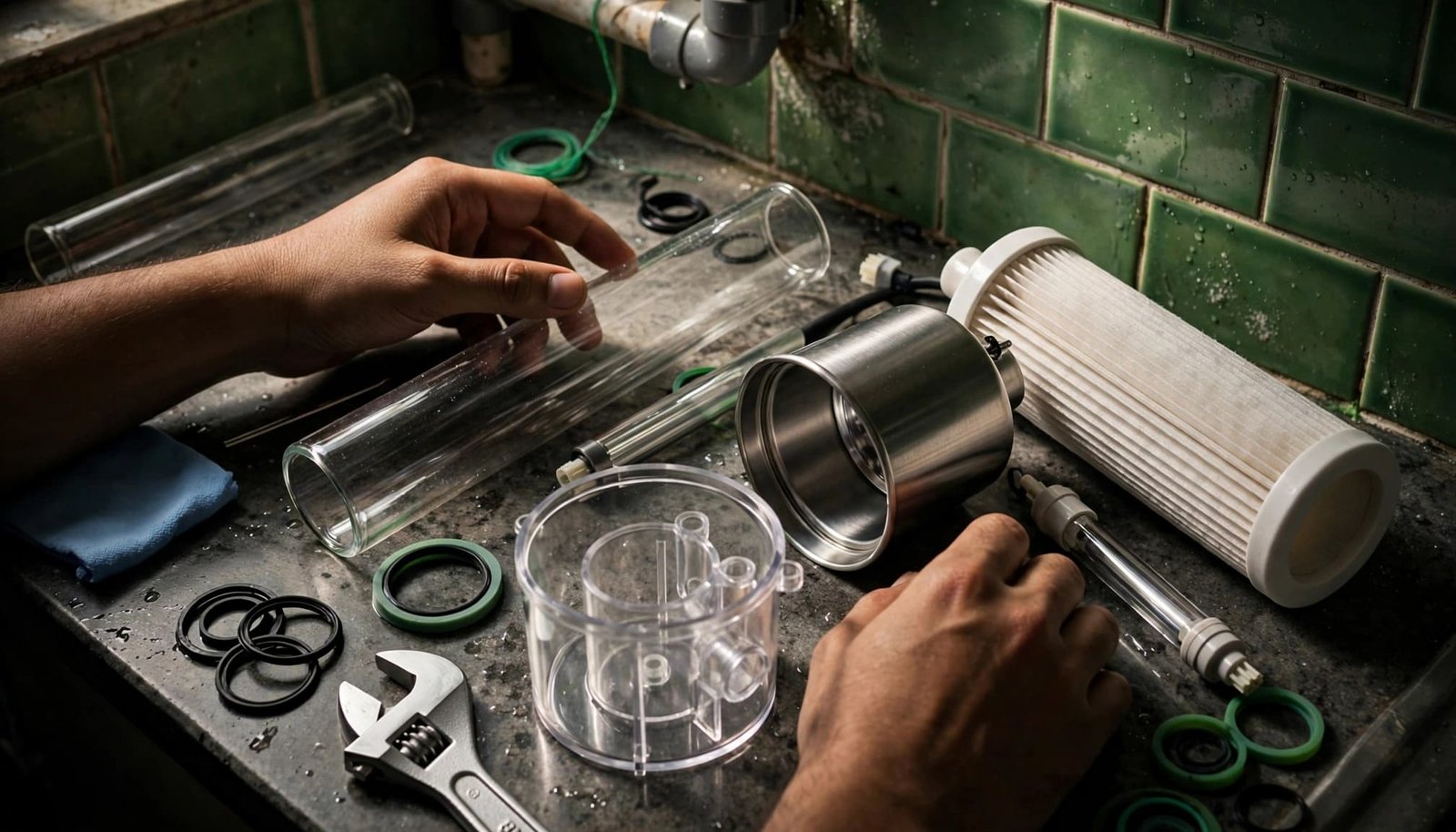
Some lamp manufacturers and purifier manuals specify 9,000 to 12,000 operating hours. For household use, calendar replacement often falls near one year, but timing depends on operating hours, lamp type, alarm design, and the manufacturer’s schedule. Don’t treat that range as universal.
Deposits on the quartz sleeve reduce UV light transmission, so clean it during service. Cleaning the sleeve isn’t the same as replacing the lamp. Replace the quartz sleeve if it’s cracked, etched, or persistently cloudy, and don’t reuse damaged parts.
Ask the technician to show you the old lamp and sleeve. Record the service date, part number, and next replacement date. Confirm that the replacement is compatible, and keep the bill. Check the manufacturer’s maintenance instructions and any relevant BIS service requirements. A paper trail beats “service done, madam.”
Before buying a unit, compare the annual maintenance cost for the lamp, sleeve, filter, labour, and call-out visits. This is where sustainable business models matter. Brands should offer accessible genuine parts, transparent service pricing, and clear maintenance information, so families can repair a working purifier instead of discarding it early.
Don’t turn a home purifier into a moral alibi
A purifier treats water at one point of use, but can’t repair contaminated pipes, tanker sources, polluted drains, or unsafe groundwater. In India, municipal supply interruptions, borewell changes, tanker storage, and monsoon contamination can alter what reaches your tap. Household treatment can’t replace safe source-water management, which protects water quality before it reaches your home.
Check municipal notices and consider testing after a supply interruption, borewell change, or heavy monsoon event. For broader context, see climate literacy and practical leadership and Explore Our Active Missions.
Use the purifier as one household safeguard, not as proof that the wider supply is safe.
Frequently Asked Questions
Does a glowing UV lamp prove that the purifier is working?
No. It only shows that the lamp is receiving power, not that the purifier is delivering a sufficient UV dose. Lamp age, sleeve deposits, cloudy water, and excessive flow can all reduce disinfection performance.
Can a UV purifier reduce TDS?
A UV-only unit usually leaves total dissolved solids unchanged because it does not remove dissolved minerals or salts. A large reduction suggests that another treatment stage, such as reverse osmosis, is present.
How often should a UV lamp be replaced?
Many household manuals specify replacement near one year or after a stated number of operating hours, often around 9,000 to 12,000 hours. Follow the manufacturer’s schedule because lamp life depends on operating hours, lamp type, and the purifier’s alarm design.
Do I need a sediment filter before UV treatment?
Usually, yes, when the incoming water contains visible particles or turbidity. Sediment can shield microorganisms from UV light and deposits can foul the quartz sleeve, reducing the delivered UV dose.
When should I get the water laboratory tested?
Arrange testing when the water source changes, after a supply interruption or heavy monsoon event, or when its smell, colour, or taste changes. Testing is also important because TDS meters cannot detect bacteria, viruses, nitrate, fluoride, pesticides, sewage contamination, or every heavy metal.
A purifier is only as honest as its maintenance
The best UV purifier isn’t the one with the brightest display. Evidence matters more than what the display promises. It’s a water purification system matched to your source, with turbidity and sediment controlled before treatment. Stay within the rated flow rate, and use dual protection through suitable prefiltration and UV treatment.
Replace lamps and sleeves on schedule, plan for the recurring maintenance cost, and arrange laboratory testing when water quality changes. Record the source, rated limit, last service date, lamp replacement date, and any laboratory results before relying on your drinking water.