Check Sewage Backflow Protection Before Renting in India
 TBH Editorial
A spotless bathroom can hide the costliest problem in an apartment.
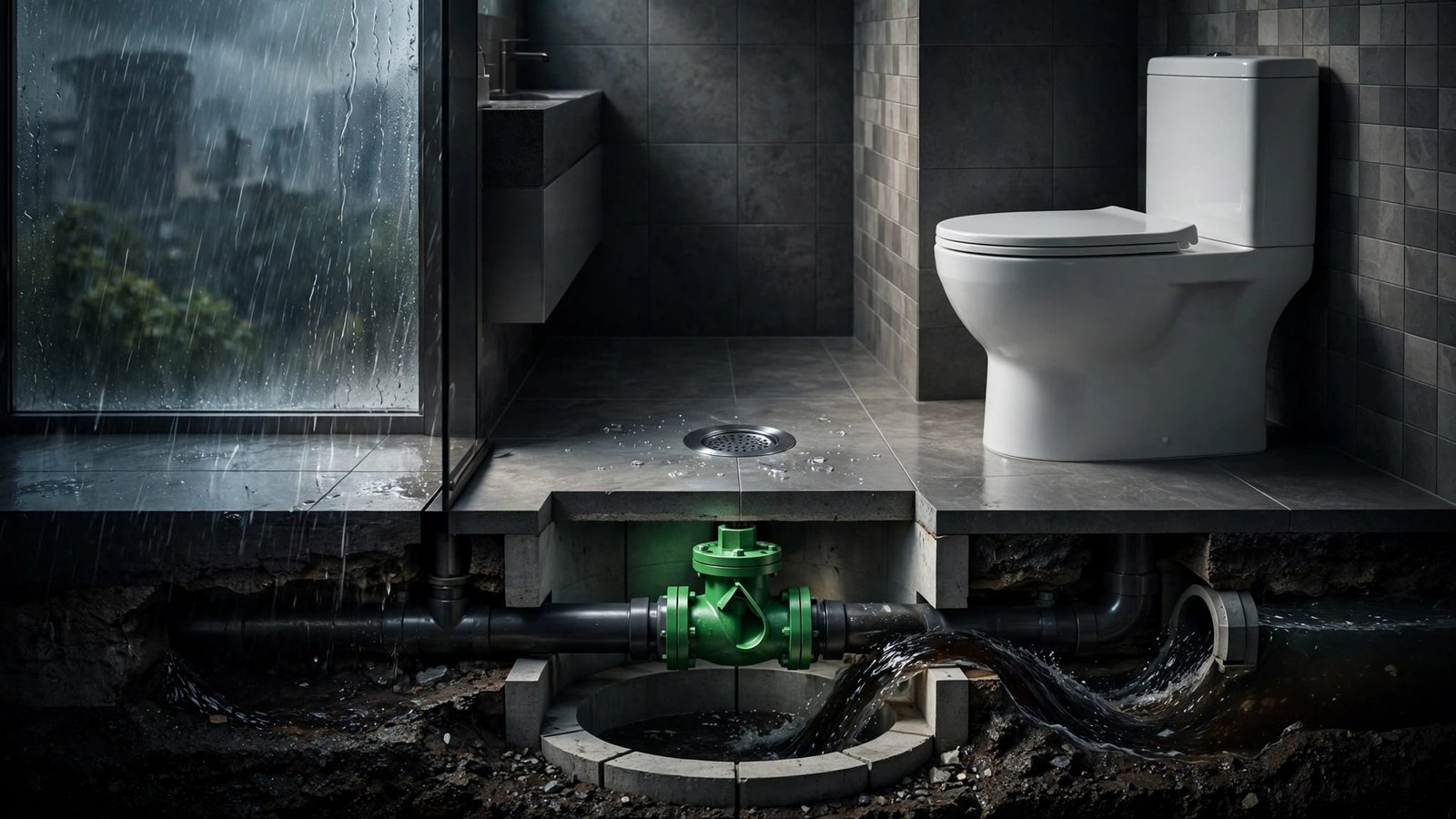
During the monsoon, a weak drain line does not only mean a bad smell. It can push contaminated water through floor drains, toilets, and low-level pipes. Sewage backflow protection deserves the same attention as rent, sunlight, and commute time before you sign.
Don’t let a broker’s “There has never been an issue” end the conversation. Look at the drains. Ask for records. Put past flooding and repair promises in writing.
Key takeaways before you visit
- Lower floors, basement-adjacent units, and flats near low-lying roads need the closest inspection.
- Check every bathroom, kitchen, utility area, balcony outlet, and visible inspection chamber.
- Ask whether the building has a backwater valve, who services it, and when it was last checked.
- A sealed chamber cover and a clean lobby are not proof that the underground system works.
- Treat old overflow marks, sewer odour, slow drains, and vague answers as decision-making evidence, not minor annoyances.
- Put known drainage issues, repairs, and the owner’s responsibilities into the rental agreement before paying a deposit.
Floodwater mixed with sewage is not a housekeeping problem. It is a public-health risk entering a private home.
Why sewage backflow protection matters in Indian apartments
Sewage usually moves away from your flat through gravity. During intense rain, a municipal sewer or overloaded common line can fill faster than it can empty. Water then seeks the lowest available exit, which may be a bathroom floor drain.
The risk is higher in ground-floor homes, semi-basements, older low-rise buildings, and towers built beside clogged drains or former water bodies. It also rises where stormwater and sewage enter the same overloaded network.
Backflow carries more than dirty water
The National Centre for Disease Control warns that contaminated floodwater can contribute to diarrhoeal disease during monsoon flooding. Its flood-health guidance is a reminder that exposure is not limited to visible sewage.
A flooded drain can bring pathogens into a kitchen corridor, bathroom, lift lobby, or parking level. The clean-up may fall on tenants, building staff, and sanitation workers who had no say in the drainage design.
It is also a question of unequal risk
Research on Mumbai found that rainfall accounts for more than 8% of deaths during the monsoon, with more than 80% of flood-related deaths falling on people living in slum communities. The burden is not shared fairly.
That is why a renter’s inspection matters beyond one lease. Systemic change starts when poor drainage is treated as a housing failure, not as a seasonal inconvenience people must tolerate.
Inspect the flat before you get attached to it
Visit in daylight if possible. A rainy-day visit is even better, though you should not wait for a storm to ask basic questions. Take your phone, a small torch, and enough time to walk slowly.
Test the drains without creating a mess
Run taps in each bathroom, the kitchen sink, utility sink, and balcony outlet. Flush the toilet once, then listen. Water should move away without gurgling, bubbling, or rising through another drain.
Notice what you can smell. A brief odour from an unused bathroom can mean a dry trap. A persistent sewer smell can point to a broken seal, vent problem, cracked line, or overloaded common connection.
Look for these clues:
- Brown tide marks near floor drains, toilet bases, or the bottom of bathroom doors.
- Black residue, grit, or dampness around a drain cover.
- Fresh paint only on the lower 30 centimetres of a wall.
- A bathroom floor that slopes away from the drain.
- A balcony outlet that is clogged with leaves, cement dust, or construction debris.
Take dated photos of anything unusual. You are not accusing anyone. You are creating a record before the keys change hands.
Walk outside and inspect the building’s low points
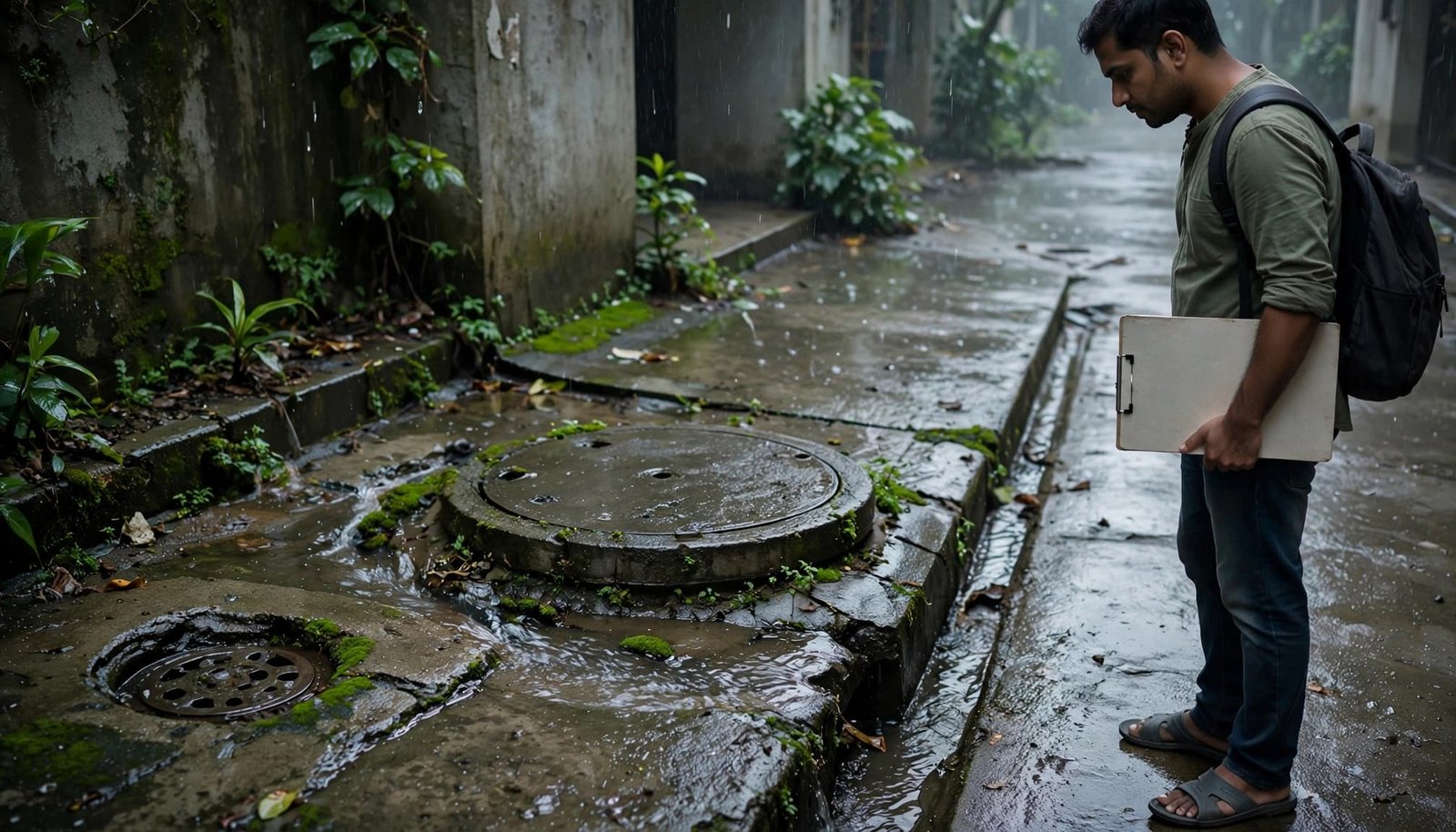
Ask to see the parking area, ground-floor common toilets, garbage zone, pump room entrance, and external inspection chambers. Do not lift a cover yourself. Ask building staff to identify which chambers serve sewage, rainwater, or both.
Indian Standard IS 1742:1983 says gullies should have sealed covers, and below-ground drains and manholes should be watertight. The building drainage code also warns about backflow in heavy rain.
An open, cracked, loose, or badly patched chamber cover is a red flag. So is standing black water near a chamber after dry weather. That water has to go somewhere.
What sewage backflow protection should look like
You are not expected to diagnose pipe gradients or dismantle fittings. But you should know the protective parts by name, and you should ask whether they exist.
Traps protect the air inside your home
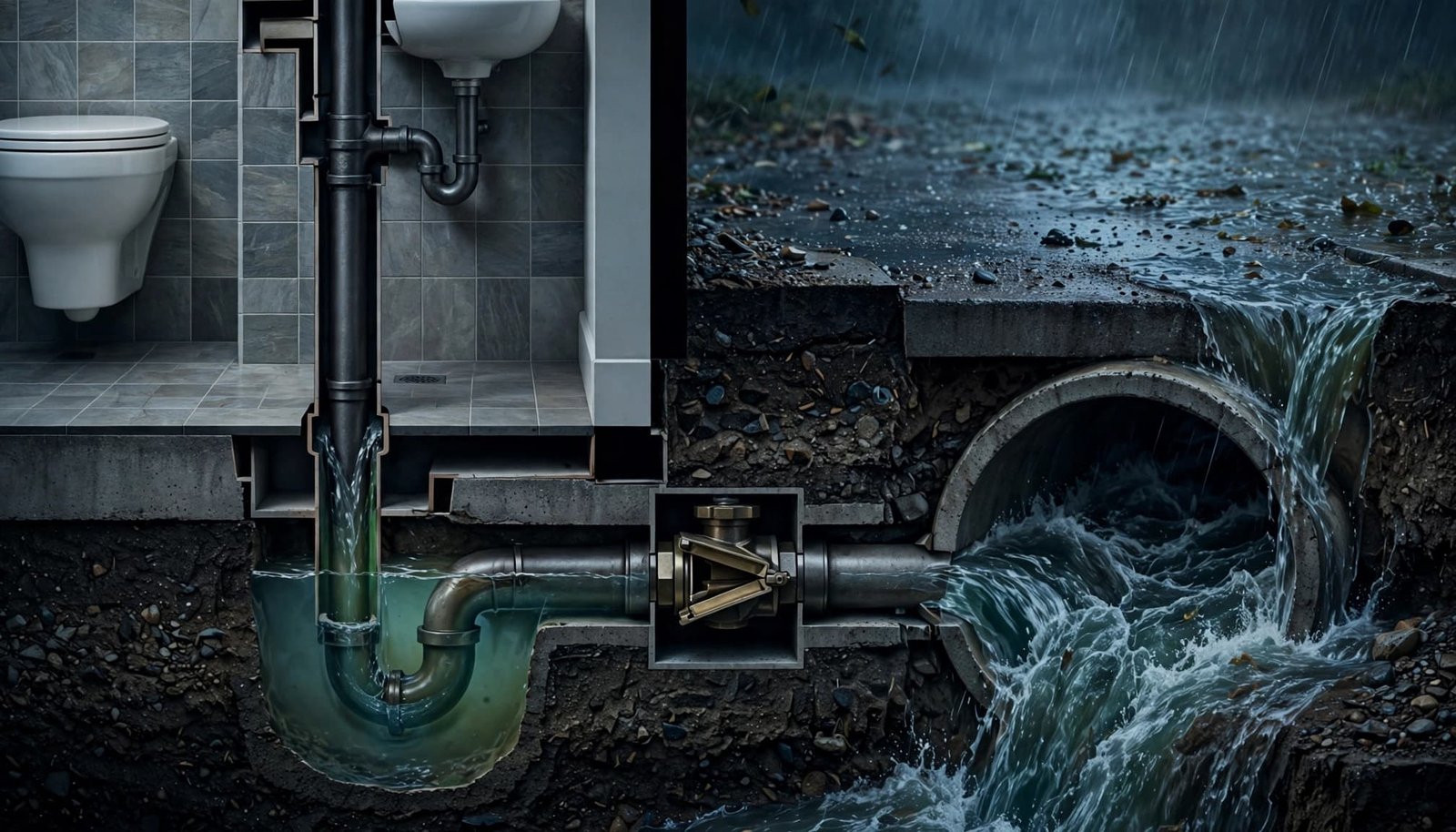
A floor drain, sink, or toilet connected to drainage needs a liquid seal trap. The small amount of water inside the bend blocks sewer gases from entering the room.
The National Building Code’s drainage guidance calls for liquid-seal traps at directly connected fixtures. If a rarely used bathroom smells foul, ask whether the trap has dried out or whether the line has a deeper fault.
A trap helps with odour. It does not stop a pressurised sewer from reversing into a flat.
Backwater valves protect against reverse flow
A backwater valve, sometimes called a non-return valve, is designed to let wastewater move out while blocking reverse movement. It may sit on a branch line or a main building drain, depending on the plumbing design.
Ask where it is installed, which flats it protects, and whether it can be accessed for cleaning. A valve blocked by grease, wipes, grit, or construction debris can fail when it matters most.
MoHUA’s current flood guidance identifies measures such as raised plinths, barriers at drain entries, elevated drainage, and local bunding for low-lying areas. These are building and site measures, not decorative extras.
A backwater valve is not a magic object. It needs access, inspection, and maintenance.
Ask for records, not reassurance
“I’ll check with the caretaker” is not an answer. A responsible owner or housing society should be able to show some maintenance trail, even if the building is old.
Questions for the landlord or broker
Ask these questions plainly, then follow up by message or email:
- Has this flat, the parking area, or any common space had sewage overflow during the last two monsoons?
- Is there a backwater valve, sump pump, non-return valve, or flood barrier serving this flat or building?
- When were the inspection chambers last cleaned or desilted?
- Have any toilets, floor traps, drainpipes, or bathroom tiles been replaced after an overflow?
- Does the building use a municipal sewer, septic tank, or a mixed arrangement?
If the answer involves a septic system, read about septic tank risks in Indian neighborhoods. A failing system can affect borewells, drains, workers, and nearby homes, not only the plot where it sits.
Make the agreement carry some weight
Ask for a written note of pre-existing odours, stains, slow drainage, past flooding, or promised repairs. Attach your inspection photos if the owner agrees.
The agreement can state who handles common-drain maintenance, what happens if a known defect returns, and whether repairs must be completed before possession. State tenancy rules and remedies vary, so do not withhold rent or deduct repair costs without local legal advice.
Keep screenshots, invoices, messages, inspection notes, and contractor details in one folder. Documentation turns “there is a smell” into a timeline someone must answer.
Read the street, not only the flat
The apartment’s plumbing is tied to the street outside it. A shiny tower cannot fully protect you if the approach road floods, drains discharge black water, or a nearby nullah carries sewage year-round.
Watch where rainwater would collect. Are ground floors below road level? Does the building entrance slope inward? Are storm drains packed with plastic, silt, or food waste?
India’s urban drainage problem is also ecological. When stormwater drains carry sewage, contaminated runoff reaches lakes, rivers, soil, and groundwater. That damage reduces urban biodiversity and makes a neighbourhood less safe for people and wildlife.
Stormwater drain pollution in Indian cities shows why a black drain should never be accepted as normal infrastructure. Climate literacy means reading the water route around your home, then asking who maintains it.
A stronger circular economy for housing would reward repair logs, durable pipes, functioning treatment systems, and honest maintenance budgets. Sustainable business models in real estate cannot mean selling a polished flat while shifting hidden repair costs onto tenants.
Small habits, larger accountability
Personal choices matter, but they have limits. Plant-based living cannot repair a blocked sewer. Everyday mindfulness can help you notice an unsafe drain, but it cannot replace enforceable building standards.
The ecological impact of sewage backflow reaches beyond your bathroom. It can contaminate streets, push polluted water into open drains, and expose the people who clean it under pressure.
Ask your resident welfare association to conduct pre-monsoon drain checks and share the dates. Ask for chamber cleaning records, pump-service invoices, and a clear complaint process. These are basic accountability tools.
For on-the-ground work linking local water systems, urban biodiversity, and climate literacy, Explore Our Active Missions and support action people can verify.
Frequently asked questions
Does every Indian apartment need a backwater valve?
No single India-wide rule means every flat must have one. A backwater valve is a sensible protective measure to ask about, especially in low-elevation buildings, lower floors, or areas with known monsoon flooding.
Can a sealed floor drain prove the apartment is safe?
No. A sealed cover may reduce odour and block debris, but it does not prove the wider sewer line, traps, chambers, or municipal connection can handle heavy rain. Check the system, its maintenance history, and the street outside.
What should I do if I spot sewage marks after signing?
Photograph the problem immediately and notify the landlord and society in writing. Ask for inspection of the source, not only cleaning or repainting. Keep every reply, invoice, and repair update.
A safer rental starts below the surface
The best time to find a weak drain is before your furniture, books, and deposit are inside the flat.
Check the visible signs. Ask direct questions. Keep records. Sewage backflow protection is not glamorous, but it is part of a home that respects your health, your money, and the people living downstream.