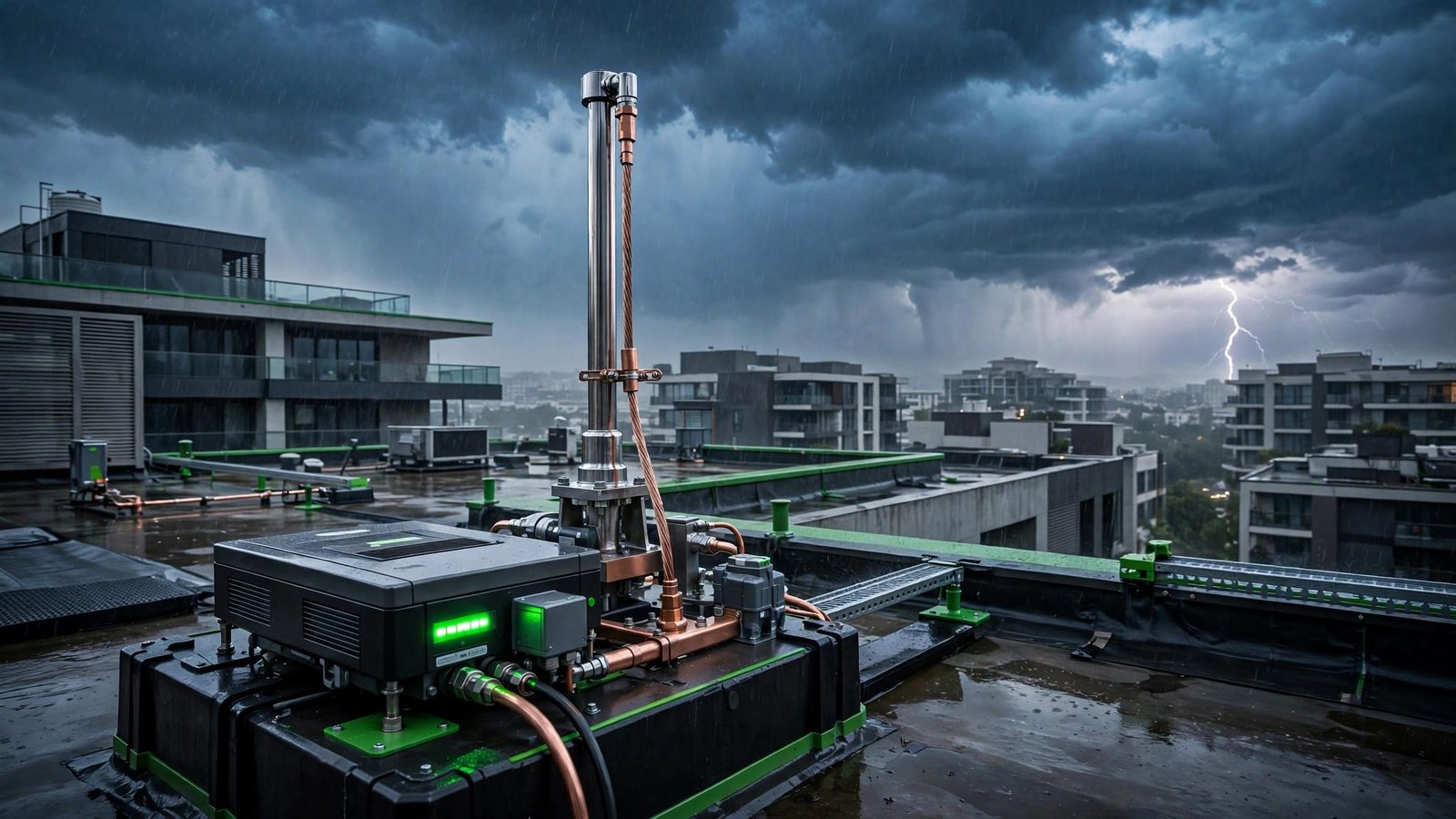
Apartment Lightning Protection: What to Check Before Renting
 TBH Editorial
A spotless lobby and a shiny modular socket can hide a building that has never had its electrical safety checked properly. Before you pay a deposit, apartment lightning protection deserves the same attention as rent, water supply, and commute time.
Lightning isn’t only a rural risk. India recorded 1,456 lightning-related deaths between January and September 2025, according to India Today’s review of lightning fatalities. A well-maintained apartment building is safer than being outdoors, but it isn’t automatically protected from a power surge, appliance damage, fire, or electrical faults.
Key takeaways before you sign
- Ask for maintenance records, not a broker’s verbal assurance that the wiring is “new.”
- Look for a building-level lightning protection system with rooftop air terminals, down conductors, grounding, and surge protection.
- Treat a visible lightning rod as one clue, not proof that the building is safe.
- Request written confirmation of the flat’s earthing, major appliance circuits, and recent electrical repairs.
- Never climb to the terrace, open an electrical panel, or test live wiring yourself.
- Put unresolved defects and repair deadlines into the rental agreement before possession.
Why apartment lightning protection is a renter issue
A lightning strike can hit a roof, nearby utility line, or connected infrastructure. A building’s lightning protection system should help manage lightning current, but energy can still travel through wiring, metal piping, communication cables, and electrical panels. That is how a storm outside becomes a damaged router, burnt AC board, failed lift, or electrical fire inside.
The larger the building, the more systems sit inside it. Multi-family buildings may have lifts, pumps, CCTV, generators, telecom equipment, inverter circuits, rooftop water pumps, EV chargers, and common electrical rooms. Each adds another path where a surge can cause trouble.
India’s broader weather exposure is also rising. CSE’s 2025 extreme-weather assessment found that extreme weather affected the country on 99 percent of days from January through September 2025. That is broader climate context, not proof that every apartment faces the same lightning risk.
A pukka building is shelter, not a safety certificate
The India Meteorological Department identifies a pukka home or building as safer shelter during lightning than open ground, trees, water bodies, or temporary structures. That matters. It doesn’t mean every flat has sound earthing or surge protection.
A building can keep rain out and still have weak electrical maintenance. If past tenants have lost appliances after storms, or if common-area lights flicker during rain, don’t dismiss it as normal monsoon life.
The damage is often hidden until it isn’t
A direct lightning strike can damage roof or building components, causing structural damage. Nearby strikes more commonly create electrical surges, sending sharp voltage spikes through supply lines.
That may destroy sensitive electronic equipment in one flat while leaving another untouched. It can also degrade appliances slowly, which makes landlords more likely to blame “old equipment” than the building’s electrical condition.
A three-pin socket proves only that someone installed a three-pin faceplate. It does not prove a working earth connection behind the wall.
What apartment lightning protection should include
A full lightning protection system is a connected path. It receives lightning at the highest points, carries current down safely, disperses it into the ground, and reduces surges entering electrical systems.
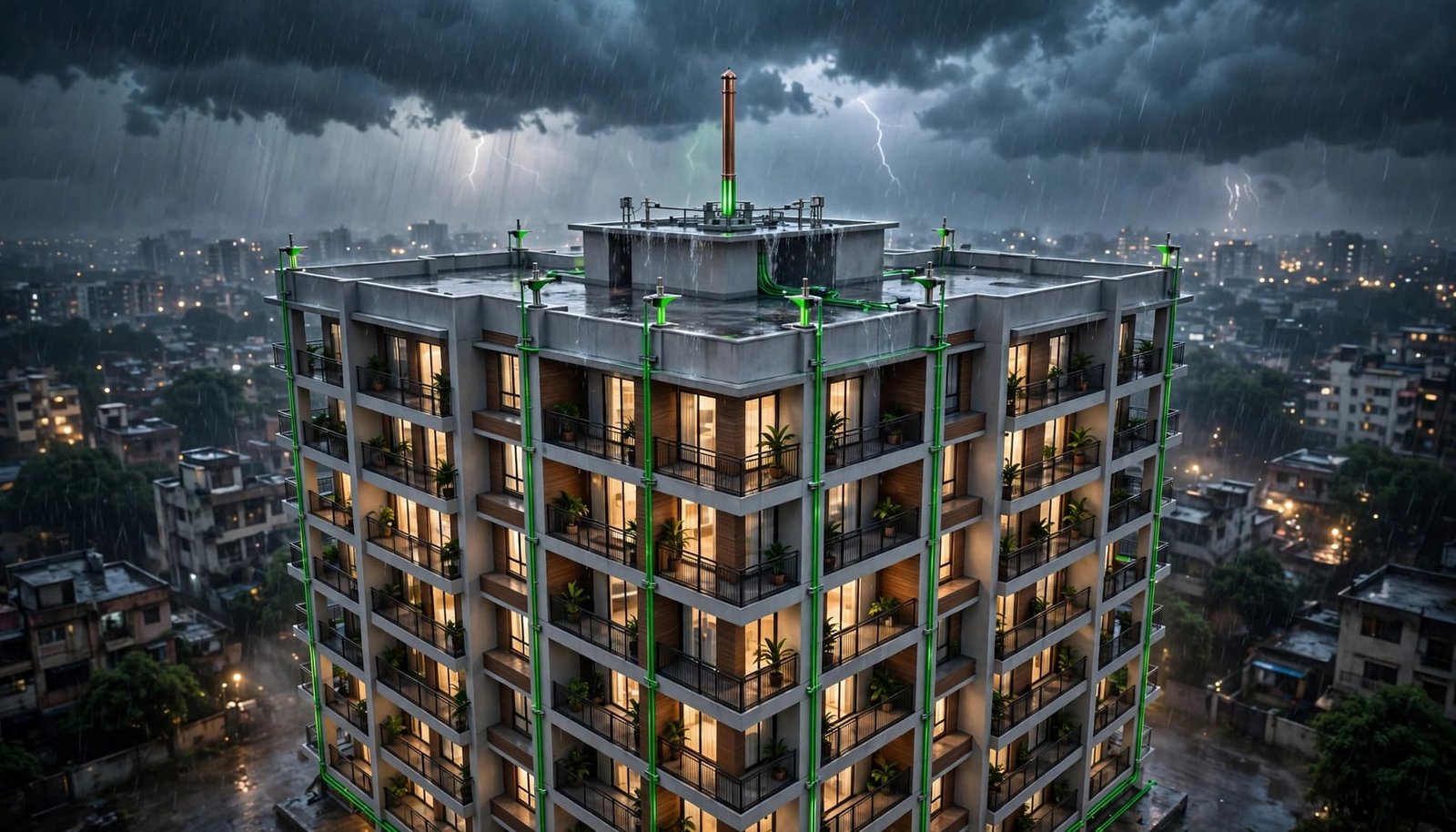
Air terminals belong at the roofline
Air terminals, often called a lightning rod, sit at high points such as terraces, lift machine rooms, water tanks, antenna structures, and roof edges. Their job is to provide a controlled point for a strike to attach.
From ground level, you may spot rods or metal conductors on the roof. Don’t treat that as a green light. A disconnected, corroded, altered, or incomplete system can look convincing from a distance.
Ask the facility manager whether rooftop lightning equipment has been inspected after major repairs, waterproofing work, solar installation, or telecom upgrades. Renters shouldn’t assess, alter, or install these components themselves without professional installation.
Down conductors need a safe route
Down conductors carry lightning current from the roof to the grounding system. They should be continuous, protected from damage, and routed as part of an engineered system.
The National Building Code of India, 2016, provides the relevant national framework for building safety and services. It also addresses risks that can arise when lightning protection components interact with electrical or service infrastructure. Ask who designed the route, when it was inspected, and whether recent construction disturbed it.
Grounding and surge protection finish the job
The grounding system disperses lightning current into the earth. It works alongside protective bonding and earthing for the building’s electrical installation. IS 3043 is India’s technical reference for earthing, while IS 732 covers electrical wiring practice and protective measures. Ask which safety standards and inspection records apply to the building.
Surge protection devices, or SPDs, sit at key points such as the main distribution board. They can reduce the risk of damaging voltage spikes reaching appliances and electronics. They cannot make a direct lightning strike harmless in every situation.
The IMD also discusses whole-house surge protectors in its lightning safety guidance. Ask whether the building has protection at the common incoming supply and whether your flat has an SPD at its distribution board.
How to inspect before signing the lease
Book a daytime visit. Move slowly. Take photographs of concerns. Don’t climb onto roofs, open the distribution board, remove socket covers, touch exposed wiring, or attempt a live electrical test.
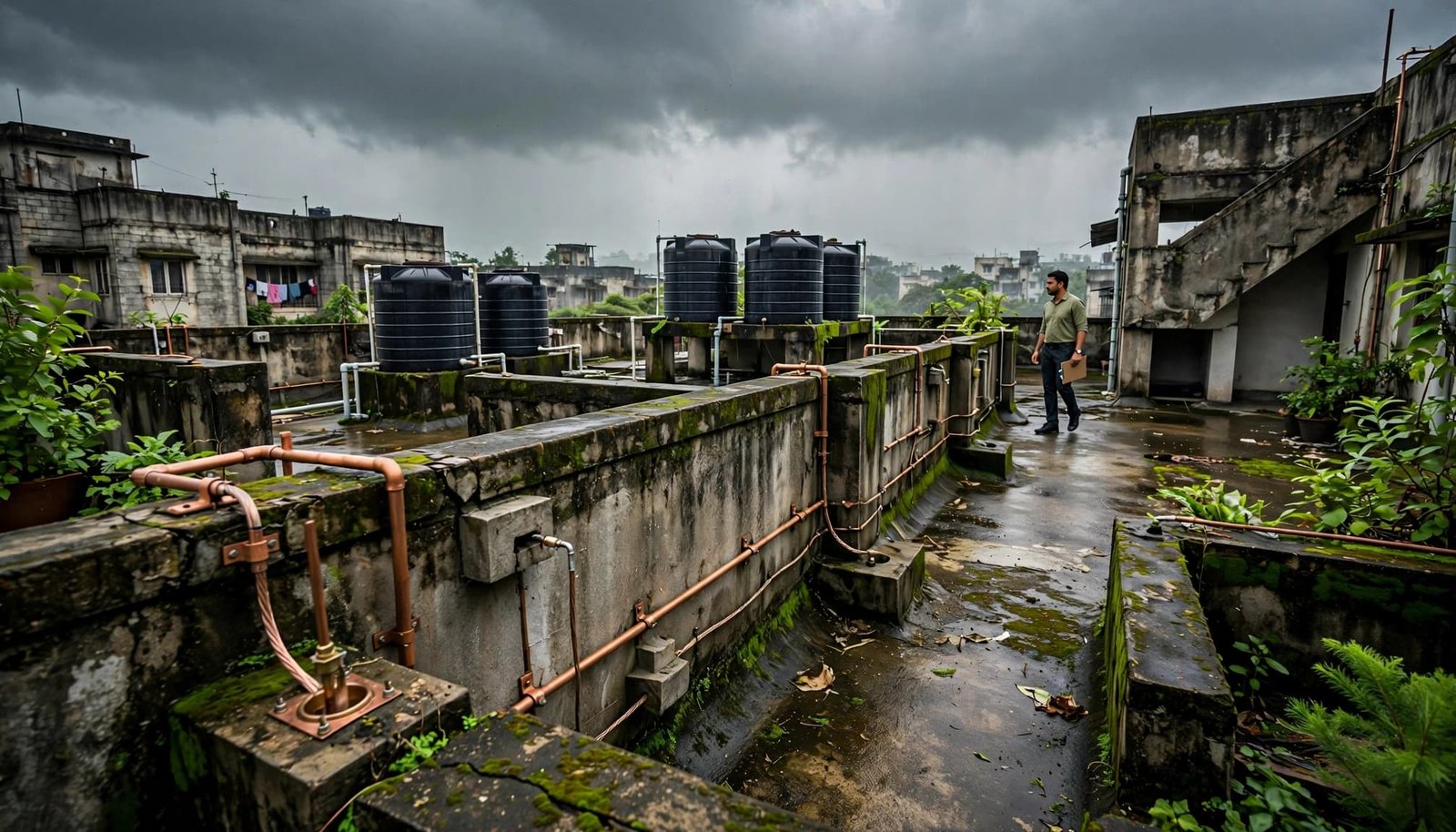
Ask for records, not reassurance
Request the latest electrician’s report, electrical repair invoice, builder handover document, or society maintenance record. Ask building administrators for records covering the lightning protection system, common earthing, generator equipment, lift systems, and electrical rooms. The record should identify the electrician or maintenance technicians who prepared or signed it.
For the rented flat, ask in writing:
- When was the last electrical inspection or repair completed?
- Which electrician or firm did the work?
- Do the inspection records show a continuous, professionally maintained path for lightning current from rooftop components to grounding?
- Have the geyser, ACs, refrigerator point, washing-machine point, and kitchen outlets been checked?
- Has the flat or building faced surge damage, burning smells, frequent tripping, or electrical fire?
A document can be incomplete or old. Still, it creates a trail. A verbal promise tends to vanish the moment a repair invoice appears.
Check the places where your real life happens
Look at the outlets planned for the refrigerator, washing machine, geyser, microwave, air conditioner, computer, induction cooktop, and other electronic equipment. A bedroom socket that charges a phone tells you little about a high-load circuit.
Watch for loose plates, cracked outlets, burn marks, paint inside socket holes, plugs that sag, damp walls near electrical points, and extension boards used as permanent wiring. Bathrooms, balconies, kitchens, and utility areas need extra scrutiny because water and electricity don’t negotiate.
A plug-in socket tester can flag a likely fault. It cannot certify that a building’s earth electrode, bonding, or complete protective path is sound. Don’t use one in wet conditions, near exposed wiring, or when you’re unsure how to interpret it. A qualified electrician should inspect any visible red flags.
Treat these red flags seriously
Call for a qualified electrician’s inspection before signing if you notice frequent tripping, shock sensations from metal appliances, hot distribution boards, exposed joints, scorch marks, burnt-plastic smells, crackling sounds, or a socket that works only when a plug sits at an angle.
Ask for closer scrutiny if the building has a diesel generator, inverter, rooftop solar, or EV charging. These systems add changeover and bonding requirements. They deserve records, not guesswork.
What the law requires, and what good practice demands
There isn’t one clearly uniform, nationwide requirement for every apartment block. Requirements can vary by city, building height, occupancy, local approvals, and design. Always check current central, state, municipal, fire-safety, and electrical-inspector requirements before treating this as legal advice.
A landlord may not be required to show you a standalone lightning risk assessment. That doesn’t make the question unreasonable. A risk assessment considers exposure, while an electrical audit checks wiring and earthing. A lightning protection inspection examines installed components, and a statutory certificate is a separate compliance document where required.
Larger towers, exposed sites, older buildings, and structures with extensive rooftop equipment have more to answer for than a small low-rise home.
Ask whether risk was assessed during design or upgrades
Ask whether a qualified engineer completed a lightning risk assessment during the building’s design, renovation, or major upgrade. The engineer may assess the location, height, roof equipment, surrounding structures, utility connections, and the consequences of a strike. They can also review whether the lightning protection system suits the building’s actual exposure.
International references such as IEC 62305 and NFPA 780 can inform engineering practice and technical standards. They aren’t automatically binding law for every Indian rental. Ask which safety standards apply locally, and whether the work follows relevant national standards or approved requirements.
Be wary of expensive systems marketed as preventing lightning before it forms. Traditional external systems don’t stop storms. They create a safer path if a strike occurs. Any claimed performance advantage should come with independent engineering evidence, maintenance requirements, and clear responsibility if it fails.
Make accountability part of the lease
Put known electrical defects, promised repairs, deadlines, and responsibility for follow-up in writing. Include major appliances supplied with the home.
This is systemic change at its most ordinary and necessary. Tenants shouldn’t inherit unsafe infrastructure because asking questions feels inconvenient. Good repairs also reduce discarded appliances, burnt cables, and avoidable waste.
What to do when a thunderstorm arrives
The best inspection cannot eliminate all weather risk. During a lightning alert, stay indoors, close windows and doors, avoid balconies and terraces, and don’t climb onto the roof. Keep away from exposed plumbing and metal railings where practical.
Unplug sensitive equipment if it is safe
If the storm hasn’t reached the building, you can unplug sensitive electronics with dry hands and safe access. Don’t rush through a damp flat, touch wet plugs, or disconnect equipment once lightning is overhead.
The IMD advises avoiding trees, water bodies, unnecessary travel, and outdoor spaces during lightning. A building is the safest place to be, but reduce contact with electrical equipment during intense storms.
Notice the building as part of its neighbourhood
Climate literacy isn’t only knowing global temperature figures. It is recognising how maintenance, drainage, heat, rain, electricity, and inequality meet at your front door.
Maintenance records affect more than one flat. Poor upkeep can endanger workers, increase appliance waste, and leave families and communities with greater exposure to unreliable housing infrastructure.
Frequently asked questions
Does a visible lightning rod mean the apartment is protected?
No. A rod is only one component. A complete setup also needs correctly installed down conductors, grounding, bonding, and regular maintenance. Ask for inspection records and check whether later roof work affected the setup.
Are apartment associations legally required to conduct a lightning risk assessment?
Requirements vary by local rules, building approvals, occupancy, height, and design. Ask the association whether a risk assessment, electrical audit, or engineer review was completed during construction or later upgrades. Request copies of relevant records, but treat this as practical guidance rather than legal advice.
Can surge protection devices protect my appliances?
They can reduce damage from electrical surges when correctly selected and installed at the main board and other relevant points. They don’t replace sound earthing, proper wiring, or external lightning protection.
A safer rental starts with proof
The smartest pre-lease question isn’t, “Does the flat have a lightning rod?” It is, “Can you show me the electrical inspection and maintenance record for this flat and building?”
A liveable city needs more than private caution. It needs housing systems that value safe repairs, transparent records, climate literacy, and people over cosmetic fixes. Explore Our Active Missions to support community work that connects urban biodiversity, public accountability, and practical climate action.