Artificial Turf in Indian Cities: More Heat, More Microplastics
 TBH Editorial
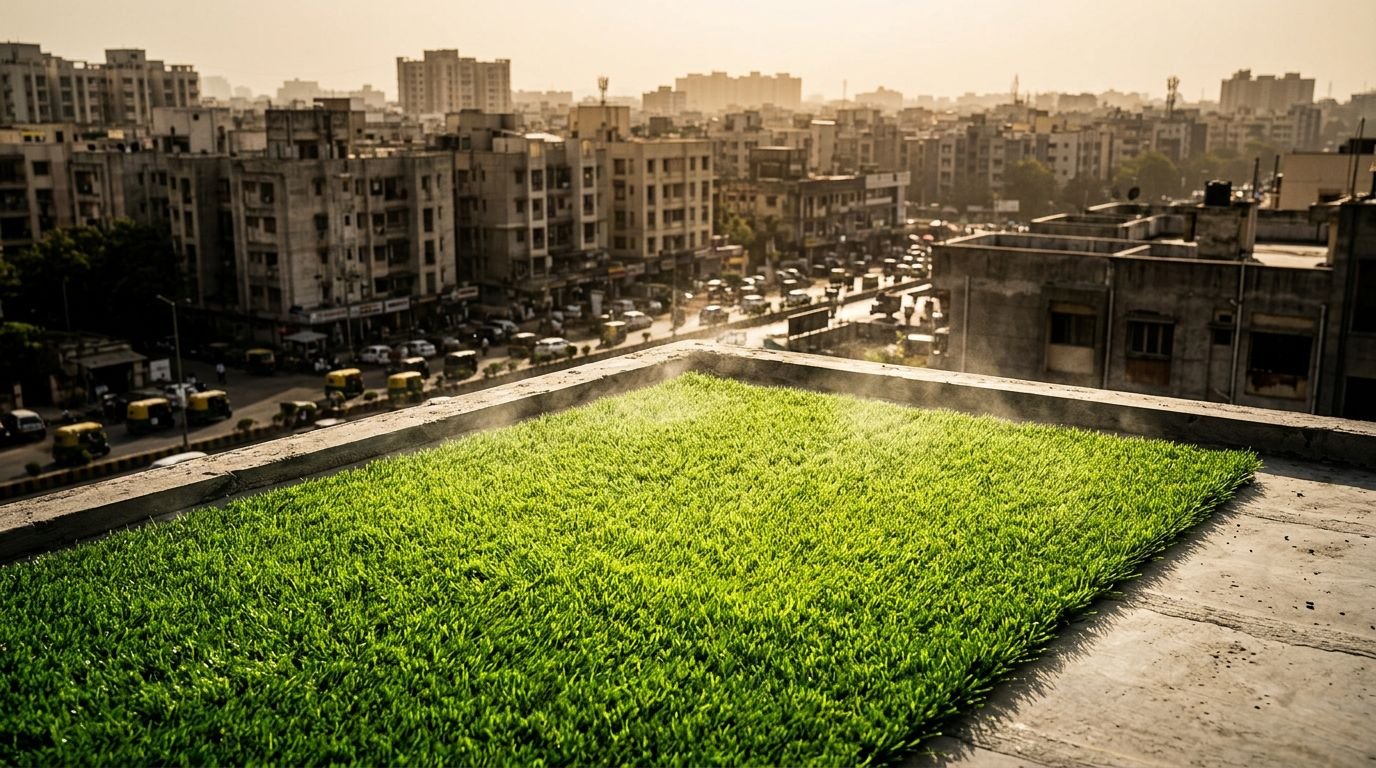
A surface can look green and still make a city hotter. That is the strange promise behind much of the artificial turf indian cities are seeing spread across their landscapes.
We put artificial grass on school courts, rooftop cafes, housing lawns, and mini-pitches because it looks tidy and stays camera-ready in our outdoor spaces. But the right question is not whether it looks green on opening day. The right question is whether it cools what people actually feel, and whether it stays out of their soil, drains, and lungs.
Once you ask that, the shine fades.
Key Takeaways
- Artificial turf in Indian cities often contributes to the urban heat island effect, with reported peak summer temperatures of 65 to 70C on some installations.
- The material in these synthetic grass products sheds microplastics and chemical-laced particles as fibres wear down and infill escapes into drains, dust, and soil.
- It is often sold as a low maintenance green space option, but much of the long-term burden lands on children, grounds staff, nearby residents, and city waste systems.
- The bigger loss is ecological: less cooling from living plants, weaker soil health, lower urban biodiversity, and more plastic waste after 8 to 10 years.
- Systemic change beats decorative shortcuts. Cities need shade, trees, permeable ground, durable natural play spaces, and honest procurement.
The green look that makes streets and playgrounds hotter
In many Indian cities, synthetic grass is marketed as a low maintenance, practical answer to dust, water stress, and worn-out lawns. On a brochure, that sounds sensible. Under a May sun, it can behave more like a hotplate than a park.
Research notes tied to Indian playground turf installations report surface temperatures of 65 to 70C during peak summer. That is not a small comfort issue. That is skin-burn territory, heat-stress territory, and no-place-for-kids-to-fall territory.
Resources collected by Sweltering Cities on fake grass and heat make the core point clearly: fake grass intensifies the urban heat island effect because it absorbs and holds far more heat than living ground cover.
Natural grass cools through evapotranspiration. Soil stores moisture. Leaves release water. Shade changes the whole feel of a space. Plastic blades do none of that, and many currently on the market lack effective heat-reducing technology. They sit on compacted layers, absorb radiation, and push heat back upward.
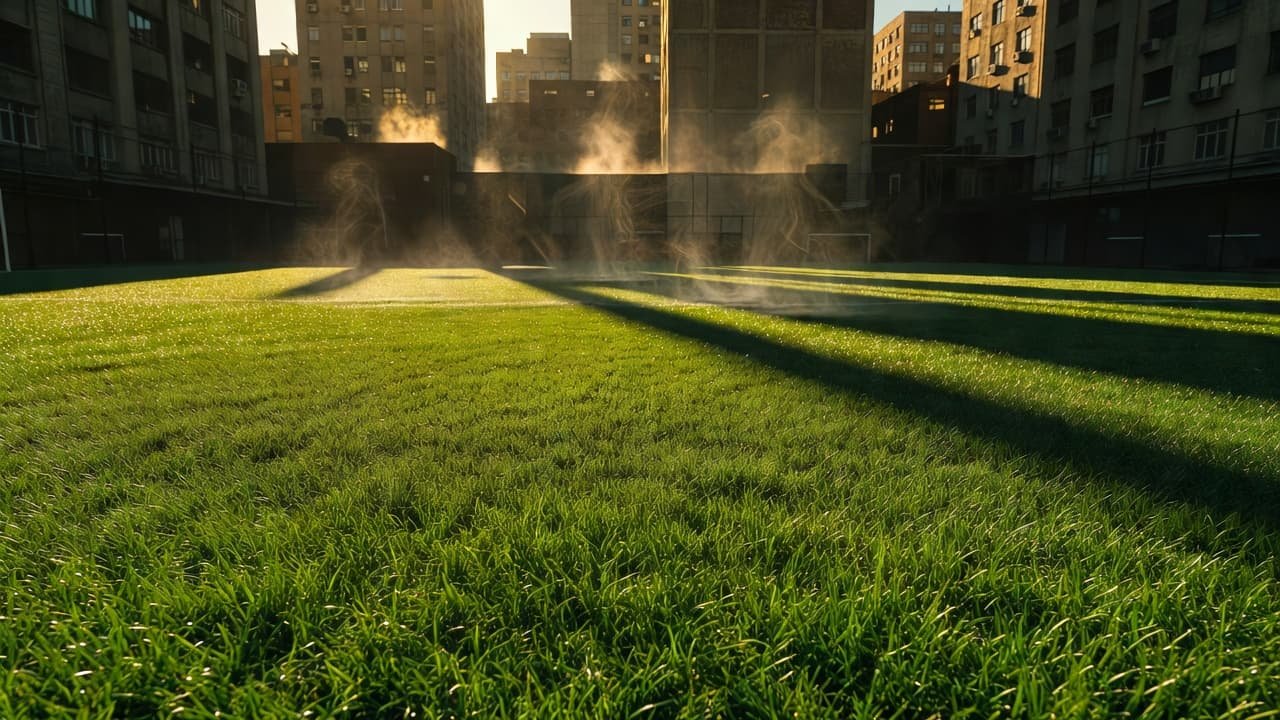
A turf patch also does not exist alone. In Indian cities, it often sits beside concrete walls, metal fencing, parked vehicles, and hard paving. That means trapped heat, weak airflow, and hot air sitting right where people stand, play, or wait.
A surface can look green and still behave like a radiator.
The harm is not evenly shared. A private club may close its turf at noon and switch on misters. A municipal school usually cannot. Groundskeepers, PE teachers, delivery riders cutting through a sports complex, and children using a budget community court are the ones who feel that heat first.
This is why accountability matters more than spectacle. A turf court can make a project file look modern. It cannot cool a neighborhood the way trees, permeable soil, and shaded streets can. If the goal is lower heat exposure across Indian cities, plastic grass is a weak answer to the wrong question.
How synthetic grass sheds microplastics into soil and drains
Heat is only half the story. The other half is smaller, less visible, and easier to ignore.
Artificial turf is made from plastics such as polyethylene, polypropylene, and nylon. Many synthetic grass products also use infill, often sand or crumb rubber from old tyres. As the synthetic turf ages, fibres fray. Backing breaks down. Infill migrates. Brushing, sweeping, foot traffic, rain, and repairs move that material outward.
A water quality review on artificial turf pulls together evidence on microplastics, metals, and chemical runoff from these surfaces. That matters a lot in India, where intense monsoon bursts can push loose particles straight into the local drainage system.
Synthetic turf does not absorb water like living ground. When rain hits a sealed or compacted base, runoff carries fragments with it. Some settle in nearby soil. Some move into drains. Some dry out and reappear as dust at breathing height.
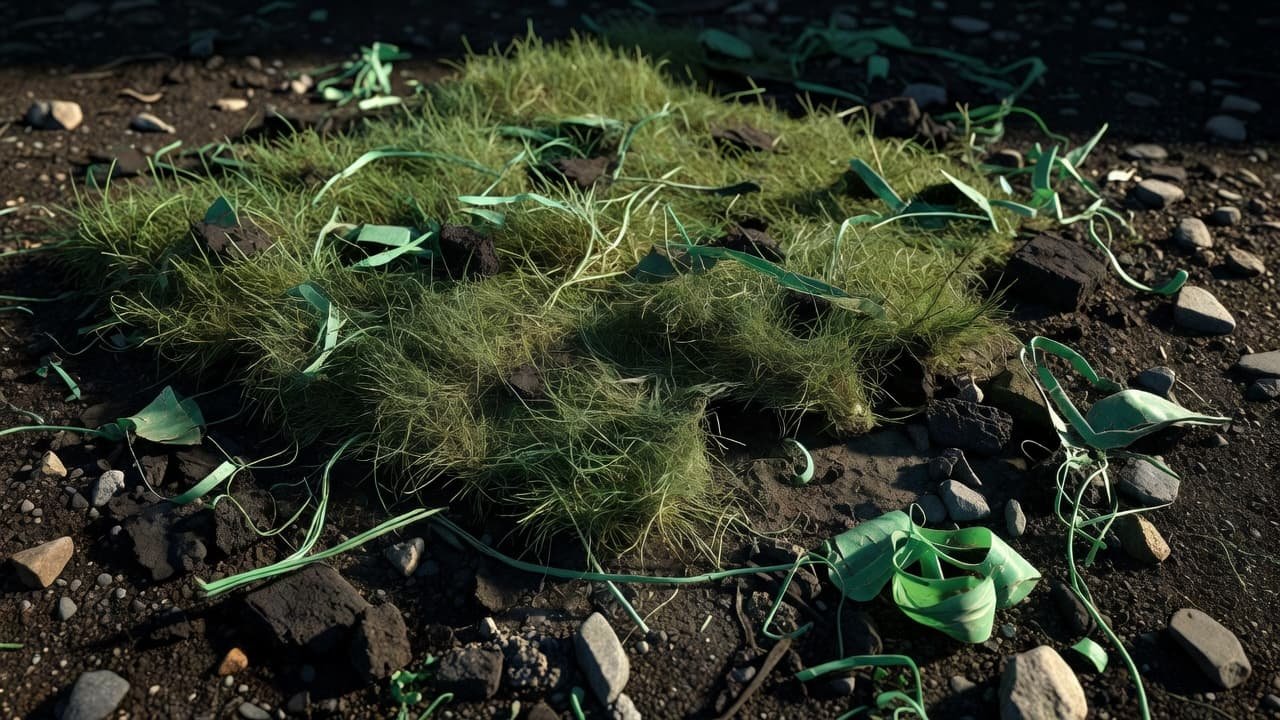
That dust is not harmless background dirt. It can mix with road grime, tyre wear, and construction residue. Children encounter it at hand height and face height. Workers sweep it into corners, where the next rain sends it onward.
One data point from Catalonia should make city planners pause. A local study there linked about 15 percent of macroplastic pollution in waterways to artificial turf. Indian conditions are different, but the lesson is plain. Plastic landscapes do not stay politely in place.
There is also a chemical question. A 2018 study cited in the water-quality literature identified 92 chemicals in tyre crumb, with roughly half not well studied. Some are irritants. Some raise cancer concerns. Hotter surfaces increase the chance of these compounds moving into the surrounding environment.
This is where the circular economy story starts to wobble. Shredding old tyres into infill is often sold as reuse. But if the next step is fragment loss, stormwater contamination, and hard-to-manage waste, that is not a clean circle. It is delayed disposal with a green label.
Why artificial turf keeps spreading across Indian cities
If the downsides are this obvious, why does fake grass keep winning tenders and terraces?
Because it solves a political problem before it solves an ecological one. It looks finished. It looks green in photos. It hides patchy soil. It cuts mowing. For builders, schools, clubs, and resident welfare groups, it offers instant neatness.
India’s market numbers show the momentum. IMARC Group estimated the country’s artificial turf market at about USD 337.7 million in 2024 and USD 351.5 million in 2025, with projections above USD 500 million in the next decade. That growth is driven by residential and commercial sports complexes, landscaping, and residential use.
Sport also matters. India has about 40 artificial hockey turf grounds, and international hockey is played on synthetic surfaces. FIFA-backed expansion plans have also pointed to 10 new artificial turf installation projects for football by the end of 2026 in cities including Mumbai, Delhi, Kolkata, Bengaluru, and Goa.
So yes, there is real demand. There are also real business incentives. Vendors get paid to install rooftop artificial grass or professional-grade putting greens, not to report how hot it gets in May or how much fibre escapes during the monsoon.
That warped incentive is familiar. Capital budgets reward the quick reveal. Maintenance budgets, monitoring, and end-of-life recovery are easier to ignore. A living park needs gardeners, shade planning, soil care, and patience. A plastic carpet needs a ribbon-cutting.
I think we need more climate literacy around this. When you see bright green in a heat-stressed city, don’t ask whether it looks premium. Ask whether it cools the site, absorbs rain, supports life, and leaves behind less waste.
A little everyday mindfulness helps too. Touch the surface on a summer afternoon. Look at the drain after a storm. Check the edges for loose fibres. Ask where the worn-out turf goes after eight years. Those simple questions cut through a lot of marketing.
The damage doesn’t stop at heat
Plastic grass does not only change the temperature of a court. It changes what that patch of land is allowed to be.
Living ground supports insects, microbes, worms, and the messy food web that birds depend on. Turf shuts most of that down. Installation usually starts with compaction and layered base materials. Soil loses breathability. Burrowing life loses access. Leaf litter, seed fall, and small habitat cycles disappear.
That has a direct effect on urban biodiversity. A living patch, even a modest one, can feed pollinators, hold moisture, and soften the edges of a harsh block. A synthetic lawn is visual green without biological function.
The water story matters too. Artificial turf is often sold as a water conservation tool because it doesn’t need irrigation like a decorative lawn. Fair point. But no irrigation is not the same as good hydrology. If rainfall cannot soak into living soil, it becomes runoff. In flood-prone cities, that trade-off is expensive.
If you care about plant-based living, this part should bother you. Replacing actual plant systems with petroleum fibres is not a greener expression of that ethic. It is the opposite of an environmental friendly choice. We are swapping living cooling, rooting, decomposing, and habitat-building surfaces for plastic that only imitates the color.
The chemical risk also grows with heat. A report in The New Lede on heated artificial turf notes growing concern that hotter turf may increase the movement of PFAS and related chemicals into the environment.
Then comes disposal. Most synthetic turf systems last 8 to 10 years. After that, large composite rolls of plastic, backing, adhesive residue, and infill need removal. Recycling remains difficult. Landfill and incineration are still common endpoints. One estimate puts the life-cycle footprint of a single artificial field at about 527 tonnes of CO2 equivalent across construction, maintenance, and removal.
The ecological impact is not abstract. It shows up as hotter play spaces, dirtier runoff, weaker soil, less wildlife, and another stubborn waste stream cities must carry.
When synthetic turf has a defensible use, and when it doesn’t
Not every use case deserves the same verdict. Sport rules are real. Maintenance constraints are real. Water scarcity is real.
If a professional or high-performance facility needs a synthetic surface for a specific sport standard, that is one conversation. Using plastic turf as a decorative substitute for living ground in courtyards, terraces, or as dog turf and pet-friendly artificial grass in housing landscapes is another. Many homeowners are also drawn to the realistic look of these materials when designing a backyard putting green.
This quick comparison makes the trade-offs easier to see:
| Surface type | Heat in summer | Rain and runoff | Waste and habitat | Best fit |
|---|---|---|---|---|
| Living grass or native ground cover | Cooler, especially with shade | Absorbs some water, supports soil | Supports habitat, lower plastic waste | Parks, school yards, courtyards |
| Artificial turf | Much hotter at surface level | Sheds runoff and loose fragments | Plastic waste, low habitat value | Limited sport-specific use |
| Hard paving | Very hot | Fast runoff | No habitat, long life but harsh | Walkways, not play lawns |
The takeaway is simple. Living surfaces cool better and support more life. Turf wins mainly on appearance, uniformity, and short-term upkeep.
That does not mean natural lawns are always the answer. In dry cities, thirsty ornamental grass can also be a poor choice. The better option is often climate-suited planting, shaded play design, permeable surfaces, and smaller areas of durable natural turf where actual play needs it.
If a city or school still chooses synthetic turf for a sports function, it should face the full bill honestly. That means publishing summer heat protocols, choosing lower-shed systems, catching runoff, banning lazy disposal, and budgeting for replacement before the first roll is laid. Without that, the project is not efficient. It is borrowing against public comfort and public waste systems.
What Indian cities should build instead
A healthier urban ground strategy is less flashy and more useful.
Start with shade. Trees, pergolas, and covered spectator edges reduce heat where people stand, not only where brochures point. Then protect soil. Permeable surfaces, mulched planting zones, and native ground cover let rain enter the earth instead of sprinting into drains.
For schools and neighborhood play areas, design matters more than surface branding. Mixed-use courts with tree cover, cooler materials at the edges, refillable water points, and honest maintenance plans do more for children than a bright green carpet ever will.
For those navigating the complexities of urban living, the true sustainable solution is found in procurement that rewards lower surface temperatures, better drainage after the first monsoon, and actual user safety in May, not only visual neatness on inauguration day.
Cities also need sustainable business models around public landscapes. Pay for long-term performance. Pay for tree survival after three summers. Pay for soil restoration and stormwater function. Stop rewarding only installation speed.
I would go one step further. Public tenders should ask six blunt questions before approving artificial turf in Indian cities: How hot does it get? Where do the fibres go? What drains protect nearby water? Does it rely on antimicrobial technology that might leach? What is the end-of-life plan? Who pays when it fails?
That kind of scrutiny is not anti-sport. It is pro-accountability.
If you want to support living systems instead of plastic substitutes, Explore Our Active Missions for on-the-ground work tied to urban biodiversity and climate literacy. Tangible local action still beats decorative greenwashing.
We do not need more surfaces that pretend to be nature. We need real shade, real soil, real habitat, and better questions asked earlier.
Frequently Asked Questions
Is artificial turf cooler than natural grass?
No, synthetic surfaces often behave like a radiator under the sun. While natural grass cools the air through evapotranspiration, artificial turf absorbs heat and can reach surface temperatures as high as 70C in Indian summer conditions.
Do synthetic lawns require less maintenance than real gardens?
While they eliminate the need for mowing and watering, they are not truly maintenance-free. As the plastic fibres and infill degrade over time, they require monitoring to manage loose particles, microplastic runoff, and eventual end-of-life disposal.
Does artificial grass pose a risk to the environment?
Yes, it can contribute to urban pollution through the shedding of microplastics and chemical-laced particles into the soil and drainage systems. During heavy monsoon rains, these materials are often washed away, potentially contaminating local waterways.
Are there alternatives for schools and playgrounds?
Cities should prioritize natural solutions like native ground cover, shaded play areas, and permeable landscaping that support biodiversity. These options cool the environment and manage stormwater effectively without the long-term plastic waste burden associated with synthetic alternatives.
What to remember before the next turf proposal
Artificial turf looks like an easy fix because it hides mess on day one. Over time, it often trades visible mess for heat, microplastics, runoff, and dead-end waste.
So when the next school, builder, club, or city department pitches a green upgrade, ask for proof that it cools the site, protects drains, and has a credible disposal plan. If the answer is mostly aesthetics, or if the proof provided is nothing more than a 15-year warranty or UV protection ratings, the project is not green enough for the climate we already live in.
The best next step is simple: when you see a bright green patch in summer, stop admiring the color and start asking what it does at 2 pm in May. Before you sign up for a free estimate, remember that the coolest choice is usually the living one.