Why Canal Lining in India Can Cut Groundwater Recharge
 TBH Editorial
A canal that “loses” water can also refill wells. That sounds backward, yet it is the core tension in the debate around canal lining in India.
Across dry regions, lining canals with concrete, brick, or geomembranes is often sold as a clean fix for seepage. In many cases, it does save surface water. But it can also block the slow underground recharge that nearby farms, ponds, and villages have depended on for years.
If you care about water justice, local ecology, and long-term planning, that trade-off deserves a closer look.
Seepage is not always waste
When water moves out of an unlined canal, engineers often count it as a loss. On paper, that makes sense. The canal carries less water to its endpoint, and delivery efficiency falls.
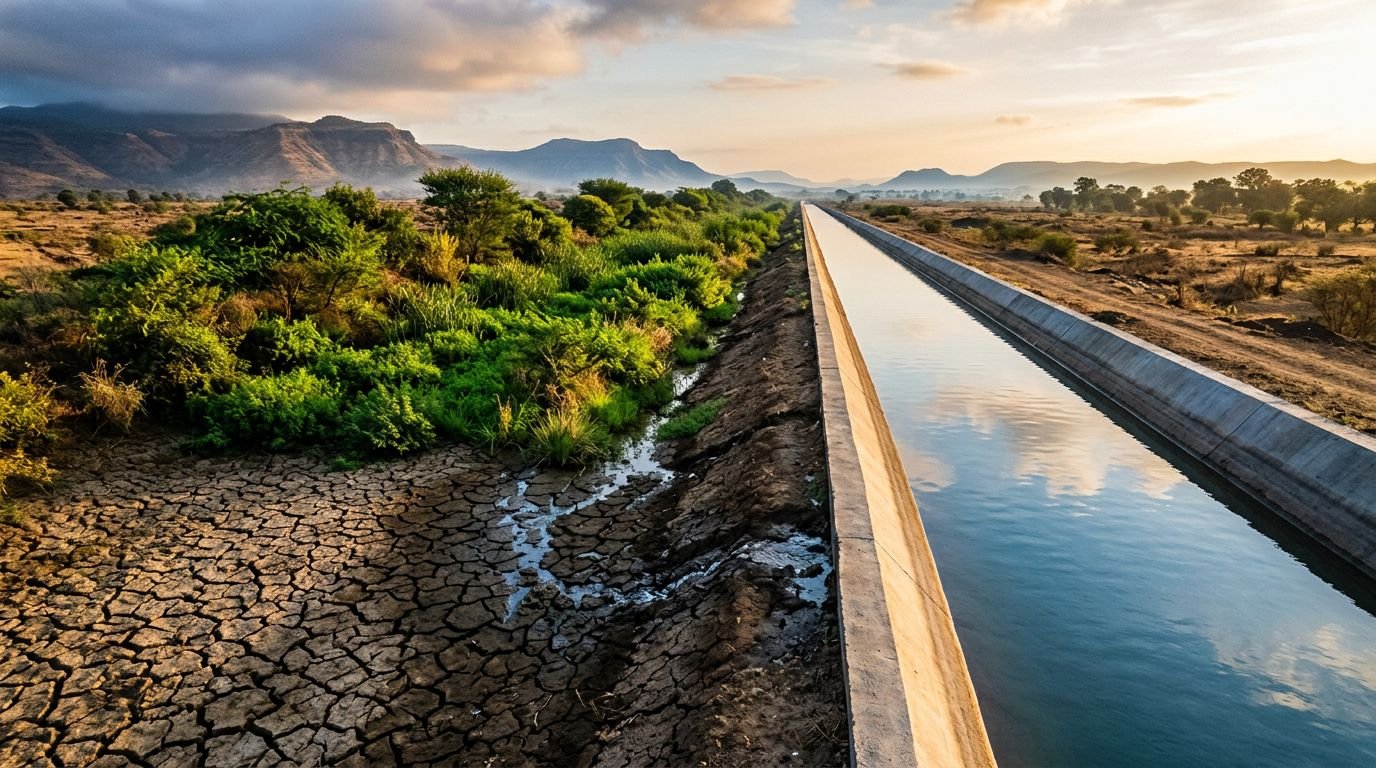
But the ground does not read project spreadsheets. In many canal command areas, seepage sinks through soil layers and feeds shallow aquifers. That water may later return through farm wells, village hand pumps, trees rooted near the canal, or wetlands that hold moisture longer into the dry season.
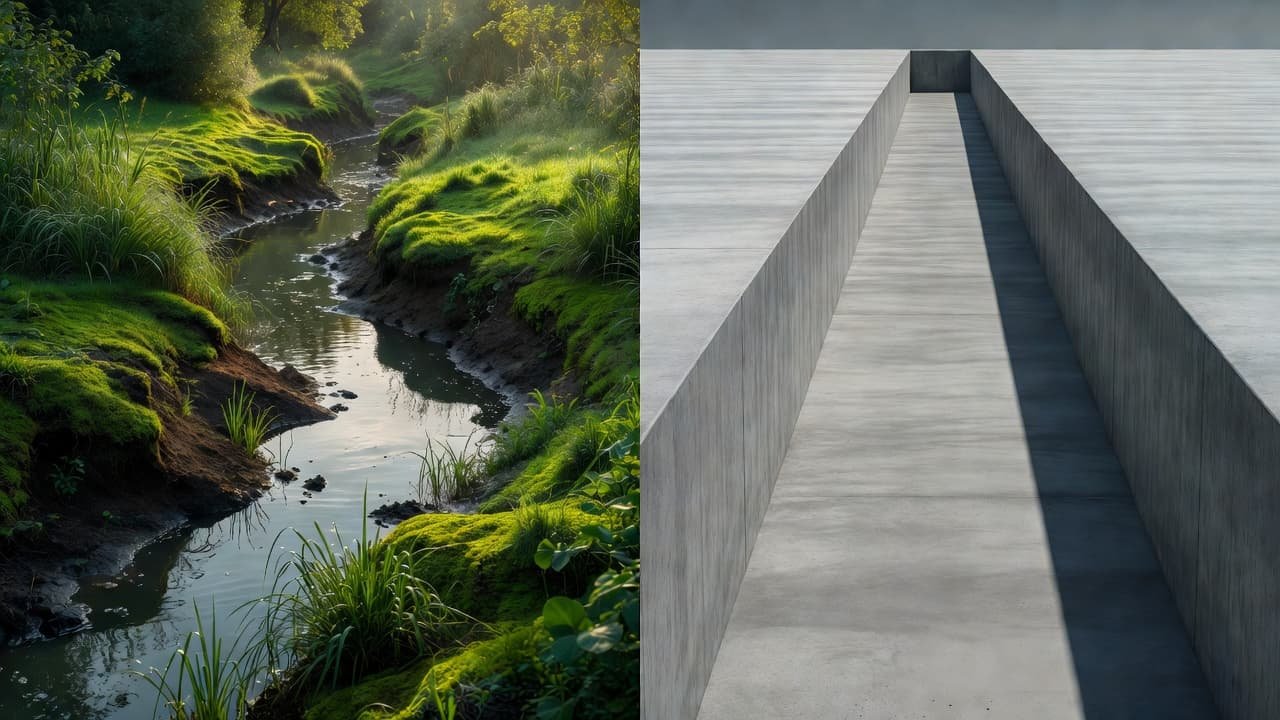
The contrast is visible above ground, yet the bigger shift happens below it.
Research on canal-induced recharge in northwest India points to something many communities already know from experience: seepage can improve groundwater conditions, especially in alluvial regions where canal water spreads through permeable sediments. In some saline areas, that recharge can even help water quality by diluting salts.
Water leaving a canal is not always gone. In many places, it is moving into storage you cannot see.
This is why blanket language about “stopping losses” can mislead. A litre lost from canal flow may still be a litre gained by the aquifer. Farmers living near old canal systems often build their water use around that fact, even when no policy note acknowledges it. As a result, lining can change more than canal hydraulics. It can alter the whole local water balance.
That is the hidden trade-off: less seepage can mean more control in the canal, but less recharge under the land beside it.
Why lining looks efficient on paper
The case for lining is not fake. In some stretches, canals leak so heavily that tail-end farmers receive too little water. Erosion damages banks, weeds spread, maintenance costs rise, and delivery becomes hard to predict. A lined canal can reduce these losses, protect the structure, and move water faster.
For agencies under pressure to show quick gains, that is attractive. Surface efficiency is easy to measure. You compare inflow and outflow, then claim a higher conveyance rate. Political messaging also becomes simple. A hard channel looks modern. Wet soil beside an earthen canal looks like waste.
A study on canal lining and seepage makes the technical logic clear. Lining reduces seepage and erosion, which is often the project goal. Yet that same reduction also means less water moves into surrounding soils and aquifers. The engineering win can carry a hydrological cost.
This matters because performance metrics are often too narrow. Canal departments may track delivery volume, construction cost, and repair frequency. They may not track nearby well levels, soil moisture in adjoining fields, or seasonal recharge patterns. If those indicators are missing, lined canals can look better than they actually are.
There is also a budget logic at work. Civil works are visible, contract-friendly, and politically legible. Groundwater recharge is slower, distributed, and less glamorous. It rarely produces ribbon-cutting moments. That imbalance can push systems toward concrete even when local hydrogeology calls for caution.
So the problem is not lining by itself. The problem is treating lining as a universal good without asking who benefits, who pays later, and what the aquifer loses in the process.
What groundwater recharge does for nearby communities
Groundwater is the quiet backup system of rural India. When monsoon timing shifts, when canal turns arrive late, or when power cuts interrupt irrigation, nearby wells often carry the burden. Seepage-fed recharge helps keep that backup alive.
In many canal-fed landscapes, farmers do not rely on one source alone. They mix canal water, shallow wells, tube wells, and stored pond water. That is called conjunctive use, even if the people doing it never use that phrase. They simply know that one source fails, another steps in.
Once lining cuts seepage, the buffer shrinks. Wells near the canal may need deeper pumping. Small farmers feel the change first because they usually have less capital for deeper borewells, stronger pumps, or rising energy bills. Then the pressure moves outward. More pumping from less recharge often lowers the local water table, and one intervention meant to save water starts feeding another cycle of extraction.
That is why the link between canals and wells matters so much. If you have followed debates about groundwater recharge and peri-urban habitats, the pattern will feel familiar. Surface-water decisions and pumping decisions do not sit in separate boxes. They shape the same aquifer, the same ponds, and often the same birds, soils, and livelihoods.
There is also a time dimension. Seepage may look messy in one season, yet it can stabilize life months later. A shallow well in March may depend on canal leakage from December. Remove the recharge and the delayed effects show up when people are most exposed.
For climate-anxious readers, this is where climate literacy becomes practical. Water systems are not a set of neat pipes. They are layered, delayed, and social. What appears wasteful in one ledger can be protective in a drought year.
When canal lining helps, and when blanket lining backfires
A serious argument against blanket lining is not an argument against all lining. Some canal reaches should be lined. Others should not. The right answer depends on soil type, aquifer depth, salinity, waterlogging risk, and how local people already use groundwater.
For example, if a canal runs through land with severe waterlogging, constant seepage can damage crops and raise salts into the root zone. In that case, lining may reduce harm. If a canal cuts across highly permeable ground and loses too much water before it reaches users, selective lining can also make sense.
The trouble begins when one logic is copied everywhere. A paper on economic trade-offs of canal lining highlights the same issue in another irrigation setting: lining may be cost-effective, but it can also affect groundwater recharge and water equity. India faces that tension at a larger scale because so many farms sit in mixed surface and groundwater systems.
A quick comparison helps:
| Local condition | Likely effect of lining | Recharge risk |
|---|---|---|
| Waterlogged or saline command area | Cuts harmful seepage and can protect crops | Lower |
| Reach with high conveyance loss and weak tail-end supply | Improves delivery, but may reduce nearby well recharge | Medium |
| Alluvial zone with many shallow wells near canal | Blocks an important recharge pathway | High |
| Selective lining with recharge ponds or spreading basins nearby | Balances delivery and aquifer support | Lower than blanket lining |
The main takeaway is simple. Hydrogeology should decide, not construction momentum.
This is also where project design needs honesty. If a district lines a canal and nearby wells decline, that is not an accidental side note. It is part of the project outcome. Public agencies should map who depends on seepage before work begins, then monitor what changes after the lining is done.
The ecological impact that reports often miss
Groundwater recharge is not only about irrigation. It shapes the wider ecological impact of a landscape.
Moist soils near unlined canals can support grasses, shrubs, insects, amphibians, and trees. Seasonal ponds fed by a high water table can hold longer. Birds use these edges, especially in peri-urban belts where natural habitat is already under pressure. Once lining cuts that diffuse moisture, the corridor can become harder and drier.
That matters for urban biodiversity too. Many Indian cities expand into former farm belts where canals, ponds, and recharge zones still connect rural and urban ecologies. When those systems dry out, you do not only lose water. You also lose habitat, local cooling, and ordinary contact with nature.
Young people feel this loss in a specific way. When children see wetlands shrink and wells fail, climate change stops being abstract. It becomes daily life. That is why building climate literacy through local wetlands is more than an education idea. It is a public skill. People need to understand where their water comes from, where it goes, and what concrete interventions change under the surface.
There is a social memory issue as well. Older farmers may remember when canal seepage kept nearby patches green through late winter. Newer planning documents may record only “unaccounted losses.” Once that lived memory disappears, bad design becomes easier to repeat.
If you want examples of local work that links habitat care with youth education and on-the-ground accountability, Explore Our Active Missions. Projects that repair ecosystems and teach people how those systems function can lower fear and raise public competence at the same time.
A water project should never be judged only by the water that stays inside a channel. It should also be judged by the life that remains possible around it.
What accountable water policy looks like
The better response is not romantic attachment to leakage. It is better accounting.
First, canal agencies should map where seepage is harmful and where it is useful. That means pairing engineering surveys with groundwater data, farmer interviews, and seasonal ecology records. In some reaches, lining will still be the right call. In others, partial lining, recharge basins, or controlled seepage zones may do more good.
Second, project reports need to track more than delivery efficiency. Nearby well levels, soil moisture, pumping intensity, and habitat changes belong in the same dashboard. Without that wider view, “saved water” can hide water shifted from aquifers to canals, or from small farmers to larger pump owners.
Third, this issue needs Systemic change. Food supply chains, agri-finance, and public procurement often reward short-term output over long-term water balance. Companies that claim sustainable business models should account for hidden aquifer losses in their sourcing regions. A circular economy view of water asks where water returns to the system, in what condition, and who gets access after it leaves the main channel.
That wider lens also reaches everyday choices. People who care about plant-based living often focus on carbon, land use, and animal welfare. Water deserves equal attention. Crop demand shapes irrigation pressure, so a thoughtful diet works best when paired with water-aware sourcing and regional crop fit. Meanwhile, everyday mindfulness about household water use can build public awareness, but personal restraint alone will not fix flawed infrastructure policy.
Industry planning matters too. The same districts facing canal changes may also face new industrial water demand. That is why it helps to read about why cities must protect groundwater recharge zones. Surface systems, aquifers, farms, and urban growth are tied together whether policy treats them that way or not.
A more honest water policy would stop asking only, “How much seepage did we stop?” It would also ask, “Whose recharge did we remove, and what replaced it?”
Conclusion
The opening claim still holds: a canal that “loses” water can also sustain a landscape. Once you see that, the debate around lining changes.
The real issue is not whether seepage looks inefficient. The real issue is whether cutting it harms groundwater recharge, nearby wells, and the living systems built around that slow underground flow.
Water planning gets better when it counts the full balance, not only the concrete channel. A canal can carry irrigation water, but the land beside it still decides how long that water supports life.