
Why Compostable Packaging Fails in Indian Waste Systems
 Saket Sambhav
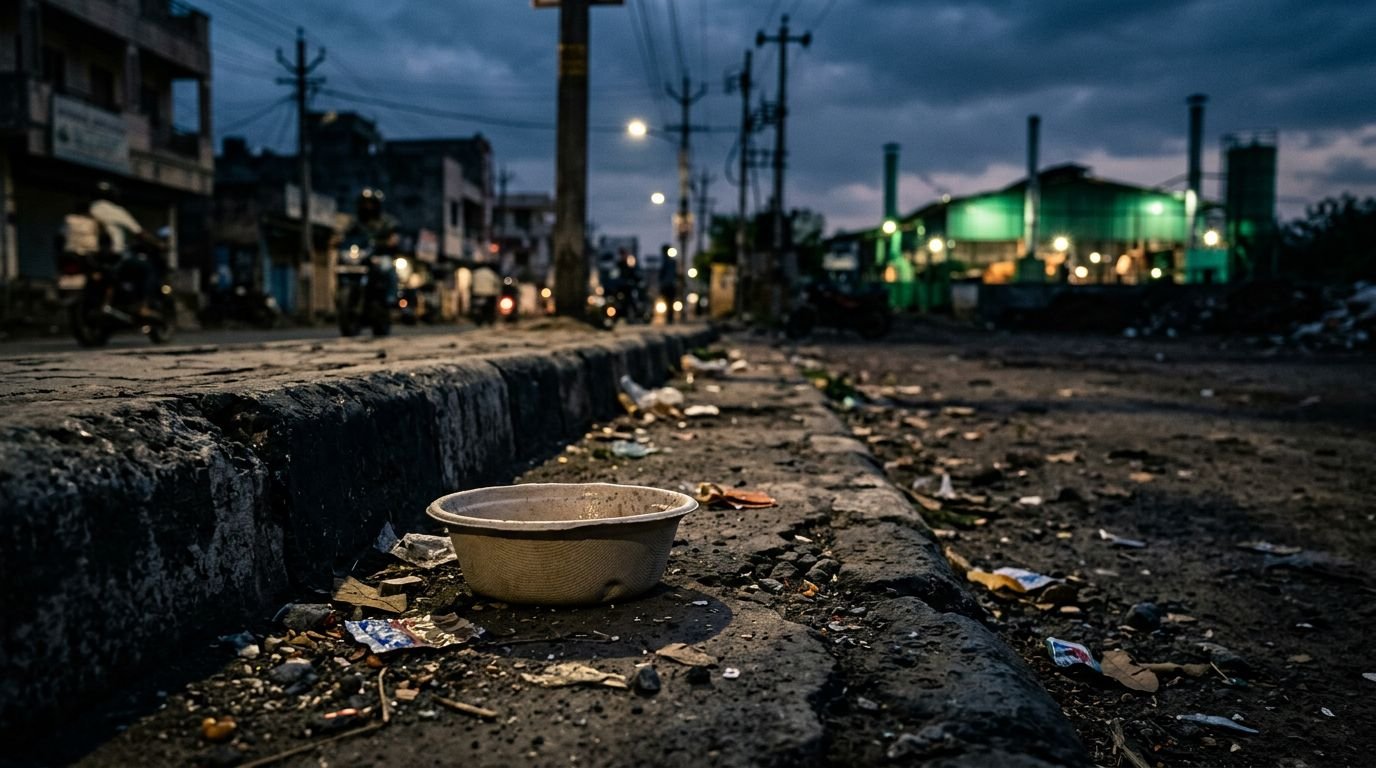
A takeout bowl can say compostable and still end up in a dump. That is the central problem with compostable packaging in India. The material may be designed for a better ending, but the waste system around it often cannot deliver that ending.
If you care about climate, waste, or honest business claims, this matters. The failure is not only about bad bins or careless users. It is about how products, cities, brands, and labor fit together, or fail to fit, in a way that fuels the ongoing crisis of plastic pollution.
Key Takeaways
- Infrastructure Gap: Compostable packaging often fails in India because municipal waste systems lack the specific industrial composting facilities required to process these materials, treating them instead as ordinary, non-recyclable trash.
- The Label Myth: A green label creates a false sense of security, leading consumers to believe packaging is environmentally friendly regardless of disposal method, while failing to account for the reality of mixed-waste streams.
- Systemic Failure: True sustainability requires more than a material swap; it necessitates robust source segregation, dedicated collection routes, and financial investment from brands into recovery infrastructure and worker safety.
- Prioritizing Reuse: Because disposal systems are often unreliable, the most effective strategy is a hierarchy that prioritizes reduction and reusable systems over relying on single-use items, even if they are biodegradable.
The green label collides with the street
Brands frequently adopt sustainable packaging because it makes a complex environmental challenge appear simple. By shifting to these eco-friendly alternatives, companies can maintain the same single-use habits while printing a green claim and moving on. For shoppers who want to reduce their impact, that can feel like genuine progress.
Yet, a package does not decide its own fate. Collection routes, source segregation, transfer stations, waste workers, and local composting capacity decide it. In many Indian cities, a compostable cup or cutlery set enters the same stream as plastic waste, food scraps, dust, sanitary waste, and traditional petroleum-based plastics. Once that happens, the label loses most of its meaning.
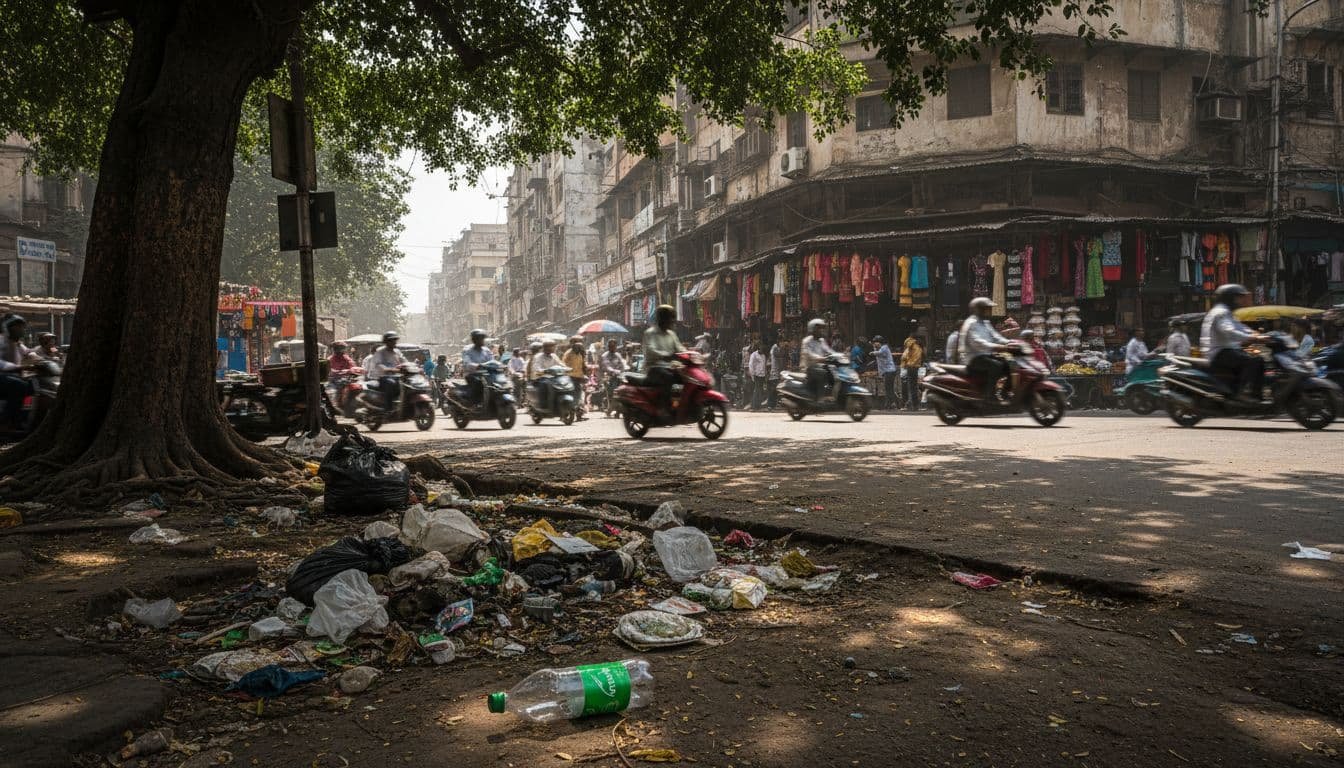
This is why the debate often goes wrong. People ask whether the material is inherently good or bad. The sharper question is whether the city has a viable path for that material after use. If the answer is no, the green choice turns into a branding story more than a legitimate waste solution.
A compostable spoon in mixed waste is still mixed waste.
That sounds harsh, but it is accurate. Compostable items can sit for weeks in drains, open plots, roadside heaps, or landfills before conditions even begin to resemble composting. During that time, these biodegradable products still create litter, confuse the sorting process, and shift cleanup costs onto sanitation workers and communities burdened by the overflow of single-use plastic.
The hard truth is simple. In India, compostable packaging often fails because the system treats it as ordinary trash.
Compostable is not the same as composted
The word “compostable” often creates a false sense of security, leading many consumers to believe that any item labeled as such can be tossed into a home compost pile. In reality, most commercial packaging is not designed for such casual decomposition. It typically requires specific levels of heat, moisture, oxygen, and microbial activity to break down. Industrial composting is a technical, managed operation, not the same as simple rotting.
Current 2026 waste-sector reporting shows India generates about 1.6 to 1.8 lakh tonnes of municipal solid waste every day. While the country operates over 2,800 compost plants, these facilities are optimized for raw organic matter rather than the specialized materials currently entering the market. Bioplastics, bagasse packaging, and various molded fiber products often require longer residence times than food waste. When sugarcane bagasse or corn starch based items are mixed into these systems, the standard composting process is often disrupted. Furthermore, when biodegradable food trays made from agricultural residues are introduced without proper infrastructure, even items that meet the IS/ISO 17088 certification standard can end up as contamination rather than nutrient-rich soil.
That gap matters. Reporting on industrial composting infrastructure in India has pointed out how few facilities can properly process these materials at scale. A separate analysis in Waste & Recycling makes the same point from another angle: waste is generated everywhere, but treatment remains limited and uneven.
This mismatch becomes clearer when you compare the ideal with the real system:
| What compostable food packaging needs | What many cities actually provide |
|---|---|
| Clean segregation at source | Mixed waste in one bag or bin |
| Separate collection and handling | Shared trucks and transfer points |
| Controlled composting conditions | Dumps, landfills, or basic wet-waste plants |
| Clear labels and sorting knowledge | Confusing claims and low awareness |
The table is the whole story in miniature. A package may be designed for specific environmental conditions, but the chain after disposal rarely matches that design.
So the failure is not mysterious. It is structural. Material science made a promise that collection systems have not caught up with.
Segregation breaks the promise at the first mile
Most waste problems begin before the truck arrives. Source segregation is still weak across many homes, offices, schools, markets, and food-delivery systems. People may want to do the right thing, but bins are inconsistent, labels are vague, and time is short. When the disposal moment lasts three seconds, confusion wins.
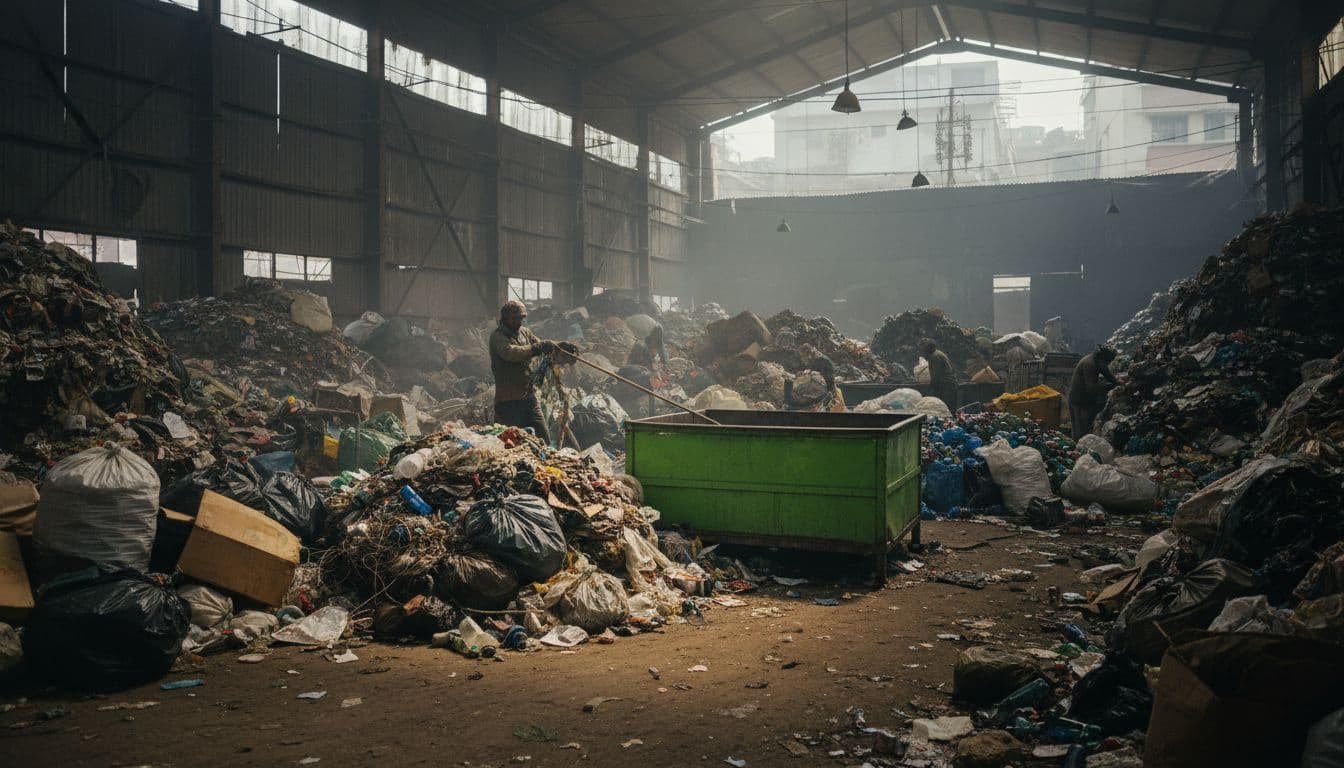
A compostable bowl mixed with gravy is not the main issue. The real problem starts when that bowl is thrown into a pile of plastic waste containing multilayer packets, PET bottles, tissues, tea dust, and diaper waste. At that point, clean recovery becomes hard and expensive. Workers sorting at speed cannot stop to decode every green logo or certification mark.
Confusion also comes from language. “Biodegradable,” “oxo-biodegradable,” “compostable,” and “recyclable” often blur together in public understanding. A reported look at compostable bag claims in India captured this problem well: even when the material is legitimate, people often cannot distinguish between certified biodegradable bags and standard compostable carry bags, leading to uncertainty about where they should go.
That confusion creates contamination in both directions. Compostable items enter recycling streams and reduce bale quality. Conventional plastics enter organics streams and ruin compost feedstock. Meanwhile, waste workers carry the burden. They sort with their hands, not with lab tools. They sort for speed and resale value, not for brand messaging.
This first-mile failure is why better packaging alone cannot fix waste. The disposal moment is social, not only technical. It depends on housing design, public bins, labor conditions, and clear communication across languages and literacy levels.
Why the waste economy ignores compostables
India’s informal recycling economy keeps cities cleaner than most formal systems could manage alone. Waste pickers recover PET, aluminum, cardboard, rigid plastic, and metals because those materials have buyers. That resale value creates movement. Materials without value tend to stay put.
Compostable packaging usually has no such market. A corn-starch bag or polylactic acid fork does not offer a clear payout to the person picking through mixed waste. In fact, it may create risk. If it looks like plastic, it can contaminate recyclable loads. If it goes with wet waste, it disappears into a dirty stream where recovery is almost impossible.
That is why compostables often fall into an economic blind spot. They are marketed as premium products, but after disposal they become low-priority waste. The cost has not vanished. It has simply shifted. Municipal systems absorb some of it. Sanitation workers absorb more. Neighborhoods near dumping grounds absorb the rest.
This is where the conversation needs more honesty. When a brand replaces single-use plastic with compostable packaging but does not fund take-back, sorting, or processing, it has not solved the end-of-life problem. It has outsourced it.
A fairer model would count labor and recovery as part of the package price. That is where sustainable business models matter. If a company wants to sell single-use items with a compostable claim, it should budget for separate collection, verified processing, and worker safety. Otherwise, the claim sits on the pack while the unpaid work sits elsewhere.
Many companies resist that because it breaks the illusion of a cheap fix. Yet single-use convenience has always depended on hidden costs. Compostables do not erase those costs. They simply rearrange them.
Policy targets don’t build local systems
Policy in India has started to move. That matters. Compostable plastics sit within Extended Producer Responsibility rules, and collection targets are strict on paper. If you want a plain-language look at the compliance side, this guide to understanding India’s EPR regulations is a useful place to start. For companies navigating these mandates, ensuring materials are CPCB certified by the Central Pollution Control Board remains the primary hurdle for legitimacy in the eyes of regulators.
Still, paperwork is not infrastructure. A certificate can verify a material. It cannot build a ward-level collection route or train workers to separate feedstock. A target can push reporting. It cannot by itself create clean streams in a crowded city market.
That is why policy design matters. A useful discussion of compostable packaging policies and lessons for India points to the same issue many local bodies face: without phased rules, incentives, and processing capacity, mandates can outpace reality.
India’s 2026 waste reforms push four-stream segregation and more local processing of wet waste. That direction is better than the old one-bin habit. Yet many urban local bodies still lack land, money, trained staff, or reliable contracts. Furthermore, balancing these waste mandates with existing FSSAI regulations creates additional complexity for food brands trying to ensure both packaging safety and environmental compliance. Smaller cities often depend on outside processors. Large cities struggle with uneven compliance across wards. Meanwhile, brands sell nationwide as if disposal conditions are the same everywhere.
Systemic change is the missing ingredient. It is less flashy than a new package, but it is what makes disposal claims honest. Cities need separate collection where compostables are allowed. Workers need clear material standards. Plants need clean input and quality checks. Public communication needs to explain, in simple language, what goes where and why.
Without that chain, policy can produce a neat spreadsheet and a messy street at the same time.
The ecological impact goes beyond the bin
Failed compostables do more than disappoint careful consumers. They also distort how people think about waste. When consumers believe they are using renewable materials that are non-toxic, they may feel freer to order one more meal, take one more spoon, or grab one more cup. The label can soften guilt without reducing waste.
That creates a wider ecological impact. A compostable item stuck in a storm drain still blocks water during monsoon weeks. If these items fail to break down, they contribute to plastic pollution and eventually fragment into microplastics that infiltrate the soil and water supply. Cows, dogs, and birds do not pause to check certifications. Neither do drains, lakes, or roadside soils.
The effect reaches urban biodiversity too. Waste leakage around parks, trees, wetlands, and construction edges harms habitats that city species already struggle to keep. When packaging claims distract from leakage, the public conversation shifts away from the places where damage is visible and local.
There is also a carbon angle, although it is less neat than marketing suggests. Feedstocks, manufacturing, transport, additives, and failed recovery all influence total carbon emissions. A single material swap cannot cancel the footprint of a throwaway system.
This is why a circular economy puts reuse ahead of better disposal. The best waste outcome is often no waste at all. Refill systems, returnable containers, bulk supply, and durable service ware do not depend on the fantasy that perfect sorting will happen after every meal.
People who care about plant-based living often understand this already. What you consume matters, but how the system handles leftovers matters too. Personal ethics are strongest when they line up with material reality, guiding us toward truly environment friendly choices that prioritize reduction over disposal.
What would work better in India right now
A more honest approach starts with fit. Compostable packaging can work in closed settings where collection is controlled and contamination stays low. Think office campuses, large events, institutional canteens, flights, or venues where one operator manages both service and waste. In those places, the material has a fighting chance.
For the wider market, better outcomes usually come from a simpler hierarchy:
- Cut unnecessary single-use packaging before changing the material.
- Use reuse and refill where return logistics are possible.
- Limit compostables to settings with separate collection and verified processing.
- Make brands pay for recovery, worker training, and public instructions.
That is less romantic than a green logo, but it is more honest. It also creates room for sustainable business models that do not depend on misleading disposal claims. Companies transitioning toward sustainable packaging or offering verified biodegradable products are better positioned for long-term success. A delivery brand with a backhaul system, a campus with on-site composting, or a caterer with returnable ware is closer to a real solution than a company selling compostable cutlery into mixed city waste.
For individuals, everyday mindfulness still matters. Carrying a bottle, refusing extra cutlery, and ordering less food packaging can reduce daily volume. So can plant-based living when it lowers food-related waste and disposable consumption around meals. Still, personal care is not a substitute for public systems. You cannot sort your way out of a broken collection chain.
Community action matters here because waste reform is local. Resident groups, schools, vendor networks, and ward offices all shape disposal habits. That is also where climate literacy becomes practical. People need to know not only that waste is harmful, but where it goes, who handles it, and what clean segregation makes possible.
If you want that awareness tied to visible local work, Explore Our Active Missions for on-the-ground projects connected to urban biodiversity and youth climate literacy.

Real progress rarely comes from one material swap. It comes from matching product design, labor, public infrastructure, and community accountability.
Frequently Asked Questions
Can I put compostable packaging in my home compost bin?
No, most compostable packaging is designed for specific industrial conditions, such as high-temperature aerobic digestion. Home compost piles typically lack the heat, moisture, and microbial activity needed to break down these specialized materials effectively.
Why does labeling packaging as ‘compostable’ cause problems for waste workers?
Labels create confusion in a system that relies on speed and the resale value of recyclables. When workers are sorting mixed waste, they cannot pause to verify certifications, leading to compostables contaminating recyclable loads or being discarded in landfills where they fail to decompose.
Is compostable packaging ever a good environmental choice in India?
It can be effective in controlled, closed-loop environments like corporate campuses, large events, or flight catering where the operator manages both the distribution and the waste collection. Without this controlled infrastructure, the packaging usually ends up in the same dumping grounds as conventional plastic.
What should I look for if I want to reduce my environmental impact?
Focus on the hierarchy of waste: first refuse unnecessary items, then choose reusable containers and refillable systems whenever possible. If you must use disposables, prioritize local, natural, and non-certified single-use options that have a clear path to local composting or organic breakdown.
The label can’t fix the system
Compostable packaging fails in Indian waste systems because the material enters a chain that was not built to keep it clean, separate, and properly processed. The package may be better on paper, yet the final outcome still depends on the reliability of local bins, waste workers, collection routes, and processing plants.
That is why the honest debate is larger than the material choice. It is about ecological impact, public trust, and whether brands are willing to fund the infrastructure their claims require.
Until that chain exists, compostable packaging in India is often a promise without an ending. A greener label only provides actual value when the city infrastructure can successfully carry it to the right place.