

Refillable Packaging Economics for Indian Beauty and Home Brands
 TBH Editorial
Here’s the blunt truth: refillable packaging economics rarely look pretty on the first sale. The case gets stronger on the second, third, and fourth purchase, when you stop paying for the same rigid bottle every time.
That sounds simple. It isn’t. Indian beauty and home brands have to balance margins, price sensitivity, operations, and customer habits. The numbers can work, but only when the system is built for repeat use, not for a nice sustainability slide.
TL;DR: Refillables win when the outer pack is reused often, the refill is much cheaper than a full pack, and the refill experience is dead simple. In India, the model tends to fit premium beauty, handwash, home-cleaning concentrates, and other repeat-use categories. It struggles when the refill is messy, lightly discounted, or hard to find.
The first sale is costly, the third is where the model breathes
A refill system shifts when you earn your margin. In a single-use model, every order carries the full packaging bill, bottle, cap, pump, label, carton, the lot. In a refill model, the first order carries the expensive bits, and later orders carry a lighter load.
That means launch economics can look worse, even when long-term economics are better.
A reusable hero pack usually needs stronger materials, tighter tolerances, and better aesthetics. It also needs to survive multiple cycles. That adds cost before you’ve earned customer loyalty. If the durable outer pack costs ₹28 more than a disposable version, and each refill saves only ₹12, you need roughly three refill purchases to recover the gap. If your average customer buys only once or twice, the whole case sags.
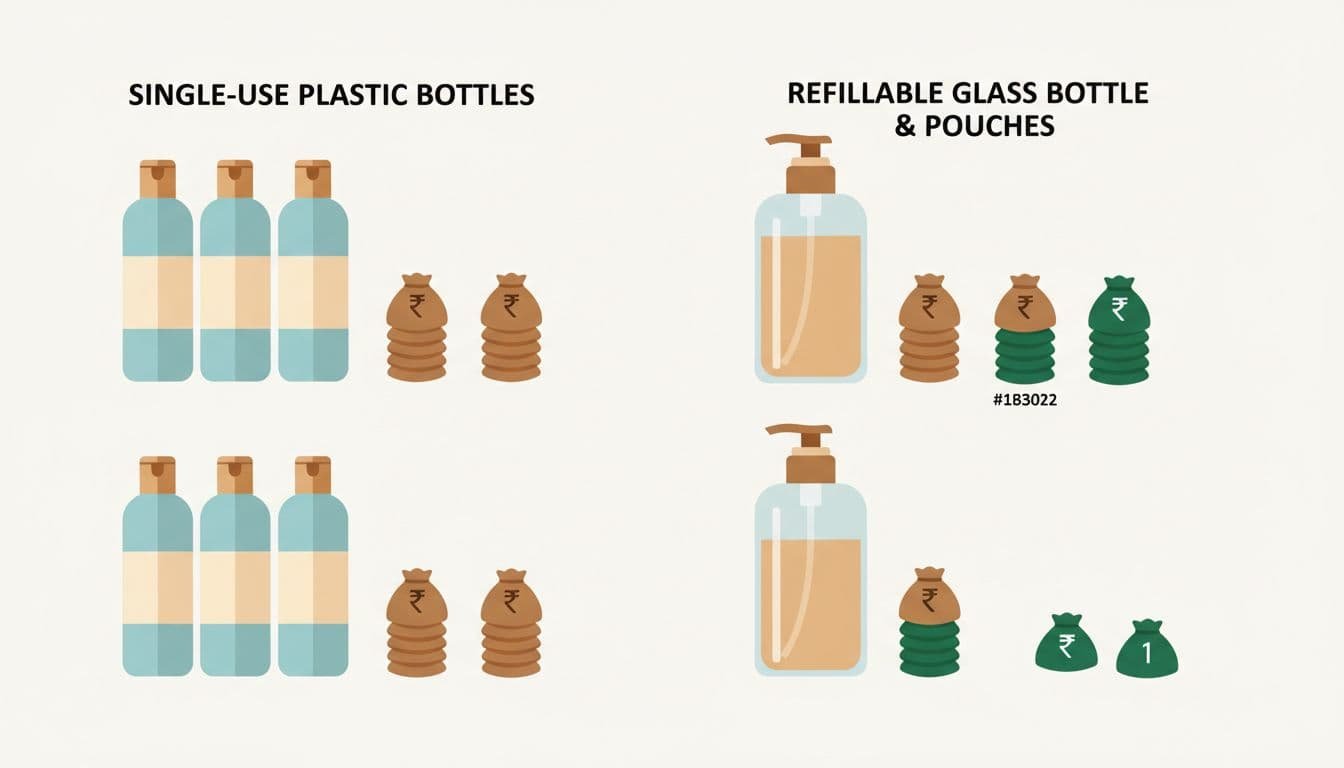
This is the cost pattern most teams are dealing with:
| Cost driver | Single-use pack | Refillable system |
|---|---|---|
| Primary packaging | Paid on every order | Paid heavily on order one |
| Refill pack material | Not relevant | Lower on repeat orders |
| Freight weight | Usually higher | Often lower after first order |
| Margin timing | Immediate and predictable | Delayed, depends on repeat rate |
The takeaway is simple: refillables are not a packaging trick, they’re a retention model.
Public examples in India show this clearly. Organix Mantra’s explainer on refillable beauty points to first-pack premiums and cheaper refill cycles, and it ties that logic to India’s EPR pressure as well. That’s important. When waste obligations rise, repeated use isn’t only a brand story, it’s a cost and compliance story.
Still, don’t romanticise it. If your refill pack is barely cheaper to produce than a full unit, you won’t have enough room to offer a meaningful consumer saving and protect margin at the same time.
Why India changes the refill maths
India makes refill economics both more attractive and more unforgiving.
The attractive bit is easy to see. Beauty and personal care packaging in India is still growing, with market tracking pointing to roughly 6.1% annual growth through 2031. More packs sold means more packaging cost sitting on your P&L. Any model that reduces repeat packaging cost deserves serious attention.
The unforgiving bit is customer behaviour. Indian shoppers are price-aware and convenience-led. They may like the idea of refillables, but liking the idea doesn’t mean tolerating leaks, tricky spouts, or refill packs that go out of stock.

Category choice matters more than brand intent. Premium skincare, fragrance, and some cosmetics can carry a durable outer pack because the pack itself feels like part of the product. Luxury beauty has moved faster for a reason, something Ma Earth Botanicals discusses in its piece on refill systems and plant-based plastics.
Home care follows a different logic. A handwash refill, dishwash concentrate, or laundry refill often works because the purchase cycle is short and the value is obvious. Why pay to ship water and a fresh bottle every time? In home categories, concentrate systems can beat fancy dispensers on economics because they cut freight, storage volume, and packaging weight all at once.
Then there is sourcing. Pumps, closures, high-quality mono-material refill packs, and durable decorative components aren’t always easy to source locally at the right quantity. Minimum order quantities can bully smaller brands. That makes refillable packaging economics in India less about ideology and more about operational discipline.
There’s also a gap between trial and habit. Murth’s take on refillable beauty in India captures the rising curiosity around refillables. Curiosity helps launch. It doesn’t create repeat. Ease does.
Margin isn’t the only payoff, retention matters too
Refillables can do something single-use packs struggle to do well: they turn packaging into a reason to come back.
A customer who already owns the bottle has a built-in excuse to repurchase the refill. The lower ticket price helps. So does the mental nudge. You’re not asking them to buy the whole product again, only the inside of it. That small change matters more than many pricing teams admit.
For D2C brands, refill cycles can sharpen repeat programmes. Usage-based reminders, subscriptions, and refill bundles make more sense when the refill has a lower absolute price and a clearer role in the routine. For retail, refills can create shelf architecture that signals value without constant discounting.
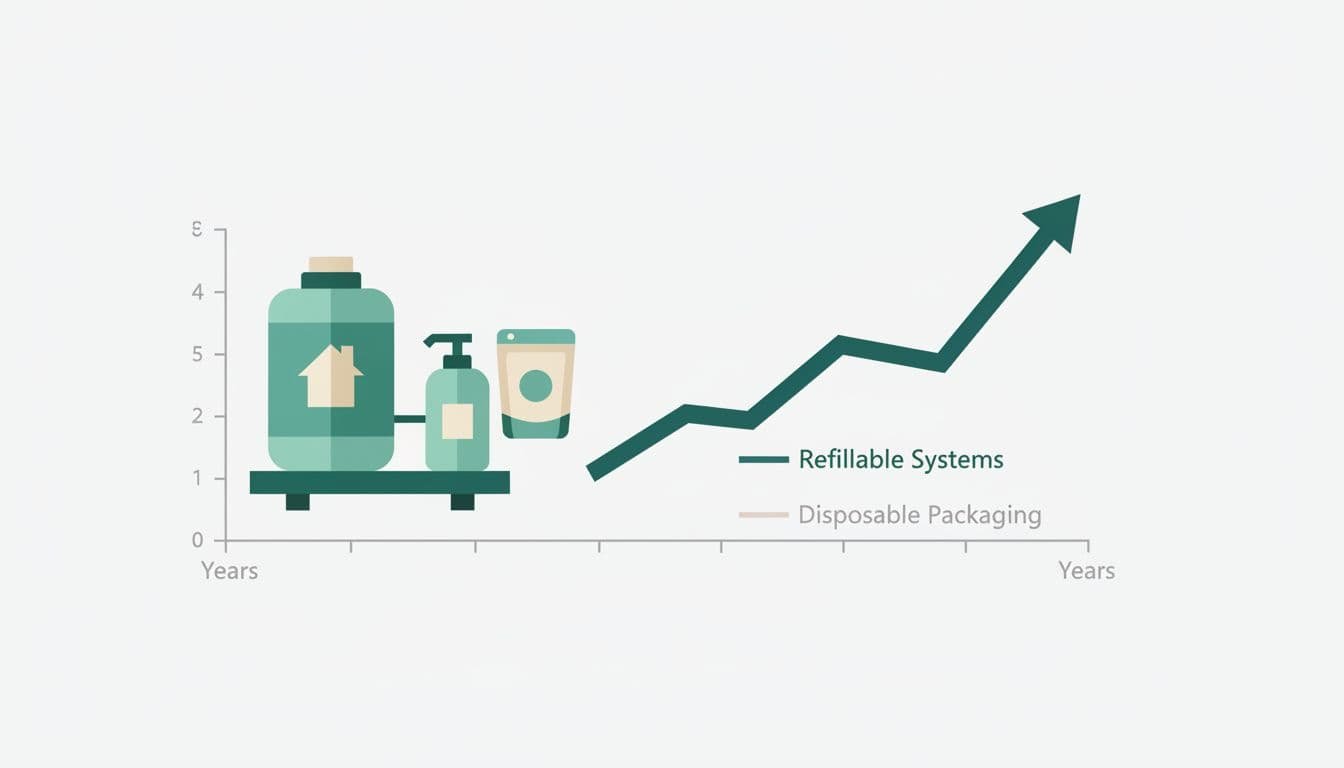
You can see this in public product design choices. t2ONLINE’s roundup of refillable beauty products highlights formats like Lakme’s refill pack approach and asa Beauty’s replace-the-inner-pack system. Different products, same commercial logic: keep the valuable outer shell, replace the cheaper inner component.
A refill that isn’t easier than re-buying is a lesson in good intentions, not a business model.
There is a reputational edge here too, but it cuts both ways. If the outer pack is reused only once, or the refill comes wrapped in almost as much material as the original, customers notice. So do critics. The Established’s look at beauty greenwashing and refillables is a useful warning. A decorative refill story can cost trust faster than it builds it.
The good version is boring, and that’s a compliment. The refill is in stock. It pours cleanly. It costs less. It fits the old pack without drama. Customers don’t have to think.
Model break-even before you fall in love with the pack
Don’t start with a manifesto. Start with a spreadsheet.
- Pick a product people replace often.
A cleanser, handwash, lotion, dish liquid, or laundry product gives you enough purchase frequency to see repeat behaviour. A low-frequency SKU makes the payback period too slow. - Track reuse, not only sales.
Your real metric is not hero pack sell-through. It’s first-to-refill conversion, time to second purchase, and how many refill cycles the average customer completes. - Separate order-one margin from order-two-plus margin.
This is where many teams get fooled. Launch orders may look weaker because the durable pack costs more. Repeat orders should look stronger. If they don’t, the refill system isn’t pulling its weight. - Pilot in one channel before scaling.
A D2C test can show refill conversion fast. Modern trade can test visibility and price perception. Running both from day one usually muddies the result.
The strongest Indian examples already show different ways to play this. asa Beauty leans into premium reusable packs. Juicy Chemistry uses refill formats for skincare. The Switch Fix sidesteps bottles altogether with solid bars and reusable tins. Same destination, different route.
A good pilot usually answers five hard questions in under 90 days. Does the refill leak? Do customers understand it without a tutorial? Is the saving obvious? Does customer support get flooded with usage issues? Can your ops team pack and ship it without cursing your name?
If one answer is “no”, fix that before scaling. Refillable systems fail in mundane ways. Loose caps. Weak seals. Poor forecasting. A refill page buried on the site. None of that sounds strategic, but it decides the economics.
Conclusion
The first sale may look worse on paper. The third often looks better. That’s the core of reuse economics for Indian beauty and home brands.
The brands that win make the outer pack worth keeping, the refill easy to buy, and the saving obvious without a calculator. Packaging is only one part of a wider environmental effort, of course. If that broader work matters to your brand, you can Contribute to Active Missions and support zero-leakage projects in the field.