Why Carbon Neutral Labels Backfire on Customer Trust
 TBH Editorial
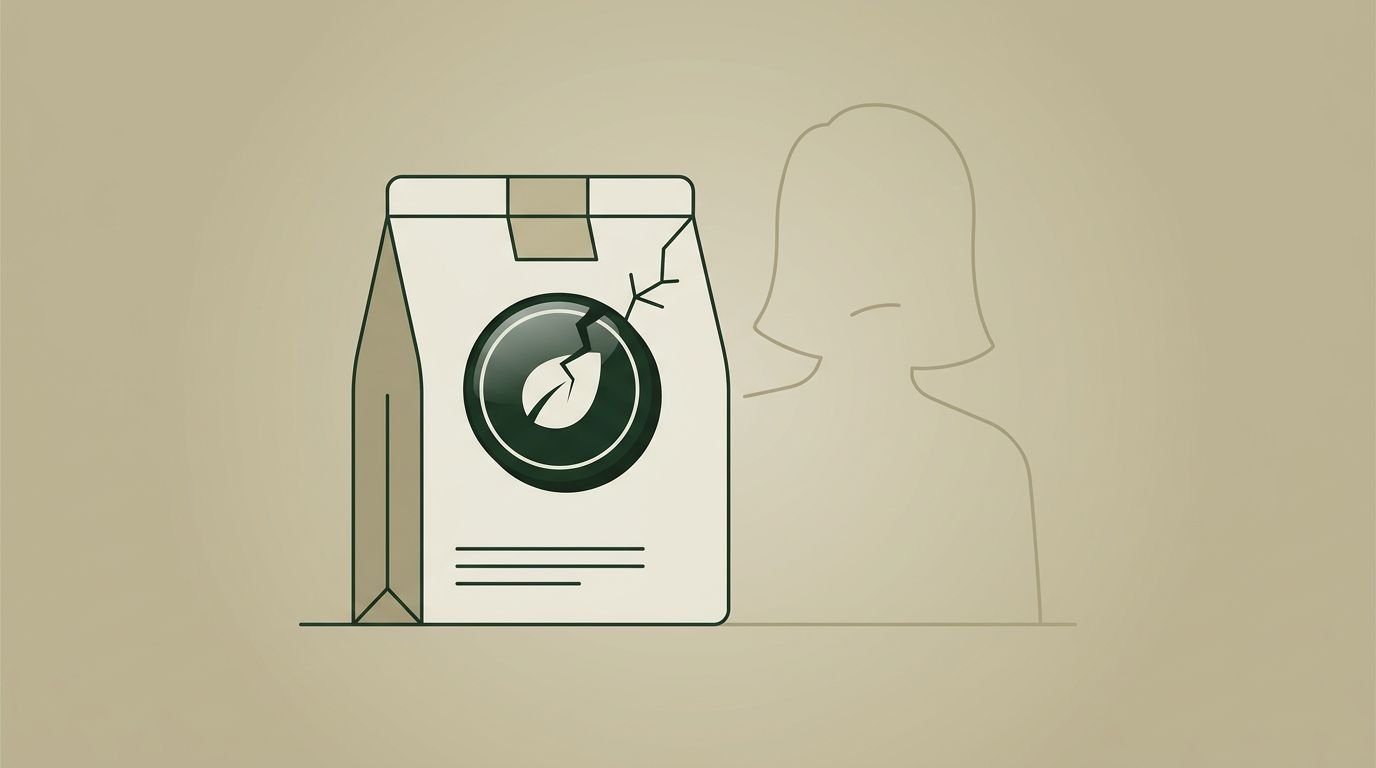
A label meant to reassure can do the opposite. Put “carbon neutral” on a pack, ad, or product page, and many customers stop trusting the rest of what you say.
That doesn’t mean people dislike climate action. It means they don’t like claims that sound simple when the truth is anything but. For brand teams, that’s the uncomfortable bit. Carbon neutral labels look neat. Customer interpretation doesn’t.
TL;DR: These labels often hurt trust because they sound absolute, whilst most claims rest on boundaries, estimates, and offsets. Once shoppers spot that gap, the badge feels less like proof and more like spin. Clear, narrow, verified claims usually land better.
The promise sounds absolute, even when the claim isn’t
If a product says “carbon neutral”, what does a customer hear? Usually, “this product causes no climate harm”. Not “we measured part of the footprint, reduced some emissions, and balanced the rest through credits”. The phrase feels final. The underlying claim rarely is.
That gap matters because trust is built on first impressions, not legal footnotes. A shopper sees the front of pack. They do not stop in aisle three to inspect your methodology PDF.
The UK’s advertising regulator has already seen this problem. In ASA guidance on carbon neutral and net zero claims, research found little consensus on what these terms mean. People often assumed the claim meant real emissions had been reduced. When offsetting entered the picture, many felt misled.
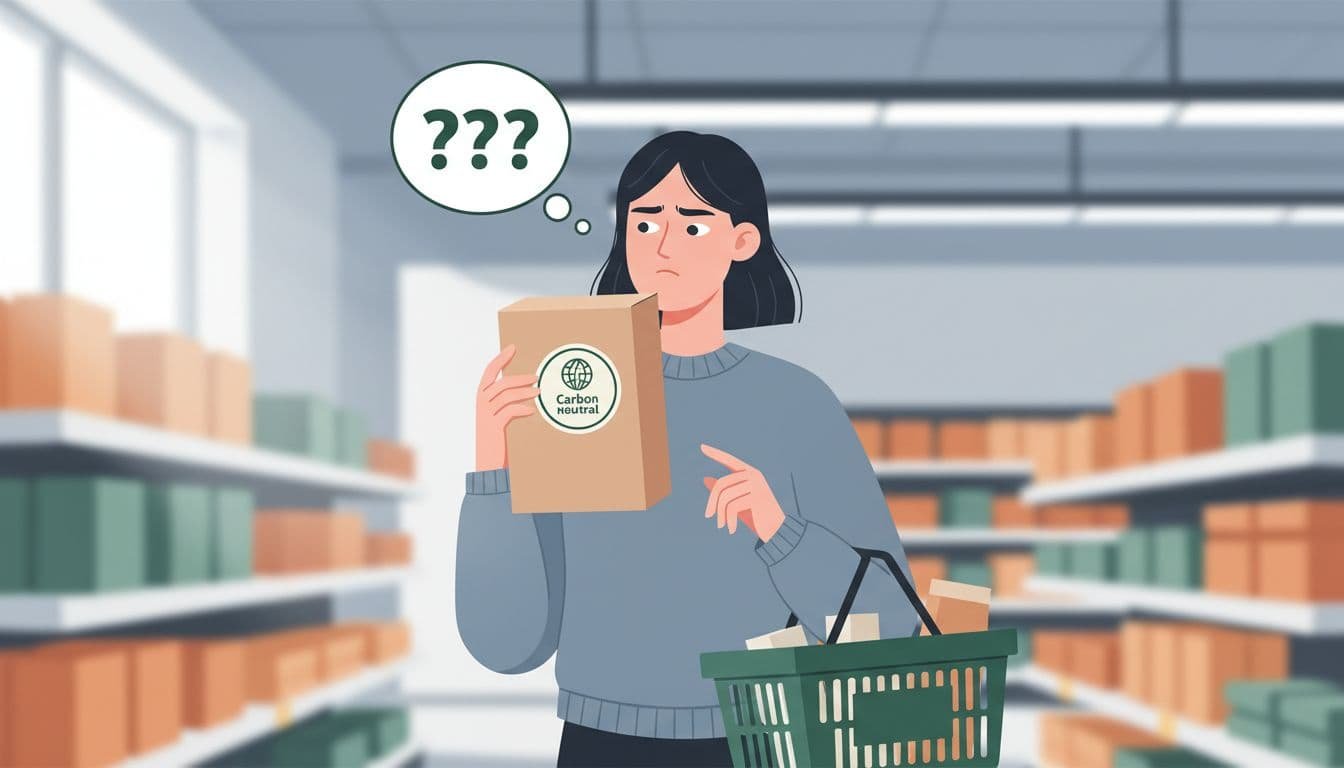
Academic evidence points the same way. A study on climate-neutral food labelling found that the label made products seem more climate-friendly than they deserved. Even when extra explanation was added, the label still pushed people towards a rosier interpretation.
That is the heart of the problem. The claim is broad. The reality is conditional.
There’s also plain old label fatigue. Recent European data shows more than 230 sustainability labels and over 100 green energy labels are already in circulation. Customers are surrounded by badges, seals, leaves, circles, and vague green promises. Another tidy icon doesn’t calm them down. It often makes them more suspicious.
People aren’t asking for perfection. They’re asking not to be managed. When a brand reaches for a claim that sounds cleaner than the underlying facts, customers sense it. Maybe not on day one, but soon enough.
Offsets are where trust starts to wobble
Most carbon neutral claims don’t stand on direct reductions alone. They lean, at least in part, on offsets. That’s where the term starts to wobble.
To be fair, carbon finance is not nonsense by default. Some projects do remove or avoid emissions. Some credits are better than others. But the label doesn’t tell customers any of that. It gives them one polished outcome word, “neutral”, and asks them to trust the plumbing behind it.
That’s a lot to ask.
Offsets are hard for most people to inspect. They raise awkward questions fast. Was the project going to happen anyway? Will the carbon stay stored for decades? Does a future tree balance a present tonne of emissions? Customers may not use the words “additionality” or “permanence”, but they grasp the basic problem. The cause and the cure don’t feel like the same thing.
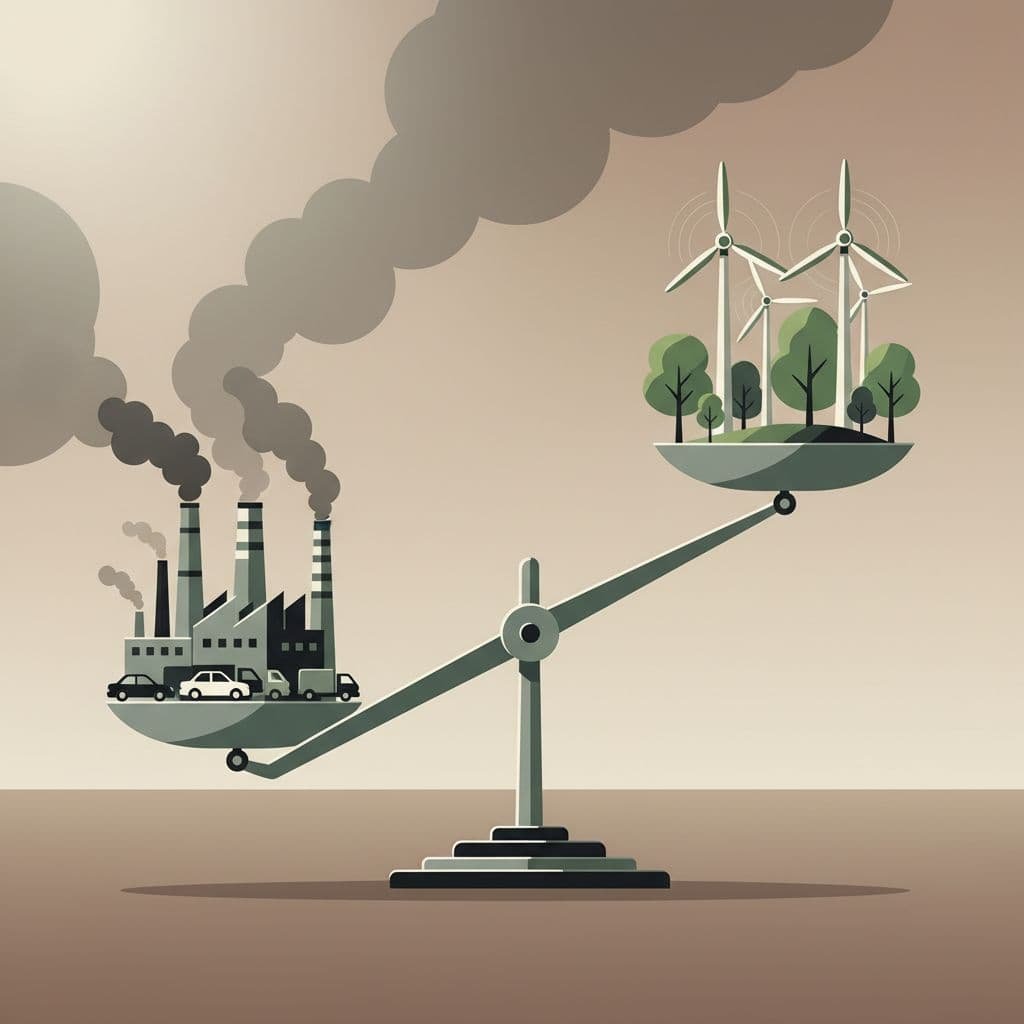
This is why carbon neutral labels can sound less like honesty and more like accounting theatre. A fossil-heavy process, a long-haul flight, or a polyester garment does not suddenly feel harmless because money changed hands elsewhere. Customers know real-world emissions are messy. What they reject is being sold the feeling of resolution.
The language makes it worse. “Neutral” sounds like the maths is settled. In practice, many claims depend on assumptions, scope choices, and credit quality. That doesn’t make every claim false. It does make the label far more fragile than most marketers admit.
And once fragility meets scrutiny, trust drops fast. A customer who feels over-sold on climate claims won’t only question that one badge. They’ll question your brand’s tone, your proof, and your motives.
Backlash and regulation changed the risk
A few years ago, some brands treated carbon neutral labels as useful shorthand. In 2026, that looks reckless.
Recent European figures show 53% of environmental claims are vague, misleading, or unfounded. 40% have no supporting evidence. Half of green labels have weak or no verification. Those numbers don’t create scepticism on their own, but they feed it. Customers learn the category before they judge your brand.
Regulators have learned it too. The UK’s Green Claims Code guidance is blunt on this point. If a business makes climate claims, it needs to be clear about what it is doing, how it is doing it, and whether it is reducing emissions, offsetting them, or both.
From 27 Sep 2026, the EU’s new consumer rules raise the bar again. Weak climate-neutral claims based on offsets face much tighter limits. That isn’t a small compliance tweak. It is a sign that the old wording has lost public permission.
Courts are adding pressure. Reuters reported that a French court found TotalEnergies misled consumers with carbon neutrality claims. Other cases across sectors have pushed the same message: if the claim sounds broader than the evidence, trouble follows.
This is why the label now carries more downside than upside. It can attract attention, but the attention is often hostile. It can simplify your story, but the simplification is exactly what gets challenged.
If your claim needs a footnote, a glossary, and three clarifying caveats, customers won’t call it clarity. They’ll call it evasion.
What credible climate communication looks like instead
Trust doesn’t come from a bigger badge. It comes from smaller, plainer claims.
That sounds less glamorous, but it works better. Customers respond well when brands tell them what has been measured, what has been reduced, what remains, and what has been independently checked. Recent 2026 data points in the same direction: shoppers are more open to clear carbon footprint information than to sweeping green promises.
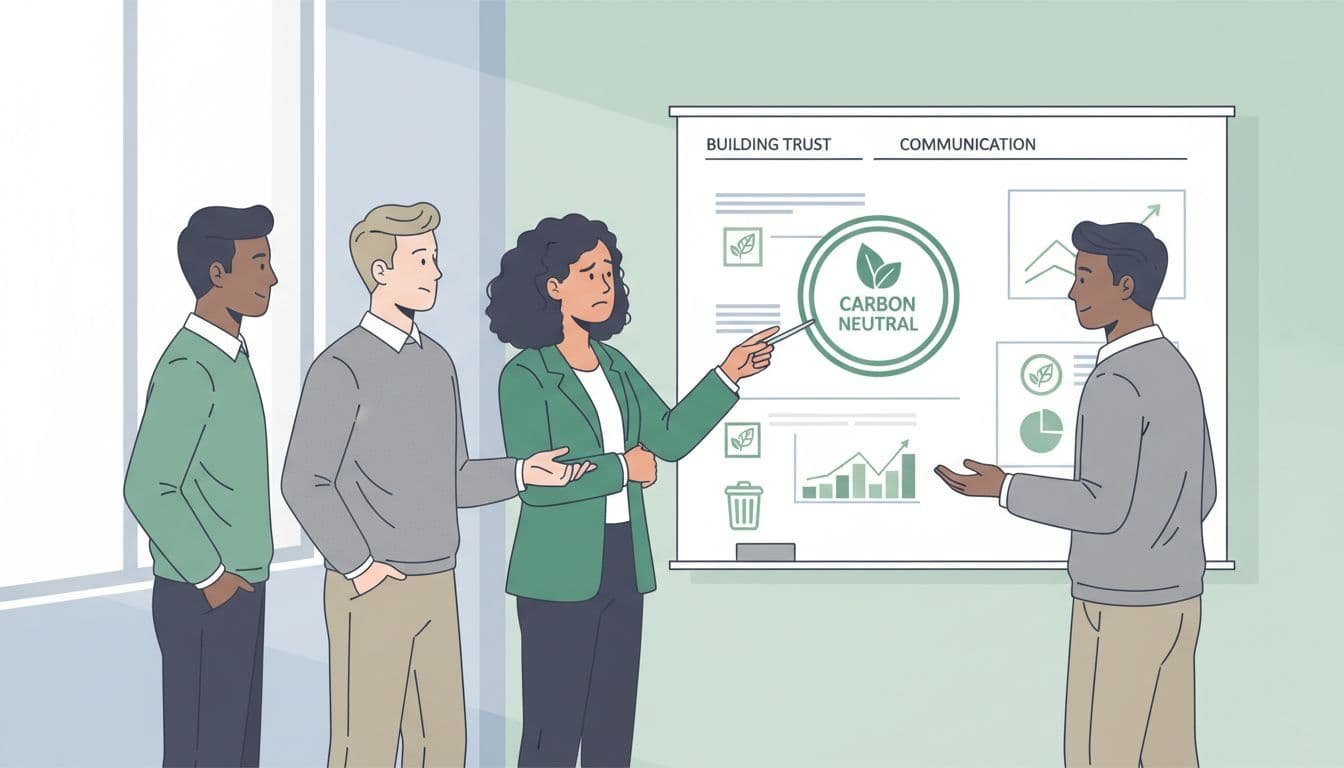
A useful rule is simple. Say what happened. Say what didn’t. Say what comes next.
The Carbon Trust’s guidance on environmental claims makes the same case in more formal language: measurement, verification, and precise wording matter more than broad virtue claims.
This comparison shows the difference:
| Weak claim | What customers often hear | More credible version |
|---|---|---|
| Carbon neutral product | This causes no climate harm | Product footprint measured for stated boundaries, emissions reduced by 28% since 2022 |
| Climate-friendly | This is good for the planet | Lower emissions than our 2021 baseline, third-party verified |
| Net zero brand | The whole business is sorted | Published transition plan, annual progress report, remaining emissions disclosed |
| Eco packaging | No meaningful environmental downside | Packaging contains 70% recycled content and is recyclable where facilities exist |
The takeaway is not “use more words”. It’s “use honest words”. Be narrow. Put dates on claims. State the boundary. If only scopes 1 and 2 are verified, say that. If shipping is still a problem, say that too.
There’s also a human point here. Customers are usually more forgiving of unfinished progress than polished overreach. “We’re reducing emissions, here’s the data, here’s what’s still hard” sounds adult. “Carbon neutral” can sound like a shortcut.
For founders and comms teams, that means resisting the urge to compress a serious climate programme into a comforting sticker. You are not trying to sound pure. You are trying to be believed.
Conclusion
Carbon neutral labels often hurt trust because they promise a clean ending in a system that is still messy. Once people see the caveats, they don’t only doubt the badge. They start doubting the brand behind it.
The better move is less dramatic and more believable. Show the reductions. Name the boundaries. Publish the proof. Let customers see progress without pretending the work is finished.
That same rule applies beyond messaging. Tangible action beats vague reassurance, which is why practical, visible work tends to earn more faith than abstract offset talk. If you want that kind of action, you can Contribute to Active Missions.