How to Test Tap Water for E. coli in Indian Homes
 TBH Editorial
A TDS meter can tell you something about dissolved solids. It cannot detect sewage bacteria.
That is why tap water E. coli isn’t a problem you solve by staring at clear water, checking its taste, or trusting a purifier light. Drinking water can look clear while still containing bacteria. After rain or pressure loss, stormwater runoff can enter the route between source and glass.
The right response is calm, practical, and evidence-led. Test the water properly, protect people before the report arrives, then push for the repair that stops contamination at its source.
Key Takeaways
- E. coli should not be detectable in a 100 mL sample of drinking water under India’s IS 10500 standard. Clear water, normal taste, low TDS, or a purifier light cannot prove microbiological safety.
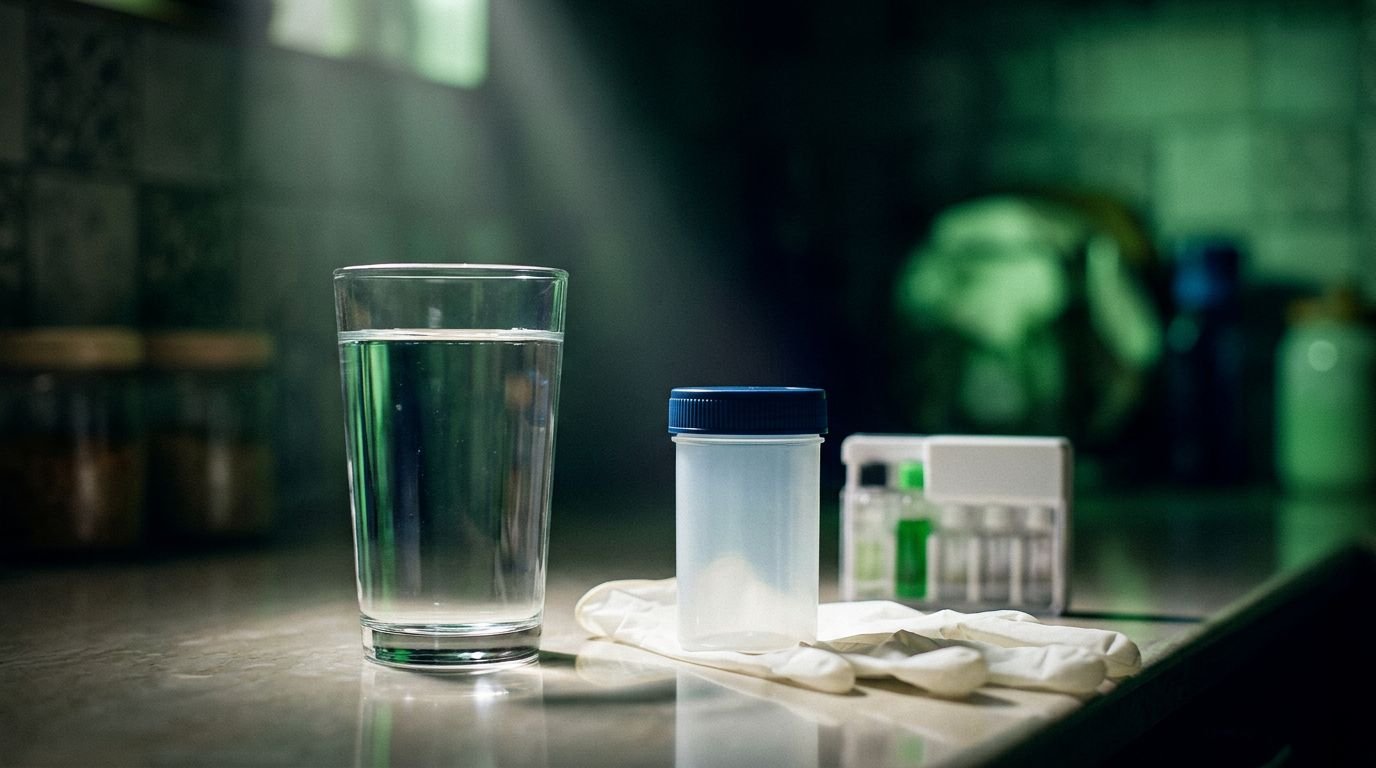
- Test for E. coli with a validated home screening kit or, preferably, a qualified laboratory. Use a sterile bottle, avoid contaminating the sample, and deliver it within the laboratory’s stated time window.
- If contamination is suspected or confirmed, stop using the water for drinking and food preparation. Boil it at a full rolling boil for at least one minute, remembering that boiling does not remove salts, metals, pesticides, or other chemicals.
- Trace the entire route from the source to the glass, including tanks, pumps, pipes, drains, filters, and taps. Document the problem, demand repair at its source, and repeat microbiological testing after repairs.
- Give safe alternate water first to infants, young children, older adults, pregnant people, and people with weakened immune systems. Seek medical advice for blood in the stool, dehydration, repeated vomiting, severe pain, or worsening symptoms.
When E. coli appears, treat it as a source warning
E. coli are intestinal bacteria that live in the intestines of humans and animals. Their presence in drinking water signals E. coli contamination and fecal contamination.
It is often linked to sewage, animal feces, dirty storage, or a breach in the distribution system.
This biological contaminant does not mean every detected strain will cause severe illness. It does mean the water is unsafe to treat casually.
What the Indian drinking-water standard requires
Under India’s IS 10500 drinking-water standard, E. coli or thermotolerant coliform bacteria should not be detectable in a 100 mL sample of drinking water.
That is a hard line. There is no “small acceptable amount” of E. coli in water used for drinking, cooking, or brushing teeth. The same applies to water used for making ice or mixing infant formula.
A positive result is not a reason to panic. It is a reason to stop guessing, boil your water temporarily when a breach is suspected, and contact the local health department for guidance.
How contamination reaches an Indian home
The failure may begin far from your kitchen. Sewage overflows after heavy rain, agricultural runoff, stormwater runoff, or broken water mains can contaminate municipal water. When supply is intermittent, falling pressure in water supply lines may draw contaminated water through cracks.
It may also begin inside the building. Common weak points include:
- Uncovered or poorly cleaned underground and overhead tanks.
- Cracked pipes running close to drains or sewage lines.
- Suction pumps that worsen low-pressure conditions in shared plumbing.
- Old purifier cartridges, dirty taps, and storage vessels left uncovered.
Water can leave a treatment plant clean and still become contaminated before it reaches your glass. That is why sample location helps identify where the chain failed.
How to test tap water E. coli at home
A TDS reading, pH strip, or quick smell test can’t detect E. coli contamination. You need a microbiological test.
You have two sensible options: a validated home presence-and-absence kit, or a sample sent to a qualified laboratory. If anyone in the home is ill, if a child drinks the water, or if you need proof for a housing society or local authority, use a lab.
Until results arrive, boil your water before drinking when contamination is suspected.
Use home kits as screening, not clearance
Some field kits can flag the possible presence of coliform bacteria or E. coli after incubation. They can help you decide whether to stop using a source immediately.
A screening kit identifies possible bacteria; it isn’t a water treatment method. A purifier or other treatment device may remove bacteria, but it doesn’t confirm whether they were present.
It cannot replace a formal report. Ask a laboratory for bacteriological water analysis using membrane filtration or multiple-tube methods, and confirm that it tests for both E. coli and total coliforms. A provider offering IS 10500 drinking-water testing should be able to explain its microbiological panel and reporting format.
For official documentation or a formal complaint, ask the health department about an accredited laboratory.
A negative home-kit result is useful information. It is not a lifetime certificate for your tap.
Collect a sample that the lab can trust
Call the lab before collecting anything. Ask whether it will provide a sterile bottle, where to sample, how long to run the tap, and the delivery deadline. Mention recent stormwater runoff or unusual supply conditions that could affect interpretation.
If you want to test the drinking water people actually consume, sample from the drinking tap after the home’s water filtration system. For tracing the source, collect paired water samples from the incoming tap before treatment and the treated-water outlet.
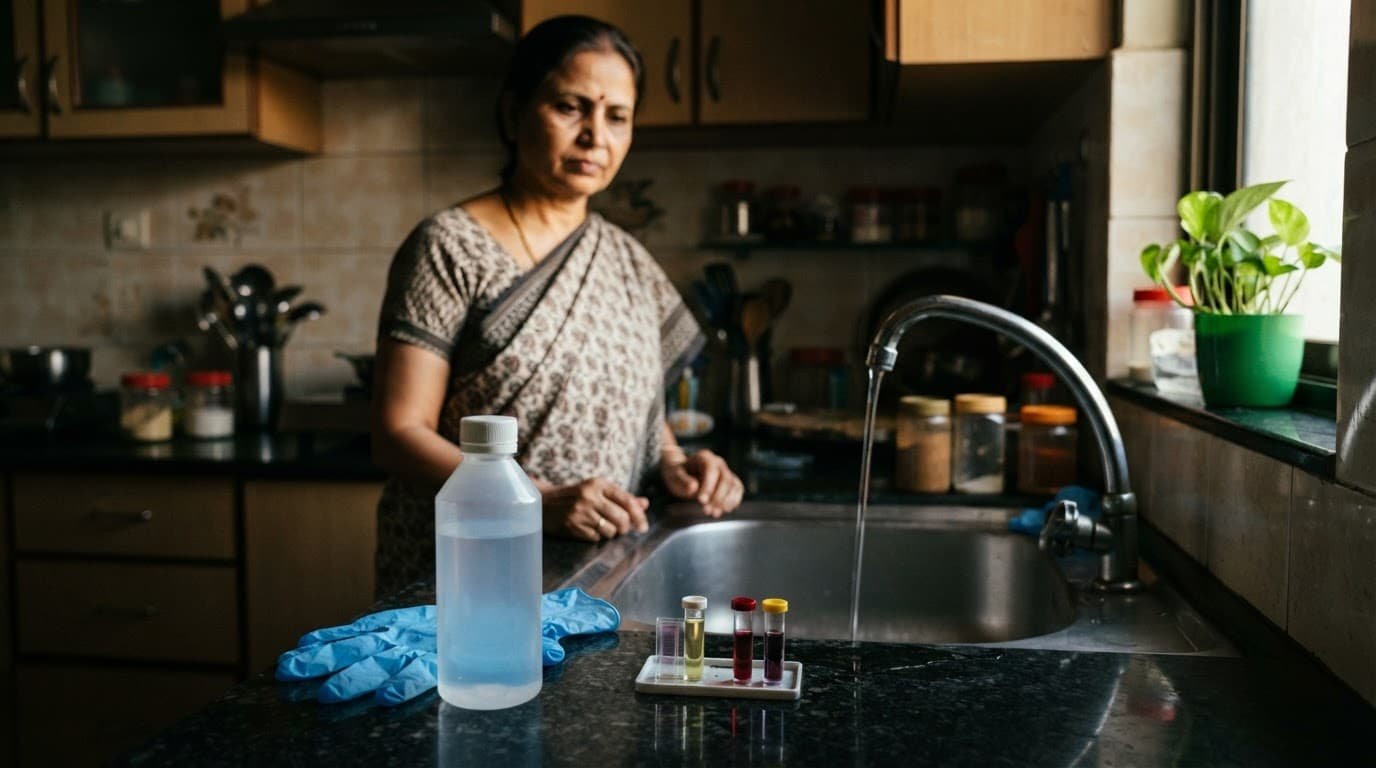
Follow a few non-negotiable rules:
- Use only the sterile bottle supplied or approved by the lab.
- Do not rinse the bottle, touch its rim, or touch the inside of the cap.
- If the bottle contains a preservative, often used to neutralise chlorine, do not empty it.
- Label water samples with the source, date, time, and whether each came before or after filtration.
- Keep it cool and deliver it within the laboratory’s stated time window.
A kitchen jar can carry its own bacteria. That turns a real concern into an argument over a bad sample.
Read the result without false reassurance
Microbiology reports can feel technical, but the core message is plain.
Zero E. coli per 100 mL is the target
For drinking water, the target is not detected in 100 mL. If the report shows E. coli, thermotolerant coliforms, or total coliforms in treated water, pause use and investigate.
Record sampling conditions and recent weather, including stormwater runoff, when interpreting an unexpected result.
A high TDS score can still come with no E. coli. A low TDS score after reverse osmosis can still contain bacteria. These are different problems that need different tests. A TDS number can’t confirm whether a water treatment method controls E. coli.
Clear water, low TDS, and a clean-looking tank do not prove microbiological safety.
A full water-quality testing guide for Indian homes can help you separate bacterial testing from chemical checks such as hardness, fluoride, iron, or nitrate.
A positive result needs action and confirmation
If E. coli is detected, do not dismiss it as a technical error. Stop using that source for drinking and food preparation. If no alternative is available, boil your water before drinking or cooking while you investigate.
The report cannot tell you the exact sewage leak or identify every pathogen in the water. It does tell you the system needs attention.
Collect fresh water samples after tank cleaning, pipe repairs, disinfection, or filter servicing. One clean follow-up result after months of unsafe water is evidence of improvement, not permission to stop maintenance.
Make water safe before the repair is complete
You cannot wait for a committee meeting, plumber visit, or municipal reply if stormwater runoff or another breach may have contaminated household water.
How to boil your water safely
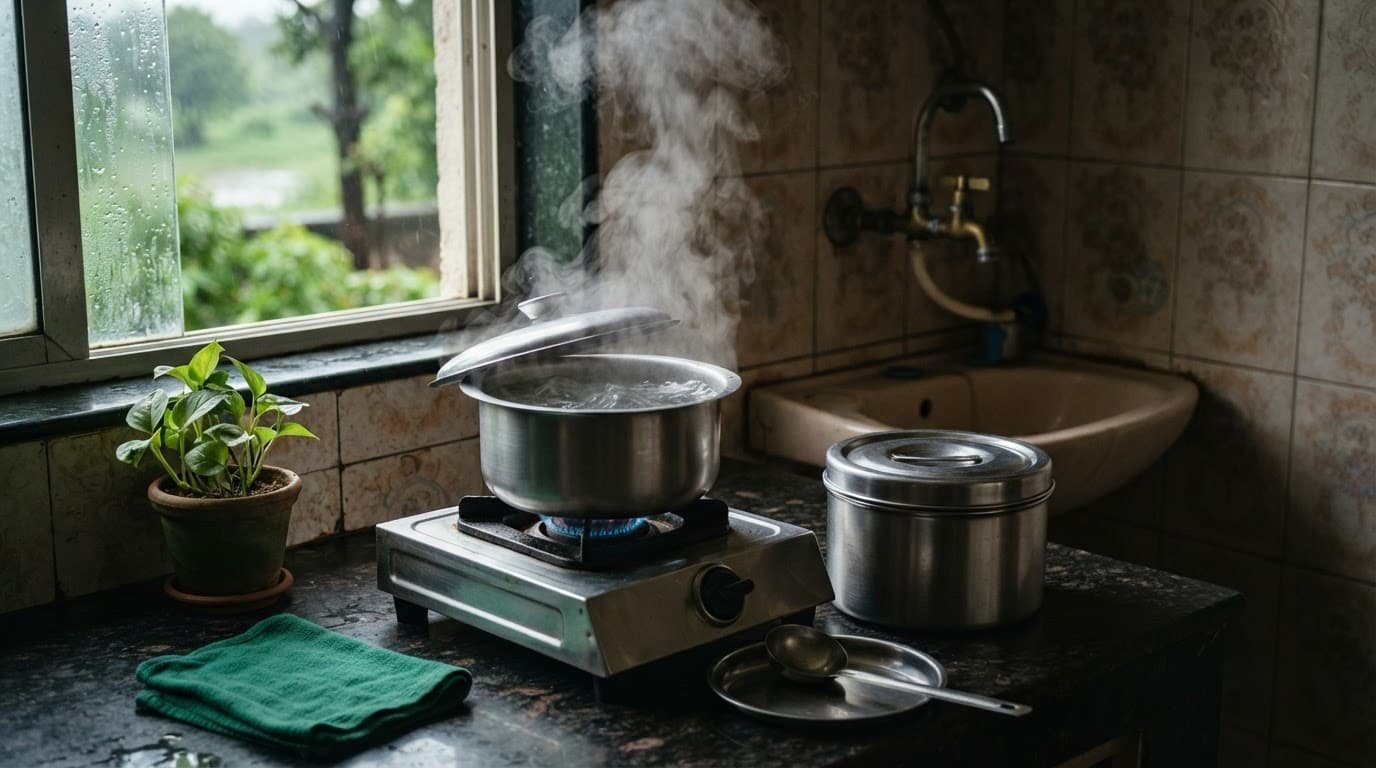
Bring water to a full rolling boil for at least one minute. Then let it cool in a clean, covered container.
During a boil-water alert, boil your water before using it. Use boiled or safely packaged drinking water for cooking, brushing teeth, making ice, preparing tea or coffee, and washing raw foods that will be eaten uncooked. Keep it covered. A clean batch can become unsafe again through a dirty ladle or open storage.
Boiling kills bacteria such as E. coli and other waterborne germs. It does not remove dissolved salts, fluoride, heavy metals, pesticides, or industrial chemicals. It is an immediate microbial safety step, not a cure for every water-quality failure.
Continue to boil your water until repairs and repeat testing are complete.
Don’t buy a purifier based on a glowing light
Water filtration includes sediment and activated-carbon options, but neither proves E. coli removal. Activated-carbon filters can improve taste and odour. Sediment filters catch particles.
A UV light system can inactivate microbes when water is clear enough, the lamp works, the dose is adequate, the flow rate is appropriate, and maintenance is current. It does not remove chemical contamination or protect water from recontamination in a dirty storage tank.
No single water treatment method is universally sufficient. Boiling addresses microbes, UV and filtration have operating limits, reverse osmosis targets dissolved solids, and chemical disinfection should follow product, public-health, or professional guidance.
Look for documented microbiological performance for drinking water against a recognised standard. Don’t trust taste, a glowing indicator light, or claims such as “99.9% pure.” Replace each water filter cartridge on schedule, clean storage tanks, and service UV units. A neglected purifier can become part of the problem.
Find the break in the chain, not just the dirty tap
A quick tank wash may help. It is not always the answer.
Trace the route water takes
Map your drinking water’s journey: municipal water or borewell, underground tank, pump, overhead tank, water supply lines, purifier, tap, and bottle.
Ask whether neighbours have reported stomach illness or stomach cramps. Also ask about bad odours, discoloured water, low pressure, flooding, stormwater runoff, sewage overflows, or recent plumbing work. If only one flat tests positive, the problem may sit inside that flat’s plumbing or purifier. If several homes test positive, compare the results with public tap water and investigate the building or supply network.
A 2025 assessment of piped water quality reinforces that quality must be checked across the supply chain, not assumed from the source alone.
Until the route is repaired and follow-up testing is complete, boil your water for drinking and cooking.
Build a paper trail people must answer
Take dated photos of tank lids, standing water near pipes, broken drains, plumbing leaks, and filter-service records. Keep test reports, invoices, complaint messages, and replies in one folder.
Then write to your landlord, resident welfare association, builder, water utility, or health department. Ask for the source of contamination to be repaired, not merely for a tank to be rinsed or a wall to be repainted.
State what you need:
- Inspection and repair of tanks, pumps, pipes, nearby drainage, and any pipe leakage.
- A written repair timeline and the person responsible.
- Details of disinfection after repairs.
- Collection of follow-up microbiological samples from the affected taps.
A vague assurance that “action has been taken” is not a safe-water plan. Records turn an invisible risk into something that can be checked.
Know when symptoms need medical care
Not everyone exposed to contaminated water will become ill. Still, nobody should have to gamble with it.
Watch for signs of waterborne illness
Possible symptoms of waterborne illnesses include diarrhoea, stomach cramps, nausea, vomiting, fever, and weakness. Some E. coli infections can cause severe abdominal pain or severe diarrhea.
Seek medical advice promptly if there is blood in the stool, repeated vomiting, signs of dehydration, unusual sleepiness, reduced urination, persistent stomach cramps, or worsening symptoms.
Severe dehydration and certain serious E. coli complications can affect the kidneys and, rarely, cause kidney failure. Tell the clinician about the suspected water exposure, and keep the test report.
Do not self-prescribe antibiotics or anti-diarrhoeal medicines for a suspected bacterial infection. The right treatment depends on the organism and the person.
Protect people who face higher risk
Infants, young children, older adults, pregnant people, and people with weakened immune systems have less room for error. Give them safe alternate drinking water first.
If no safe alternative is available, boil your water before preparing their drinks or food.
This is also a fairness issue. The people most exposed to unreliable water are often renters, domestic workers, informal settlements, and households that cannot afford repeated purifier upgrades or bottled water.
Personal caution matters. But asking a family to buy another water filter while ignoring a leaking sewage line is moral theatre.
Safe water needs systemic accountability
Everyday mindfulness can mean noticing a bad smell after rain, checking a tank lid, or refusing to store drinking water uncovered. Those habits help.
But plant-based living, lower-waste choices, and careful household routines do not disinfect contaminated tap water. During a system failure, boil your water as a temporary step, but don’t mistake it for infrastructure repair.
Repair budgets are public-health infrastructure
Systemic change looks unglamorous: practical water management, inspection logs, tank-cleaning records, plumbing budgets, pressure checks, timely repairs, and repeat testing. A reliable water treatment method depends on that support.
Sustainable business models for housing societies and utilities should fund this work before residents get sick. Housing authorities and the health department should enforce those standards. A circular economy for buildings should reward repair and careful maintenance, not preserve cracked plumbing to save money.
Climate literacy belongs here too. Intense rainfall can overwhelm drains, increase stormwater runoff, and raise contamination risks around old water systems. The risks of hospital wastewater in India show how microbial pollution, weak treatment, and public health can collide far beyond one household tap.
Community health and ecology share the same drain
The ecological impact does not stop at a kitchen sink. Sewage entering drains and lakes harms insects, fish, frogs, birds, and the small patches of urban biodiversity that cool and support Indian cities.
A community that tracks water failures protects more than its own bottles and taps. It pushes for cleaner drains, safer tanks, better reporting, and fewer invisible harms passed downstream.
For local work connecting climate literacy, community health, and living ecosystems, Explore Our Active Missions.
Frequently Asked Questions
Can a TDS meter detect E. coli in tap water?
No. A TDS meter measures dissolved solids, not bacteria, so a low reading does not prove that water is safe to drink.
What does a positive E. coli water test mean?
It signals fecal contamination and means the water should not be treated casually, even if nobody feels ill. Stop using it for drinking and food preparation, boil it temporarily, and investigate the source with follow-up testing.
Is a home E. coli test kit enough?
A validated home kit can screen for possible bacteria and help you act quickly. It does not replace a formal laboratory report, especially when someone is ill or documentation is needed for a housing society or local authority.
How should I collect a water sample for testing?
Call the laboratory first and use only its sterile or approved bottle; do not rinse it or touch the rim or inside of the cap. Label the source, date, time, and filtration status, keep the sample cool, and deliver it within the stated deadline.
Does boiling or using a purifier solve E. coli contamination?
Boiling water at a full rolling boil for at least one minute kills E. coli and other microbes, but it does not remove chemical contaminants. Purifiers work only within their documented operating limits, so maintain them properly and repair any contaminated tank, pipe, drain, or supply line.
A positive test is evidence, not a verdict
A positive E. coli result is frightening because contamination is invisible. Weather or source conditions, including stormwater runoff, do not make it safe to ignore.
Test the water with the right method. Boil your water or replace unsafe drinking water immediately. Then document the fault and demand the repair that removes the risk at its source.
Safe water is not a luxury upgrade. It is basic public-health accountability.